
Maoupa Maake
Serial killer David Randitsheni
Serial killer · S outh Africa · 2004
David Randitsheni (born 1964/5) was a South African rapist and serial killer. ·…
10 victims
David Randitsheni
Serial killer · S outh Africa · 2004
David Randitsheni (born 1964/5) was a South African rapist and serial killer. ·…
10 victims
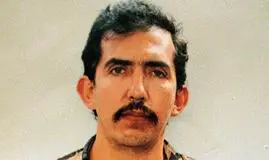 Luis Alfredo Garavito
Serial killer · Colombia/Ecuador · 1992
Luis Alfredo Garavito Cubillos, also known as "La Bestia" ("The Beast") or "Tri…
192 victims
Luis Alfredo Garavito
Serial killer · Colombia/Ecuador · 1992
Luis Alfredo Garavito Cubillos, also known as "La Bestia" ("The Beast") or "Tri…
192 victims
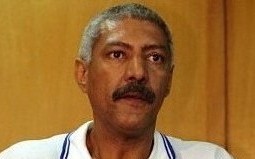 Edson Isidoro Guimaraes
Serial killer · Brazil · 1999
Edson Isidoro Guimarães was a Brazilian nursing assistant and nurse’s aide at S…
131 victims
Edson Isidoro Guimaraes
Serial killer · Brazil · 1999
Edson Isidoro Guimarães was a Brazilian nursing assistant and nurse’s aide at S…
131 victims
 Javed Iqbal
Serial killer · Pakistan · 1998
Javed Iqbal (born 1956 in Lahore, Punjab, Pakistan; died October 8, 2001, in La…
100 victims
Javed Iqbal
Serial killer · Pakistan · 1998
Javed Iqbal (born 1956 in Lahore, Punjab, Pakistan; died October 8, 2001, in La…
100 victims
 Glen Edward Rogers
Serial killer · USA · 1993
Glen Edward Rogers was a spree killer whose cross-country rampage in 1994-95 le…
70 victims
Glen Edward Rogers
Serial killer · USA · 1993
Glen Edward Rogers was a spree killer whose cross-country rampage in 1994-95 le…
70 victims
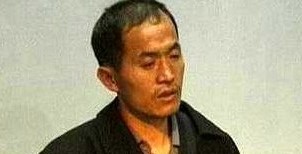 Yang Xinhai
Serial killer · China · 2000
Yang Xinhai (simplified Chinese: 杨新海; pinyin: Yáng Xīnhǎi; 17 July 1968–14 Febr…
67 victims
Yang Xinhai
Serial killer · China · 2000
Yang Xinhai (simplified Chinese: 杨新海; pinyin: Yáng Xīnhǎi; 17 July 1968–14 Febr…
67 victims
 Garry Dean Miller
Murderer · USA · 1988
Garry Dean Miller — offender · April Marie Wilson — victim (7-year-old) Garry D…
1 victim
Garry Dean Miller
Murderer · USA · 1988
Garry Dean Miller — offender · April Marie Wilson — victim (7-year-old) Garry D…
1 victim
 Herbert Smulls
Murderer · USA · 1991
Defendant: Herbert Smulls Accomplice: Norman Brown Victims: · Stephen Honickman…
1 victim
Herbert Smulls
Murderer · USA · 1991
Defendant: Herbert Smulls Accomplice: Norman Brown Victims: · Stephen Honickman…
1 victim
 Debora Green
Murderer · USA · 1995
Debora Green (born Debora Jones, February 28, 1951) was an American physician.…
2 victims
Debora Green
Murderer · USA · 1995
Debora Green (born Debora Jones, February 28, 1951) was an American physician.…
2 victims
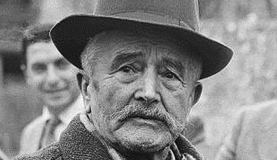 Gaston Dominici
Homicide · France · 1952
Gaston Dominici was convicted of the triple murder of three Britons in France i…
3 victims
Gaston Dominici
Homicide · France · 1952
Gaston Dominici was convicted of the triple murder of three Britons in France i…
3 victims
 Sheila LaBarre
Murderer · USA · 2005
Sheila LaBarre was convicted of first-degree murders of Kenneth Countie and Mic…
2 victims
Sheila LaBarre
Murderer · USA · 2005
Sheila LaBarre was convicted of first-degree murders of Kenneth Countie and Mic…
2 victims
- Gender
- male
- Country
- S outh Africa
- Location
- Johannesburg o area , S outh Africa
- Date of birth
- 196 5
- Characteristics
- rape, robbery
- Victim profile
- Men and women
- Method of murder
- Beating with rocks - Shooting - Hitting with a hammer
- Date(s) of murder
- 1996 - 1997
- Years active
- 1996–1997
- Date of arrest
- December 23, 1997
- Status
-
Imprisoned
Sentenced to 27 life sentences plus 1159 years and 3 months imprisonment on September 6, 2000; in total, his sentence amounted to 1,340 years in prison
Case record: Maoupa Maake (also known as the Wemmer Pan Killer)
Background
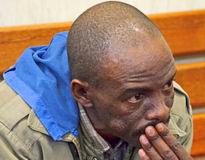
Maoupa Maake (Maoupa Cedric Maake; also known as the Wemmer Pan Killer) was a serial killer from South Africa. He was born in 1965. He committed at least 27 murders throughout 1996 and 1997. He targeted the Wemmerpan area of Johannesburg. He also targeted Indian shop owners. At first, it was believed that there were two serial killers: one targeting Wemmer Pan and one targeting Indian tailors. The South African Police Service linked the two sets of murders after Maake signed a lay-by slip at one of the shops he targeted, and this signature linked him to both areas.
Maake was featured in a 13-part M-Net television series called Criminal Minds hosted by Malcolm Gooding.
The offence
Maake began his crime spree in April 1996 as far as anybody knows, raping and killing a still unidentified woman. By April 1997, he had amassed nearly a dozen attacks on innocent store owners and had murdered a young couple. In May and June of 1997, he accelerated his pursuit of couples while beginning to lure taxi drivers to remote areas for the purpose of gunning them down.
Maake killed people of virtually any race and took victims of both sexes. He attacked both the young and the old, including taxi drivers and shop owners. He killed with a gun or a knife, though he seemed to prefer certain weapons in certain situations. He attacked male shop owners mostly with some sort of blunt object, usually a rock. When he went after taxi drivers (who were also males), he used a gun, as he did when attacking male/female couples. He favored the use of a knife when he was isolated with a single female victim. Maake seemed to adhere to only a single rule: “To hurt and to kill.”
The crimes included murders and attempted murders, rapes, and aggravated robberies. The police created two criminal profiles during the investigation: one for the “Wemmerpan” murderer and one for “Hammer” murders. The Wemmer Pan murders involved patterns including men and women walking alone who Maake bludgeoned to death with rocks; couples in cars around the Wemmerpan area whom he assaulted, shooting the men and raping the women. The second criminal profile involved murders of tailors in the inner city area, killed in their shops with hammers.
Investigation
During the investigation of Maake’s murders, two separate criminal profiles were created by police: one for the “Wemmerpan” murderer and one for “Hammer” murders. At first, the Brixton Murder and Robbery Unit of the South African Police Service (SAPS), the unit primarily responsible for investigation of serial killers in the Johannesburg Police Area, did not link his crimes together because of differences in patterns between the murders.
Geographic profiling later revealed that the majority of Maake’s murders were centered around his two residences, the place where he worked, and the residences of his brother and girlfriend.
Maake’s arrest and cooperation generated data that was later used with Geographic Information Systems (GIS) and crime mapping technology to provide diagrams of the geographical extent of the serial murders. The Wemmer Pan serial killer trial was one of the earliest uses of GIS to aid in court prosecution by the SAPS.
Arrest
Maake was arrested in December 1997 as a suspect of the “Wemmer Pan” murders. He initially acknowledged responsibility for the crimes. He cooperated with police officers on several occasions to lead them around the vicinity and point out the locations of his crimes. He was with his girlfriend on the day of his arrest.
Trial
Maake was charged with 35 counts of murder, 28 attempted murders, 15 counts of rape, 46 counts of aggravated robbery, and other offenses relating to the unlawful possession of firearms and ammunition.
In court, Maake pleaded not guilty to all charges. At trial, he denied all of the numerous charges against him and pleaded not guilty to 133 charges.
One month after his arrest, he also confessed to the “Hammer” murders. His trial lasted eleven months and did not end until September 2000.
During the trial, surviving female victims testified against him, recalling how he would kick and scream obsceneties at them while they were on the ground near death. Experts offered graphic explanations of how Maake used large rocks to crush the skulls of some of the male victims. A mother whose son was murdered ran from the courtroom sobbing.
Maake’s courtroom behavior was described as unpredictable. Almost each time his mother was mentioned, he wept. He once became so furious, banging his head on the dock and screaming, that six police officers had to carry him out. Sometimes he refused to enter the courtroom from the holding cells below. During a recess, he sneered at state advocate Yolinda du Plessis and threatened her with the same violence he used on his victims. Maake slept as Judge Geraldine Borchers pronounced him guilty of murdering Jose de Caires by hitting him over the head with his own hammer and stabbing him. While he dozed, De Caires’s widow, Mariette, sobbed.
At one point in the trial, Judge Borchers ordered Maake be removed from the court. On another occasion, she recommended that he be examined by a doctor, and he was prescribed tranquillisers, which he apparently refused to take.
Judge Geraldine Borchers made the following statements in court:
“The accused has caused pain and suffering on a very large scale,” Judge Geraldine Borchers told the court. “The offences are extremely serious which indicate the accused is a very dangerous man who will kill his fellow man without compunction.” She said Maake had showed no remorse for his actions and her greatest aim in sentencing the killer was to protect society. “It cannot be permitted that society has to run the risk of having such a man in its midst.”
Sentencing
On September 6, 2000, Maake was convicted of 27 murders, 26 attempted murders, 14 rapes, 41 aggravated robberies, and many more less serious offenses. He was found guilty of 114 of 134 charges in all.
He was sentenced to 27 life sentences (one life sentence for each murder) plus 1159 years and 3 months imprisonment. In total, his sentence amounted to 1,340 years in prison.
Maake also received the following sentences as described: 20 years for each rape, 15 years for each attempted murder except two for which he received 10 years, and 12 years each for the 41 aggravated robberies. For the crimes of attempted robbery, assault with grievous bodily harm, unlawful possession of firearms and the unlawful possession of ammunition, the sentences totalled seven years and three months.
Outcome
Maake received 27 life sentences in the high court for 27 of the 35 murders he had been charged with. He received 1159 years and three months for 26 of 28 attempted murder charges; 14 of 15 rape charges and 41 of 46 charges of robbery with aggravating circumstances, one attempted robbery, possession of ammunition and the use of a stolen firearm.
Maake said he would appeal and boasted he would be out of jail in two years.
Timeline
- April 1996 — Maake raped and murdered a woman who was never identified.
- December 1996 to April 1997 — Maake attacked 11 shop owners and murdered and robbed a couple.
- May and June 1997 — Maake attacked two taxi drivers and lured couples to remote areas, including attacks on couples and a woman between June and July.
- August and November 1997 — Maake attacked 13 shop owners; a man was murdered and robbed in November.
- December 1997 — Maake was arrested as a suspect of the “Wemmer Pan” murders.
- September 6, 2000 — Maake was convicted and sentenced to 27 life sentences plus 1159 years and 3 months imprisonment; in total, his sentence amounted to 1,340 years in prison.
Aftermath
Geographic profiling and court prosecution used GIS and crime mapping technology as part of the prosecution of the Wemmer Pan serial killer trial.
Maake was described as having criminal “profile” that was elusive. He was described as “unique,” and unlike most multiple murderers, he did not fixate on one type of victim or method. He would undergo a further psychological evaluation to shed some light on his mind when the court considered mitigating factors. It was suggested that the evaluation may answer questions such as why he often stole his victims’ shoes, or why he always referred to his male victims as “dog.”
Other details
Maake was described as a married father of four who earned a living as a house painter. He completed Std 7. One of his brothers was a police sergeant in Soweto.
At first, authorities believed there were at least two different slayers: one credited with taxi-driver and store owner crimes, and another credited with the murders of couples and women. When evidence from the two investigations began to overlap, police realized the two killers were the same.
Spotted an error, or have more information about this case?