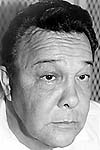
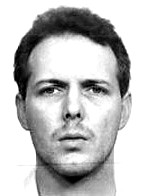
Rudy Esquivel
Murderer Ervil LeBaron
Murderer · USA · 1972
Ervil Morrell LeBaron (1925 to August 16, 1981) was the leader of a polygamous…
35 victims
Ervil LeBaron
Murderer · USA · 1972
Ervil Morrell LeBaron (1925 to August 16, 1981) was the leader of a polygamous…
35 victims
 Brian Kevin Rosenfeld
Murderer · USA · 1985
Brian Kevin Rosenfeld Brian Kevin Rosenfeld was sentenced to three concurrent l…
23 victims
Brian Kevin Rosenfeld
Murderer · USA · 1985
Brian Kevin Rosenfeld Brian Kevin Rosenfeld was sentenced to three concurrent l…
23 victims
 Marvin Gray
Murderer · USA · 1975
Marvin Gray was convicted killer who claimed responsibility for 23 slayings and…
23 victims
Marvin Gray
Murderer · USA · 1975
Marvin Gray was convicted killer who claimed responsibility for 23 slayings and…
23 victims
 Yahweh ben Yahweh
Murderer · USA · 1980
Yahweh ben Yahweh was born and legally named Hulon Mitchell Jr. (October 27, 19…
23 victims
Yahweh ben Yahweh
Murderer · USA · 1980
Yahweh ben Yahweh was born and legally named Hulon Mitchell Jr. (October 27, 19…
23 victims
 Dallas Bernard Holiday
Murderer · USA · 1986
Dallas Bernard Holiday Holiday was sentenced to death for the murder. The sente…
1 victim
Dallas Bernard Holiday
Murderer · USA · 1986
Dallas Bernard Holiday Holiday was sentenced to death for the murder. The sente…
1 victim
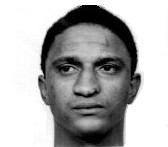 David Hicks
Murderer · USA · 1988
David Hicks was executed by lethal injection in Texas on January 20, 2000. Ocol…
1 victim
David Hicks
Murderer · USA · 1988
David Hicks was executed by lethal injection in Texas on January 20, 2000. Ocol…
1 victim
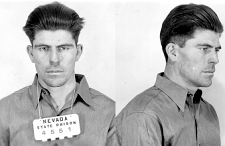 Raymond Plunkett
Murderer · USA · 1942
Raymond Plunkett was executed in the Nevada State Prison on June 30, 1944. He w…
1 victim
Raymond Plunkett
Murderer · USA · 1942
Raymond Plunkett was executed in the Nevada State Prison on June 30, 1944. He w…
1 victim
- Gender
- male
- Country
- USA
- Location
- Harris County, Texas, USA
- Date of birth
- 1936
- Age at first offence
- 42
- Characteristics
- rape, history of mental illness
- Victim profile
- Timothy Hearn, 28 ( undercover police Officer )
- Method of murder
- Shooting
- Date(s) of murder
- June 8, 1978
- Years active
- 1978
- Date of arrest
- —
- Status
-
Executed
Executed by lethal injection in Texas on June 9, 1986
Case record: Rudy Ramos Esquivel (No. 606)
Timeline
- June 9, 1986 — Rudy Ramos Esquivel was executed by lethal injection in Texas.
- June 8, 1978 — Esquivel fatally shot undercover police officer Timothy Hearn, 28, as Esquivel attempted to arrest him and two women for possessing heroin outside a Harrisburg-area restaurant.
- 1978 — Esquivel was indicted for the murder of Houston police officer Timothy Hearn during an incident in which Esquivel also wounded officer Murry Jordan; Esquivel pleaded self-defense and presented witnesses in support of that claim.
- 1978 — Esquivel was convicted by a jury and sentenced to death for the murder of a police officer.
- 1980 — The Texas Court of Criminal Appeals affirmed Esquivel’s conviction and sentence, 595 S.W.2d 516.
- 1980 — The Supreme Court denied certiorari, 449 U.S. 986, 101 S.Ct. 408, 66 L.Ed.2d 251.
- April 30, 1986 — Batson v. Kentucky was rendered by the Supreme Court.
- June 5, 1986 — Esquivel filed an application for stay of execution and an original application for writ of habeas corpus with the Texas Court of Criminal Appeals.
- June 6, 1986 — The Texas Court of Criminal Appeals denied the stay of execution and all relief requested in the writ application.
- June 6, 1986 — A district court order stayed the execution of Rudy Ramos Esquivel scheduled for June 9, 1986.
- June 7, 1986 — The United States Court of Appeals for the Fifth Circuit vacated and annulled the district court’s order staying the execution, after considering filings and conference-call oral arguments.
- June 8, 1986 — A Federal appeals court reinstated the scheduled execution Monday of Rudy Ramos Esquivel.
- Sept. 22, 1978 — The United States Court of Appeals for the Fifth Circuit affirmed the district court’s denial of Esquivel’s habeas corpus petition (in Rudy Esquivel v. W. J. Estelle, Jr., Director, Texas Department of Corrections, Respondent-appellee; No. 74-2785).
Background
Rudy Ramos Esquivel was executed by lethal injection in Texas on June 9, 1986.
Esquivel was a high school graduate or GED holder and was 50 years old (42).
Esquivel had been sentenced to 99 years in prison in 1953 for a gang rape. He had a history of burglary, robbery, abduction, and assault that dated to his youth.
Esquivel claimed he was framed. He sought more time for his lawyers to prepare evidence supporting an assertion that Hispanic Americans were improperly excluded from the jury at his trial.
Esquivel maintained that the State of Texas exercised its peremptory challenges in a manner that systematically excluded Hispanics from the jury in violation of Batson v. Kentucky.
The offence
On June 8, 1978, Esquivel fatally shot undercover police officer Timothy Hearn, 28, during an incident in which Esquivel attempted to arrest Hearn and two women for possessing heroin outside a Harrisburg-area restaurant.
Esquivel wounded Hearn’s partner, officer Murry Jordan.
Esquivel pleaded self-defense and presented witnesses in support of that claim.
Esquivel was sentenced to death by a jury for the murder of a police officer.
Investigation
The federal habeas materials stated that the federal habeas court made an effort to uncover old newspaper reports that might have shown whether the defense attorney was present at the sentencing, but none were available. The legal destruction of the state court records proved another impediment to resolution of that issue.
Arrest
The record described an incident in which Esquivel fatally shot undercover police officer Timothy Hearn and wounded officer Murry Jordan.
Trial
Esquivel was indicted in 1978 for the murder of Houston police officer Timothy Hearn.
At trial, Esquivel pleaded self-defense and presented witnesses in support of that claim.
The jury convicted Esquivel and sentenced him to death.
Esquivel was represented at his state trial by an appointed attorney who was now dead.
No appeal was taken after the state trial, and twenty years later Esquivel sought state habeas relief.
Esquivel’s habeas filings later challenged a limitation placed by the state trial judge on his counsel’s ability to interrogate prospective jurors during voir dire as to their understanding of the words “deliberately” and “probability” as used in Tex.Code Crim.Proc.Ann. art. 37.071(b)(1) & (2) (Vernon 1981).
(b) On conclusion of the presentation of the evidence, the court shall submit the following issues to the jury:
(1) whether the conduct of the defendant that caused the death of the deceased was committed deliberately and with the reasonable expectation that the death of the deceased or another would result;
(2) whether there is a probability that the defendant would commit criminal acts of violence that would constitute a continuing threat to society....
(Emphasis added.)
Sentencing
After Esquivel’s 1953 rape conviction, Esquivel sought habeas corpus claiming he was not represented by counsel at the sentencing phase of his trial and that he was not fully informed of his right to appeal.
The district court adopted the state court’s factual findings and found that Esquivel’s counsel was present during sentencing and that Esquivel had been adequately informed of his right to appeal because the state trial judge told him that he could appeal his case.
The appellate opinion described a finding that an attorney was present as a specific historical fact, and stated that the district court was bound to accept the state court’s finding unless the record showed an inadequate basis for that finding.
The state habeas court heard Esquivel’s testimony and that of two former district attorneys. One district attorney did not remember whether the defense attorney was present. The other assistant district attorney, Mr. Cahoon, testified that Esquivel’s attorney was present. Cahoon also testified that in potential capital cases, such as Esquivel’s, there was an established practice in Harris County of having the defense attorney present at the sentencing.
During the sentencing phase, the jury was asked “whether the conduct of the defendant in killing the deceased was unreasonable in response to the provocation, if any, of the deceased.” The jury answered that inquiry adverse to Esquivel.
Appeals
Habeas corpus: counsel presence and appeal rights (Sept. 22, 1978)
The United States Court of Appeals for the Fifth Circuit affirmed the district court’s denial of Esquivel’s habeas corpus petition (Rudy R. Esquivel, Petitioner-appellant, v. W. J. 74-2785).
Esquivel had sought habeas corpus claiming:
- After his 1953 rape conviction he was not represented by counsel at the sentencing phase of his trial.
- He was not fully informed of his right to appeal.
The appellate court stated it found no merit in Esquivel’s contentions and affirmed the district court. It rejected Esquivel’s argument that he was not adequately informed of his appeal rights.
The opinion stated that the standard announced in Lumpkin v. Smith did not apply retroactively to convictions prior to Lumpkin’s finality. It stated that the standard prevailing at the time of Esquivel’s conviction required that an appointed attorney tell his client that the client had a right to appeal, and that it did not require more.
The opinion stated that although the state trial court was not required to so inform Esquivel, it considered the information it gave him sufficient to bar habeas relief, and stated that the fact that the state trial court informed Esquivel reduced any default of his appointed counsel to harmless error.
The appellate opinion stated that the judgment of the district court was AFFIRMED.
Habeas corpus: voir dire limits and mitigating guidance (Nov. 19, 1985)
The United States Court of Appeals for the Fifth Circuit affirmed the denial of Esquivel’s petition for habeas corpus (791 F.2d 350 Rudy Ramos ESQUIVEL, Petitioner-Appellee, v. O.L. McCOTTER, Director, Texas Department of Corrections, Respondent-Appellant; No. 86-2411).
The opinion stated that Esquivel’s second claim was that the Texas death-penalty scheme did not pass constitutional muster because it failed to provide the jury with adequate guidance in its consideration of mitigating circumstances.
The opinion stated that the Supreme Court had held in Jurek v. Texas that the Texas statute was reviewed and approved, and in Zant v. Stephens that the Constitution did not require trial judges to guide jury consideration of aggravating and mitigating circumstances by specifically instructing jurors on how to balance those circumstances.
It stated that the record showed the jury considered mitigating self-defense factors, including the inquiry “whether the conduct of the defendant in killing the deceased was unreasonable in response to the provocation, if any, of the deceased,” and that the jury answered that inquiry adverse to Esquivel.
Execution stay vacated; Batson retroactivity and jury selection claims (June 7, 1986)
O.L. McCotter, Director, Texas Department of Corrections, filed a motion in the United States Court of Appeals for the Fifth Circuit asking the appellate court to vacate the order entered by the district court for the Southern District of Texas on June 6, 1986, staying the execution of Rudy Ramos Esquivel scheduled for June 9, 1986.
The Fifth Circuit concluded that the trial court erred and abused its discretion in entering the stay order, and it vacated and annulled the order.
The opinion stated that:
- On June 5, 1986, Esquivel filed an application for stay of execution and an original application for writ of habeas corpus with the Texas Court of Criminal Appeals.
- He alleged peremptory challenges were used to systematically exclude Hispanics from the jury in violation of Batson v. Kentucky.
- On June 6, 1986, the Texas Court of Criminal Appeals denied the stay and relief, stating that no prima facie showing had been made and that examination of the transcript showed no Spanish-surnamed individuals were peremptorily challenged.
The opinion included a statement of the Texas Court of Criminal Appeals’ ruling:
The Court is of the opinion that no prima facie showing has been made by applicant of any violation of Batson v. Kentucky, supra. Additionally, an examination of the transcript in the case reveals that no Spanish-surnamed individuals were peremptorily challenged by the State at applicant's trial.
The Fifth Circuit opinion described Esquivel’s counsel’s explanation and the content of Esquivel’s affidavit. It stated that Esquivel’s counsel informed the court that the allegation was based on information received from Jim Keegan, attorney employed by the Staff Counsel for Inmates at the Texas Department of Corrections, and that Esquivel’s affidavit contained a general statement that the state struck prospective jurors with Spanish surnames, without details.
The opinion reproduced the entirety of the affidavit text:
My name is Rudy Ramos Esquivel, and in 1978 I was convicted in Harris County, Texas under Cause No. 280748, of Capital Murder. There were Hispanics and/or Mexican Americans on the jury panel from which the jury which tried and convicted me was selected, but all the Hispanics and/or Mexican Americans were stricken by the State. There were no Hispanics and/or Mexican Americans on the jury which tried and convicted me.
The Fifth Circuit stated that the allegations in the petition and the general attestation in Esquivel’s affidavit were not supported by the record of the state trial, as found by the Texas Court of Criminal Appeals and confirmed by examination of the state trial transcript by a member of the panel.
It stated that the state exercised 11 of its 15 peremptory challenges and that none was of a person with a Spanish surname. It stated that the record reflected all but two listed a religious preference of Protestant. It stated that Esquivel exercised all 15 of his challenges, none having been used against a person with a Spanish surname. It stated that just over a score of the venire members were excused for cause, either at the request of the state or of the defendant, or by the court sua sponte, and that three bore Spanish surnames.
The opinion stated that a finding that no Spanish-surnamed individual was peremptorily challenged was presumed correct under 28 U.S.C. Sec. 2254(d) and Sumner v. Mata.
The opinion concluded that Batson v. Kentucky was not to be given retroactive application in federal habeas proceedings, and it discussed retroactivity standards under Linkletter v. Walker, Stovall v. Denno, and Solem v. Stumes.
The opinion stated that it was persuaded Batson should be given prospective application only in federal habeas proceedings, and that Esquivel’s application for habeas relief was without merit.
Accordingly, it vacated the order staying the execution.
Outcome
His last statement was: “Goodbye to all my friends; be cool. Thank you for being my friends. Give my love to everybody.”
Aftermath
The record described that the scheduled execution was reinstated after the Federal appeals court reinstated the scheduled execution Monday of Rudy Ramos Esquivel, and that his lawyers had appealed to the United States Supreme Court after the appeals court reinstatement and after the Texas Court of Criminal Appeals refused to block the execution.
Other details
- Esquivel’s legal challenges included assertions that:
- he was not represented by counsel at the sentencing phase after his 1953 rape conviction;
- the Texas death-penalty scheme failed to provide adequate guidance on mitigating circumstances; and
- prospective jurors were improperly limited on voir dire regarding the words “deliberately” and “probability.”
- The appellate materials referenced the Supreme Court’s decision in Jurek v. Texas and Zant v. Stephens.
- The appellate materials referenced Milton v. Procunier (and cert. denied) as resolving Esquivel’s voir dire challenge.
- The appellate materials referenced multiple decisions and standards for retroactivity including:
- Shea v. Louisiana,
- United States v. Johnson,
- Linkletter v. Walker,
- Stovall v. Denno,
- Solem v. Stumes.
- The appellate materials included discussion that Batson primarily concerned safeguarding a person accused of crime against the arbitrary exercise of power by prosecutor or judge and addressed allocation of power and function between judge and jury.
Spotted an error, or have more information about this case?