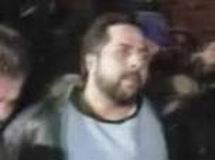
Rashid Baz
Murderer Brian Kevin Rosenfeld
Murderer · USA · 1985
Brian Kevin Rosenfeld Brian Kevin Rosenfeld was sentenced to three concurrent l…
23 victims
Brian Kevin Rosenfeld
Murderer · USA · 1985
Brian Kevin Rosenfeld Brian Kevin Rosenfeld was sentenced to three concurrent l…
23 victims
 Russell Ellwood
Murderer · USA · 1991
Russell Ellwood was a former taxi driver. Authorities suspected him of killing…
20 victims
Russell Ellwood
Murderer · USA · 1991
Russell Ellwood was a former taxi driver. Authorities suspected him of killing…
20 victims
 Robert Martines Perez
Murderer · USA · 1994
Name: Robert Martines Perez · Other name used in proceedings: Robert Martinez P…
15 victims
Robert Martines Perez
Murderer · USA · 1994
Name: Robert Martines Perez · Other name used in proceedings: Robert Martinez P…
15 victims
 Billy Frank Vickers
Murderer · USA · 1993
Billy Frank Vickers Vickers was executed by lethal injection in Texas on Januar…
14 victims
Billy Frank Vickers
Murderer · USA · 1993
Billy Frank Vickers Vickers was executed by lethal injection in Texas on Januar…
14 victims
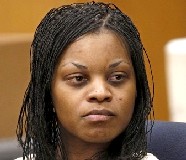 Tivasha Logan
Murderer · USA · 2009
Tivasha Logan was sentenced to life in prison without parole on July 11, 2012 a…
1 victim
Tivasha Logan
Murderer · USA · 2009
Tivasha Logan was sentenced to life in prison without parole on July 11, 2012 a…
1 victim
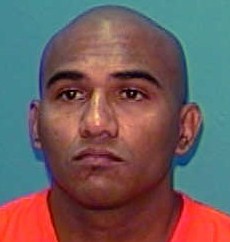 Noel Doorbal
Murderer · USA · 1995
Noel Doorbal (DOB: 12/21/71) was sentenced to death on 07/17/98. Eleventh Judic…
2 victims
Noel Doorbal
Murderer · USA · 1995
Noel Doorbal (DOB: 12/21/71) was sentenced to death on 07/17/98. Eleventh Judic…
2 victims
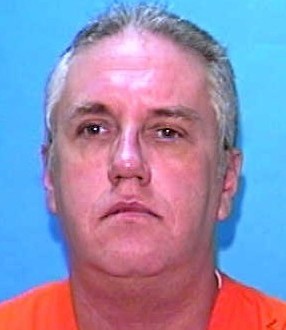 Jim Eric Chandler
Murderer
Jim Eric Chandler was convicted in the Nineteenth Judicial Circuit, Indian Rive…
1980 victims
Jim Eric Chandler
Murderer
Jim Eric Chandler was convicted in the Nineteenth Judicial Circuit, Indian Rive…
1980 victims
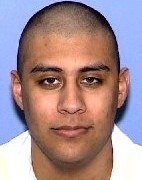 Moises Sandoval Mendoza
Murderer · USA · 2004
Moises Sandoval Mendoza was convicted of capital murder for the death of Rachel…
1 victim
Moises Sandoval Mendoza
Murderer · USA · 2004
Moises Sandoval Mendoza was convicted of capital murder for the death of Rachel…
1 victim
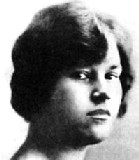 Edith Thompson
Murderer · United Kingdom · 1922
Edith Jessie Thompson (Edith Graydon; 25 December 1893 – 9 January 1923) was a…
1 victim
Edith Thompson
Murderer · United Kingdom · 1922
Edith Jessie Thompson (Edith Graydon; 25 December 1893 – 9 January 1923) was a…
1 victim
- Gender
- male
- Country
- USA
- Location
- Brooklyn, New York, USA
- Date of birth
- 1966
- Age at first offence
- 28
- Characteristics
- hate crime
- Victim profile
- Aaron Halberstam, 16 (rabbinical seminary student)
- Method of murder
- Shooting
- Date(s) of murder
- March 1, 1994
- Years active
- 1994
- Date of arrest
- Next day
- Status
-
Imprisoned
Sentenced to 141 years in prison with no possibility of parole on January 18, 1995
Case record: Rashid Baz — Brooklyn Bridge Shooting
Background
Rashid Baz was Lebanese-born. He was under arrest after the shootings and later confessed to the shootings. He was convicted of second-degree murder and received a sentence of 141 years in prison with no possibility of parole.
After the Brooklyn Bridge Shooting, the American Jewish Committee produced a review and assessment examining the murder of Aaron Halberstam, the 16-year-old rabbinical seminary student murdered in the Brooklyn Bridge shooting on March 1, 1994. The review described the Middle Eastern context in which the attack occurred and discussed lessons to be learned for U.S. counter-terrorism policy.
The review also discussed a broader issue of classification under New York State law without a full examination of the Middle Eastern political context that allegedly provided motivation for Baz’s attack. It stated that while determination of motive was not necessary for the successful prosecution of a murder case, understanding motive was instrumental in raising awareness of government agencies to the potential for recurrence of such attacks.
The offence
On March 1, 1994, Rashid Baz opened fire three times on a white van transporting 15 Lubavitch Chasidic rabbinical seminary students while they traversed the southbound ramp of the Brooklyn Bridge. The attack occurred as the students traveled from Manhattan to Brooklyn.
The incident was described as occurring on the ramp leading from the Franklin D. Roosevelt Drive to the Brooklyn Bridge. The review described that the students were returning home from the Manhattan Ear, Eye and Throat Hospital after Rabbi Menachem Mendel Schneerson had undergone cataract surgery earlier that morning.
Baz fired from the passenger window of his car at the rear windows and right passenger side windows of the van with a Glock 9-millimeter semi-automatic pistol and a 9-millimeter Cobray machine gun. He then pursued the van across the span of the bridge and strafed the driver’s side with machine gun fire until the firing mechanism jammed. He then picked up the Glock semi-automatic pistol placed on the floor of the front seat and fired for a third time until that weapon became jammed as well.
The review stated that a third weapon that Baz had taken in the trunk was a 12-gauge Streetsweeper shotgun, which was not used in the attack.
Two students were described as gravely injured. Aaron Halberstam and Nachum Sasonkin were stated as shot in the back of the head during the attack. Two other students were described as injured. The review further stated that on March 5, 1994, four days after the attack, Aaron Halberstam died.
During the incident, the review included specific statements about Baz shouting and hailing in Arabic while following the fleeing van. It stated that Baz followed the fleeing van with shouts of "Kill the Jews" and hailed in Arabic.
Victims and injuries
Aaron Halberstam was a 16-year-old rabbinical seminary student. He was shot in the head and died four days later in the hospital.
Nachum Sasonkin was 18 years old. He was shot in the head and underwent surgery to relieve pressure on his brain. The review stated he still had a bullet lodged in his brain, made a recovery, was deaf in one ear, and had trouble walking unaided.
Two other students were named with ages: Yaakov Schapiro (17) and Levi Wilhelm (18). The review stated that they suffered less serious gunshot wounds; one lost part of his intestines.
The review also stated that 14 boys on the van would carry trauma from these experiences for the rest of their lives.
Investigation
The review stated that initial media reports of the investigation into the Brooklyn Bridge shooting related Rashid Baz’s version of the incident in which he claimed the shooting resulted from a traffic dispute. During the trial, it stated that Baz’s motivation was demonstrated through testimony from his own psychiatrist indicating that he was enraged over the incident in Hebron and carried out the shooting as an act of vengeance.
It also stated that an FBI reclassification occurred later, reclassifying the shootings as "the crimes of a terrorist." After the conviction, the Halberstam family and others wanted the case reclassified as a terrorist attack and wanted further investigation into possible terrorist links.
Arrest
The review stated that soon after Baz strafed the van of students, he drove his damaged car to a Brooklyn repair shop and shoved a gun against an employee’s head, demanding: "Fix my car and fix it fast," and that the employee of the Hilal Auto Repair Service in Red Hook contacted police.
It described that Baz was arrested on March 2, 1994. Baz was identified as 28 and a Lebanese national. The review stated that he was arrested at 2:30 a.m. at a 242 45th St., Brooklyn residence he shared with an aunt and uncle.
The review also stated that Bassam Reyati (27) was arrested. It described Reyati as running the Pioneer Car Service that employed Baz and owned the Chevrolet Impala driven by the suspect during the alleged spree. It stated that Hilal Abd Al-Aziz Muhammad (32), described as owner of the auto repair shop, was also arrested and that he was an acquaintance of Baz.
The review stated that investigators charged Reyati and Muhammad with hindering prosecution and illegal weapons possession.
The review described four illegal weapons found in Reyati’s home: a 9mm Cobray handgun, a Glock 17 semiautomatic, a "street sweeper" 12-guage shotgun, and a .380-cal semiautomatic pistol. It stated police recovered a stun gun, a bulletproof vest, and two 50-round ammunition clips for the Cobray.
The review stated that Baz told police he bought the weapons after being robbed six weeks ago.
It stated that detectives used search warrants for the repair shop and the blue 1978 Impala found nearby the Hilal Auto Repair Shop. The review described that detectives retrieved shell casings that matched bullets fired at the students.
The review stated that spent shells were tossed into a dumpster after Baz cleaned out the vehicle at the 237 Hamilton Ave. shop, not far from the bridge.
It stated that search warrants were executed for Baz’s 45th Street apartment and an adjacent hallway. The review stated that anti-Jewish literature was found in the apartment, which was leased to his uncle.
Trial
During the trial, the review described the defense’s position that Baz suffered from post-traumatic stress disorder due to childhood exposure to violence during the Lebanese Civil War. It stated that the defense argued Baz’s actions were triggered by the killing of 29 Muslims four days earlier by Baruch Goldstein in Hebron.
The review stated that the jury rejected this argument and that on December 1, 1994 Baz was convicted on one count of murder, 14 counts of attempted murder, and one count of criminal use of a firearm.
The review also stated that Baz sat placidly throughout the hour-long proceeding and chose not to speak on his own behalf.
It described that a psychologist and a psychiatrist testified for the defense. It stated the testimony included that Baz had joined one of the armed militias at age 9 and had suffered serious trauma while growing up amid warfare.
A prosecution psychiatrist was described in the review as describing Baz as an angry man with an antisocial personality.
Trial quotations and disputed motive evidence
The review included a quoted exchange from cross-examination of Baz’s psychiatrist, Dr. Douglas Anderson:
Q. You mentioned earlier the incident in Hebron, the massacre in Hebron? Anderson: Yes.
Q. Do you know when that incident was in relation to the events on the Brooklyn Bridge? Anderson: That was Friday, February 25th.
Q. That would be some three or four days before the event on the Brooklyn Bridge? Anderson: Four days.
Q. In your opinion, Doctor, did the Hebron(49) incident or Mr. Baz’s reaction to the Hebron incident have any impact on his state of mind during that time? Anderson: Yes. It had an enormous impact.
Q. In what way? Anderson: He was enraged. He was absolutely furious. He was - - I think Hebron put him from condition yellow to condition red(50).
The review also quoted Baz from his videotaped confession:
Q. How upset were you?
Baz: I was upset, but not upset to go do something.
Q. Were you upset to say something?
Baz: To say something?
Q. I mean, did you make comments about it? You know, about what should be done about that?
Baz: Should be done about that?
Q. Yeah. In other words, did you, when you were talking to your friends did you express your view of how you - - how you as - - a Lebanese man from Beirut - - Baz. [Nods affirmatively.]
Q. - - should deal with the situation? Like what had happened in Lebanon?
Baz: I told them it’s not fair.
Ahum. Baz: And they should take revenge.
Q. And they should what?
Baz: Take revenge.
Q. That they should take revenge. Baz: Right.
Q. That who should take revenge?
Baz: The people over there(53).
The review also quoted a testimony excerpt describing a sermon and included the following quoted statement attributed to an imam as reported in testimony:
"this takes the mask off of the Jews. It shows them to be racist and fascist as bad as the Nazis. Palestinians are suffering from the occupation and it’s time to end it."
The review also included additional testimony describing Baz expressing that all Arabs and Muslims should feel the same way and that the distinction between Israelis and all other Jews, including American Jews, had become blurred.
Sentencing
The review stated that on December 1, 1994 Baz was convicted of murder in the second degree with intent to cause the death of Aaron Halberstam in the Supreme Court of the State of New York. It also stated he was convicted of fourteen counts of attempted murder in the second degree with intent to cause death and criminal use of a firearm in the first degree.
The review stated that on January 18, 1995 Baz received a sentence of 141 years in prison.
It also stated that Judge Harry Rothwax sentenced Baz to 25 years to life for the second-degree murder charge and consecutive terms of 8 1/3 years to 25 years for the attempted murder counts. It further stated that Rothwax said Baz deserved the "most severe punishment."
Appeals
The review described that the case was reopened in August 1999 and was still pending. It also stated that over the last six years the Halberstam family made efforts to have the case investigated at the Federal level and wanted the attack reclassified as an act of terrorism.
Outcome
The review stated that on August 26, 1999 the Justice Department and FBI agreed to open an investigation into Baz. It stated that the investigation did not yield any new leads connected to terrorist organizations but that the Justice Department did formally reclassify the incident as an act of terrorism.
The review additionally stated that the Brooklyn Bridge Shooting had never been recognized as an act of terrorism and that it had been characterized as "road rage."
The review cited an Assistant District Attorney Armand Durastanti quoted as follows:
All of these things culminated on the morning of March 1 with the defendant committing an act which, based on the psychiatric testimony that we’ve heard in this case, can only be considered as an act of terrorism; insofar as what appears to be clear is that the defendant targeted these youths, targeted innocent civilians to make what was in essence a political statement. In this case, the political statement based on the political situation in the Middle East, which, as we heard from the defense psychiatrist, the defendant has always deeply personalized(65). And more particularly on the events that had occurred three or four days earlier in Hebron, where a Jewish settler from Brooklyn had killed a number of Arabs praying at a mosque. It seems clear that the defendant targeted these boys because they were obviously Jewish (66).
It further stated that ten days after the Brooklyn Bridge shooting, the Hamas movement in Gaza released a communiqué praising Rashid Baz’s attack on the van and bestowed upon him the title of mujahid. The review quoted the communiqué:
We will retain the cry of condemnation on your heads and our hand is backed by millions of Muslim hands that are ready to carry out their execution role against Jews.(68)
It also quoted additional lines from the communiqué:
Only Islam is the legitimate and exclusive representation of our people and its predicament; and the living proof of this is namely the holy warrior and Lebanese immigrant Rashid Al-Baz, the son of Islam who took action against the souls of the evil dregs of the Jews in Brooklyn in America. His deed proclaims that you [i.e., the Jews ] do not have the ability to tear Palestine away from our hearts, may a curse be on your heads.(69)
Aftermath
The review described that ten thousand mourners gathered and that the hearse drove Halberstam for a final tour of Crown Heights, passing the yeshiva on Troy Avenue where he studied and the Lubavitcher Rebbe's former home on President Street, stopping in front of the Halberstam home on Eastern Parkway. The review described that Ari’s father, mother and siblings made an incision into their clothing and said, as customary for the Jewish mourner, "Blessed is the True Judge." It further described a procession with more than 250 police officers to guard against incidents.
The review described that Rabbi Sholom Ber Hecht, a cousin of the Halberstam family, addressed the masses and delivered a eulogy. It included the following quotes attributed to Rabbi Sholom Ber Hecht:
"When the Torah scroll was read in the main synagogue, a mistake, a defect was found in the Torah. The word echod; meaning oneness or unity, was found to be written incorrectly," rendering the entire scroll unfit for use.
"Upon reflection, an amazing thought comes to mind. The Hebrew letters of the word echod comprise the initial letters of Halberstam family, Aaron, the child, and the parents, Chesed and Devorah. "
"The unity of this family has now been shattered by a terrorist's bullet. Our sages tell us, every Jew is a letter in the Sefer Torah. When the life of one family is devastated, then the entire Sefer Torah is affected; the life of the entire Jewish people is shattered and, clearly, this is a sign from on High that there is imperfection in the unity of the Jewish people... He has been offered up as a sacrificial lamb, and his life has been taken as a family and the entire Jewish people."
The review also included a quote attributed to the mourners during burial (Kaddish):
"May His Great Name grow exalted and sanctified in the world which He will create anew, where He will resuscitate the dead...and rebuild the city of Jerusalem."
The review stated that after the funeral, neighbors provided the mourners with a first meal, described as a "meal of condolence," and described customary eating of round foods such as eggs, lentils, and bagels. It described that the circle had no opening and was symbolic of life and death and the inability to yet express grief.
The review also described that the entrance ramp to the Brooklyn Bridge on the Manhattan side was named the Ari Halberstam Memorial Ramp in memory of the victim, and that this renaming occurred in 1995.
Timeline
- March 1, 1994 — Rashid Baz opened fire on a van carrying 15 Lubavitch Chasidic rabbinical seminary students on the Brooklyn Bridge ramp.
- March 2, 1994 — Rashid Baz was arrested at 2:30 a.m. at a 242 45th St., Brooklyn residence; Bassam Reyati and Hilal Abd Al-Aziz Muhammad were also arrested.
- December 1, 1994 — Rashid Baz was convicted in Supreme Court of the State of New York of murder in the second degree with intent to cause the death of Aaron Halberstam, 14 counts of attempted murder in the second degree, and criminal use of a firearm in the first degree.
- January 18, 1995 — Rashid Baz was sentenced to 141 years in prison with no possibility of parole; consecutive terms were imposed for attempted murder counts.
- May 17, 1995 — Hilal Abd Al-Aziz Muhammad was sentenced to five years of probation for hindering prosecution.
- August 26, 1999 — The Justice Department and FBI agreed to open an investigation into Rashid Baz.
- October 16, 1996 — Bassam Reyati was sentenced to 5 years of probation and a $1000 fine for hindering prosecution.
- March 5, 1994 — Aaron Halberstam died four days after the attack.
Other details
The review described details of the vehicle and route, including that the van was a white Dodge Ram 350 carrying 15 students and that the suspect drove a blue Chevrolet Caprice equipped with a submachine gun, two 9mm guns, and a "street sweeper" shotgun.
It also described that the attack began at 10:24 A.M. on the ramp leading from the Franklin D. Roosevelt Drive to the Brooklyn Bridge, and that the van was among vehicles returning from Manhattan Eye, Ear, and Throat Hospital where Rabbi Schneerson was being treated.
The review described that the suspect initially followed the Rebbe's entourage to the Brooklyn Battery Tunnel, and when it was closed to other vehicular traffic, he traveled north to the Brooklyn Bridge.
It also described that Baz followed the van after the first bursts, that two students stumbled out after the van stopped, and that after further gunfire the van sped off toward Brooklyn leaving two students on the bridge who were later picked up by an emergency medical technician.
It also described that Baz pursued the van with shouts of "Kill the Jews" hailed in Arabic, fired shots again at the passenger side, and that the van swerved off the bridge at the Cadman Plaza exit.
The review stated that the Wounded were immediately rushed to St. Vincent's Hospital.
The review described the sentencing and plea outcomes for other men connected to concealing evidence:
- It stated that Bassam Reyati admitted he helped Baz conceal evidence by removing the car's shattered windshield, placing it in the trunk, and leaving the car on the street near his office. It stated he was convicted of hindering prosecution and sentenced to 5 years of probation and a $1000 fine on October 16, 1996.
- It stated that Hilal Abd Al-Aziz Muhammad admitted he helped Baz dispose of evidence by concealing the weapons used in the attack, helping remove the car's broken windshield, throwing out shell casings, and calling Bassam Reyati to dispose of the vehicle. It stated he was convicted of hindering prosecution and sentenced to five years of probation on May 17, 1995.
The review described the Middle Eastern context and included multiple quoted statements unrelated to the Brooklyn Bridge attack testimony, including an FBI and Justice Department discussion and various quoted calls for violence. It also included the following quoted statement attributed to an Assistant District Attorney and other quoted materials.
The review included a quoted excerpt attributed to Hamas praising the attack, and additional material about terrorist ideology and political statements.
The review also discussed Baz’s background in Lebanon and the nature of Druze origins and religious identification. It described that Baz was born in 1965 and that his father was of Druze background and his mother was Palestinian Muslim. It described family interviews in Lebanese newspapers and stated that Baz identified as a Muslim and as Palestinian through wearing a Palestinian keffiyah during the Brooklyn Bridge shooting.
It stated that Baz crashed a borrowed car into the rear end of a car in front of him near Atlantic Avenue and declared, "I am a Muslim." It also stated that a Brooklyn neighbor asked Baz, "What are you Rashid? Catholic? Jewish? Muslim?" and Baz answered, "I don’t know."
It included an account of Baz requesting books about Islam be brought to prison for him after his arrest.
The review included a quoted testimony attributed to Muafaq Askar’s description of the sermon’s effect on Baz and included a quote attributed to the imam. It also included additional quoted statements attributed to Reyati about Baz being very angry after the Hebron massacre, including a statement that Baz said, "We’re supposed to kill all those Jews."
Spotted an error, or have more information about this case?