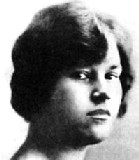
Edith Thompson
Murderer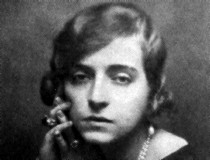 Marguerite Fahmy
Murderer · United Kingdom · 1923
Marguerite Fahmy faced a charge of murder in connection with the death of Ali K…
1 victim
Marguerite Fahmy
Murderer · United Kingdom · 1923
Marguerite Fahmy faced a charge of murder in connection with the death of Ali K…
1 victim
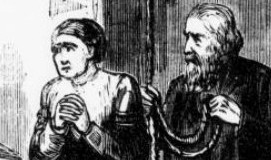 Margaret Waters
Murderer · United Kingdom · 1866
Margaret Waters was an English murderess who was hanged by executioner William…
19 victims
Margaret Waters
Murderer · United Kingdom · 1866
Margaret Waters was an English murderess who was hanged by executioner William…
19 victims
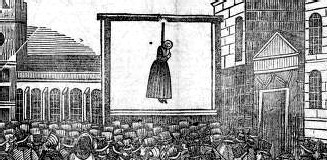 Catherine Wilson
Murderer · United Kingdom · 1854
Catherine Wilson was a British nurse who poisoned victims after befriending the…
7 victims
Catherine Wilson
Murderer · United Kingdom · 1854
Catherine Wilson was a British nurse who poisoned victims after befriending the…
7 victims
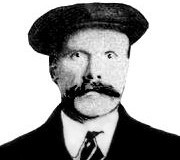 Albert Burrows
Murderer · United Kingdom · 1920
Albert Burrows (also named Albert Edward Burrows): married farm labourer who to…
4 victims
Albert Burrows
Murderer · United Kingdom · 1920
Albert Burrows (also named Albert Edward Burrows): married farm labourer who to…
4 victims
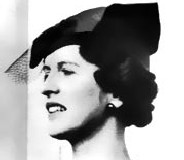 Florence Ransom
Murderer · United Kingdom · 1940
Florence Ransom was a middle-aged woman who was described as physically beautif…
3 victims
Florence Ransom
Murderer · United Kingdom · 1940
Florence Ransom was a middle-aged woman who was described as physically beautif…
3 victims
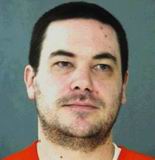 Robert Jackson
Murderer · USA · 1992
Robert W. Jackson, III — defendant; male; white · Elizabeth Girardi — victim ·…
1 victim
Robert Jackson
Murderer · USA · 1992
Robert W. Jackson, III — defendant; male; white · Elizabeth Girardi — victim ·…
1 victim
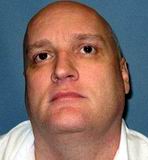 William Glenn Boyd
Murderer · USA · 1986
Name: William Glenn Boyd · Gender: M · Race: B · Date of birth: 1/6/1966 · Pris…
2 victims
William Glenn Boyd
Murderer · USA · 1986
Name: William Glenn Boyd · Gender: M · Race: B · Date of birth: 1/6/1966 · Pris…
2 victims
 Jeffrey Tokar
Murderer · USA · 1992
March 11, 1992 — Jeffrey Tokar picked up his girlfriend, Sandra Stickley, share…
1 victim
Jeffrey Tokar
Murderer · USA · 1992
March 11, 1992 — Jeffrey Tokar picked up his girlfriend, Sandra Stickley, share…
1 victim
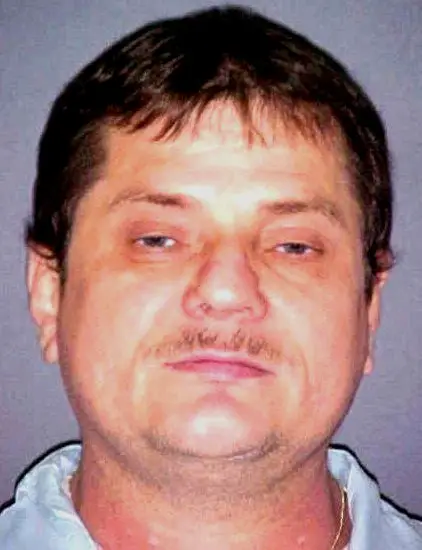 Terry Lyn Short
Murderer · USA · 1995
Terry Lyn Short was convicted in Oklahoma County of first-degree murder and fiv…
1 victim
Terry Lyn Short
Murderer · USA · 1995
Terry Lyn Short was convicted in Oklahoma County of first-degree murder and fiv…
1 victim
 Ambrose Sykes
Murderer · USA · 2004
Ambrose Sykes was sentenced to death on September 20, 2006. He was convicted of…
1 victim
Ambrose Sykes
Murderer · USA · 2004
Ambrose Sykes was sentenced to death on September 20, 2006. He was convicted of…
1 victim
 Julius Ricardo Young
Murderer · USA · 1993
Julius Ricardo Young was executed by lethal injection in Oklahoma on January 14…
2 victims
Julius Ricardo Young
Murderer · USA · 1993
Julius Ricardo Young was executed by lethal injection in Oklahoma on January 14…
2 victims
- Gender
- female
- Country
- United Kingdom
- Location
- London, England, United Kingdom
- Date of birth
- December 25, 1893
- Age at first offence
- 29
- Characteristics
- love triangle
- Victim profile
- Percy Thompson, 32 (her husband)
- Method of murder
- Stabbing with knife
- Date(s) of murder
- October 3, 1922
- Years active
- 1922
- Date of arrest
- Next day
- Status
-
Executed
Executed by hanging in Pentonville Prison on January 9, 1923
Overview
Edith Jessie Thompson (Edith Graydon; 25 December 1893 – 9 January 1923) was a British woman executed by hanging for the murder of her husband, Percy Thompson. Her case became a cause célèbre. Frederick Edward Francis Bywaters (27 June 1902 – 9 January 1923) was her partner in an affair and was also executed for the same murder.
Timeline
- 1909 — Edith Graydon met Percy Thompson.
- 1916 — Edith Thompson and Percy Thompson married.
- 1920 — Edith and Percy Thompson became acquainted with Freddy Bywaters.
- September 1921 — Bywaters was at sea and Edith Thompson wrote to him frequently during that time.
- September 1922 — Bywaters returned and they met again.
- October 3, 1922 — The Thompsons attended a performance at the Criterion Theatre in London’s Piccadilly Circus and were returning home when Percy Thompson was attacked and stabbed.
- December 6, 1922 — The trial began at the Old Bailey.
- December 11, 1922 — The jury returned a verdict of guilty; both Thompson and Bywaters were sentenced to death by hanging.
- January 9, 1923 — Edith Thompson was executed by hanging; Bywaters was also executed simultaneously.
- 1916 — (Marriage date stated) Edith Thompson married Percy Thompson.
- 1971 — Bodies of the executed women were exhumed for reburial elsewhere during a programme of rebuilding at the prison.
- 13 November 1993 — A grey granite memorial was placed on plot 117 and dedicated to the memory of the four women buried there.
Background
Edith Graydon was born on 25 December 1893 at 97 Norfolk Road in Dalston, London, and was the first of five children of William Eustace Graydon (1867–1941), a clerk with the Imperial Tobacco Company, and his wife, Ethel Jessie Liles (1872–1938), the daughter of a police constable.
During her childhood, Edith Graydon was described as a happy, talented girl who excelled at dancing and acting, was academically bright, and had a natural ability in arithmetic. After leaving school, she worked as a bookkeeper for a fabric importer. She established a reputation as a stylish and intelligent woman, was promoted by the company several times, and became their chief buyer, making regular trips to Paris on behalf of the company.
In 1909 Edith Graydon met Percy Thompson, and after a six-year engagement they married in 1916. They bought a house in Ilford in Essex and lived a comfortable life with their careers flourishing.
The case involved a relationship between Edith Thompson and Freddy Bywaters. By 1920 the couple became acquainted with Bywaters, although Bywaters and Edith Thompson had met nine years earlier when Bywaters had been a school friend of Edith’s younger brother. By 1920 Bywaters had joined the merchant navy. Edith Thompson was attracted to Bywaters, who was described as handsome and impulsive, and whose stories of travel around the world interested her. Percy was described as staid and conventional, while Bywaters represented a more dashing figure to Edith Thompson and more closely resembled her romantic ideal.
Edith Thompson was welcomed by Percy Thompson, and the trio holidayed on the Isle of Wight, joined by Edith’s sister. After their return, Percy invited Bywaters to lodge with them. Edith Thompson and Bywaters began an affair soon after. When Percy Thompson realised the affair, he confronted them, a quarrel broke out, and Percy ordered Bywaters from the house when Bywaters demanded that Percy divorce Edith Thompson.
Edith later described a violent confrontation with her husband after Bywaters left. She said her husband struck her several times and threw her across the room.
From September 1921 until September 1922 Bywaters was at sea, and during this period Edith Thompson wrote to him frequently. Upon his return, they met again.
The offence
On October 3, 1922, the Thompsons attended a performance at the Criterion Theatre in London’s Piccadilly Circus and were returning home when a man jumped out from behind some bushes near their home and attacked Percy Thompson.
After a violent struggle, during which Edith Thompson was also brutally knocked to the ground, Percy Thompson was stabbed. Percy Thompson was mortally wounded and died before Edith Thompson could summon help. The attacker fled.
Neighbours later reported hearing a woman screaming hysterically and shouting “no don’t” several times. By the time police arrived, Edith Thompson had still not composed herself.
Investigation and arrest
At the police station Edith Thompson appeared distressed and confided to police that she knew who the killer was, naming Freddy Bywaters. Believing herself to be a witness rather than an accomplice, Edith Thompson provided details of her association with Bywaters to the police.
As police investigated further, they arrested Bywaters. Upon discovering a series of more than sixty love letters from Edith Thompson to Bywaters, police arrested Edith Thompson as well.
The letters were described as the only tangible evidence linking Edith Thompson to the murders and as allowing for consideration of common purpose, specifically that if two people wish to achieve the death of a third and one person acts on the expressed intentions of both, both are equally guilty by law.
Both Edith Thompson and Bywaters were charged with murder.
Trial
The trial began on December 6, 1922 at the Old Bailey.
Bywaters co-operated completely. He led police to the murder weapon he had concealed after the murder and consistently maintained that he had acted without Edith’s knowledge.
The love letters were produced as evidence. Edith Thompson’s declarations within the letters described her love for Bywaters and a desire to be free of Percy Thompson. The letters included claims that she had ground a glass light bulb to shards and fed them to Percy Thompson mixed into mashed potato, and that she had fed him poison. The trial account stated that Percy had failed to die and had failed to become ill. Edith Thompson implored Freddy to “do something desperate”.
Thompson’s counsel urged her not to testify, stressing that the burden of proof lay with the prosecution and that there was nothing they could prove other than that she had been present at the murder.
Despite counsel’s advice, Edith Thompson insisted she would take the stand. Her testimony was described as damning and as involving a series of lies. Her demeanour was described as variously flirtatious, self pitying, and melodramatic, and it was said to have made a poor impression on the judge and jury, particularly when she contradicted herself.
When asked about the meaning of passages in her letters, she said, “I have no idea”.
Her counsel later stated that her vanity and arrogance had destroyed her chances for acquittal.
It was also said that her testimony negated positive testimonies from neighbours who had heard Thompson crying out in horror during her husband’s murder, and statements from police who dealt with the immediate investigation. Those statements described Thompson as being in a genuine state of shock and disbelief and attested to her assertions:
- “Oh god, why did he do it?”
- “I never wanted him to do it”
Bywaters stated that Edith Thompson had known nothing of his plans because he had not intended to murder Percy Thompson. He said his aim was to confront Percy Thompson and force him to deal with the situation. He claimed that when Percy reacted in a superior manner, Bywaters lost his temper. He repeatedly stated that Edith Thompson had made no suggestion that he kill Percy Thompson and that she did not know that he intended to confront him.
In discussing the letters, Bywaters stated that he had never believed Edith had attempted to harm her husband, but that he believed she had a vivid imagination fuelled by the novels she enjoyed reading. He said that in her letters she viewed herself in some way as one of these fictional characters.
Bywaters and Edith Thompson both were described as having been caught in lies and contradictions.
Sentencing
On December 11, 1922, the jury returned a verdict of guilty. Both Thompson and Bywaters were sentenced to death by hanging.
After sentencing, it was described that Thompson became hysterical and started screaming in court, while Bywaters loudly protested Thompson’s innocence.
Outcome
Thompson and Bywaters were executed by hanging on January 9, 1923.
Before and during the trial, Thompson and Bywaters were the subjects of critical media commentary. After the death sentences were imposed, public attitudes and media coverage shifted. Almost one million people signed a petition against the imposed death sentences. Bywaters attracted admiration for his fierce loyalty and protectiveness towards Thompson. Thompson was regarded as foolish, but sympathy was described as growing, including that hanging a woman was considered abhorrent, and that no woman had been executed in Britain since 1907.
Thompson stated that she would not hang. When her parents were allowed to visit her, she urged her father to simply take her home.
Despite the petition and a new confession from Bywaters in which he declared Thompson to be completely innocent, the Home Secretary, William Bridgeman, did not extend a reprieve.
A few days before the executions, Thompson was told of the date fixed and lost her composure. The last few days of her life were described as near hysteria, crying, screaming, moaning, and unable to eat. On the morning of her execution Thompson was heavily sedated but remained in an agitated state.
On January 9, 1923, Thompson was half carried to the scaffold in Holloway Prison, where she had to be held upright while the noose was fitted. Bywaters, who had tried since his arrest to save Thompson from execution, was hanged in Pentonville Prison. They were hanged simultaneously at 9:00 am, about half-a-mile apart, with Holloway and Pentonville prisons located in the same district.
Later, both bodies were buried within the walls of the prisons where they had been executed.
Critiques of the case and trial
The account described ongoing disputes and critiques regarding Edith Thompson’s guilt and the fairness of her conviction.
Rene Weis was said to echo suggestions that Edith Thompson was innocent of murder. The main basis for that argument was that there was no evidence that Edith was party to arranging the murder on the night in question. Weis’s discussion also involved views about what it meant to be “principal to murder in the second degree,” including support, assist, instigate, command, agree, and murder. The debate also concerned perceptions of Edith Thompson’s character.
A character and legal framing issue was described as involving differences between the trial Judge and Edith Thompson’s counsel. The trial Judge, Mr. Justice Shearman KC, labelled her as an adulterer, deceitful, and wicked and implied she was easily capable of murder. Her letters were described as full of “insensate silly affection” and “...full of the outpourings of a silly but, at the same time, wicked affection.” The Court of Appeal was said to have concurred with this approach.
Sir Henry Curtis Bennett KC attempted to cast her immorality as defensible in the context of the “glamorous aura” of a “great love.” The trial judge’s summing up was also described as focusing the case as only concerning “adulterer” and an (adulterous) wife.
Verbatim quotations attributed to Mr. Justice Shearman KC included:
"This is not an ordinary charge of murder....Am I right or wrong in saying that this woman is one of the most extraordinary personalities that you or I have ever met? ...Have you ever read...more beautiful language of love? Such things have been very seldom put by pen upon paper. This is the woman you have to deal with, not some ordinary woman. She is one of those striking personalities met with from time to time who stand out for some reason or another....You are men of the world and you must know that where there is a liaison which includes some one who is married, it will be part of the desire of that person to keep secret the relations from the other partner. It is not the sort of thing that they would bring to the knowledge of their partner for life."
The material also quoted Curtis Bennett later as saying:
"Was it not proved that she had posed to him (i.e. Bywaters) as a woman capable of doing anything - even murder - to keep his love? She had to: Bywaters wanted to get away from her."
The Court of Appeal’s endorsed description included:
"Now, the learned judge, in his summing-up to the jury, spoke of the charge as a common or ordinary charge of a wife and an adulterer murdering the husband. That was a true and appropriate description."
A quoted observation attributed to Young suggested:
"Mr. Justice Shearman frequently referred to Bywaters as "the adulterer," apparently quite unconscious of the fact that, to people of Bywaters' generation, educated in the ethics of dear labour and cheap pleasure, of commercial sport and the dancing hall, adultery is merely a quaint ecclesiastical term for what seems to them the great romantic adventure of their lives. Adultery to such people may or may not be "sporting," but its wrongness is not a matter that would trouble them for a moment. Sinai, for them, is wrapped in impenetrable cloud. And if we are not prepared to adapt the laws of Sinai to the principles of the night club and the thé dansant , I see no other alternative but to educate again our young in the eternal verities on which the law is based."
The Court of Appeal reasoning about the significance of the evidence and continuity of incitement was described as conceding deficits in direct arrangement evidence. The account described the Court of Appeal as reasoning that prior prolonged incitement revealed in letters, combined with an “extraordinary catalogue of lies,” meetings with Bywaters on the day of the murder, and the content of her last letter, was sufficient to convict her of arranging the murder.
The criticism also addressed the narrow approach to “principal in the second degree” and the meaning of “preconcerted arrangement.” It was also described that critiques alleged no direct evidence that Edith arranged the murder or consented to its commission on the night in question.
The account included claims that poison-plot evidence was challenged. It described that an autopsy on Percy Thompson failed to reveal evidence that he had been fed ground glass or any type of detectable poison. It also included a quoted line attributed to the Court of Appeal to show the relevance of letters even if they were uncertain:
"... if the question is, as I think it was, whether these letters were evidence of a protracted, continuous incitement to Bywaters to commit the crime which he did in the end commit, it really is of comparatively little importance whether the appellant was truly reporting something which she had done, or falsely reporting something which she merely pretended to do."
A further Court of Appeal quotation attributed to Bywaters included:
"Moreover "it matters not whether those letters show or, at any rate, go to show, that there was between this appellant and Mrs Thompson an agreement tending to the same end. Those letters were material as throwing light, not only upon the question by whom was this deed done, but what was the intent, what was the purpose with which it was done" said the Court of Appeal to Bywaters."
The account also described criticisms by Lewis Broad, arguing for separate trial and alleging prejudice in language directed at the jury, along with alleged misuse of letters by the prosecution. It listed items of criticism including:
- use of a 1500 word extract from 25,000 words in total
- censorship of many letters during the trial because they dealt with menstruation and orgasm
- only one unambiguous reference to poison in the five months preceding the murder
- suggestions of the meaning of uncertain phrases being made by the Crown to prejudice the jury
- the murder context suggesting no element of planning
- an assertion that there was nothing in the letters amounting to agreement
- a break in the chain of causation after Bywaters indicated he did not want to continue to see Edith, evidenced from letters Jun 20–Sept 12 1922
- an argument that the letters were part of a fantasy between the parties was not put forth to the jury
- the note that Home Office files were marked not to be opened for 100 years
The narrative included direct quotations attributed to Curtis-Bennett to Mr. Stanley Bishop, a journalist:
"She spoiled her chances by her evidence and by her demeanour. I had a perfect answer to everything which I am sure would have won an acquittal if she had not been a witness. She was a vain woman and an obstinate one. She had an idea that she could carry the jury. Also she realized the enormous public interest, and decided to play up to it by entering the witness-box. Her imagination was highly developed, but it failed to show her the mistake she was making."
It also included a quoted hypothetical criticism attributed to Young:
"If the defence had said on behalf of Mrs. Thompson, 'I did not murder Percy Thompson, I had nothing to do with it. I had no knowledge of it, and I was stunned and horrified when it took place, and I defy the prosecution to introduce any evidence with which that denial is not absolutely compatible,' and had rested on that, I do not think you could have found a British jury to convict her."
The Crown contention quoted in the account included:
"...that there was an agreement between these two persons to get rid of Mr. Thompson, or that, if there was not an actual agreement in terms, there was an instigation by Mrs. Thompson to get rid of him, on which Bywaters acted so as to kill him."
Judge Shearman KC’s instruction quoted in the account included:
"Now, I am going to ask you to consider only one question in your deliberations, and that is, was it an arranged thing between the woman and the man? I quite accept the law of the learned Solicitor-General that if you hire an assassin and say: 'Here is money,' and there is a bargain between them that the assassin shall go out and murder the man when he can, the person who hires the assassin is guilty of the murder it is plain common sense. I also accept the proposition that if a woman says to a man, 'I want this man murdered; you promise me to do it,' and he then promises her (she believing that he is going to keep his promise as soon as he gets an opportunity) and goes out and murders someone, then she also is guilty of murder."
The Court of Appeal’s described stance about redeeming features included a quoted phrase:
"exhibits from beginning to end no redeeming feature."
A quotation attributed to Broad about the judge’s summing up being “deadly, absolutely against her” was also included:
- “deadly, absolutely against her”
The account presented these critiques as part of an ongoing debate about legal fairness and evidential interpretation.
Imprisonment, execution procedure, and burial
The account described that Thompson was taken to Holloway Prison before execution, and Bywaters was taken to Pentonville Prison. They were placed in condemned cells.
The account described Thompson’s condition: she was said to have major mood swings and expected to be reprieved. The execution party was described as hearing a “ghastly moan” from Edith’s cell shortly before they entered the condemned cell. When John Ellis, the hangman, went in she was semi conscious as he strapped her wrists. She was carried from the condemned cell to the gallows by two warders and two assistants and held on the trap while Ellis did his job.
The account presented competing claims about blood following the hanging, including a suggestion by pathologist Bernard Spilsbury that it could have been caused by pregnancy and miscarriage, and another claim that it could have been due to inversion of the uterus. The account included other statements: that “Under English law the execution would have been staid until after she had given birth,” and that she likely would have been reprieved if pregnant under that practice.
It also reported that Thompson had been in custody for over three months before execution and that she had everything to gain from claiming to be pregnant. It stated that the Home Office files were marked not to be opened for 100 years.
The account stated that Thompson’s body was buried in an unmarked grave within the walls of Holloway Prison. It further stated that in 1971 the prison rebuilding programme exhumed bodies of the executed women for reburial elsewhere. With the exception of Ruth Ellis, the remains of the four women executed at Holloway—Edith Thompson, Styllou Christofi, Amelia Sach, and Annie Walters—were reburied in a single grave at Brookwood Cemetery in Surrey. The new grave remained unmarked for over twenty years and was acquired in the 1980s by René Weis and Audrey Russell.
On 13 November 1993, a grey granite memorial was placed on plot 117 dedicated to the memory of the four women buried there. The grave and plot were formally consecrated by the Reverend Barry Arscott of St. Barnabas, Manor Park, which was described as the church in which Edith Thompson was married in January 1916.
The memorial’s tombstone text included Edith Thompson’s epitaph:
"Sleep on beloved. Regrets. Her death was a legal formality"
It also stated that representatives of the Home Office did not inform Avis Graydon, Edith Thompson’s surviving sister, of the exhumation and of her right to take control of her sister’s funeral arrangements. Avis Graydon died in 1977 without ever knowing she had been reburied in Brookwood, and thus did not have the opportunity to visit the grave or erect a memorial over it.
The account stated that Bywaters’ remains still lay in an unmarked grave within the walls of HMP Pentonville, buried shortly after his execution in January 1923. It also stated that the remains of Percy Thompson were buried at the City of London Cemetery and that Edith Thompson’s parents were buried at the City of London Cemetery, with their grave number given as 92743 in Area 197 adjacent to Central Avenue.
It said Edith Thompson’s devoted sister Avis Graydon, who had previously dated Freddy Bywaters, gave a long interview in 1973 to Mrs. Audrey Russell and died on 6 August 1977. Avis Graydon was buried at St. Patrick’s RC Cemetery, Leytonstone. The account also stated that in her will she expressed a wish for mass to be said for members of the Graydon family every 9 January, the anniversary of Edith Thompson’s death. It stated that this annual remembrance service restarted after the publication of Weis’s book in 1988, and since the early 1990s there had been an annual service of remembrance at St. Barnabas, Manor Park (East Ham) every 9 January at 8:30 am.
Other details
Case in popular culture
The Thompson and Bywaters case was described as providing the basis for fictional and non-fictional works and depictions. The account stated:
- The couple were the subject of waxworks at Madame Tussauds.
- Alfred Hitchcock expressed a wish to make a documentary film on the case several times and commented that it was the one he would most like to film.
- It stated that at the start of the 1920s Hitchcock had been taught to dance by Edith Thompson’s father at the Golden Lane Institute when he worked for the Cable Car Company.
- Hitchcock instructed his authorised biographer, John Russell Taylor, not to touch on the case of Edith Thompson in case it caused her sister distress, even after those years.
- The account compared similarities to the plot of Hitchcock’s 1950 film Stage Fright.
It also listed works and depictions:
- In 1934 F. Tennyson Jesse published “A Pin to See the Peepshow,” described as a fictional account despite a disclaimer that all characters were imaginary, with the title referring to children’s entertainment at which she first met her lover-to-be.
- The account stated that this was dramatised on TV in 1973 with Francesca Annis playing Edith, John Duttine as Bywaters, and Bernard Hepton as Thompson.
- A play by Frank Vosper called “People Like Us” written in the 1930s was originally banned by the Lord Chamberlain and remained unperformed until 1948 when it premiered at the Wyndhams Theatre in London’s West End.
- The account said there were references to Edith Thompson in Agatha Christie’s novel Crooked House (1949).
- It said that in the 1981 British television series The Lady Killers an episode called “Darlingest Boy” dealt with the Thompson and Bywaters murder case, with Edith Thompson played by Gayle Hunnicutt and Frederick Bywaters played by Christopher Villiers.
- It listed non-fiction works by Lewis Broad and René Weis, as well as a fictional version by Jill Dawson in 2000.
- It stated that Weis’s biography with a new preface appeared in 2001, as did the film Another Life in which Natasha Little played Edith Thompson, Nick Moran played Percy Thompson, and Ioan Gruffudd played Freddy Bywaters.
- It stated that in 2006 writer Molly Cutpurse published A Life Lived, a novel about how Edith’s life might have developed had she been allowed to live.
- It stated that P. D. James (The Murder Room, 2004), Dorothy Sayers, and Anthony Berkeley Cox (writing as Francis Iles) had written fiction based on their story.
Burial details of other individuals
The account stated that Percy Thompson’s remains were buried at the City of London Cemetery and that Edith Thompson’s parents were buried at the City of London Cemetery with the grave number provided as 92743 in Area 197 adjacent to Central Avenue.

Spotted an error, or have more information about this case?