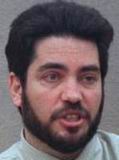
Douglas Feldman
Murderer Russell Ellwood
Murderer · USA · 1991
Russell Ellwood was a former taxi driver. Authorities suspected him of killing…
20 victims
Russell Ellwood
Murderer · USA · 1991
Russell Ellwood was a former taxi driver. Authorities suspected him of killing…
20 victims
 Robert Martines Perez
Murderer · USA · 1994
Name: Robert Martines Perez · Other name used in proceedings: Robert Martinez P…
15 victims
Robert Martines Perez
Murderer · USA · 1994
Name: Robert Martines Perez · Other name used in proceedings: Robert Martinez P…
15 victims
 Billy Frank Vickers
Murderer · USA · 1993
Billy Frank Vickers Vickers was executed by lethal injection in Texas on Januar…
14 victims
Billy Frank Vickers
Murderer · USA · 1993
Billy Frank Vickers Vickers was executed by lethal injection in Texas on Januar…
14 victims
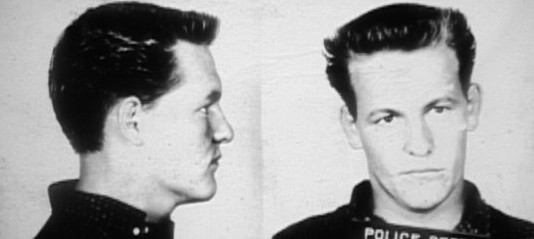 Charles Harrelson
Murderer · USA · 1968
Charles Voyde Harrelson (born July 23, 1938 – March 15, 2007) was an American f…
2 victims
Charles Harrelson
Murderer · USA · 1968
Charles Voyde Harrelson (born July 23, 1938 – March 15, 2007) was an American f…
2 victims
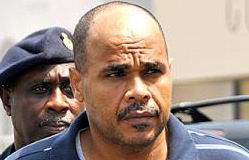 Cyril Darville
Serial killer? · The Bahamas · 1990
Cyril Darville was convicted for a murder committed in 1990. He had a prior rec…
9 victims
Cyril Darville
Serial killer? · The Bahamas · 1990
Cyril Darville was convicted for a murder committed in 1990. He had a prior rec…
9 victims
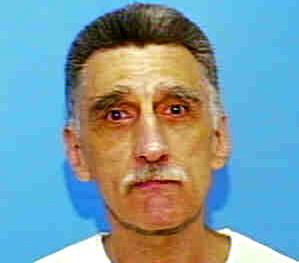 Robert Anthony Buell
Murderer · USA · 1982
Robert Anthony Buell was a former Akron city planner who lived in the nearby to…
1 victim
Robert Anthony Buell
Murderer · USA · 1982
Robert Anthony Buell was a former Akron city planner who lived in the nearby to…
1 victim
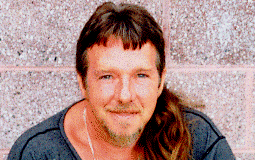 Carl Drew
Murderer · USA · 1979
Carl Drew was sentenced to life in prison without parole in 1981. · Carl Drew (…
3 victims
Carl Drew
Murderer · USA · 1979
Carl Drew was sentenced to life in prison without parole in 1981. · Carl Drew (…
3 victims
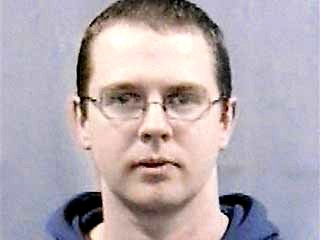 Charles Carl Roberts
Mass murderer · USA · 2006
Charles Carl Roberts IV was an American milk truck driver who was involved in t…
5 victims
Charles Carl Roberts
Mass murderer · USA · 2006
Charles Carl Roberts IV was an American milk truck driver who was involved in t…
5 victims
- Gender
- male
- Country
- USA
- Location
- Dallas County, Texas, USA
- Date of birth
- J une 19, 1958
- Age at first offence
- 40
- Characteristics
- —
- Victim profile
- Robert Stephen Everett, 36 / Nicolas Velasquez, 62 (truck drivers)
- Method of murder
- Shooting (9mm pistol)
- Date(s) of murder
- August 25, 1998
- Years active
- 1998
- Date of arrest
- September 5, 1998
- Status
-
Executed
Sentenced to death on September 22, 1999. Executed by lethal injection in Texas on July 31, 2013
Case overview
Douglas Alan Feldman was convicted of capital murder in Texas and was sentenced to death by lethal injection. The United States Court of Appeals for the Fifth Circuit described the facts of the crimes as including shootings of Robert Everett and Nicolas Velasquez, and a later shooting of Antonio Vega, all linked by ballistics to the same 9-millimeter firearm Feldman possessed. After exhausting direct review and habeas proceedings, Feldman was executed.
Timeline
- May 31, 1974 — Feldman was found delinquent because of credit card abuse and drug possession offenses.
- January 2, 1974 — Robbie Harris went to a Shell gas station where Feldman was employed as a cashier; Harris gave Feldman a credit card to pay for a purchase; Harris later discovered an unauthorized charge.
- January 16, 1978 — Jadean Jourden met a man later learned to be Feldman at Willow Creek Pharmacy; an armed robbery occurred, with threats and demands for drugs including dilaudid, morphine, percodan, and seconal.
- December 6, 1996 — A violent encounter occurred in which Feldman collided with Brantley’s 1984 Firebird, exited holding a ball-peen hammer, struck the Firebird, struck Brantley at least three times with the hammer, and threatened to kill him.
- May 31, 1996 — Chad Phipps testified to seeing Feldman loading a car in a motel parking lot; Feldman slammed a car door into Phipps’s girlfriend’s car and said, “No. That’s hitting her car door.”
- May 1, 1998 — Donna McElroy testified that Feldman assaulted her at Keller’s Hamburgers, knocking her down, running over her, and causing injuries including loss of teeth.
- August 24, 1998 — In Plano, Texas, Feldman fatally shot Robert Everett after a traffic incident involving an eighteen-wheeler; witnesses observed Feldman ride up on a motorcycle, fire multiple shots into the back of Everett’s trailer, reload, pull alongside the cab, and fire additional shots directly at Everett, killing him.
- August 25, 1998 — Approximately 45 minutes after the Everett killing and about eleven miles away, in Dallas, Texas, Feldman shot and killed Nicolas Velasquez at an Exxon service station while Velasquez was refilling the station’s gas supply.
- August 23, 1998 — A shooter fired approximately nine shots into the Central Volkswagen Dealership in Richardson, Texas, breaking windows and other items.
- September 5, 1998 — At a Jack-in-the-Box restaurant in Dallas, Texas, Feldman shot Antonio Vega three times, seriously injuring him.
- September 8, 1998 — A Dallas County grand jury indicted Feldman for capital murder for the killings of Everett and Velasquez.
- August 1999 — A Dallas County jury found Feldman guilty of capital murder for the killings of Robert Everett and Nick Velasquez.
- August 25, 1999 — A jury convicted Feldman of capital murder.
- August 31, 1999 — After the jury recommended capital punishment, the trial court sentenced Feldman to death by lethal injection.
- February 20, 2002 — The Texas Court of Criminal Appeals affirmed Feldman’s sentence.
- April 18, 2007 — The Court of Criminal Appeals denied Feldman’s application for habeas corpus.
- May 3, 2011 — The Northern District of Texas, Dallas Division, denied Feldman’s petition for a federal writ of habeas corpus.
- September 14, 2012 — The U.S. Court of Appeals for the Fifth Circuit affirmed the federal district court’s denial of relief.
- March 18, 2013 — The U.S. Supreme Court denied certiorari review.
- July 11, 2013 — The Texas Court of Criminal Appeals dismissed Feldman’s subsequent application for a writ of habeas corpus.
- July 17, 2013 — Feldman filed a motion to reconsider in the Texas Court of Criminal Appeals.
- July 29, 2013 — A U.S. district court dismissed Feldman’s prisoner civil rights lawsuit.
- July 29, 2013 — The Board of Pardons and Paroles met and did not recommend clemency for Feldman.
- July 30, 2013 — The U.S. Court of Appeals dismissed Feldman’s most recent successive habeas petition.
- July 31, 2013 — Feldman filed a motion for a stay of execution in the U.S. Supreme Court; Feldman was executed by lethal injection in Texas.
Background
Personal and demographic details
Douglas Alan Feldman was a male. His date of birth was 06/19/1958. His education was 12 years. His occupation was laborer. His hair color was black and his eye color was blue. His height was 5' 06" and his weight was 198. Feldman was native to Dallas County and was identified as White.
Prior criminal history and juvenile record
During the punishment phase of trial, the State introduced Feldman’s juvenile court record. The record showed that on May 31, 1974, Feldman was found delinquent due to credit card abuse and drug possession offenses.
Texas Youth Commission (TYC) records were also admitted, showing that less than one day after Feldman was released from TYC custody, he was found in possession of marijuana.
Penitentiary packs reflecting Feldman’s 1978 convictions for aggravated robbery and narcotics possession were introduced.
Additional testimony addressed extraneous offenses:
- Robbie Harris testified about credit card abuse. On January 2, 1974, Harris went to a Shell gas station where Feldman was employed as a cashier. Harris gave Feldman a credit card to pay for a purchase, and later discovered Feldman had used Harris’s credit account to make an unauthorized charge for a substantial amount of money. Harris offered to accept repayment to settle the matter, but Feldman acted as if he had done nothing wrong and refused Harris’s offer.
- Jadean Jourden testified about the armed robbery at Willow Creek Pharmacy. She said Feldman asked if she sold a specific tape, opened the counter gate, and “hit her in the head with something that felt like a gun,” ordered her to get face-down on the floor, and threatened to kill her. After that, she heard Feldman threaten the store pharmacist, Robert Scarbrough. Scarbrough also identified Feldman as the armed robber. During the robbery, Feldman screamed profanities and threatened to shoot Scarbrough and Jourden. Jourden testified that Feldman grabbed Scarbrough, held a gun to Scarbrough’s head, and ordered Scarbrough to get specific drugs, including dilaudid, morphine, percodan, and seconal. Scarbrough filled a bag with the drugs, and Feldman fled with it.
- Brad Runnels testified that on the day of the armed robbery an Exxon gas station was situated next to Willow Creek Pharmacy. Runnels saw Feldman as he fled the pharmacy. When Feldman tried to drive out, his car was trapped by an incoming vehicle. Runnels watched as Feldman got out and pointed a gun at the driver’s window, forcing the other driver to back the vehicle.
- Chad Phipps testified about an incident in which Feldman slammed his car door into Phipps’s girlfriend’s car. Phipps reported the incident and Feldman’s license plate number to police. During Feldman’s testimony and in the presence of the jury, Feldman called Phipps “a […] liar.”
- James Brantley testified about the Dec. 6, 1996 violent encounter. Feldman collided with Brantley’s restored 1984 Firebird but did not stop. Feldman repeatedly slammed on his brakes attempting to cause a collision. Feldman stopped, exited holding a ball-peen hammer, got onto the Firebird’s hood, smashed it with the hammer, and reached into the driver’s side to hit Brantley at least three times with the hammer. Feldman told Brantley to leave him alone or he would kill him. Feldman then drove in reverse onto the hood of the Firebird. Brantley feared for his life. Afterward, Brantley reported the incident to the police and gave them Feldman’s license plate number. Brantley was hospitalized with an acute scalp contusion. Feldman paid Brantley $6,500 to settle an ensuing lawsuit.
- Donna McElroy testified that Feldman assaulted her on May 1, 1998 at Keller’s Hamburgers. Feldman told her he did not have his wallet with him, McElroy told him he could not have the food without paying, and Feldman “[...] told her he was not going to pay for the food.” When Feldman reached for something in his car, McElroy backed away afraid he was going to shoot her. Feldman drove his car toward her, knocked her down, and ran over her. McElroy lost teeth and had a burning sensation in her legs.
- The State also introduced letters Feldman wrote from jail expressing violent themes, and those portions were published to the jury during the punishment phase.
Deterrent and institutional details
During prison, Feldman was recorded for 136 disciplinary cases, including one in which he ripped a telephone from the wall just before a scheduled media visit.
The offences
Capital murders of Robert Everett and Nicolas Velasquez
In the night of August 24, 1998, Feldman was riding his motorcycle. Robert Everett, driving an eighteen-wheeler, passed him and pulled into Feldman’s lane, missing Feldman’s left hand by inches. Feldman became enraged. Feldman took out his firearm and fired several shots into the back of Everett’s trailer. Feldman then reloaded his weapon and pulled up alongside Everett’s cab, firing several more shots directly at Everett, killing him. After returning to verify that Everett was dead, Feldman headed home.
Approximately 45 minutes after the Everett killing and about eleven miles from the scene of the original shooting, Feldman passed an Exxon service station where Nicolas Velasquez, an Exxon tanker truck driver, was refilling the station’s gas supply. Feldman drove into the station and shot Velasquez twice in the back, killing him.
Feldman was charged with capital murder for killing Nicolas Velasquez by shooting him with a firearm and, during the same criminal transaction, killing Robert Stephen Everett by shooting him with a firearm; and in the alternative, killing Velasquez by shooting him with a firearm and, during a different criminal transaction but pursuant to the same scheme and course of conduct, killing Everett by shooting him with a firearm. The jury found Feldman guilty “as charged in the indictment.”
Witness accounts included that Feldman rode up beside the truck on a motorcycle and fired multiple shots into the cab of the truck, dropping back and then returning to fire additional shots. Reports described a total of 12 gunshots fired into the truck, resulting in Everett’s death.
Attempted murder of Antonio Vega
Over a week later, Feldman shot Antonio Vega while Vega was standing outside of a Jack-in-the-Box restaurant. Vega was seriously injured but survived. Vega testified that while dialing the phone outside the restaurant, he heard gunfire and felt a burn in his chest. When Vega turned to run, he saw someone behind him pointing a gun at him. Vega felt a burning feeling in his leg and fell. Vega stated that he was shot three times and thought he was going to die. A nearby witness noted Feldman’s license plate number and reported it to police.
Central Volkswagen dealership shooting (Richardson)
On August 23, 1998, approximately nine shots were fired into the Central Volkswagen Dealership in Richardson, Texas, breaking windows and other items.
The shootings linked to the same firearm
Ballistics testing showed that one of Feldman’s guns, a 9mm pistol, was used in all three shootings described in the case as including shootings of Robert Everett, Nicolas Velasquez, and Antonio Vega. Officers recovered two firearms and hundreds of rounds of ammunition when Feldman was arrested. After his arrest, Feldman admitted committing the shootings to a police investigator, stating that they were a consequence of his traffic altercation with Robert Everett. Feldman also testified at trial, including his explanation that he had shot Velasquez because Velasquez was standing beside an eighteen-wheeler, which caused Feldman to “explode[ ] again in anger.”
Witness statements, testimony, and evidence
Letter admissions and published letters
At trial, the State introduced letters Feldman wrote from jail and published portions to the jury during punishment.
Feldman’s final words included:
“I hereby declare Robert Steven Everett and Nicolas Velasquez guilty of crimes against me, Douglas Alan Feldman. Either by fact or by proxy, I find them both guilty. I hereby sentence both of them to death, which I carried out in August of 1998. As of that time, the State of Texas has been holding me illegally in confinement and by force for fifteen years. I hereby protest my pending execution and demand immediate relief.”
In the federal habeas portion of the case description, Feldman admitted in a letter that he was responsible for criminal mischief at Central Volkswagen on 8/23/98, as well as the shooting deaths of Robert Stephen Everett and Nicolas Velasquez, and the attempted murder of Antonio Vega. The letter included the following text:
“I am responsible for the criminal mischief which occurred at Central Volkswagen on 8/23/98 (shooting of windows & vehicles), as well as the shooting deaths (murder) of Mr. Robert Stephen Everett (8/24/98) and Mr. Nicolas Velasquez (8/25/99) [sic] as well as the attempted murder of Mr. Antonio Vega (9/5/98). I have no excuse for my actions other than that I was in a state of extreme emotional distress at the time. I had an altercation in traffic with Mr. Everett, after which I erupted in rage & subsequently committed the attacks mentioned above.”
In another letter excerpt described as sent to a former girlfriend, Feldman wrote he was relieved and felt “absolutely no remorse” for killing truckers. The excerpt included:
“I will tell you this: I found it quite pleasurable to kill those two men!”
“If you are an angry person and someone provokes you to violence . . . it feels wonderful to cause their death and to watch their pain. . . .”
The prosecution also described that Feldman wrote in December 1998 that he enjoyed killing Everett and Velasquez and wanted to see more people get shot, and he described fantasizing about walking through Dallas-area stores and shooting shopkeepers. Feldman wrote about fantasizing about killing police officers over a prior traffic citation and stated he had previously been armed at a truck stop and came very close to killing more truck drivers. Feldman also described wanting to kill people who disturbed his quiet and then desecrate their corpses. The prosecution closed its case with a letter in which Feldman stated that murder should not be illegal and compared killing humans to hunting game animals.
Firearms examiner and evidence handling
A firearms examiner, Lannie Emanuel, compared shell casings and fragments collected from the dealership with the firearm seized from Feldman at the time of his arrest and concluded that nine-millimeter cartridge casings were fired by Feldman’s firearm.
Nneka Olan, a Dallas County Sheriff’s Office Clerk, testified that when Feldman was processed into jail after his arrest for the instant offense, money found in his possession was seized for examination. Secret Service Special Agent T.M. Hiles testified that he examined the money and found three counterfeit bills.
Arrest and recovery of evidence
The case description stated that a bystander noted Feldman’s license plate number and gave it to the police. When police arrested Feldman, they recovered two firearms and hundreds of rounds of ammunition. Ballistics testing showed the 9mm pistol was used at all three locations.
In the Texas Court of Criminal Appeals opinion describing evidence in the case, the trial record described that when officers apprehended Feldman they recovered a loaded nine-millimeter weapon, an additional pistol magazine, a Glock pistol, seventy-five hollow-point bullets, and one hundred ninety-four round nose bullets. Another loaded magazine was recovered from Feldman’s pocket.
Trial
Charges and trial outcome
Feldman was indicted by a Dallas County grand jury for capital murder for the killings of Everett and Velasquez. On August 25, 1999, a jury convicted Feldman of capital murder. After the jury recommended capital punishment, the trial court sentenced Feldman to death by lethal injection on August 31, 1999.
The Texas Court of Criminal Appeals opinion later described that appellant was convicted of capital murder in August 1999, and that the trial judge sentenced appellant to death pursuant to the jury’s answers to the special issues under Texas Code of Criminal Procedure article 37.071 §§ 2(b) and 2(e).
Jury and voir dire issues
Feldman raised multiple points of error in direct appeal. The Texas Court of Criminal Appeals addressed challenges for cause and lesser-included offense instructions, among other issues.
Challenges for cause and excluded juror
The opinion stated that Feldman complained about the trial court’s failure to grant challenges for cause to venirepersons G. Henry, D. Garcia, and R. Martinez. The court reviewed voir dire and denied the challenges as to Henry and Garcia, and overruled points of error nine, ten, and eleven.
The opinion also addressed Feldman’s points regarding the trial court’s grant of a State’s challenge for cause to veniremember D. Dreifke. It held that points of error twelve and thirteen were overruled and that point of error fourteen was overruled. It concluded that Dreifke vacillated and ultimately told the court she was not sure whether she could perform the duty entrusted her, and therefore the trial judge acted within discretion in excluding her.
Lesser-included offense instruction
Feldman complained that the trial court erred in refusing to instruct the jury on the lesser-included offense of murder. The Texas Court of Criminal Appeals applied a two-step test and found that while murder was a lesser-included offense of capital murder, Feldman failed to satisfy the second prong requiring some evidence that would permit a rational jury to find guilt only of the lesser offense. The court concluded the trial court did not err and overruled points of error one and two.
The opinion described evidence including that the total elapsed time between the two murders was 45 minutes; that Feldman became enraged after Everett’s driving, chased him, fired into the back of Everett’s trailer, reloaded, fired directly at the cab, killed Everett, then stopped in a mall parking lot and returned to check whether Everett was dead; and later, after about eleven miles, passed an Exxon service station and shot Velasquez twice in the back killing him. It also described the later Jack-in-the-Box shooting of Antonio Vega.
The opinion addressed Feldman’s argument about “motiveless” second murder and concluded that, given evidence, a rational jury could only conclude that Feldman’s behavior in killing both truck drivers was committed pursuant to the same over-arching objective or motive, and thus the jury could not have rationally acquitted appellant of capital murder and convicted only of murder.
Evidence of extraneous acts
Feldman complained in points of error three through five that the trial court erred by allowing testimony about the aggravated assault of Antonio Vega during the guilt/innocence phase as an unadjudicated extraneous offense. The Texas Court of Criminal Appeals described Texas Rule of Evidence 404(b) and stated that such evidence may be admissible for purposes such as plan, identity, or motive. It held the trial court acted within discretion in allowing testimony, concluding it had relevance apart from character conformity and that it was not substantially more prejudicial than probative.
The opinion also stated that appellant conceded he killed the two victims named in the indictment but disputed that the murders were committed in the same criminal transaction or during the same scheme or course of conduct. It described the State’s use of the Vega assault/attempted murder evidence to make existence of this fact more probable by revealing a common “anti-truck driver” motive or scheme.
Cross-examination about extraneous offenses
Feldman advanced points of error six through eight asserting the trial court erred by allowing the State to cross-examine him about extraneous offenses committed more than twenty years before the current offense. The Texas Court of Criminal Appeals stated that when a defendant takes the witness stand, he may be cross-examined and impeached like any other witness. It concluded the trial court did not abuse discretion in allowing this testimony, and overruled points of error six through eight.
Parole instruction issue
In point of error fifteen, Feldman complained that the trial court informed the jury about the forty-year minimum for parole eligibility if a life sentence were assessed, but then instructed the jury not to consider that minimum. The Texas Court of Criminal Appeals held parole eligibility was not a proper subject for the jury to consider at the sentencing phase of a capital case and concluded that any assumed error did not cause egregious harm because parole was not an issue applicable to Feldman’s case, overruling point of error fifteen.
Constitutional challenges to the sentencing scheme
Feldman complained in points of error sixteen through nineteen regarding constitutionality of article 37.071 provisions, and the Texas Court of Criminal Appeals overruled those points, stating it had previously addressed and rejected these contentions.
Cumulative effect
Feldman argued cumulative effect denied due process and due course of law in points of error twenty and twenty-one. The Texas Court of Criminal Appeals concluded cumulative error had not been shown and overruled those points, affirming the judgment.
Sentencing
The jury recommended capital punishment and the trial court sentenced Feldman to death by lethal injection on August 31, 1999.
Feldman did not receive a special “last meal” in Texas; he was offered the same meal served to the rest of the unit, and his final words were those quoted above.
Appeals and post-conviction proceedings
Direct appeal to the Texas Court of Criminal Appeals
On February 20, 2002, the Texas Court of Criminal Appeals affirmed Feldman’s sentence.
The Texas Court of Criminal Appeals opinion stated: “We affirm.”
Texas habeas proceedings
On April 18, 2007, the Court of Criminal Appeals denied Feldman’s application for habeas corpus. On July 11, 2013, the Texas Court of Criminal Appeals dismissed Feldman's subsequent application for a writ of habeas corpus.
Federal habeas and appellate review
Feldman filed a petition for a federal writ of habeas corpus in the Northern District of Texas, Dallas Division. The petition was denied on May 3, 2011. On September 14, 2012, the U.S. Court of Appeals for the Fifth Circuit affirmed the denial of relief. On March 18, 2013, the U.S.
In the U.S. Court of Appeals for the Fifth Circuit case described as No. 11-70013, the court denied Feldman’s request for a certificate of appealability.
Motions and clemency
On July 17, 2013 Feldman filed a motion to reconsider in the Texas Court of Criminal Appeals. On July 29, 2013 the Board of Pardons and Paroles met and did not recommend clemency. On July 30, 2013 the U.S. On July 31, 2013 Feldman filed a motion for a stay of execution in the U.S. Supreme Court.
Execution scheduling
The case described that the Criminal District Court No. 3 of Dallas County scheduled Feldman’s execution to take place on July 31, 2013.
Outcome and aftermath
Feldman was executed by lethal injection in Texas on July 31, 2013.
He was pronounced dead minutes after lethal drug injection at 6:28 p.m. CDT, with the time described variably as 13 minutes or 14 minutes after the lethal drug was injected.
Witness accounts described families of both victims Robert Everett and Nicolas Velasquez present for the execution, including statements about closure. These statements included:
- John Everett said, “We don’t find peace in his death,” and “We find peace in day-to-day living.”
- John Everett stated: “We find peace in day-to-day living.”
- Prosecutor Jason January said he had never seen anyone as scared as Feldman appeared in his final moments and described Feldman as having “life rage.” January also characterized Feldman as “the poster child for the death penalty.” In discussing Feldman’s demeanor, January stated: “I thought he was literally shaking scared when we walked in,” and “Having seen a few of them (executions), I’ve never seen anyone that scared. So the guy that talked the toughest was the most cowardly.”
- Emily Castillo stated: “It’s pretty frustrating,” and “I just feel like it’s closure. My dad finally has justice after 15 years.”
- Velasquez’s daughter Alice Hagemann stated it was difficult listening to Feldman speak about her father and said: “I prepared myself for that. I don’t think he ever found peace.”
- Elizabeth Chavez stated: “I prepared myself for that.
- John Everett, as quoted in one account, stated: “Very dark and very evil and very unremorseful,” and “We were not completely surprised by it.”
Additional remarks described by the court included that Feldman recited the names of his victims and declared them guilty of crimes against him, and then stated he had sentenced them to death and carried out their executions in August 1998, while protesting illegal confinement and demanding immediate relief.

Spotted an error, or have more information about this case?