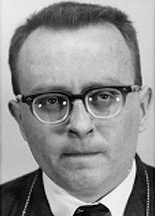
Victor Harry Feguer
Murderer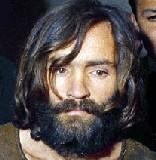 Charles Manson
Murderer · USA · 1969
Charles Milles Manson (born November 12, 1934) was an American criminal and mus…
9 victims
Charles Manson
Murderer · USA · 1969
Charles Milles Manson (born November 12, 1934) was an American criminal and mus…
9 victims
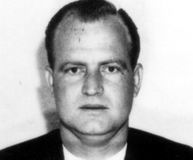 Gary Gene Tison
Murderer · USA · 1967
Gary Gene Tison was serving life sentences at the Arizona state prison. He had…
7 victims
Gary Gene Tison
Murderer · USA · 1967
Gary Gene Tison was serving life sentences at the Arizona state prison. He had…
7 victims
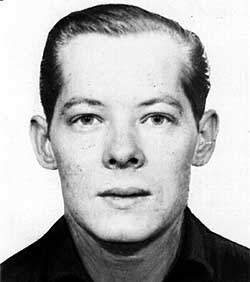 Richard Lee Tingle
Murderer · USA · 1968
Richard Lee Tingle was born out of wedlock in December 1940. He was raised by a…
6 victims
Richard Lee Tingle
Murderer · USA · 1968
Richard Lee Tingle was born out of wedlock in December 1940. He was raised by a…
6 victims
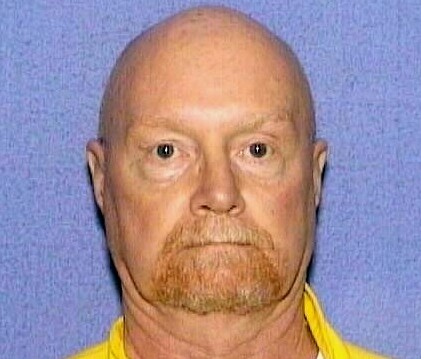 Gary Duane Rardon
Murderer · USA · 1962
Gary Duane Rardon killed a man in 1962 and later served 4 years for manslaughte…
4 victims
Gary Duane Rardon
Murderer · USA · 1962
Gary Duane Rardon killed a man in 1962 and later served 4 years for manslaughte…
4 victims
 John Gilbert Graham
Mass murderer · USA · 1955
John “Jack” Gilbert Graham was born on January 23, 1932, at Denver, Colorado. H…
44 victims
John Gilbert Graham
Mass murderer · USA · 1955
John “Jack” Gilbert Graham was born on January 23, 1932, at Denver, Colorado. H…
44 victims
 Michael Van McDougall
Murderer · USA · 1979
Michael Van McDougall was convicted of fatally stabbing a neighbor and was late…
1 victim
Michael Van McDougall
Murderer · USA · 1979
Michael Van McDougall was convicted of fatally stabbing a neighbor and was late…
1 victim
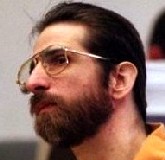 John Famalaro
Murderer · USA · 1991
John Joseph Famalaro was sentenced to death for the first degree murder of Deni…
1 victim
John Famalaro
Murderer · USA · 1991
John Joseph Famalaro was sentenced to death for the first degree murder of Deni…
1 victim
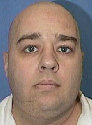 Ivan Ray Murphy
Murderer · USA · 1989
January 9, 1989 — Ivan Ray Murphy and Douglas Stoff went to Lula Mae Denning’s…
1 victim
Ivan Ray Murphy
Murderer · USA · 1989
January 9, 1989 — Ivan Ray Murphy and Douglas Stoff went to Lula Mae Denning’s…
1 victim
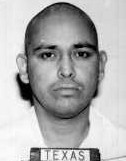 Luis Ramirez
Murderer · USA · 1998
Luis Ramirez was a Hispanic male executed by lethal injection in Texas on Octob…
1 victim
Luis Ramirez
Murderer · USA · 1998
Luis Ramirez was a Hispanic male executed by lethal injection in Texas on Octob…
1 victim
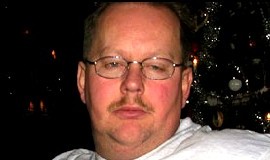 Anders Eklund
Murderer · Sweden · 2000
Anders Eklund (born August 6, 1965) was a Swedish murderer and rapist. He was c…
2 victims
Anders Eklund
Murderer · Sweden · 2000
Anders Eklund (born August 6, 1965) was a Swedish murderer and rapist. He was c…
2 victims
- Gender
- male
- Country
- USA
- Location
- Dubuque, Iowa, USA
- Date of birth
- 1935
- Age at first offence
- 25
- Characteristics
- abduction, kidnapping, drugs
- Victim profile
- Dr. Edward Bartels, 34
- Method of murder
- Shooting
- Date(s) of murder
- July 11, 1960
- Years active
- 1960
- Date of arrest
- —
- Status
-
Executed
Executed by hanging in Iowa (Federal execution) on March 15, 1963
Case record: Victor Harry Feguer
Identifying information
Victor Harry Feguer (born in 1935) was executed by hanging in Iowa (federal execution) on March 15, 1963.
The offence
Feguer was charged with a violation of the Kidnapping Act, 18 U.S.C. 1201(a), in that on or about July 11, 1960, he knowingly transported Edward Roy Bartels in interstate commerce from Iowa to Illinois, after the latter was unlawfully kidnapped and held, and in that the victim was not liberated unharmed.
In the events described in the proceedings, Feguer kidnapped Edward Roy Bartels in Dubuque, Iowa, and killed Bartels in Illinois with a single gunshot to the head. Bartels was a physician engaged in general practice in Dubuque, Iowa. He left his home on Monday evening, July 11, 1960, in response to a telephone request for medical assistance and did not return. His body was found on the early morning of July 21 in a wooded rural area some 5 miles across the Mississippi River in Illinois. He had been killed by a bullet which entered the back of his head.
The jury trial from March 1 to 12, 1961, resulted in a verdict of guilty and, as authorized by 1201(a), in the jury's recommendation that the defendant be punished by death. Accordingly, and pursuant to 18 U.S.C. 3566 and to 792.9 of the Code of Iowa, 1958, I.C.A., a sentence of death by hanging was imposed.
Background
Feguer was born in Michigan in 1935 and was 25 years of age at the time of the crime.
Feguer's mother died after a short illness in 1941 when he was about 6. Although his father was living, he went to stay with his paternal grandparents. His father was addicted to drink; after the death of Feguer's mother he joined the Navy for two years.
When Feguer was 11, his uncle (his mother's brother) felt the grandparents' home was not very good for him and asked the boy to live with him. He did so for three weeks. About this time he took money from the grandfather and bought a motor scooter. His father was living with a woman elsewhere and Feguer went to stay with them for a few weeks and returned to the grandparents for a short time.
He was placed in a juvenile home where he stayed two months. The proprietor suggested that the uncle and his wife provide a home for him but they felt they could not do so because of the size of their own family. He stayed with an aunt who was working in Lansing. He did not attend school and was placed in a home for boys. He apparently came down with tuberculosis and was hospitalized for nine months.
Up to this time, age 16, he had experienced little formal difficulty with the law but he had been involved in minor thefts. In May 1951, shortly after his release from the boys' home, he was convicted of burglary and car theft and sentenced to the Michigan State Prison at Jackson. He was there until paroled in August 1955. He went to live with another uncle, and this period included him receiving $50 spending money a week from the first uncle through the probation officer, which was later lowered to $40 a week. On one occasion during this period additional money was given to him because he said his father had taken funds from him.
In late 195 the record described that Feguer was again convicted of car theft and was returned to the state prison. He was finally discharged there on April 14, 1960.
The proceeding also described Feguer as a drifter.
Investigation and evidence
Events leading to the kidnapping charge and arrest
On May 3, 1960, Feguer obtained work as a stock clerk in a Kroger store at Galion, Ohio, and quit or was discharged after five days. Later in May he worked for about two weeks as a kitchen helper in a restaurant in Broadview, Illinois, west of Chicago.
He came to Chicago on a truck from Ohio and said that his luggage was stolen when he was let out in a rough neighborhood in the middle of the night. On May 27 the defendant registered with the Milwaukee district office of the Wisconsin State Employment Service. His application contained references to his work at Galion and Broadview but many of his statements as to education and duration of employment were not accurate.
On May 28 he obtained employment with a janitorial service in Milwaukee and was there until June 18. He was eventually discharged because “it was a case of a lot of standing around, talking, and not applying himself” and “there were a lot of areas that were never touched”. On June 18 while still working for the janitorial service, he answered an ad for a manager of a Milwaukee rooming house just acquired by a new owner. He was employed. During the last part of June he collected rents, gave receipts and kept stub records. When under supervision he did his work adequately though grudgingly and when not under supervision his work was described as sub-standard. He lived on the premises. He drank on the job.
The owner's son did not regard him as highly reliable and would not have given him a job in his accounting firm, but he felt that the defendant was not a danger for the family's interest in the kind of work he was doing. He left without notice about July 8, taking $55 in rent money with him. He was not bonded. He had been given a bond application to fill out about July 6 but left without completing it. Some aparemtn keys were missing when he left.
During this time the defendant opened a checking account at the First Wisconsin National Bank, Milwaukee, and obtained personalized checks bearing his name “Victor H. Feguer”.
On July 2 he drew one of these checks in favor of Becker's Sporting Goods Store, Waukesha, Wisconsin, in the amount of $37.20. This check was paid. It was used to purchase a Browning designed .380 automatic Czechoslovakian-made hand gun and cartridges for it.
On Thursday, July 7, in the early evening, the defendant arrived by bus in Dubuque, Iowa. He hired a cab to go from the bus station to a rooming house at 1004 Bluff Street. That evening the wife of the owner of the rooming house had received a telephone call in response to her newspaper ad about a vacant room. She drove to the house and found the defendant waiting for her on the front steps. He rented the room. He told her he was an artist and accountant on vacation for a month and that he wanted to work in the room and to do some painting. He said his name was Sam Newman. She issued a $6 receipt to him in that name for a week's rent paid in cash.
On July 8 the defendant called at a used car lot in Dubuque. He looked at an automobile there and rode in it with the salesman. He identified himself as Sam Newman and said he was from Milwaukee and was in Dubuque because he had had trouble with his wife. They arrived at a price of $1,000 for the car. The defendant offered a personalized check in payment but the salesman refused to accept it until it had cleared. The salesman noted the name Feguer on the check but the defendant explained that he was a commercial artist and that the name Newman looked better in print than the other name. The defendant then indicated he had changed his mind about buying the car but said that he would be back the next morning.
On Saturday, July 9, the defendant stopped at a finance company in downtown Dubuque to discuss an automobile loan. This was refused because he was not employed and he had just come from out of town. He was told, however, to come back if he could get a Dubuque job-holder as co-signer.
He took some shirts and trousers to the Dubuque Laundry Service and gave the name of Newman there, asking that the work be done quickly.
About this time he cased most of the loan offices in Dubuque with the idea of committing a burglary.
On the evening of July 9 William Lloyd Howes of Dubuque took his girl to a nine o'clock show. They drove downtown in his automobile and parked it at the curb. Howes threw the keys in the glove compartment. The compartment also contained a packet with his draft card, driver's license, social security card, and an insurance card, all bearing Howes' name. When Howes and his companion returned the car was gone. It was recovered the next morning but the keys and card packet were missing. The car had traveled about 35 miles and was muddy.
The defendant after his arrest stated to federal agents that on the evening of July 9 he and a companion, Alex Dupree, were standing on a corner when the Howes car drove up; that Alex noted the man had thrown something into the glove compartment; that they entered the car and found the keys and identification material; and that they drove the car around for an hour and then abandoned it.
On Saturday morning, July 10, the defendant purchased milk and other food at a grocery store. On the 11th he cashed a check at a Dubuque bank. This was for $6 and was drawn on his Milwaukee account. It was paid and was the last check honored on that account. Its payment reduced the defendant's balance to $2.59. He returned later on the same day with a $65 check. The girl teller refused to cash it without an officer's approval.
The defendant consulted an officer who asked him if he knew anyone in the city. He said he knew a parish priest. The officer said that if the priest would indorse the check it would be cashed. The defendant stopped in at the Modern Music Store. He spent an hour looking at radios and finally chose one. He offered a check in payment. This at first was refused. At the defendant's suggestion the Milwaukee bank was called and the account number was verified. His check for $95.82 to cover the radio, batteries and the call was then accepted.
The defendant went to the De Maio Brothers Shoe Store. The proprietor waited on him. He selected a pair of shoes and offered a check in payment. He said he was from Milwaukee, was vacationing in Dubuque, and was staying at 1004 Bluff Street. The proprietor's niece took over the transaction at this point. They kidded back and forth about people trying to pass bad checks. The check was accepted. The niece said she approved it because the defendant had given a Dubuque address and an assurance that he would be in town for a while.
The defendant went to Enzler's Luggage Shop. His check in payment for luggage was refused. He returned to the Dubuque Laundry but his things were not ready. He went to the Penney Store and bought a suit and a pair of trousers and paid for them with another check for $39.74.
Telephone call and kidnapping of Dr. Bartels
About 7:00 p.m. on the evening of July 11, a telephone call was received at the Bartels home in Dubuque. Mrs. Bartels answered. The caller asked for Dr. Bartels and identified himself as a Mr. Stevens. She summoned her husband. The caller stated that he and his wife were visiting in Dubuque; that his wife had had surgery; that she was suffering post-operative pain for which she had been taking medication; and that she was at an address on Locust Street at which there was no telephone. Dr. Bartels agreed to come and left his home about 7:30 p.m. He wrote the address “1134 Locust Ed Stevens” by the telephone so his wife would know where to reach him if necessary. He carried a billfold with currency, his identification cards, and his drivers license. He drove off in his 1959 two-door blue-grey Nash Rambler automobile.
Defendant’s statements to federal agents about the kidnapping and killing
The following account was given by the defendant to federal agents after his arrest:
On the evening of July 11, he wanted to get in touch with a general practitioner because that kind of physician would be more likely to have morphine or demerol needed by the defendant's companion, Alex Dupree, who was with him at a room he had rented at 1004 Bluff Street. He, the defendant, went to a nearby drug store and looked at the yellow pages of the telephone book. The first name listed was that of a surgeon. The second name was that of Dr. Bartels. He called the doctor's residence. A woman answered and summoned the doctor. He told the doctor his wife had been under home treatment with demerol. He gave the doctor a Locust Street address. The doctor arrived there driving a Rambler.
The defendant met him and told the doctor they had been visiting friends at that address but because of his wife's illness she had returned to their residence. He got in the car with the doctor and directed him to 1004 Bluff Street. They went up to the rear bedroom on the second floor. Alex was in bed. The defendant pulled a gun on the doctor there and told him that they did not intend to kill him. The three left the house with the defendant holding the gun under a paper.
They entered the car. He told the doctor to drive through the business district of Dubuque. The doctor blinked his lights on the way. The defendant told him to keep them on low beam and if he tried any funny business he would kill him. He directed the doctor to highway 20 and east across the bridge to East Dubuque, Illinois, and on into the countryside. He told the doctor to drive down a side lane. This, however, ended in a farmstead. They returned to the highway and continued east. They turned off to the left. A mile and a half down this road he told the doctor to stop. He and the doctor got out of the car. The doctor was very nervous during the trip and many times asked if he was going to be killed. He tried to assure the doctor that he was not.
When they stopped he told the doctor to take some pills for his nervousness and he obeyed. The area there was not suitable for leaving the doctor so they went down the road another mile or so where there was a line of trees over a slight rise. Here the three got out of the car, crossed a fence, and walked through a corn field to the wooded area. He told the doctor they were going to tie him up and that later he would call the doctor's wife and later still the state police and let them know where he was.
The defendant then knew he was already involved in a kidnapping and didn't want a murder on his hands. At this time Alex had the gun. Alex shot the doctor behind the ear and he fell. Alex took the billfold from the doctor and pulled the body farther into the brush. He and Alex returned to the car and he took the gun from Alex. He drove the car back to Dubuque.
On the way they stopped at a tavern. They went to the rooming house and got their bags. He then stopped at a telephone, called the doctor's residence, and told the woman who answered that the doctor would be detained over night.
The defendant also described that he went on to tell of his shooting Alex, putting his body into the car's trunk, throwing him into the river at East Dubuque, disposing of bloody blankets and his own bloody shirt, and driving on to Chicago.
A witness identified the defendant as the person who used the public pay telephone at Holscher's Pharmacy at 11th and Main, one block north and one block east of 1004 Bluff Street, in Dubuque, around 7:00 p.m. on July 11, and who spoke in that conversation of his sick wife. The defendant's right thumb print was found in the telephone directory, chained at this telephone, upon the page opposite the one which contained the list of Dubuque physicians. Dr. Bartels' name and telephone numbers were second on that list.
A witness who lived at 1022 Bluff Street, which is part of a triplex with 1004 Bluff, saw the defendant and a person he identified as Dr. Bartels enter 1004 Bluff about 7:20 p.m. and emerge about 8:00 p.m. The man with the defendant was carrying a bag and a stethoscope. They then drove by in a small blue-grey car, with the doctor driving.
A part-time employee at a hospital which the doctor used saw him shortly before 8:00 p.m. The employee was parking her car on Bluff Street and saw the doctor coming up the street with another man. The employee got out of her car and greeted the doctor. The doctor responded with a loud “hello” and with an appearance which the witness described as “a look of fear”. The employee identified the defendant as the man accompanying the doctor.
At about 10:00 p.m. another call came to the Bartels' home. It was the same man who had made the first call. He told Mrs. Bartels that the doctor had asked him to call to tell her that the patient was very ill, that he would be detained several hours and possibly over night, and that a specialist was being called.
When the doctor's body was later discovered, two rows of footprints, not three, were still visible across the corn field and approaching the wooded area where the body lay, and only one pair, not two, went in the opposite direction and approached the road.
Investigation: events after July 11 and prior to the arrest
At 8:00 a.m. on July 12, the defendant registered at the Roosevelt Hotel in Gary, Indiana, under the name of J. C. Austin of Evanston, Illinois.
On the evening of July 12, the Dubuque police searched the room the defendant had occupied at 1004 Bluff Street. They found a Quality Cleaners slip, dated July 8, in the name of Newman, for a pair of pants; a printed addressed envelope for the First Wisconsin National Bank, Milwaukee; a Wisconsin State Employment Service card issued to Victor H. Feguer; the identification portion of a Central Greyhound Lines bus ticket; a die with a horseshoe insignia; a Dubuque Laundry slip in the name of Newman; the room's rental receipt issued to Sam Newman; and fragments which Howes recognized as the identification in his key case.
In the forenoon of July 13, the defendant appeared with a 1959 Nash at a used car lot in Gary. He introduced himself as Dr. Edward Bartels from Dubuque and produced the 1959 registration for the automobile. He stated he wanted to “trade down”, that is, turn the car in for an older less expensive car plus cash. He could not, however, locate the title and in the presence of the salesman he searched his wallet and envelopes in the car's glove compartment. The salesman suggested the defendant call his wife and if she would mail the title card he would make the exchange. The defendant was reluctant to do this and the deal was not closed. The salesman described the proposed transaction as “fabulous”.
On the 16th, the defendant cashed small checks in Dr. Bartels' name at three Gary filling stations. On two of these occasions he had a stethoscope around his neck. On all he used the doctor's identification material. On the same afternoon he bought clothing at the Penney Store with a check in the doctor's name. Later he attempted to purchase an $80 watch at the Busch Jewelry Company. He asked for a blank check. One was offered and he filled it out. The manager gave him a receipt but told him he could have the watch on Monday when the check had cleared. The defendant did not return.
The manager described his reasons for suspicion, including that the defendant's dirty appearance and that he did not seem to be a doctor, the Gary address he gave being nonexistent, his asking for a check late on a Saturday, and his story that he had just come to town yet wanted a watch immediately.
On July 15, Jack Hoard Hale, a twice-convicted felon and then in the Atlanta penitentiary, testified as a court witness at trial. He met the defendant on the street in Gary during the day of July 15. Hale said: “He ‘bummed’ the defendant for a drink. The defendant bought him a drink and gave him money.” Hale and the defendant went to a beach on Lake Michigan where they swam and fired a few shots with a pistol the defendant had. They returned to town for more drinks. Hale had no place to stay and spent the night with the defendant in his hotel room. The defendant had a Nash with Iowa plates and a physician's bag. Hale said that on the 16th they went out to cash checks and that an A & P store would not accept one. They went to a Penney store where the defendant bought some clothing with a check, and then to three oil stations where checks were cashed using Dr. Bartels' name and his stethoscope. Hale warned him about the license number and said he told the defendant. Hale testified that the defendant said he did not care for the car was stolen anyway.
Hale testified that they cleaned up and put on the new clothing and that they picked up the doctor's bag at the hotel but left other clothing there and drove that night to Holland, Michigan. They arrived early on the 17th and rented a tourist room. They went to the beach for an hour and returned to the room and slept. They went out that evening for something to eat and drink and stayed in the room that night.
On the morning of the 18th, they went to Grand Rapids. They had the stethoscope but left the bag at Holland. They tried unsuccessfully to get some blank checks in Grand Rapids. Hale bought a Grand Rapids newspaper for July 18 and saw on the front page a story with a Dubuque dateline about the disappearance of Dr. Bartels and stating that he had been seen in the company of Victor H. Feguer. Hale showed the paper to the defendant as they were getting gas. Hale testified that the defendant told him his name was not Feguer but was Newman, that he had persuaded the doctor to come out on a call, had held a gun on him, had taken him out to a wooded area on the highway and had left him with his buddy while the defendant took the doctor's car. The defendant told Hale that he did not know where the doctor was and that his buddy had him and was holding him for ransom. Hale testified that the defendant said: “they were not going to take him alive”, and that Hale's fingerprints would be on the car and he would be implicated. Hale testified that the defendant asked him to help steal some license plates. Hale at first refused and waited in a tavern.
Hale testified that the defendant returned and said he needed someone to watch while he took a front plate off another Nash Rambler. Hale went out with him. They removed the front plate and then the defendant did the same with the rear plate. Hale testified that Dr. Bartels' identification was destroyed at a service station restroom. They returned to Holland and the defendant got the bag and then headed for Birmingham, Alabama, leaving about 9:00 p.m. on the evening of July 18. Hale testified that they reached Birmingham about 6:00 p.m. on July 19. On the way, Hale said the defendant instructed him to break up the Iowa plates and throw them away piece at a time. Hale testified that the defendant had the gun on the seat beside him and said if they were stopped he would try to outtalk the police and, if necessary, shoot it out with them, and that Hale was to tell the police the defendant's name was Howie.
In Birmingham, they checked in at the Ansley Hotel and Hale testified that Hale registered them as “Jack Jason and Bro.” They bought beer, took baths, and went to bed. The next morning, the 20th, they went to several used car lots in an attempt to sell the automobile and were arrested by the FBI.
Hale testified that the 1959 Nash from which the Michigan plates were taken was owned by the City of Grand Rapids, that the disappearance of the plates was noted by the city vehicle supervisor late on July 19, and that he reported it to the police. Hale testified that the plates in question were 1959 plates No. X-23831 with a 1960 tag and an additional city tag and that the ‘X’ insignia was used for plates issued to Michigan municipalities.
On July 22, shortly after midnight, the Austin room at the Roosevelt Hotel in Gary was examined by a federal agent accompanied by the hotel manager. Clothing, the defendant's suitcase, the mate to the horseshoe die, and the pair of old shoes the defendant had worn into the De Maio shoe store in Dubuque were found there.
Arrest and custodial events
Complaint and federal warrant
On July 20, 1960, a complaint was filed in the Northern District of Iowa charging the defendant, in violation of 18 U.S.C. 1073, with interstate flight to avoid prosecution for kidnapping and a warrant for the defendant's arrest was issued. Information as to this warrant was not received by federal agents in Birmingham until about 5:00 p.m. on July 20.
Events in Birmingham on July 20, 1960
On July 20:
- At about 10:30 a.m., the Birmingham FBI office received a telephone call from J. B. Alford, manager of a used car lot in that city. Alford stated that a man had just been in his lot attempting to sell at a below-normal price a 1959 Nash Rambler with Michigan plates; that he had seen in a local newspaper a photograph of a person named Smith Gerald Hudson who at that time was a federal fugitive; and that it was possible the man driving this automobile was Hudson. Alford further stated that the man did not have a title for the car so the purchase was not made.
- Four other dealers said that such a car had also appeared at their lots. Hudson had been convicted of murder and other crimes and was charged with interstate flight to avoid confinement after the murder conviction. A warrant for his arrest had been issued on August 26, 1957, by the United States District Court for the Middle District of Pennsylvania and was still outstanding. He was on the list of the ten men most wanted by the federal authorities. A current FBI circular carrying Hudson's photograph and fingerprints and other descriptive material contained a precautionary notice that he should be considered armed and dangerous.
- After Alford's call, instructions as to Hudson and his possible presence in Birmingham were broadcast to agents in the area. A special agent went to see Alford carrying a photograph of Hudson without glasses. Alford stated that if glasses had not been worn by the driver of the Nash he would look very much like Hudson. Two others at the lot said the same.
- Shortly before 1:00 p.m., the Nash was reported to be in a neighboring area. By radio control, FBI cars closed in and first observed the Nash parked in front of an automobile parts and junk yard.
- Only one man was in the car in the right front seat. The defendant came out of the yard, entered the Nash, and drove it out. As the Nash pulled into the parking area of another junk yard, four FBI cars with seven agents converged on it and blocked it. Agents, with guns drawn, ordered the two occupants to come out of the Nash and to be braced against it, approximately 1:30 p.m.
- The defendant was frisked, and this led to discovery of several .38 caliber cartridges in his left pocket. He was asked where the gun was and he replied: “On the seat”. An agent saw and picked up the gun from the front seat of the car, and it was loaded.
- The defendant was handcuffed. He said his name was Howes. The agents had with them Hudson's identification card and fingerprints, and they looked at the fingers of the two men and concluded that neither was Hudson. The handcuffs were then removed.
- An agent advised the defendant he did not have to talk, that he had the right to consult a lawyer, and that any statement he made could be used against him.
- One agent noticed a physician's bag on the back seat and asked the defendant what he was doing with it. The defendant said a doctor had given it to him on a gambling debt and that the doctor was an alcoholic and an addict.
- Another agent knew from Michigan experience that the ‘X’ preceding the numerals was one issued only to a municipality in Michigan. The Grand Rapids city tag on the car had also been noted.
- The defendant was asked if he was an employee of the City of Grand Rapids and replied that he was not.
- The head agent asked if he would come to the FBI office. The defendant said he would and stated: “You can check all you want to and you will find that this car is legitimate, it's perfectly registered to me, and it is my car”.
- The defendant continued to identify himself as Howes and produced Howes' driver's license and cards.
- The agents moved the Nash back to the office. About 2:00 p.m., the defendant was interviewed, fingerprinted, photographed, and checked against identifications of other men wanted by the FBI. He continued to identify himself as Howes.
- Around 3:15 p.m., Detroit advised they did not have a stolen car report on the automobile but that the plates had been reported stolen from a 1959 Nash belonging to the Grand Rapids health department. The defendant was confronted with this and then admitted that his name was Feguer and that the car and the license plates were stolen. Agents took a formal statement and he signed it.
- After the admission, two agents again went to the car about 3:15 p.m. and brought back items including a transmitter and two Missals in the glove compartment; a pillow case containing a stethoscope; a receipt from the Busch Jewelry Company of Gary; a box of .38 cartridges; road maps and other items. These were taken without a search warrant.
- The interview was suspended at approximately 4:00 p.m. An agent sat with the defendant until 6:00 p.m. but during that period no questions were asked.
Iowa warrant contact and formal arrest
At about 5:00 p.m., contact was made with the agent in charge of the Omaha office, who was in Iowa. He told Birmingham of the issuance of the Iowa federal warrant. At 6:10 p.m., the agents advised the defendant that he was under formal arrest on the fugitive charge.
The sole United States Commissioner in Birmingham had an office in the Federal Building and was there daily from 11 to 3. She resided miles out of town but had no telephone at the time. When the Birmingham office received the information about the Iowa warrant, the agent in charge immediately tried to get in touch with the Commissioner and with two United States district judges in Birmingham to arrange a preliminary examination under Rule 5, F.R.Cr.P.; this was unsuccessful because the Commissioner was on vacation.
A further and long interview began about 6:10 p.m., conducted by the Special Agent in Charge and by two others. The defendant was advised he did not have to make a statement, any statement could be used against him, and he had a right to consult an attorney. The interview continued until 9:30 p.m. when it was recessed for 50 minutes, then resumed at 10:20. He dictated a statement from 10:42 until 11:19, which was typed and completed at 12:57 a.m. At 1:05 a.m., after he read the statement, he wrote a final paragraph in longhand. He left the office at 1:21 a.m. to go with two agents to the county jail, and no questions were asked there. He slept for three hours.
Preliminary examination and counsel
On the morning of July 21, the Assistant United States Attorney for the Northern District of Alabama was asked to arrange with a federal judge for a preliminary examination. The Honorable H. H. Grooms was the first judge who became available. A hearing was held in his courtroom about 10:45 a.m. The defendant was present. The court was advised that he was being held on a federal warrant out of Iowa charging unlawful flight to avoid prosecution but that the warrant had not yet been received. The court found Mr. Hugo L. Black, Jr., a competent lawyer and experienced in federal court matters, in the building and appointed him to represent the defendant. Mr. Black conferred with the defendant. The court set bond at $25,000 and continued the matter until the late afternoon of July 22.
In the afternoon, two agents interviewed the defendant at the jail, took clothes to him, and he released the clothes he had on to them, including shoes bought at the De Maio store on July 11. The defendant signed and delivered a statement that he voluntarily released this personal clothing to the agents. A further July 22 interview occurred for an hour without the knowledge of Birmingham counsel or the court. By the time of the July 22 hearing, papers from Iowa had still not arrived. The matter was continued until Monday morning, July 25.
At 10:20 a.m. on July 23, Special Agents Dawson (from Waterloo, Iowa) and Brown interviewed the defendant for about three hours at the Birmingham jail. The agents did not have a copy of the statement made on the night of July 20 and it was not mentioned or referred to during the interview. The defendant told a detailed story of the events of July 11. This interview was also without knowledge of Birmingham counsel and court.
By July 25, the awaited papers had been received, including a federal complaint on the kidnapping charge under 1201(a). Mr. Black had advised the court he would be out of town on the 25th. Mr. Black’s older partner William Mitch was appointed and represented the defendant at the hearing on the 25th. The kidnapping complaint was read. The defendant waived hearing and signed consent to removal, and a warrant of removal was issued.
After the hearing, Dawson and two others called on the defendant at the jail and questioned him about Dupree and the claimed disposition of his body at East Dubuque, again without knowledge of Birmingham counsel and court.
Competency to stand trial
On July 25, 1960, the United States Attorney for the Northern District of Iowa filed with the Iowa federal court a motion, pursuant to 18 U.S.C. 4244, for judicial determination of the defendant's mental competency and for commitment for examination. The motion was granted and the defendant was committed to a United States medical center at Springfield, Missouri. He went from Birmingham to Springfield.
From July 26 to August 19, Feguer was at Springfield for observation and psychiatric evaluation, and then was taken to Waterloo.
He first appeared in federal court in Waterloo for arraignment on August 23, 1960. The court read the indictment and advised him of the seriousness of the charge because the death penalty could be imposed. The court advised him of his right to counsel and its willingness to appoint counsel. Feguer stated he desired to retain his own counsel from Chicago, had funds, but said: “in this particular proceeding, I think, just to facilitate matters, that I can act in proper person”. Neither Mr. Black nor Mr. Mitch represented him after departure from Birmingham.
A report, transcribed August 15, of the examination at Springfield was sent to the court, signed by “Richard A. Stamm, M.D., Staff Psychiatrist.” It recited that the purpose was to obtain medical data concerning his ability to understand the nature of the legal proceedings pending against him and his abilities to assist counsel. The report described his background and stated he denied being or ever having been mentally ill. It concluded:
‘000-x44, Paranoid Personality, Severe, Chronic. * * * I believe that because of the nature and strength of his defenses, he is potentially able to react psychotically to additional, special stress’
At a hearing on September 1, the court noted the Springfield report and advised him the court would appoint able and experienced attorneys without cost. Feguer said: “After giving the matter careful consideration, I have decided to act in proper person, exercising my own right to do so”. He later said: “No, I don't feel it's necessary”. He stated he wanted a copy of the arrest warrant. The court found him mentally capable of understanding the proceedings and mentally competent to assist in his own defense.
On September 2 the court formally noted that he asked to be assigned counsel with whom he might confer. On September 9 and 16 defense counsel were appointed.
On September 30, the United States attorney moved for an order under Rule 28 to show cause why qualified psychiatrists should not be appointed as expert witnesses. At a hearing on October 15, with defense counsel in attendance, it was agreed in open court that Dr. Stamm could be appointed as an expert witness and the court ordered a further examination. Feguer was transferred back to Springfield and remained under observation from October 25, 1960, to January 5, 1961, when he returned to Waterloo.
A second Springfield report dated January 5 was signed for the psychiatric staff by Richard A. Stamm, M.D., Staff Psychiatrist, and stated it was prepared by “staff members present” Drs. Settle, Sturgell, and Stamm. It stated a diagnosis of:
‘000-x 24 Schizophrenic Reaction, Paranoid Type, in period of exacerbation, manifested by: Looseness of association in thinking processes, inappropriate affect, hypersuspiciousness and religiosity, hyperintellectualization and evidence suggestive of hallucinations.’
The defense moved for a hearing under 4244, and the hearing was held February 20. Dr. Stamm testified and other aspects of the record included extensive prehearing comment by the court and government counsel.
At the conclusion of the hearing on February 20, the court ruled from the bench that Feguer was able to understand the proceedings and assist his own defense and was competent to stand trial. A written order confirmed competence.
A further hearing on March 10 addressed competency over defense objection. At this hearing, a deputy United States marshal testified to evidence about an electric light bulb filament and two hacksaw blades discovered in Feguer’s left shoe and his behavior in relation to cell bars. Dr. Stamm testified about maximum security isolation and that his contact was for only three or four minutes and that on March 10 he seemed more relaxed than in prior contact. Dr. Frederick M. Stark also testified about capacity to aid counsel based on certain assumptions.
On March 11, the court entered an order reciting that it was clearly established that Feguer had present ability to consult with counsel with a reasonable degree of rational understanding; that he had a rational as well as factual understanding of the proceedings; and that he was competent to stand trial and properly assist in his defense.
Insanity defense and expert testimony
The trial included evidence on insanity/responsibility. Dr. Stamm testified at trial as a court witness. He stated that based solely upon his examination from October 1960 to January 1961, he believed Feguer knew right from wrong on July 11, 1960; had no reason to believe he did not know the harmfulness of a criminal act; and had no evidence of delusional thinking to this extent he probably could have resisted an impulse to hurt someone.
On examination by defense counsel, he reviewed Feguer’s background and described a first examination diagnosis of paranoid personality disorder, severe, chronic, and testified about hostile fantasies, tense behavior, and paranoid personality potentially being very close to psychotic.
On examination by the United States Attorney, Dr. Stamm stated maximum security confinement at Springfield and described sociopathic evidence in the record and stress effects.
In rebuttal, the prosecution called Dr. Stark. Dr. Stark testified that paranoid personality does not imply psychotic condition; that it was considered sane and mentally competent; and that such a person could develop a schizophrenic reaction. Dr. Stark also described the concept of a sociopath and borderline schizophrenic reaction. He was asked a record-based hypothetical question and, over objection, stated his opinion that on July 11, 1960, Feguer had the reason and capacity to understand the difference between right and wrong, understood the nature and character of a criminal act and its consequences, and that at that time he was not under the influence of an irresistible impulse.
The defense called a former counsellor at Jackson prison and Herbert Edwin Thomas, a physician-psychiatrist.
The former counsellor testified about his personal case load and about Feguer being evasive and having internalized ideas and confused thinking in a note received from Feguer, and also said that evasiveness and suspicion were normal prisoner behavior toward administrative personnel.
Herbert Edwin Thomas testified that he and one resident were psychiatrists for the Michigan Department of Corrections and described prison transfer limitations; he testified that he saw Feguer once on February 23, 1960, for about twenty minutes; and he cited prison records including a note about referral for examination when Feguer was about 16. He described prior psychiatrist reports and described his own conclusion about diagnosis and supervision, including that in his twenty minute conference Feguer was not grossly confused and that he could find his way around in the community, and that in February 1960 there was certainly no evidence of any schizophrenic process.
Lay and other witnesses included testimony that Feguer acted normally until about age 11, and that after prison in Jackson he was not normal, and other lay perceptions that included being uncommunicative, ill at ease, distant or remote, polite and reserved, and nervousness and evasiveness.
Feguer did not take the stand.
Trial and appellate procedure
Feguer pleaded not guilty. The defense of insanity was noticed.
The jury trial from March 1 to 12, 1961, resulted in a verdict of guilty and a jury recommendation of death by hanging. The appellate proceeding included a federal appeal in forma pauperis from the judgment and sentence of death.
Appeal: Victor Harry Feguer v. United States of America
The appellate case information included:
- Edward Roy Bartels, 35 years of age, was a physician engaged in general practice in Dubuque, Iowa.
- “302 F.2d 214”
- “Federal Circuits, Eighth Circuit”
- “Docket number: 16739”
- “April 16, 1962”
- “Before VOGEL, VAN OOSTERHOUT and BLACKMUN, Circuit Judges.”
- “BLACKMUN, Circuit Judge.”
The appeal included nine issues on appeal, described as:
- Finding that the defendant was mentally competent to stand trial.
- Refusing to issue subpoenas for two psychiatrists as defense witnesses at government expense.
- Questions on the insanity issue, including the right and wrong test plus irresistible impulse, and permitting similar inquiry through hypothetical questions of a psychiatrist called by the government in rebuttal.
- Refusing insanity instructions requested by the defense in line with the Durham rule and American Law Institute suggestions.
- Denying defense motions for suppression and return of evidence seized in Alabama.
- Denying a defense motion for suppression of evidence seized in Dubuque.
- Denying a defense motion to suppress certain statements of the defendant.
- Foreclosing certain comments on capital punishment in the closing argument for the defense.
- Not foreclosing certain comments in the closing arguments for the prosecution.
All issues except point 9 were preserved by objection. Defense motions for judgment of acquittal under Rule 29 were denied.
The appellate court concluded that the trial court's determination of competency was not arbitrary or unwarranted, held that supplemental hearing on March 10 was permissible, held that the trial court's definition of insanity was not improper, and held no reversible error in the other evidentiary and procedural points described, culminating in “Affirmed.”
Sentencing
Pursuant to 18 U.S.C. 3566 and to 792.9 of the Code of Iowa, 1958, I.C.A., Feguer was sentenced to death by hanging.
Outcome
The appellate court affirmed the conviction and sentence. Feguer was executed by hanging in Iowa (federal execution) on March 15, 1963.
Death and burial
On March 14, 1963, Feguer sat in an all-night vigil with a Catholic priest.
Between 4 and 5 in the morning, he was given a new suit for his execution. Two guards escorted Feguer to the gallows. At dawn on March 15, Victor Feguer was hanged for murdering Dr. Bartels.
The body was removed by a local funeral home. Feguer's death certificate listed “fracture cervical spinal column” as the cause of death. Feguer was buried in an unmarked grave in Fort Madison. He was buried in a second new suit provided for his burial. In the suit pocket was an olive pit from Feguer's last meal, which consisted only of a single olive.
Aftermath
Feguer would be the last person executed in Iowa. Iowa abolished capital punishment for all crimes in 1965. As of 2006, Iowa remained one of 14 states that does not use capital punishment.

Spotted an error, or have more information about this case?