
Peter Alan Fell
Murderer ?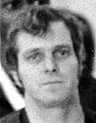 Ellis Wayne Felker
Murderer ? · USA · 1981
Ellis Wayne Felker (c. 1948 – November 15, 1996) was convicted of murder and re…
1 victim
Ellis Wayne Felker
Murderer ? · USA · 1981
Ellis Wayne Felker (c. 1948 – November 15, 1996) was convicted of murder and re…
1 victim
 John Kogut
Murderer ? · USA · 1984
John Kogut was a 21-year-old high school dropout and unemployed landscaper. In…
1 victim
John Kogut
Murderer ? · USA · 1984
John Kogut was a 21-year-old high school dropout and unemployed landscaper. In…
1 victim
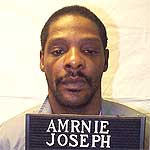 Joseph Amrine
Murderer ? · USA · 1985
Joseph Amrine was a death row inmate in Missouri. He was housed with the victim…
1 victim
Joseph Amrine
Murderer ? · USA · 1985
Joseph Amrine was a death row inmate in Missouri. He was housed with the victim…
1 victim
 Larry Griffin
Murderer ? · USA · 1980
Larry Griffin — defendant; executed in Missouri on June 21, 1995 · Quintin Moss…
1 victim
Larry Griffin
Murderer ? · USA · 1980
Larry Griffin — defendant; executed in Missouri on June 21, 1995 · Quintin Moss…
1 victim
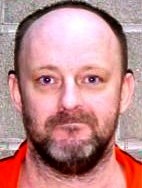 Lemuel Prion
Murderer ? · USA · 1992
October 24, 1992 — The arms of the 21-year-old female victim were discovered in…
1 victim
Lemuel Prion
Murderer ? · USA · 1992
October 24, 1992 — The arms of the 21-year-old female victim were discovered in…
1 victim
 Lendell Hunter
Murderer ? · USA · 1975
Lendell Hunter carried out a string of violent rapes that shocked Augusta, Geor…
1 victim
Lendell Hunter
Murderer ? · USA · 1975
Lendell Hunter carried out a string of violent rapes that shocked Augusta, Geor…
1 victim
 Michael Robinson
Murderer · USA · 1994
Michael Robinson was prosecuted in the Ninth Judicial Circuit, Orange County, u…
1 victim
Michael Robinson
Murderer · USA · 1994
Michael Robinson was prosecuted in the Ninth Judicial Circuit, Orange County, u…
1 victim
 Michel Peiry
Serial killer · USA / France / Switzerland · 1981
Michel Peiry (born 28 février 1959), nicknamed “Le sadique de Romont (FR)”, was…
5 victims
Michel Peiry
Serial killer · USA / France / Switzerland · 1981
Michel Peiry (born 28 février 1959), nicknamed “Le sadique de Romont (FR)”, was…
5 victims
 Pierre Jaccoud
Homicide ? · Switzerland · 1958
Pierre Jaccoud (born in 1905) was a Swiss lawyer and politician. He served as “…
1 victim
Pierre Jaccoud
Homicide ? · Switzerland · 1958
Pierre Jaccoud (born in 1905) was a Swiss lawyer and politician. He served as “…
1 victim
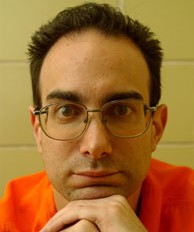 Martin Tankleff
Homicide · USA · 1988
Martin (“Marty”) Tankleff (born August 29, 1971) was a Long Island, New York re…
2 victims
Martin Tankleff
Homicide · USA · 1988
Martin (“Marty”) Tankleff (born August 29, 1971) was a Long Island, New York re…
2 victims
- Gender
- male
- Country
- United Kingdom
- Location
- Aldershot Common, Hampshire , England, United Kingdom
- Date of birth
- 1961
- Age at first offence
- 21
- Characteristics
- miscarriage of justice, torture
- Victim profile
- Margaret Johnson, 66, and Ann Lee, 45
- Method of murder
- St abbing with a double-edged knife
- Date(s) of murder
- May 10, 1982
- Years active
- 1982
- Date of arrest
- —
- Status
-
Conviction quashed; sentenced to life imprisonment on August 9, 1984; released on December 1, 2000; convictions exonerated on March 5, 2001
Case record: Peter Alan Fell
Background
Peter Alan Fell was involved in a case in which he made phone calls to police after two women were stabbed to death while walking their dogs.
Fell had been described as a fantasist and an inveterate attention seeker. He also had a history portrayed as attention seeking, including claims while in the army that he had been attacked by civilians and a claim that he was an army boxing champion. He also tried to implicate himself in the Yorkshire Ripper murders by phoning the police and giving his name.
Fell was described as being mentally and emotionally vulnerable, with psychiatric evidence described as showing him to have an emotionally vulnerable and “suggestible” personality. A psychologist, Gisli Gudjonsson, testified that he had had doubts about the reliability of Fell’s confession since 1988.
Fell’s childhood was described as disturbed; his parents split up when he was three and he was given up by two sets of foster parents, leaving him in the care of a children’s home.
Fell was later described as a practising Christian while in prison, and his faith in God was said to have helped him cope.
The offence
On May 10, 1982, two women were attacked and stabbed on Aldershot Common, on Hungry Hill just outside Aldershot, Hampshire, while they were walking their dogs.
Mrs Margaret Johnson was 66 years old. She owned a red setter called Tara and was attacked while approximately 20 yards away from a five-bar gate where she had run to escape. She was stabbed 11 times.
Mrs Ann Lee was 44 years old. She left her home in Highfield Gardens, Aldershot with her labrador, Monty, to meet Mrs Johnson. She was discovered lying on the path at the top of a small hillock. She was stabbed five times with a double-edged knife.
The police investigation described that there were no witnesses, that the murders were committed in daylight, and that the bodies were found close to an army base.
The police ruled out robbery and rape as potential motives. No weapon was found.
Robbery and rape were ruled out as potential motives, and no weapon was found.
Two suspicious sightings were described on the day: a man wearing a camouflage jacket and “a lorry driver - crying, with his head in his hands” were seen close to the murder scene. The police dismissed both.
Fell later alleged that he had killed the women because they had laughed at him and one of them reminded him of his mother, whom he hated.
Investigation
A huge police investigation followed the murders, involving 100 officers.
Fell made telephone calls to police after the murders became known, and he made additional calls on later dates identifying himself as the killer.
Fell was described as being seen five times by police in the months after the murders because he brought suspicion on himself in a series of telephone calls.
The renewed media publicity was described as triggering further phone calls from Fell while he was drunk and depressed on the anniversary of the killings.
On a day after the murders, Fell was described as staggering out of a pub in Aldershot and calling the police. He told an officer he had met a man who had told him he was the killer, and he said the man lived at 10 York Road, which was described as his own address. The police did nothing, so Fell rang again the next day offering the same information.
It was described that it was another two weeks before Fell was questioned, and then he was ruled out as a suspect. Detectives concluded that Fell could not have been on the common at the time of the murder, and that there was no motive.
Fell was later described as having moved to Bournemouth after another night of heavy drinking. He then called the local police and said: “I know who did Bournemouth ... Aldershot double, double murderer on May 10, '78.” He gave his own name.
A further set of events was described regarding the content and reliability of Fell’s confession. Police conceded that Fell’s account lacked detail and did not tally with known facts. It was described that the confessions came immediately after officers had discussed with him the likely outcomes of pleading guilty to murder or manslaughter.
Gisli Gudjonsson’s testimony and the psychiatric evidence were described as concerning the reliability of Fell’s confession.
The criminal cases review commission referred the case back to the court of appeal in September 1999.
Arrest
A month after the murders, Fell was described as being arrested and detained for three days without access to a lawyer.
Fell was later described as being interviewed by the police for nearly 10 hours in seven sessions without a solicitor.
Fell was described as confessing after 72 hours of questioning without a solicitor, with supporters alleging that his partial confession was extracted after he had been held in solitary confinement for 72 hours, denied access to a solicitor despite repeated requests, and refused food.
Trial
Fell pleaded not guilty.
Fell was tried at Winchester Crown Court and was found guilty by a 10-2 majority verdict of guilty for each murder in August 1984, following a 19-day trial.
The jury deliberated for 25 hours and 30 minutes before reaching the 10-2 majority verdicts of guilty for each murder.
The court heard that Fell had made 13 anonymous phone calls to police naming himself as the killer.
During the trial, the jury was told that Fell had made a partial confession to police admitting the murders, while also denying remembering anything about stabbing the two women.
Fell’s defence included that he was not called by the defence to give evidence.
At some point during the trial proceedings, author David Jessell described officers being taped saying to Mr Fell: “the sooner you see clear, my sunshine, the better” and “from the day you started to walk you lied.” These statements were described in the context of the interrogation.
Fell was described as having repeatedly insisted that he made up the whole story because he wanted “to be somebody”. In one account of his denial he told detectives: “I have not murdered anyone,” “Never have and never will, there's not a lot else I can say ... I know the phone calls and all that ... that's only because I wanted to be someone. I'm nobody.”
Sentencing
Fell was sentenced in July 1984 to life imprisonment on each of two counts of murder.
He was sentenced to two life terms in 1984 after being found guilty by a 10-2 majority verdict of a double murder that occurred in 1982.
The sentencing was described as taking place at Winchester Crown Court on August 9, 1984, and he was given two life sentences.
Appeals
After conviction, Fell later withdrew his confessions and applied for leave to appeal against conviction. Leave to appeal was refused by the Court of Appeal in 1985.
A further application was made to the Home Office in October 1991, and the case was taken up by a legal human rights organisation named Justice. Justice brought the case to the attention of the Criminal Cases Review Commission, which referred the case back to the Court of Appeal in September 1999.
During the appeal hearing, Patrick O’Connor, QC, accused the police of putting Fell under pressure when he was in a particularly vulnerable state.
The Crown conceded that Fell’s confessions were unreliable and that, on that basis alone, his convictions could not be upheld.
The appeal quashing was described as being unsafe, and the conviction was quashed by Lord Justice Waller. The panel included Mr Justice Garland and Mr Justice Sachs, and the decision was described as leaving the mystery of who stabbed Ann Lee and Margaret “Peggy” Johnson unresolved.
Fell was released on bail in December 2000 pending the outcome of the appeal court hearing in March 2001. He was exonerated on March 5, 2001.
Fell later said: “If I dwell on it, it will just do me more harm, so I don't want to dwell on it. I'll just take one day at a time. I have always believed that one day I would be proved innocent,” and: “I used to say a lot of silly things but did not realise they would be used against me at the trial.” He was also described as saying: “I’m very happy and now just taking one step at a time. I don't want to dwell on it, but just to move on.” He further said: “I have just got to put it behind me and start afresh. If I dwell on it, it will just do me more harm.” and: “My fate is in God's hands.”
Jim Nicholl, Fell’s lawyer, said: “He might be a crackpot, he might be crazy, he might be all those things, or probably was in 1982. But a murderer he was not and never has been. He is completely and totally innocent.”
Detective Superintendent Des Thomas said: “We never give up on murders,” and: “If any further evidence is forthcoming, we will take the appropriate action. The families of the victims will be informed of developments.”
Justice spokeswoman Lib Peck said: “We are really delighted that this case has been referred back to the Court of Appeal,”
In a statement about why he confessed, Fell also said:
Outcome
Fell’s convictions for the double murder were quashed and the conviction was described as unsafe.
The decision meant that the identity of the person who stabbed Ann Lee and Margaret “Peggy” Johnson had yet to be solved.
Aftermath
After quashing, Fell was described as relieved and preparing to start afresh.
Fell was described as waiting to hear the court’s reasons and as preparing for a full appeal hearing.
Compensation was discussed, including that Fell would probably be due a substantial sum in compensation and that the question of possible compensation claim was in the hands of his solicitors.
Hampshire police said they would review the murder case.
Hyndburn MP Greg Pope called on the Home Secretary Jack Straw to order a Police Complaints Authority investigation into the way the case was investigated.
Fell was described as being ordered to stay at the bail hostel in London until after the outcome of the appeal hearing and as unsure whether he would return to Lancashire in the long term.
Fell’s brother Paul, of Great Harwood, said: “They called him into a room, asked him to sit down and offered him a cup of coffee, then they said 'you are going to be going out next week.' “I can't believe they would do something like this if he wasn't going to win the appeal.”
Other details
Fell was described as originally from Lancashire and having taken a job in a Bournemouth hospital.
Fell was described as a hospital porter, and later as working as a school groundsman.
Fell was described as marrying his fiancée Ann after his arrest and as having a baby, Sara, in 1983.
A description of the trial also stated that Fell made 13 anonymous phone calls, and that the police released him on bail for three months on the same day he made the confession.
Several claims related to trial safety and evidential gaps were described: there was no forensic evidence, no murder weapon was found, he was not picked out at an identity parade, and detectives came close to charging a second man with the murders.
An alibi was described as standing up: Fell claimed he was in a bank cashing a cheque at the time of the killings.
Two additional claims were described regarding potential witnesses and mistaken identity, including:
- A woman attacked in a similar fashion a year before the two murders said the photofit of the double killer was the same man who attacked her; it was stated that Fell was serving in Germany at the time she was attacked.
- A second woman came forward since media publicity and said she saw a “crazy-looking” man near the murder scene just an hour before the killings who was definitely not Fell.
Fell was described as having been originally from Lancashire and later living as part of his adult life behind bars.
Spotted an error, or have more information about this case?