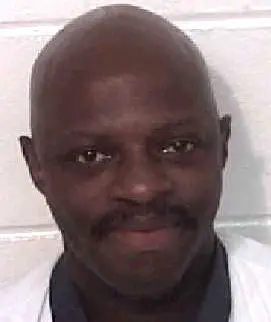
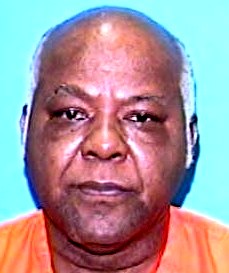
Eric Lynn Ferrell
Murderer Brian Kevin Rosenfeld
Murderer · USA · 1985
Brian Kevin Rosenfeld Brian Kevin Rosenfeld was sentenced to three concurrent l…
23 victims
Brian Kevin Rosenfeld
Murderer · USA · 1985
Brian Kevin Rosenfeld Brian Kevin Rosenfeld was sentenced to three concurrent l…
23 victims
 Yahweh ben Yahweh
Murderer · USA · 1980
Yahweh ben Yahweh was born and legally named Hulon Mitchell Jr. (October 27, 19…
23 victims
Yahweh ben Yahweh
Murderer · USA · 1980
Yahweh ben Yahweh was born and legally named Hulon Mitchell Jr. (October 27, 19…
23 victims
 Russell Ellwood
Murderer · USA · 1991
Russell Ellwood was a former taxi driver. Authorities suspected him of killing…
20 victims
Russell Ellwood
Murderer · USA · 1991
Russell Ellwood was a former taxi driver. Authorities suspected him of killing…
20 victims
 Lem Tuggle
Murderer · USA · 1971
Lem Tuggle was executed by lethal injection in Virginia on December 12, 1996. L…
2 victims
Lem Tuggle
Murderer · USA · 1971
Lem Tuggle was executed by lethal injection in Virginia on December 12, 1996. L…
2 victims
 Gerald Stano
Serial killer · USA · 1969
Gerald Eugene Stano (September 12, 1951 – March 23, 1998) was executed by elect…
41 victims
Gerald Stano
Serial killer · USA · 1969
Gerald Eugene Stano (September 12, 1951 – March 23, 1998) was executed by elect…
41 victims
 Edward Lee Busby
Murderer · USA · 2004
Name: Edward Lee Busby, Jr. TDCJ Number: 999506 Date of birth: 07/25/1972 Age a…
1 victim
Edward Lee Busby
Murderer · USA · 2004
Name: Edward Lee Busby, Jr. TDCJ Number: 999506 Date of birth: 07/25/1972 Age a…
1 victim
 William George Bonin
Serial killer · USA · 1972
William George Bonin was executed by lethal injection in California on February…
44 victims
William George Bonin
Serial killer · USA · 1972
William George Bonin was executed by lethal injection in California on February…
44 victims
 Willa Blanc
Murderer · USA · 2009
Willa Blanc was convicted after pleading guilty in a case involving the kidnapp…
1 victim
Willa Blanc
Murderer · USA · 2009
Willa Blanc was convicted after pleading guilty in a case involving the kidnapp…
1 victim
- Gender
- male
- Country
- USA
- Location
- DeKalb County, Georgia, USA
- Date of birth
- 1963
- Age at first offence
- 24
- Characteristics
- robbery, alcohol, drug addict
- Victim profile
- His 72-year-old grandmother and 15-year-old cousin
- Method of murder
- Shooting
- Date(s) of murder
- December 30, 1987
- Years active
- 1987
- Date of arrest
- Next day
- Status
-
Sentenced to death
Sentenced to death in September 1988
Case overview
Eric Lynn Ferrell was convicted of murdering his 72-year-old grandmother and his 15-year-old cousin and was sentenced to death in September 1988 in DeKalb County. He was also convicted of armed robbery and possession of a firearm by a convicted felon. The jury found statutory aggravating circumstances on each count of murder, and it imposed death sentences for each of the murders.
Timeline
- December 29-30, 1987 — Ferrell spent the night at his grandmother’s house.
- December 30, 1987 (shortly before noon) — Another relative stopped by the house and found the bodies of Ferrell’s grandmother and cousin in a bedroom.
- December 30, 1987 (shortly after 3:00 p.m.) — Ferrell arrived at the scene and was escorted to the police station to be interviewed.
- December 30, 1987 (4:00 p.m.) — Ferrell gave a written statement to detective Eunice.
- December 30, 1987 (by 7:30 p.m.) — Investigators decided to talk in more detail to Ferrell to pinpoint the time of death and details not fully explored in the initial statements.
- December 30, 1987 (11:15 p.m.) — Detectives Mabe and Hall “Mirandized” Ferrell and talked to him again.
- December 31, 1987 (3:45 a.m.) — Ferrell was formally arrested and four spent rounds were found in his pockets during booking.
- December 31, 1987 (after they returned to jail) — Ferrell told a detective that he wanted to give another statement.
- December 31, 1987 (early the next morning) — The crime occurred the morning of December 30, 1987, and Ferrell was formally arrested early the next morning.
- January term of 1988 — Ferrell was indicted.
- September 12 through September 17, 1988 — The case was tried.
- September 23, 1988 — A motion for new trial was filed.
- January 4, 1989, and April 10-11, 1990 — The motion for new trial was heard.
- July 30, 1990 — The motion was denied.
- September 24, 1990 — The case was docketed in the appellate court.
- November 19, 1990 — Oral arguments were heard.
- March 15, 1991 — The case was decided.
- March 27, 1991 — Reconsideration was denied.
- July 19, 1995 — Ferrell filed a petition for writ of habeas corpus.
- July 13, 1999 — An evidentiary hearing was held in the habeas proceedings.
- February 8, 2001 — The habeas court vacated Ferrell’s convictions and sentences in an order filed on this date.
- October 22, 2001 — The decision on habeas proceedings was dated.
Background
Ferrell was 34 when he was sentenced to death in September 1988. The bodies were found on December 30, 1987. Ferrell was on probation at the time of his grandmother’s and cousin’s killings.
Ferrell’s grandmother was named Willie Myrt Lowe. Ferrell’s cousin was Tony Kilgore.
The offence
Ferrell’s grandmother and cousin were shot twice in the head at very close range, with close-range gunshot wounds to the head described as “execution style.” The state’s theory was that Ferrell killed his cousin while the latter was in bed asleep, that the grandmother was awakened by the noise and went to the cousin’s bedroom, that Ferrell grabbed her, forced her to the floor, and shot and killed her. The state conceded at trial that the victim was not physically tortured but contended she was psychologically tortured.
A substantial amount of money was missing from Ferrell’s grandmother’s house. Cash and rolled coins were described as missing, and the murders involved armed robbery.
Investigation
Police initially thought the double homicide was revenge for a homicide committed by Ferrell’s uncles a few weeks earlier.
When relatives were interviewed, Ferrell returned to try to enter the house and repeatedly asked, “What's happened?” In his pockets, police found four spent rounds of .22 ammunition and over $600 in cash. A ballistics examination identified a .22 caliber revolver as the murder weapon, and the four shell casings found in Ferrell’s pocket were determined to have been fired from the murder weapon. A search warrant was obtained and Ferrell’s residence was searched, resulting in three handguns including the murder weapon being obtained.
Ferrell was unable to account satisfactorily for the money in his pocket.
A search incident to Ferrell’s arrest discovered four .22 caliber shell casings, matching the ammunition found in a bedroom and bearing markings consistent with having been fired by the murder weapon.
Detectives were unable to locate a person named “Murphy” whom Ferrell said came by his house that morning to pay him $450 for a “roofing job.” Ferrell’s mother could not recall such a visit. Ferrell’s employer stated that Ferrell worked very little in the last two weeks, knew beforehand he had no work scheduled on the day in question, and usually had little or no money, and that the employer often had to buy Ferrell’s lunch for him. Investigators also learned that Ferrell’s grandmother usually kept a large amount of money in her house, but that there was none in the house after her death. Investigators also learned there was no alarm clock in the grandmother’s bedroom. Ferrell’s uncle (one of the two arrested for murder a few weeks previously) had left a handgun with Ferrell before turning himself in.
Arrest and custody
Ferrell arrived at the scene shortly after 3:00 p.m. on December 30 and was escorted to the police station to be interviewed. He was not a suspect at that time, and the interviewing officers testified that he was not under arrest and not in custody and could have left if he had chosen to do so.
Ferrell gave a written statement at 4:00 p.m. to detective Eunice. Detective Eunice had no further contact with Ferrell after obtaining this statement.
By 7:30 p.m., investigators decided to talk in more detail to Ferrell, who was still not a suspect and still could have left if he had wanted to.
At 11:15 p.m., detectives Mabe and Hall “Mirandized” Ferrell and talked to him again. Ferrell was later formally arrested at 3:45 a.m. during booking, when he was searched and four spent rounds fired from the murder weapon were found in his pockets. The next morning, Ferrell was escorted to a magistrate by detective Dillon to set a date for his committal hearing. After the return to jail, Ferrell told Dillon he wanted to give another statement.
Statements
Ferrell’s first two statements were challenged on appeal as not having been preceded by advice of Miranda rights. The trial court found Ferrell was not in custody when he gave his first two statements and concluded they were admissible.
Ferrell’s third statement was challenged as involving partial Miranda advice and as having been given after an illegal search. The record showed that his Miranda rights were fully explained to him, and that he read and signed the waiver form; the third statement was properly admitted.
Ferrell’s fourth statement was challenged as occurring after his 6th Amendment right to counsel attached and after he invoked that right. Assuming the right to counsel had attached and he had invoked it at the hearing, the appellate court concluded there was no violation because Ferrell initiated the interrogation.
Ferrell’s first written statement to detective Eunice at 4:00 p.m. stated he had spent the night with the victims because they were receiving threatening telephone calls and were afraid to stay alone. He said his grandmother awakened him at 5:30 a.m. and he had gone home to get ready for work, but no work was forthcoming, so he visited his probation officer in another county. He claimed he called his grandmother at 9:00 a.m. and she was still alive.
Ferrell told investigators about his probation and volunteered that he had been previously arrested for murder. During questioning, detective Davis testified: “Well, at that point I realized that I was in there interviewing this guy and I didn't know if anyone had ever searched him. I was concerned if he might have a weapon on him. I asked him if he had anything in his pockets. . . . [A]s I asked the question, he said, "Nothing, except this money." And as he stood up, I could see there was a big bulge . . . in his right front pocket. He reached his hand into the pocket and pulled the money out. Davis counted the money, so Ferrell could not later accuse them of taking part of it.”
Ferrell stated he kept his money on him rather than using a bank, that he already had a couple of hundred dollars, and that “Murphy” had come by his house to pay him $450 for a “roofing job.” Ferrell later stated he could have been mistaken about the alarm clock, after investigators attempted to verify details.
In his later statement after he had asked to give another statement, Ferrell claimed that before he left his grandmother’s house, two armed men entered, killed both victims, gave Ferrell the money and a gun, and left.
Trial
Ferrell was convicted by a jury for the murder of his grandmother and his cousin, and for the offenses of armed robbery and possession of a firearm by a convicted felon. He was given the death penalty for each of the murders.
At the trial scene, Ferrell repeatedly asked “What's happened?” while police officers were at the scene. At trial, the jury rejected Ferrell’s account that unknown men confronted him as he was leaving, pushed into the house, and murdered the victims with Ferrell’s .22 caliber handgun, left money in his pocket, and told him to bring his uncle.
Jury instructions and evidentiary rulings challenged on appeal
The trial court instructed the jury that, “[m]alice shall be implied where no considerable provocation appears and where all the circumstances of the killing show an abandoned and malignant heart.” The court did not err in instructions defining armed robbery as a matter of state law and did not shift any burden of proof to the defendant.
The appellate court found no merit to challenges to sentencing phase instructions and to alleged prosecutorial misconduct and improper argument. The appellate court also concluded there was no abuse of discretion in the trial court’s rulings on admissibility of evidence and testimony.
The court rejected a contention that the offense of theft by taking should have been charged as a lesser included offense of armed robbery because Ferrell did not request such an instruction.
The court addressed other enumerations of error, including claims about the admission of pre-trial statements, ineffective assistance of counsel, and the denial of “conflict-free” counsel in response to a pre-trial objection to public defenders.
Sentencing
For each count of murder, the jury found as statutory aggravating circumstances that the murders were committed while the offender was engaged in the commission of the offenses of murder and armed robbery. For Count 1, the jury also found the murder was “outrageously and wantonly vile, horrible or inhuman in that it involved torture and depravity of mind.” The state conceded the victim was not physically tortured but argued psychologically tortured.
The appellate court concluded the evidence did not support the jury’s finding as to Count 1 that involved torture and depravity of mind, and it compared the evidence to prior cases in which serious psychological abuse had been found. The appellate court held that, even though the evidence did not support the b (7) finding as to Count 1, the jury’s remaining findings of statutory aggravating circumstances were sufficient to allow the jury to consider imposing death sentences on both counts. The appellate court concluded the jury’s b (7) finding as to Count 1 did not lead to the imposition of death sentences under the impermissible influence of passion, prejudice, or other arbitrary factors.
The appellate decision also found no merit to challenges to the sentencing phase verdict form instructions and other sentencing phase jury charge issues.
A motion for new trial was denied on July 30, 1990.
Appeals
Direct appeal
Ferrell appealed his conviction and sentences. The appellate court reviewed multiple claims, including:
- Admission of four pre-trial statements (Miranda issues, search warrant issues, and 6th Amendment right to counsel issues).
- Ineffective assistance of counsel, including challenges to counsel’s preparation and mitigation evidence.
- Alleged conflict of interest in counsel’s representation by the same public defenders’ office that represented Ferrell’s uncles in a murder case.
- Jury instructions (including a malice instruction, credibility instructions, and instructions on armed robbery).
- Sentencing phase instructions.
- Claims about failure to provide “conflict-free” counsel.
- Claims about alleged prosecutorial misconduct and improper argument.
The appellate court concluded that Ferrell’s complaints were without merit and affirmed the death sentences.
The case was titled FERRELL v. THE STATE and is identified as S90P1667 (261 Ga. 115) (401 SE2d 741) (1991), with CLARKE, Chief Justice.
Habeas corpus proceedings
Ferrell filed a petition for writ of habeas corpus on July 19, 1995. An evidentiary hearing was held on July 13, 1999.
The habeas court vacated Ferrell’s convictions and sentences in an order filed on February 8, 2001. The warden appealed in Case No. S01A0840 and Ferrell cross-appealed in Case No. S01X0842.
The habeas court’s disposition addressed procedural default and sentencing phase jury charge claims, alleged ineffective assistance of appellate counsel, and an alleged mental retardation claim. The habeas proceedings also addressed the method of execution, concluding execution by electrocution was unconstitutional and would be carried out by lethal injection in accordance with OCGA 17-10-38, as amended, after the decision in Dawson v. State.
The decision is dated October 22, 2001 and includes arguments from multiple attorneys and amici curiae.
Aftermath
Ferrell’s habeas proceedings involved repeated analysis of procedural default and of claims barred as res judicata that had been previously rejected on direct appeal, including ineffective assistance of trial counsel, conflict of interest of trial counsel, and improper argument regarding victim impact and victim worth.
The habeas analysis considered sentencing phase jury instructions and concluded they were not constitutionally deficient in the respects argued.
The habeas analysis also considered whether appellate counsel had rendered ineffective assistance in several ways and concluded Ferrell failed to demonstrate ineffective assistance in selecting, preparing, and presenting claims at the motion for new trial and on direct appeal.
Other details
Ferrell paid past due moneys through his probation officer on the day of the murders to avoid having his probation revoked.
Ferrell told his friend that he had recently received $900 in compensation from Rockdale County for wrongful detention and that he had a zippered pouch full of rolled coins. He bought a six-pack of beer for his friend and himself and then called home.
A neighbor answered Ferrell’s home phone and informed Ferrell that his grandmother was “kinda sick.” Ferrell told his friend he had been informed that someone had hurt his grandmother.
Ferrell speculated to his friend that the mafia might have hurt his grandmother in retaliation for a killing recently committed by his uncle.
Ferrell had been placed on “suicide watch” after his trial, and the admission of a document showing this placement was challenged; the trial court sustained the state’s objection to admitting the document, and Ferrell did not show how it would have been relevant to any issue.
Ferrell claimed that during the post-trial period his due-process rights were violated when he was examined by a psychiatrist without notice to counsel; the appellate court concluded that no harm resulted because the examination occurred after trial and the state did not introduce evidence resulting from such an interview.
Ferrell asserted in his habeas petition that he was mentally retarded. Ferrell relied on affidavit testimony from multiple mental health professionals, and the habeas proceedings also included conflicting evidence from trial counsel’s expert testing and prison testing. The habeas court concluded Ferrell failed to prove beyond a reasonable doubt that he was mentally retarded under Georgia statutory definition.
In the habeas proceedings, the method-of-execution issue was presented, and the portion of the judgment addressing electrocution as cruel and unusual punishment was affirmed, with future executions directed to be carried out by lethal injection in accordance with OCGA 17-10-38, as amended.
The appellate decision included an Appendix that listed attorneys, including Robert E. Wilson, District Attorney; James W. Richter and Desiree Sutton Peagler, Assistant District Attorneys; Michael McDaniel and Michael J. Bowers; the Attorney General Michael J. Bowers, Attorney General; Andrew S. Ree, for appellee; and Alice C. Stewart, for appellant.
The record noted that the crime occurred the morning of December 30, 1987; Ferrell was formally arrested early the next morning; he was indicted during the January term of 1988; the case was tried from September 12 through September 17, 1988; and a motion for new trial was filed on September 23, 1988, with amendments and a hearing on January 4, 1989 and April 10-11, 1990, followed by denial on July 30, 1990.

Spotted an error, or have more information about this case?