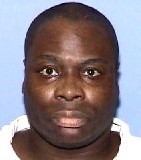
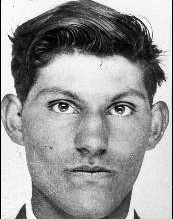
Edward Lee Busby
Murderer Robert Martines Perez
Murderer · USA · 1994
Name: Robert Martines Perez · Other name used in proceedings: Robert Martinez P…
15 victims
Robert Martines Perez
Murderer · USA · 1994
Name: Robert Martines Perez · Other name used in proceedings: Robert Martinez P…
15 victims
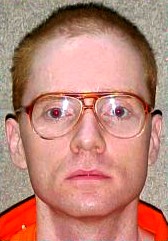 Robert Glen Jones
Murderer · USA · 1996
Defendant: Robert Glenn Jones (ADC#070566) · Co-defendant: Scott Nordstrom (ADC…
7 victims
Robert Glen Jones
Murderer · USA · 1996
Defendant: Robert Glenn Jones (ADC#070566) · Co-defendant: Scott Nordstrom (ADC…
7 victims
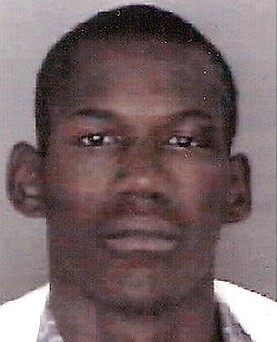 Joshua Wayne Andrews
Murderer · USA · 2000
Joshua Wayne Andrews was a serial killer accused of killing several people in V…
5 victims
Joshua Wayne Andrews
Murderer · USA · 2000
Joshua Wayne Andrews was a serial killer accused of killing several people in V…
5 victims
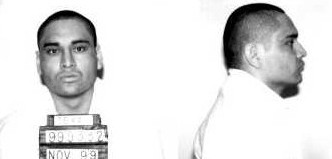 Juan Carlos Alvarez
Murderer · USA · 1998
Juan Carlos Alvarez, born on March 9, 1977, in San Luis, Mexico, was a Hispanic…
5 victims
Juan Carlos Alvarez
Murderer · USA · 1998
Juan Carlos Alvarez, born on March 9, 1977, in San Luis, Mexico, was a Hispanic…
5 victims
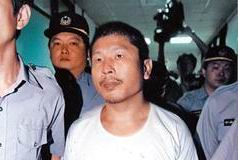 Chen Chin-hsing
Murderer · Taiwan · 1997
Chen Chin-hsing was executed by firing squad on October 6, 1999. Pai Hsiao-yen…
4 victims
Chen Chin-hsing
Murderer · Taiwan · 1997
Chen Chin-hsing was executed by firing squad on October 6, 1999. Pai Hsiao-yen…
4 victims
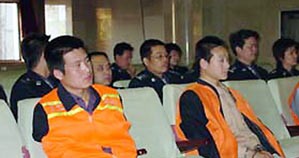 Changyin & Changping Shen
Serial killers · China · 1999
Changyin Shen and Changping Shen were convicted and sentenced to death for kill…
12 victims
Changyin & Changping Shen
Serial killers · China · 1999
Changyin Shen and Changping Shen were convicted and sentenced to death for kill…
12 victims
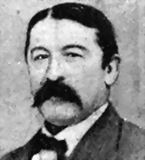 John Gordon
Murderer? · USA · 1843
John Gordon (died February 14, 1845) was executed by hanging on February 14, 18…
1 victim
John Gordon
Murderer? · USA · 1843
John Gordon (died February 14, 1845) was executed by hanging on February 14, 18…
1 victim
 Ian Brady
Serial killer · United Kingdom · 1963
Ian Brady — Scottish serial killer. Ian Brady was born Ian Duncan Stewart on Ja…
5 victims
Ian Brady
Serial killer · United Kingdom · 1963
Ian Brady — Scottish serial killer. Ian Brady was born Ian Duncan Stewart on Ja…
5 victims
- Gender
- male
- Country
- USA
- Location
- Tarrant County, Texas, USA
- Date of birth
- J uly 25, 1972
- Age at first offence
- 32
- Characteristics
- kidnapping, robbery
- Victim profile
- Laura Lee Crane, 77
- Method of murder
- P lacing tape over her nose and mouth causing her death
- Date(s) of murder
- January 30, 2004
- Years active
- 2004
- Date of arrest
- 2 days after
- Status
-
Sentenced to death
Sentenced to death on November 18, 2005
Case details
Name: Edward Lee Busby, Jr. TDCJ Number: 999506 Date of birth: 07/25/1972 Age at time received: 33 Education level: 10 Date received: 11/18/2005 Date of offence: 01/30/2004 Age at the offence: 31 County: Tarrant Race: Native Gender: Male Hair color: Black Height: 6' 00'' Weight: 291 Eye color: Brown Prior occupation: Cook, Laborer Co-defendants: None
Prior record
TDCJ # 828128 — on a one year sentence for possession/manufacture/delivery of drugs from Potter County. TDCJ # 1016882 — on a two year sentence for robbery from Tarrant County.
The offence
On or about January 30, 2004, Edward Lee Busby, Jr. and a female accomplice (“Kitty”) abducted a seventy-eight-year-old woman in Fort Worth, then robbed and murdered her. The elderly victim suffocated from having multiple layers of duct tape wrapped tightly over her entire face that covered her nose and mouth. According to the medical examiner's testimony, approximately 23.1 feet of duct tape was wrapped around the victim's face with such force that her nose deviated from its natural position.
Laura Lee Crane, 77, was killed in 2004 after she was abducted from a southwest Fort Worth store parking lot where she had gone to shop. Mrs. Crane was wrapped in 37 feet of duct tape when she was found in Davis, Okla.
Busby said he duct taped Laura Lee Crane but did not intend to kill her.
Investigation
Edward Lee Busby, Jr. made various statements to the FBI, Oklahoma police, and Fort Worth detectives between February 1, 2004 and February 3, 2004.
Busby initially claimed that he and Kitty obtained the victim's car in Fort Worth from someone named “JD,” with the victim's body in the trunk, and that Busby and Kitty merely disposed of the victim's body in Oklahoma.
On February 3, 2004, Busby led the police to the location of the victim's body in Oklahoma. At that location, Busby made a tape-recorded statement abandoning the “JD” story and admitting that he and Kitty abducted, robbed, and killed the victim.
On February 20, 2004, Busby gave a written statement to the police again admitting that he and Kitty abducted, robbed, and killed the victim.
In Busby’s February 3, 2004 tape-recorded statement and February 20, 2004 written statement, Kitty was portrayed as the leader of their criminal enterprise, with Busby following her instructions. In both statements, Busby admitted that he wrapped the duct tape over the victim's face while also stating several times that he did not mean to kill her.
A Fort Worth detective (Johnson) testified at the suppression hearing that, before her arrival in Oklahoma City on February 1, she had “been made aware that a probable cause arrest warrant for Edward Lee Busby, Jr., for the offense of aggravated kidnapping had been issued earlier on February 1 st of 2004.” The record contained no such warrant.
Johnson also testified at trial that she had reason to believe that appellant had been “through the magistrate's warning” in Oklahoma City. When defense asked, “Did you have any reason to believe that he had been taken before any judge in Oklahoma City?”, Johnson answered: “I believe he had been through the magistrate's warning, yes.”
Arrest
On February 1, 2004, an Oklahoma City police officer (Padgett) arrested Edward Lee Busby, Jr. in Oklahoma City after stopping him for committing several traffic violations while driving the victim's car.
During the arrest period, the Oklahoma state charges filed against Busby were for unauthorized use of a motor vehicle, improper right turn, and driving with a suspended license. Padgett testified that “within 48 hours,” a judge initialed off that there was probable cause to make the arrest.
Padgett testified about a probable cause affidavit he filled out for Edward Busby, Jr. The testimony included: “This is the probable cause affidavit that I filled out for Edward Busby and it was for the unauthorized use of a motor vehicle, the improper right turn, and then driving suspension, and all of those were state charges.”
Padgett also testified that after state charges were signed in front of a notary, “Lieutenant Foreman” signed as jail supervisor and the matter went to the judge “within 48 hours” for probable cause.
Custodial statements, press conference, and counsel
After being informed of and waiving his rights, Busby voluntarily made the February 1, 2004 through February 3, 2004 custodial statements in Oklahoma City.
On February 6, 2004, a warrant was issued by a district judge in Fort Worth for Busby’s arrest based on a capital-murder complaint filed that day by the Tarrant County District Attorney's Office.
On Thursday, February 19, 2004, Fort Worth detectives brought Busby from Oklahoma City to Fort Worth. That same day, Busby appeared before a Texas magistrate and requested appointment of counsel after being informed of his rights.
Busby made the February 20, 2004 written statement after initiating contact with Fort Worth detectives by repeatedly asking to speak to them. Busby held a press conference on February 20, 2004 during which he repeated the claim that he did not mean to kill the victim when he wrapped duct tape around her face.
Busby was appointed counsel on Monday, February 23, 2004. He was indicted on March 31, 2004.
Trial
Verdict and conviction: A jury convicted Busby on November 11, 2005 of capital murder. Tex. Pen. Code Ann., §19.03(a)(7)(A). Sentence at trial: Pursuant to the jury's answers to the special issues set forth in Tex. Code Crim. Proc. Article 37.071, §§2(b) and 2(e), the trial judge sentenced Busby to death on November 17, 2005.
Jury arguments and points of error
Failure to testify comments (points one through three)
In points of error one through three, Busby claimed that during closing jury arguments at the guilt phase, the State made three direct comments on his failure to testify. The trial court overruled all three objections.
The defense argument included:
[DEFENSE]: Something very interestingly [sic] happened in the case. Maybe it is only interesting to a lawyer who has spent a lot of time in cases, but I submit to you it is interesting. And that is that the State's very own evidence, specifically State's Exhibit No. 62, being the oral recording, the tape-recording made by the officer and the Defendant back on February 3 rd of 2004, and State's Exhibit No. 99, being the written statement signed by the Defendant on February the 20 th of 2004, the State's very own evidence which they supported, which they vouched for, which they brought to you, raised the issue of intent. Because replete throughout those statements there is reference after reference, after reference by Busby saying that was not my intent. That is not what I wanted. That is not what I desired. That is not what I planned. Replete in the State's evidence, not the Defense evidence, which you could be expected to cast a jaundice eye upon, but the State's evidence brought to you by a police officer of great experience. And then the Defendant's own words saying, that was not my intent. That is very important I submit to you.
The State arguments included emphasized portions that Busby claimed were direct comments on failure to testify:
[STATE]: And I'll mention a few things that I think are particularly interesting, but with regard to some things that Mr. Strickland said, when you boil it all down, they want you to take his word for it. There's Exhibit 62, the tape-recorded statement, Detective Johnson says now, you really haven't told us the whole story, have you, Mr. Busby? And he said, no, I haven't. He admits to lying right there on the spot. Remember when Officer Padgett stopped him on the street? He said where did you get this car? He said, well, my Aunt Geneva Coleman gave it to me. Well, do you know Laura Crane? No, I don't know her. This is the man they want you to take his word for. And he is lying to cops right there on the street. And when it comes to find out, they figure out, hey, this car is a car that he don't belong to be in, they take him in. They arrest him, do all of the things that you have heard about. Is he telling the truth? No. Did he tell Detective Johnson on the side of the road that he hadn't told him the whole story? No. He says, well, I haven't told you the whole story. Now, on February the 20 th , he again says, well, I still haven't told you the whole story. And, folks, I submit to you that it's a pretty logical deduction that he still hasn't told the whole story. * * * Oh, yeah, he wants you to take his word for it that Kitty made him do it. Kitty made me do this. Kitty made me do that. I couldn't resist Kitty. Well, now he can't even keep his story straight, because in the statement that he first gave on the side of the road, they asked him why did you take her car? Well, Kitty told her [sic] that if I loved her, I would take somebody's car for her. And then he comes along later, and why did you tape her up? I was afraid of Kitty. I was afraid Kitty was going to turn me into the police and tell everybody I did it all by myself. He can't keep it straight as to why he did it in the first place. * * * The most interesting thing is he keeps saying Kitty made me do it. Kitty made me do it. Well, you know, ladies and gentlemen, well, I love Kitty. I had to do all of these things because I love Kitty. I had to steal this poor woman's car who had just gone to the grocery store in the middle of the daytime two blocks from her house, but I had to because I love Miss Kitty. Well, I guess if you are married and you have got a husband or wife who gets mad at the neighbor because they make too much noise when they are having a party and you tell your spouse to go over and kill them because they are making too much noise, if you love them, I guess that would be okay with Mr. Busby; or go steal their car, that would be okay with Mr. Busby. Now, ladies and gentlemen, this business of Kitty made me do it, that is not a defense, that is an excuse. It is high time that Mr. Busby took some responsibility for his own conduct instead of blaming it on everybody else. * * * Now, I would suggest to you, ladies and gentlemen, an interesting thing that we need to remember about the Kitty made me do it defense, the statement, State's Exhibit 99 -- and I want to read just briefly to you a paragraph that I thought was particularly pertinent. Remember all of the chances that he had to leave and get away from Miss Kitty? * * * Here he is again. Let's believe him. Let's take his word for it. "When I got back in the motel, I let the seat down in the back to be sure the woman was still alive and she was fine." And you heard Dr. Gofton say that with that kind of duct tape on somebody's nose, they would live about a minute. You want to believe him again? "She was alive and well when we got back to the motel." If he really wanted her to live, why didn't he bring her inside the motel room, take her inside out of the cold? Remember this, Miss Kitty made him do it. But he taped her up when he was away from Miss Kitty. Here is statement 99. Did Miss Kitty make him do it? It's time he takes responsibility in these statements to the police. He doesn't do it. He doesn't avail himself - * * * Okay. Ladies and gentlemen, they say that we want-they-we want you to have our cake and eat it too. No, we want you to use your common sense. We want you to look at all of the evidence we brought you and decide what portion you choose to believe and what portion you don't.
The court overruled points of error one through three.
Constitutional claims about Article 37.071
Point of error four: Busby claimed the trial court erroneously overruled his motion to declare the “10-12” provision of Article 37.071, § 2(f)(2), unconstitutional under the Eighth and Fourteenth Amendments. The court overruled the claim.
Point of error five: Busby argued Article 37.071 was unconstitutional on its face, including arguments about the mitigation special issue, open-ended discretion, meaningful appellate review, consideration of mitigation, narrowing of “mitigating evidence,” undefined terms, arbitrary discrimination/equal protection, and vagueness. The court overruled point of error five.
Point of error six: Busby claimed Article 37.071 violated the Equal Protection Clause under Bush v. Gore because there were “no uniform, statewide standards to guide prosecutors in deciding” when to seek the death penalty. The court overruled point of error six.
Timely appointment of counsel (points seven and eight)
Point of error seven: Busby claimed reversible error due to failure to appoint counsel in a timely manner. Point of error eight: Busby claimed that failure required suppression of all written and oral custodial inculpatory statements.
The court overruled points of error seven and eight.
Findings of fact and conclusions of law (point nine)
Busby claimed the trial court erred by failing to submit findings of fact and conclusions of law after denying pretrial suppression. The court found the trial court dictated its detailed findings and conclusions into the appellate record in open court with counsel present and no objection to the method used. The court overruled point of error nine.
Jury charge about voluntariness (point ten)
Busby claimed the trial court erred by failing to submit a requested jury charge regarding voluntariness of custodial statements under Article 38.23(a), including instructing the jury to disregard evidence if obtained while deprived of the assistance of counsel. The court overruled point of error ten.
Challenges for cause and peremptory strikes (point eleven)
Busby asserted the trial court erroneously denied seven defense challenges for cause to veniremembers Chang, Hedger, Mahan, Sickles, Crossman, Fielding, and Battershell. The court agreed that Busby could complain only about strikes he expended on Chang, Hedger and Mahan because the State used a peremptory strike on Sickles and Busby did not use peremptory strikes on Crossman, Fielding or Battershell; Crossman was accepted as the eighth juror, Fielding was accepted as an alternate juror, and Battershell was not reached.
The court stated that after eleven jurors were seated and Busby exhausted his fifteen statutory peremptory strikes, the trial court granted an additional peremptory strike, which Busby used on a veniremember named Burnett. The trial court denied a request for what would have been a seventeenth peremptory strike for veniremember Williams, and Williams was seated as the twelfth juror.
Busby identified juror White as “objectionable,” and the court discussed that Busby stated he was not requesting an additional peremptory strike to remove White. The record included:
[DEFENSE]: Mr. White is an objectionable juror. I do not believe the law requires us to state the reasons for our objections. Although we have earlier indicated to the Court that we were particularly concerned by the fact that he has previously served on a capital murder jury. Further, that he has had a son that was murdered. And for those, as well as a number of other reasons, which are not stated at this time, we are now in the position of having seated a juror objectionable to the Defense which we would not have had to seat but for the fact that the strike situation progressing as it did.
[THE COURT]: Does the State have any response?
[STATE]: Yes, I suppose I do, Your Honor. While I suppose it is true that [the defense] doesn't have to articulate a reason now as to why he finds [White] objectionable, I would just like the record to reflect, and I think the Court will recall, that he was questioned extensively about his prior jury service and also the situation involving his son. And he was-he was acceptable to both sides. Neither side tried to disqualify him in any manner. * * *
[THE COURT]: Was that your request? An extra [peremptory] strike at this point?
[DEFENSE]: No. All I'm doing, Judge, is stating on the record that [White], number 46 is objectionable to us. * * * And with all-all respect to [the State], I think he is attempting to blur the line between a challenge for cause and an objectionable juror. Mr. White was not challenged for cause. He was not challenged for cause because he did not appear to be challengeable for cause. But he is nonetheless objectionable to us. And under the procedure that we have used here, that is, instead of striking as we go along, the mini-panel procedure, this is the only opportunity we have to state our objection. We could have made a spurious challenge for cause which the Court would not have entertained. But at any rate, I think the record speaks for itself. But we have exhausted our strikes. We have not got an additional strike. And this man that is on the jury is objectionable to us for a plethora of reasons.
[STATE]: Could I just point one thing out for the record? In light of [the defense] claim that Mr. White is objectionable, I would point out that on juror 18, they used their sixth strike. They didn't use their seventh strike until juror number 24, which means there was ample opportunity to use a strike on Mr. White if they indeed intended to do that, if he was so objectionable.
[DEFENSE]: He was just one of many people that were objectionable to us, Judge. And we used-we used 16 strikes on people that were equally, if not more, objectionable to us. We just ran out of strikes for all of the objectionable people that showed up for this panel. It is what it is. I just wanted-
[THE COURT]: That is right. It is what it is. The record will reflect, it is what it is.
The court overruled point of error eleven.
Appeals
Appellant raised eleven points of error on direct appeal. The court decided that these points had no merit and affirmed the trial court’s judgment.
The opinion in the Court of Criminal Appeals of Texas listed: No. AP-75,300 Edward Lee Busby, Jr., Appellant V. The State of Texas. On Directa Appeal from Tarrant County, Hervey, J. delivered the opinion with Keller, P.J., Meyers, Johnson, Keasler, Holcomb and Cochran, JJ. joining. Price and Womack, JJ., concurred. Delivered: May 14, 2008 (Publish).
Outcome
The trial court’s judgment was affirmed.
Aftermath
Prosecution and defense characterisation at sentencing phase (as described in the case narrative): Prosecutors sought the death sentence, saying Busby “richly deserved it.” They said Busby was a career criminal with convictions for robbery, drug-related offenses and evading arrest. An assistant Tarrant County district attorney, Greg Miller, said: “He’s been to the Texas penitentiary twice,” “He’s been on probation. Going to prison, he didn’t learn much from it.”
Defense attorneys Steve Gordon and Jack Strickland offered a different portrayal, tracing Busby’s missteps to his youth in Pampa, low intelligence, being raised by a single mother, special education classes until he dropped out, and not enjoying school. A former teacher, Jeanette Miller, told the jury earlier in the week and said: “He didn’t want to do what I asked him to do. He didn’t like authority. On the days that Junior didn’t show up, I was elated.” “She had better days when he was absent.”
Spotted an error, or have more information about this case?