
Ronald Fluke
Murderer Russell Ellwood
Murderer · USA · 1991
Russell Ellwood was a former taxi driver. Authorities suspected him of killing…
20 victims
Russell Ellwood
Murderer · USA · 1991
Russell Ellwood was a former taxi driver. Authorities suspected him of killing…
20 victims
 Robert Martines Perez
Murderer · USA · 1994
Name: Robert Martines Perez · Other name used in proceedings: Robert Martinez P…
15 victims
Robert Martines Perez
Murderer · USA · 1994
Name: Robert Martines Perez · Other name used in proceedings: Robert Martinez P…
15 victims
 Billy Frank Vickers
Murderer · USA · 1993
Billy Frank Vickers Vickers was executed by lethal injection in Texas on Januar…
14 victims
Billy Frank Vickers
Murderer · USA · 1993
Billy Frank Vickers Vickers was executed by lethal injection in Texas on Januar…
14 victims
 Adnan Çolak
Serial killer · Turkey · 1992
Adnan Çolak was born in 1952 and was known as the "Artvin Monster". He was a Tu…
11 victims
Adnan Çolak
Serial killer · Turkey · 1992
Adnan Çolak was born in 1952 and was known as the "Artvin Monster". He was a Tu…
11 victims
 Ebony Smith
Murderer · USA · 2011
Ebony Passion Smith was a Warner Robins woman who was sentenced to life in pris…
1 victim
Ebony Smith
Murderer · USA · 2011
Ebony Passion Smith was a Warner Robins woman who was sentenced to life in pris…
1 victim
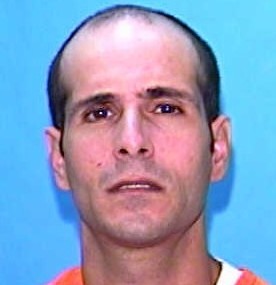 Pablo San Martin
Murderer · USA · 1991
Pablo San Martin was indicted on counts that included First-Degree Murder and o…
2 victims
Pablo San Martin
Murderer · USA · 1991
Pablo San Martin was indicted on counts that included First-Degree Murder and o…
2 victims
- Gender
- male
- Country
- USA
- Location
- Tulsa, Oklahoma, USA
- Date of birth
- 1950
- Age at first offence
- 47
- Characteristics
- parricide, abuse
- Victim profile
- His wife, Ginger Lou Fluke , 44, and their daughters, Kathryn Lee Fluke , 11, and Susanne Michelle Fluke , 13
- Method of murder
- Shooting
- Date(s) of murder
- October 15, 1997
- Years active
- 1997
- Date of arrest
- Same day (surrenders)
- Status
-
Executed
Executed by lethal injection in Oklahoma on March 27, 2001
Case information
Ronald Dunaway Fluke was convicted of three counts of First Degree Murder in violation of 21 O.S.1991, § 701.7.
Timeline
- Oct. 17, 1997 — Fluke murdered his wife, Ginger Lou Fluke, and their daughters, Kathryn Lee Fluke and Susanne Michelle Fluke, at their Tulsa home; he later confessed to police.
- Sep. 23, 1998 — Fluke entered guilty pleas to three counts of First Degree Murder in the middle of jury selection, against the advice of counsel.
- Sep. 25, 1998 — The trial court held a Wallace hearing and continued sentencing to Oct. 2, 1998.
- Oct. 2, 1998 — The defense called an expert, Dr. Ann Taylor, to testify that Fluke was presently incompetent; the proceedings were postponed to Oct. 12, 1998.
- Oct. 12, 1998 — The trial court incorporated Dr. Taylor’s Oct. 2 testimony into the record, asked Fluke questions, found him competent, and sentenced him to death on each of three counts of Murder in the First Degree.
- Oct. 19, 1998 — The trial court held a Grasso hearing and determined Fluke was competent to waive his capital direct appeal.
- Oct. 12, 1999 — Fluke filed his Brief on Capital Mandatory Sentence Review.
- Mar. 30, 2000 — The Oklahoma Court of Criminal Appeals remanded the case for further hearings on the issue of Fluke’s competency.
- Oct. 26, 2000 — The Oklahoma Court of Criminal Appeals decided Fluke v. State (2000 OK CR 19).
- Nov. 16, 1998 — Tulsa District Judge Tom Gillert set an execution date.
- March 27, 2001 — Fluke was executed by lethal injection in Oklahoma; he was pronounced dead at 9:34 p.m.
The offence
Fluke murdered his wife, Ginger Lou Fluke, and his two daughters, Kathryn Lee Fluke and Susanne Michelle Fluke, at their Tulsa residence.
Wife: Ginger Lou Fluke
Fluke attacked Ginger Lou Fluke while she slept on a couch. He struck her on the back of the head, neck and shoulder with a large hatchet, then shot her once in the head.
Police described evidence that she remained conscious and screaming until Fluke shot her in the head. The Oklahoma Court of Criminal Appeals later described that when Fluke hit her on the back of her head, she awoke and began screaming, and Fluke continued to hit her with the hatchet as she screamed, leveling at least seven or eight blows to her head and neck before the fatal gunshot.
Daughters: Kathryn Lee Fluke and Susanne Michelle Fluke
After killing Ginger Lou Fluke, Fluke went upstairs and shot each of his daughters in the head while they were awake.
Kathryn Lee Fluke was 11 years old and Susanne Michelle Fluke was 13 years old.
The Oklahoma Court of Criminal Appeals described that Fluke killed his daughter in her bedroom immediately after the first murder, then went into the second daughter’s room and fatally shot her as well. Police described that both daughters were awake when he shot them, and that one daughter initially thought he was joking when he pointed the gun at her. The pistol jammed at first, but Fluke managed to fire it.
Investigation and confession
At about 1:30 a.m. on Oct. 17, 1997, Fluke attacked his wife and then killed both daughters.
At about 8 a.m. that morning, Fluke went to the Tulsa Police Department and confessed to the murders.
Fluke told police he had planned the killings for some time before he committed the murders, and he described his reasons to police including his view of financial ruin and his suicidal intent. He stated that after killing his family he had started to kill himself but was unable to do so. He indicated he had put the gun to his own head but could not pull the trigger to commit suicide.
Police said Fluke was calm and coherent when he walked into the detective quarters and confessed.
Arrest and custody
Fluke surrendered at 8 a.m. on Oct. 17, 1997, after confessing to police.
Trial
Plea
Fluke pleaded guilty to three counts of First Degree Murder in the District Court of Tulsa County.
On Sep. 23, 1998, during jury selection, and against the advice of counsel, Fluke decided to plead guilty to the murders of his wife and two adolescent daughters rather than continue his trial. The trial judge accepted Fluke’s guilty pleas despite defense counsel’s assertion that the defense believed Fluke was presently incompetent, and the pleas were memorialized in writing the next day.
Waiver of mitigation and appeal
Fluke declined to present mitigating evidence and asked to be sentenced to death.
He refused to submit mitigating evidence and waived his rights to jury trial, presentation of mitigating evidence, and direct appeal.
A court review of the sentence was automatic, and Fluke indicated he intended to waive additional appeals; he failed to file an appeal with the U.S. Supreme Court.
Competency proceedings
The trial court conducted a Wallace hearing the following day, Sep. 25, 1998, and found Fluke understood the consequences of waiving the presentation of mitigating evidence, then continued sentencing to Oct. 2, 1998.
On Oct. 2, 1998, the defense called Dr. Ann Taylor, who testified that Fluke was presently incompetent. The proceedings were again postponed to Oct. 12, 1998.
On Oct. 12, 1998, the trial court held a short hearing, incorporated Dr. Taylor’s Oct. 2 testimony into the record, asked Fluke questions, found Fluke competent, and sentenced him to death on each of the three counts.
On Oct. 19, 1998, the trial court held a Grasso hearing and found Fluke competent to waive his capital direct appeal.
Sentencing
Fluke was sentenced to death on each of three counts of Murder in the First Degree.
The Oklahoma Court of Criminal Appeals described that the trial judge found only two aggravating circumstances beyond a reasonable doubt:
- that the murder of Ginger Fluke was especially heinous, atrocious or cruel; and
- that there was a great risk of death to more than one person as to all three victims.
The trial judge’s sentencing included a rejection of aggravating circumstances in counts involving Fluke’s daughters: the court later described in the opinion that there was insufficient evidence to prove the especially heinous, atrocious or cruel aggravating circumstance in the two counts involving Fluke’s daughters, and insufficient evidence to support the continuing threat aggravating circumstance as to all three counts.
Judge Tom Gillert sentenced Fluke to death. At sentencing, Gillert told Fluke: “what you were unable to do yourself, now you have foisted on me.”
After sentencing, Fluke spent his last hours in isolation on death row under a suicide watch.
Appeals
Fluke filed his Brief on Capital Mandatory Sentence Review on Oct. 12, 1999.
The Oklahoma Court of Criminal Appeals remanded the case on Mar. 30, 2000, for further hearings on the issue of Fluke’s competency, directing an independent evaluation to determine whether Fluke was competent when he entered his guilty pleas and waived presentation of mitigating evidence during the Wallace hearing, and whether he was presently competent to waive his capital direct appeal. Dr. Thomas Goodman examined Fluke, and the trial court entered findings supporting that Fluke was and is competent in all areas.
On Oct. 26, 2000, in Fluke v. State (2000 OK CR 19), the Oklahoma Court of Criminal Appeals held that Fluke was competent and denied Proposition I.
The court also denied sentencing propositions. It held:
- Victim impact evidence did not require a mitigating evidence prerequisite under the facts of this case because the sentencer considered mitigating evidence; it did not decide whether Payne requires mitigating evidence before victim impact evidence may be introduced.
- Sufficient evidence supported the especially heinous, atrocious or cruel aggravating circumstance based on conscious suffering and awareness.
- Sufficient evidence supported the great risk of death aggravating circumstance based on the murders occurring in close proximity and involving more than one person.
The Oklahoma Court of Criminal Appeals affirmed the judgments and sentences.
Outcome
Fluke was executed by lethal injection.
The Oklahoma Court of Criminal Appeals affirmed his death sentences, and Fluke waived his remaining appeals in order to be executed.
Aftermath
Betty Hightower, the sister-in-law of Fluke, planned to be at Oklahoma State Penitentiary when Fluke was put to death.
The execution took place at Oklahoma State Penitentiary in McAlester. Fluke was pronounced dead at 9:34 p.m.
Last remarks and statements
Fluke told a judge: “I don’t have a death wish, but I did a terrible thing and I feel sorry for what I did and I’m ready to pay the price,”
Fluke also told a judge: “I am the sorriest individual on the face of this Earth right now, and I deserve to die,”
Fluke stated in an interview: “I feel like I am doing what's right. I'm guilty. I've made peace with God.”
Fluke made a statement about his belief: “I believe I killed the flesh, but I believe their souls are in heaven now,”
Fluke wrote: “My financial crisis was not as severe as my deluded mind perceived,”
Fluke wrote: “Yes, now, looking back, I should have sought out psychological guidance . . . I hadn't filed taxes for three years and that laid heavy on my mind. When you are in the depth of depression, your only thoughts are of death and of how to take your own life,”
Fluke replied: “Yes, Ginger, Susanne and Kathryn should have had the right to decide for themselves, but my deluded mind made the worst possible decision,”
Fluke said: “I am the sorriest individual on the face of this Earth right now, and I deserve to die,”
In written responses to questions from the Tulsa World, Fluke said: “I’m a Christian saved by the blood of Jesus.”
Fluke said: “I've done a terrible thing. I'm sorry. I wish I could take it back,”
Fluke asked for prayers for all families involved.
Fluke requested a last meal of the Lord’s Supper: some grape juice and a cracker.
Other details
Victims’ family statements
Lori Adams read a statement released earlier Tuesday evening. Adams read: “Most people lock their doors at night to keep the bad guys out, little did they know that dreadful night they were locking the bad guy in. He not only took the lives of 3 very precious people, he also took a part of many others who loved Ginger, Susanne and Kathryn very, very much,”
When asked about Fluke’s apology, Adams said: “We chose to focus on Ginger, Susanne and Kathryn,”
Betty Hightower said: “I will be there in support of Ginger, Susanne and Kathryn,”
Hightower said: “Well, I do think that he deserves to die,”
Hightower said: “I think this crime deserves much more than the legal punishment. I just feel like he is taking the coward's way out by going to sleep.”
Hightower said she took comfort in the fact that when “this cold-blooded killer breathes his last breath, that he will face the almighty God for his judgment.”
Hightower said: “Ron said he loved his family but he did not love them enough to let them decide for themselves if they could have weathered any problems or embarrassment they may have had to endure due to his action,”
Hightower said: “Ginger was the most caring, sweet and loving person you would ever want to meet,”
Hightower said: “She was a devoted wife and mother and a wonderful sister and friend. Susanne and Kathryn couldn't help but be the light of anyone's eyes. They were both so sweet and cared deeply about other people's feelings. Both girls always had a smile on their faces. The world was a better place with them in it,”
Hightower said: “But I would not wish them back to the abuse and pain they suffered at the hands of Ron Fluke.”
Kristi Milam of Oklahoma City and Deanna Bullock of Kearney, Mo. said they still had questions. Milam said she wrote Fluke a letter “a few days ago,” but “there are no answers” for why he committed the murders.
Milam said: “He's said so many things about why he did it,”
Fluke’s background and personal circumstances
Fluke was 52 at the time of execution. During the proceedings described, Fluke was also described as 49 and 51 in different accounts.
Fluke was a self-employed safety consultant.
Fluke stated that he was depressed due to financial ruin caused by gambling, and he described gambling as having “basically, ruined my life.”
Fluke said: “Gambling, basically, ruined my life.”
Fluke told police he wanted to spare his daughters the embarrassment of his suicide and financial ruin.
Fluke said: “I believe their souls are in heaven now,” and “I believe I killed the flesh, but I believe their souls are in heaven now,”
Fluke said: “I don't have a death wish, but I did a terrible thing and I feel sorry for what I did and I'm ready to pay the price,”
Fluke’s childhood was described as normal; he grew up in Tulsa and attended Rogers High School and junior college.
Fluke met Ginger in 1978 at a club.
Fluke said he did not consider his death to be state-assisted suicide.
Fluke declined to seek a clemency hearing before the Oklahoma Pardon and Parole Board.
Case identifiers and court details
- Case name: RONALD DUNAWAY FLUKE, Appellant, v. THE STATE OF OKLAHOMA, Appellee
- Court: COURT OF CRIMINAL APPEALS OF OKLAHOMA (an appeal from the District Court of Tulsa County, the Honorable Thomas Gillert, District Judge)
- Case citation: Fluke v. State, 2000 OK CR 19, 14 P.3d 565, 71 OBJ 2929
- District court case number: CF-97-4924

Spotted an error, or have more information about this case?