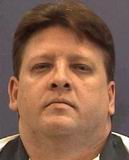
Melbert Ray Ford
Murderer Brian Kevin Rosenfeld
Murderer · USA · 1985
Brian Kevin Rosenfeld Brian Kevin Rosenfeld was sentenced to three concurrent l…
23 victims
Brian Kevin Rosenfeld
Murderer · USA · 1985
Brian Kevin Rosenfeld Brian Kevin Rosenfeld was sentenced to three concurrent l…
23 victims
 Yahweh ben Yahweh
Murderer · USA · 1980
Yahweh ben Yahweh was born and legally named Hulon Mitchell Jr. (October 27, 19…
23 victims
Yahweh ben Yahweh
Murderer · USA · 1980
Yahweh ben Yahweh was born and legally named Hulon Mitchell Jr. (October 27, 19…
23 victims
 Russell Ellwood
Murderer · USA · 1991
Russell Ellwood was a former taxi driver. Authorities suspected him of killing…
20 victims
Russell Ellwood
Murderer · USA · 1991
Russell Ellwood was a former taxi driver. Authorities suspected him of killing…
20 victims
 Shaun Thrower
Murderer · United Kingdom · 1994
Shaun Thrower was convicted of the murder of 17-year-old Amanda Wagg and was se…
1 victim
Shaun Thrower
Murderer · United Kingdom · 1994
Shaun Thrower was convicted of the murder of 17-year-old Amanda Wagg and was se…
1 victim
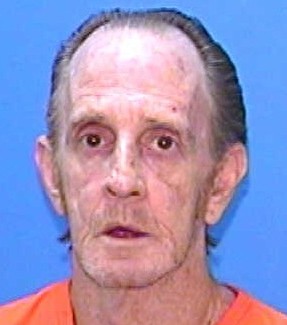 William Melvin White
Murderer · USA · 1978
William Melvin White was convicted of murdering Gracie Mae Crawford. White was…
1 victim
William Melvin White
Murderer · USA · 1978
William Melvin White was convicted of murdering Gracie Mae Crawford. White was…
1 victim
 Lendell Hunter
Murderer ? · USA · 1975
Lendell Hunter carried out a string of violent rapes that shocked Augusta, Geor…
1 victim
Lendell Hunter
Murderer ? · USA · 1975
Lendell Hunter carried out a string of violent rapes that shocked Augusta, Geor…
1 victim
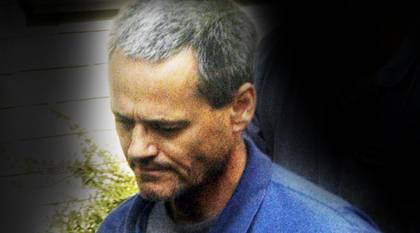 Ulf Olsson
Murderer · Sweden · 1989
Ulf Olsson (1951–), also known as Helénmannen (“the Helén man”) in Sweden, was…
2 victims
Ulf Olsson
Murderer · Sweden · 1989
Ulf Olsson (1951–), also known as Helénmannen (“the Helén man”) in Sweden, was…
2 victims
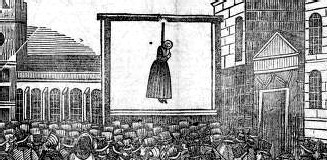 Catherine Wilson
Murderer · United Kingdom · 1854
Catherine Wilson was a British nurse who poisoned victims after befriending the…
7 victims
Catherine Wilson
Murderer · United Kingdom · 1854
Catherine Wilson was a British nurse who poisoned victims after befriending the…
7 victims
- Gender
- male
- Country
- USA
- Location
- Newton County, Georgia, USA
- Date of birth
- 1960
- Age at first offence
- 26
- Characteristics
- robbery, armed robbery, alcohol
- Victim profile
- His ex-girlfriend, Martha Chapman Matich, 31, and her 11 year old niece
- Method of murder
- Shooting
- Date(s) of murder
- March 6, 1986
- Years active
- 1986
- Date of arrest
- Next day
- Status
-
Executed
Executed by lethal injection in Georgia on June 9, 2010
Case overview
Melbert Ray Ford, Jr. was convicted in Newton County, Georgia, of murdering his former female companion, Martha Chapman Matich, and murdering her 11-year-old niece, Lisa Chapman, and of committing armed robbery, burglary, and possession of a firearm during the commission of a felony. He was sentenced to death on each of the murder convictions and received prison terms for the other crimes. Ford was executed by lethal injection in Georgia on June 9, 2010.
Timeline
- March 6, 1986 — Melbert Ray Ford talked to several people about robbing Chapman’s Grocery; he later shot away the lower half of the locked and barred glass door, entered the store, and attacked the victims.
- 10:20 p.m. — The store’s burglar alarm sounded.
- 10:27 p.m. — A Newton County sheriff’s deputy arrived; Martha Matich was found shot three times behind the counter; Lisa Chapman was found in the bathroom shot in the head but still alive, sitting on a bucket, bleeding from the head, and having convulsions.
- Next day — Ford and Roger Turner were arrested; Turner confessed first.
- March 11, 1986 — Ford was indicted in the Superior Court of Newton County, Georgia.
- October 20 through October 24, 1986 — Ford’s jury trial occurred.
- October 24, 1986 — After the jury trial, Ford was convicted as charged.
- September 24, 1987 — The Georgia Supreme Court unanimously affirmed Ford’s convictions and sentences.
- March 7, 1988 — The United States Supreme Court denied Ford’s petition for writ of certiorari.
- June 13, 1988 — Ford filed a first state habeas corpus petition in the Superior Court of Butts County, Georgia.
- September 14, 1992 — An evidentiary hearing was held on the first state habeas corpus petition.
- December 5, 1996 — The state habeas corpus court entered an order denying Ford state habeas relief.
- September 29, 2000 — Ford’s application for a certificate of probable cause to appeal was denied by the Georgia Supreme Court.
- June 4, 2001 — The United States Supreme Court denied Ford’s petition for writ of certiorari.
- September 27, 2001 — Ford filed a second petition for habeas corpus relief in the Superior Court of Butts County.
- October 23, 2001 — The state habeas corpus court entered an order dismissing the second petition as successive.
- March 12, 2002 — The Georgia Supreme Court denied Ford’s application for certificate of probable cause to appeal.
- September 28, 2001 — Ford, represented by Brian Mendelsohn and Mary F. Radford, filed a petition for a writ of habeas corpus in the United States District Court for the Northern District of Georgia, Atlanta Division.
- April 13, 2004 — An evidentiary hearing was held in the federal habeas proceeding on a prosecutorial misconduct claim.
- May 11, 2007 — The district court denied Ford federal habeas corpus relief.
- July 5, 2007 — The district court denied a motion to alter and amend judgment.
- September 28, 2007 — The district court granted in part Ford’s application for a certificate of appealability.
- October 31, 2007 — The Eleventh Circuit denied Ford’s application for expansion of the certificate of appealability.
- August 14, 2008 — The case was orally argued before the Eleventh Circuit.
- October 27, 2008 — The Eleventh Circuit issued an opinion which denied relief.
- December 23, 2008 — Ford’s petition for panel rehearing was denied.
- January 25, 2010 — The United States Supreme Court denied Ford’s petition for writ of certiorari.
- June 9, 2010 — Ford was executed by lethal injection at 7:27 p.m. in Georgia.
People
- Melbert Ray Ford, Jr. — Defendant; executed on June 9, 2010.
- Martha Chapman Matich (Martha Matich) — Victim; former female companion of Ford; shot three times; died.
- Lisa Chapman (Lisa Renee Chapman) — Victim; 11-year-old; found in the bathroom shot in the head but still alive; later died.
- Roger Turner — Accomplice; unemployed; drove Ford to the store after consuming alcoholic drinks; arrested next day; confessed first; pleaded guilty and was sentenced to 20 years in prison; paroled in 1991.
- William Roger Turner — Referenced as Roger Turner in other portions of the text.
- Ezell Brown — Newton County Sheriff’s deputy (described as deputy at the time of Lisa and Martha’s murder).
- Paul Chapman — Martha’s brother and Lisa’s uncle.
- Cindy Griffeth (Cindy Chapman-Griffeth) — Lisa’s mother.
- Kathryn Hamoudah — Vice-chair of Georgians for Alternatives to the Death Penalty; made statements about the execution.
- Brian Mendelsohn — Ford’s attorney (in federal proceedings) and described as Ford’s attorney at the time of execution coverage.
- Mary F. Radford — Ford’s representative in state and federal habeas proceedings.
- John M. Ott — District Attorney (named as presenting for appellee in the direct appeal opinion).
- Michael J. Bowers — Attorney General (named as presenting for appellee in the direct appeal opinion).
- Paula K. Smith — Assistant Attorney General (named as presenting for appellee in the direct appeal opinion).
The offence
After Ford’s relationship with Martha Matich broke up, Ford began harassing her by telephone. Two weeks prior to her death, Ford told a friend of his that he “was going to blow her . . . brains out.”
The day before her death, Ford unsuccessfully tried to convince a friend to drive him to the convenience store where Matich worked. Ford told the friend that he planned to rob the store and work revenge upon Matich by killing her. On March 6, 1986, Ford talked to several people about robbing the store and told one that he intended to kidnap Ms. Matich, take her into the woods, make her beg, and then shoot her in the forehead. Ford tried to talk another into helping him with his robbery, responding when the effort failed that “there wasn't anybody crazy around here anymore.”
Ford met 19-year-old Roger Turner, who was out of a job and nearly out of money. Ford persuaded Turner to help him by plying him with alcohol and promising that they could easily acquire eight thousand dollars. The two drove in Turner’s car to Chapman’s Grocery arriving just after closing time. Ford shot away the lower half of the locked and barred glass door and entered the store. Turner, waiting in the car, heard screams and gunshots. Ford ran from the store to the car carrying a bag of money.
At 10:20 p.m. the store’s burglar alarm sounded. A Newton County sheriff’s deputy arrived at 10:27 p.m. Martha Matich was lying dead behind the counter, shot three times. Lisa Chapman was discovered in the bathroom, shot in the head but still alive, sitting on a bucket, bleeding from the head, and having convulsions. She could answer no questions. She died later. Ford and Turner were arrested the next day. Turner confessed first.
Investigation and arrest
Turner confessed first and was brought into Ford’s interrogation room to state to Ford that he had told the truth. Ford told Turner not to worry and said that Turner was not involved in the murders. Ford told his interrogators that the shooting began after Martha Matich pushed the alarm button. Ford also stated that had he worn a mask it would not have happened.
A Newton County jury convicted Ford and sentenced him to death after an October 1986 trial. Ford claimed at trial that he was too drunk to know what was happening and that it was Turner who entered the store and killed the victims.
Trial
Charges and convictions
A Newton County grand jury indicted Ford in the Superior Court of Newton County, Georgia, for the murders of Martha Chapman Matich and Lisa Chapman and for armed robbery, possession of a firearm during commission of a felony, and burglary. The jury found Ford guilty as charged.
The jury returned a sentence of death for each murder conviction. Ford also received terms of years for the other crimes.
Sentencing phase findings and sentence imposed
At the sentencing phase, the jury found statutory aggravating circumstances as to each murder. The jury found that:
- the malice murder of Lisa Chapman was committed while Ford was engaged in the commission of another capital felony—armed robbery—and during the commission of a burglary; and
- the malice murder of Martha Matich was committed while Ford was engaged in the commission of capital felonies of armed robbery and murder and during the commission of a burglary.
The jury recommended that Ford be sentenced to death for the two malice murders. The trial court followed the jury’s recommendation and sentenced Ford to death on both malice murder counts, to run consecutively to each other; merged the two felony murder counts into the malice murder counts; and imposed a consecutive 20-year sentence for armed robbery, a consecutive five-year sentence for firearm possession, and a consecutive 20-year sentence for burglary.
Trial procedures and issues raised on appeal (direct appeal opinion)
Ford raised constitutional objections to Georgia death penalty procedures, including an argument that defendants convicted of both burglary and armed robbery in addition to murder entered the sentencing phase with two “built-in” statutory aggravating circumstances, allowing the state to obtain a death sentence without presenting any aggravating evidence at the sentencing phase. The direct appeal opinion discussed how statutory aggravating circumstances narrow death eligibility.
Ford also argued that Georgia law unconstitutionally required the imposition of the death penalty whenever mitigating circumstances did not outweigh aggravating circumstances. The opinion addressed that juries in Georgia were not required to balance aggravating and mitigating circumstances and that the jury may withhold the death penalty for any reason or without any reason.
The direct appeal opinion also addressed trial court actions regarding voir dire, excusing prospective juror Gibbs, denying a motion for change of venue, and the failure to declare a mistrial after the jury observed Ford in handcuffs outside the courtroom.
The direct appeal opinion addressed Ford’s custodial interrogation and related issues under Miranda v. Arizona and Edwards v. Arizona, including Ford’s request to call his attorney and subsequent actions during interrogation. The court found no violation and found Ford’s statements were voluntary.
The opinion further found evidence supported Ford’s conviction on malice murder counts and that evidence supported armed robbery, burglary, and possession of a firearm during commission of a felony. The opinion addressed sentence review, including that the death sentences were neither imposed under passion, prejudice, or other arbitrary factor and were not excessive or disproportionate compared with similar cases.
Sentencing
The jury found statutory aggravating circumstances for each murder conviction. Ford was sentenced to death on each of the murder convictions, with the two death sentences ordered to run consecutively to each other. Ford received consecutive term sentences for armed robbery, possession of a firearm during commission of a felony, and burglary.
Appeals
Direct appeal (Georgia Supreme Court)
Ford’s convictions and sentences were unanimously affirmed by the Georgia Supreme Court on September 24, 1987.
United States Supreme Court (direct appeal)
Ford filed a petition for writ of certiorari in the United States Supreme Court, which was denied on March 7, 1988.
First state habeas corpus proceeding
Ford filed a first state habeas corpus petition in the Superior Court of Butts County, Georgia, on June 13, 1988. An evidentiary hearing was held on September 14, 1992. On December 5, 1996, the state habeas corpus court denied Ford state habeas relief.
Ford’s application for a certificate of probable cause to appeal filed in the Georgia Supreme Court was denied on September 29, 2000. Ford then filed a petition for writ of certiorari in the United States Supreme Court, which was denied on June 4, 2001.
Second state habeas corpus proceeding
Ford filed a second petition for habeas corpus relief in the Superior Court of Butts County on September 27, 2001. On October 23, 2001, the state habeas corpus court dismissed the second petition as successive. After that, Ford filed an application for certificate of probable cause to appeal in the Georgia Supreme Court, which was denied on March 12, 2002.
Federal habeas corpus proceeding (Northern District of Georgia)
Ford, represented by Brian Mendelsohn and Mary F. Radford, filed a petition for a writ of habeas corpus in the United States District Court for the Northern District of Georgia, Atlanta Division, on September 28, 2001. Ford filed an amendment to his petition on March 11, 2002. A federal hearing was held in April 2004 on one issue. On May 11, 2007, the district court denied Ford federal habeas corpus relief. The district court denied a motion to alter and amend judgment on July 5, 2007. The district court granted in part Ford’s application for a certificate of appealability on September 28, 2007.
Eleventh Circuit
The Eleventh Circuit denied Ford’s application for expansion of the certificate of appealability on October 31, 2007. The case was orally argued before the Eleventh Circuit on August 14, 2008. On October 27, 2008, the Eleventh Circuit issued an opinion denying relief. Ford filed a petition for panel rehearing, which was denied on December 23, 2008.
United States Supreme Court (habeas)
Ford filed a petition for writ of certiorari in the United States Supreme Court, which was denied on January 25, 2010.
Outcome
Ford was executed by lethal injection in Georgia at 7:27 p.m. on June 9, 2010.
In his final statement, Ford said: “I wish to thank all my family and my friends and my loved ones,” before his voice trailed off and he began to mumble inaudibly.
Ford received a final meal that included fried fish and shrimp, a baked potato, salad, boiled corn, ice cream, cheesecake and soda.
Other details
Jurisdiction, sentencing docket, and convictions listed
- Case number 199520 — armed robbery conviction (crime commit date 03/06/1986); sentence length 20 years, 0 months, 0 days; conviction county Newton County.
- Case number 199520 — possession of a firearm during the crime conviction (crime commit date 03/06/1986); sentence length 5 years, 0 months, 0 days; conviction county Newton County.
- Case number 199520 — burglary conviction (crime commit date 03/06/1986); sentence length 20 years, 0 months, 0 days; conviction county Newton County.
- Case number 199520 — murder conviction (crime commit date 03/06/1986); sentence length DEATH; conviction county Newton County.
Prior sentences
- Case number 114718 — terrorist threats & acts conviction (crime commit date 08/02/1978); sentence length 6 years, 0 months, 0 days; conviction county Cobb County.
- Case number 114718 — criminal trespassing conviction (crime commit date 08/02/1978); sentence length NOT AVAILABLE; conviction county Cobb County.
Incarceration history listed
- 01/02/1987 to ACTIVE
- 10/05/1978 to 08/31/1979
Prison and execution setting details mentioned
Ford was executed at the Georgia Diagnostic and Classification Prison near Jackson, described as 50 miles south of Atlanta. The Georgia Diagnostic and Classification Prison in Jackson was also referenced as the location where he declined a sedative and declined a prayer request from the prison chaplain.
Statements by others at execution coverage
Kathryn Hamoudah said:
- “We are here today to stand unified that our state not take the life of anyone for any reason,”
- “The death penalty perpetuates violence, does nothing for society and does nothing or victims.” She also stated: “Georgians For Alternatives to the Death Penalty denounces state killing in our names,” and added that the group believed the punishment was “inhumane, arbitrary in application; perpetuates violence and does nothing to keep our communities safer, nor does it address the needs of victims’ families.”
Paul Chapman said: “A weight has been lifted off of my shoulders,” and also: “I was hoping to hear at the end he would apologize and ask for forgiveness. I believe a good Christian would ask for a prayer.”
Cindy Griffeth said: “I was hoping that he would have a prayer, a sign that he had been saved,” and also: “... I think the way he went ...” before pausing and continuing: “It was too easy for him.”
Newton County Sheriff Ezell Brown said:
- “I feel that the justice system has carried out its responsibility for ensuring that the victims have justice,”
- “While their families still live with the horrific memory at least they know that the perpetrator has been brought to justice.”
- “Today our work is done.”
Victim family descriptions included with the case narrative
Cindy Chapman-Griffeth described Lisa Chapman as a tenderhearted girl who loved animals, especially horses, and people and was always smiling and laughing. She said Lisa attended Livingston Elementary School where students still stroll through a wing named in her honor. She also said Lisa dreamed of becoming a teacher and liked to learn sign language and speaking to people who were impaired. Chapman-Griffeth said Lisa “loved unicorns and walking behind her daddy as he plowed the garden, pushing the dirt between her toes,” and that Lisa loved “to help me cook and being a big sister.”
Chapman-Griffeth also stated: “She was also saved the week before she was murdered at a Bible school at Prospect Methodist Church.”
Paul Chapman described Martha as “a quiet, reserved girl who tended to be a follower” and said: “She always looked for the good in every individual,” and also described counseling: “I took her aside and I told her that he was evil and she needed to put him aside,” and that she “told me that she thought he would change.” Paul said: “She tried to see the good in this man, or this monster, and thought that maybe she could change him. But as we know, that didn’t take place.”
In that same coverage, Chapman-Griffeth was quoted saying about Ford: “I think lethal injection is too good for him. That night I lost a part of my heart that will never be filled.”
Harassment and threats
The narrative stated that Ford began harassing Martha by telephone after their relationship ended. It also stated he told a friend he was going to “blow her . . . brains out.”
Spotted an error, or have more information about this case?