
Charles Adrian Foster
Murderer Brian Kevin Rosenfeld
Murderer · USA · 1985
Brian Kevin Rosenfeld Brian Kevin Rosenfeld was sentenced to three concurrent l…
23 victims
Brian Kevin Rosenfeld
Murderer · USA · 1985
Brian Kevin Rosenfeld Brian Kevin Rosenfeld was sentenced to three concurrent l…
23 victims
 Marvin Gray
Murderer · USA · 1975
Marvin Gray was convicted killer who claimed responsibility for 23 slayings and…
23 victims
Marvin Gray
Murderer · USA · 1975
Marvin Gray was convicted killer who claimed responsibility for 23 slayings and…
23 victims
 Yahweh ben Yahweh
Murderer · USA · 1980
Yahweh ben Yahweh was born and legally named Hulon Mitchell Jr. (October 27, 19…
23 victims
Yahweh ben Yahweh
Murderer · USA · 1980
Yahweh ben Yahweh was born and legally named Hulon Mitchell Jr. (October 27, 19…
23 victims
 Russell Ellwood
Murderer · USA · 1991
Russell Ellwood was a former taxi driver. Authorities suspected him of killing…
20 victims
Russell Ellwood
Murderer · USA · 1991
Russell Ellwood was a former taxi driver. Authorities suspected him of killing…
20 victims
 Mark Jensen
Murderer · USA
Mark Jensen was a stockbroker husband accused of killing his wife, Julie Jensen…
1 victim
Mark Jensen
Murderer · USA
Mark Jensen was a stockbroker husband accused of killing his wife, Julie Jensen…
1 victim
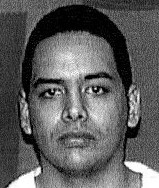 Arnold Prieto
Murderer · USA · 1993
Arnold Prieto was sentenced to death on June 2, 1995. The current status was st…
3 victims
Arnold Prieto
Murderer · USA · 1993
Arnold Prieto was sentenced to death on June 2, 1995. The current status was st…
3 victims
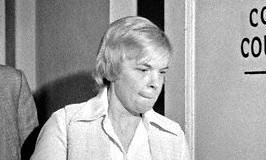 Marybeth Tinning
Murderer · USA · 1972
Marybeth Tinning (née Roe, born on September 11, 1942) was an American prisoner…
9 victims
Marybeth Tinning
Murderer · USA · 1972
Marybeth Tinning (née Roe, born on September 11, 1942) was an American prisoner…
9 victims
- Gender
- male
- Country
- USA
- Location
- Muskogee County, Oklahoma, USA
- Date of birth
- September 30, 1948
- Age at first offence
- 35
- Characteristics
- robbery
- Victim profile
- Claude Wiley, 74 (grocery store owner)
- Method of murder
- St abbing with knife
- Date(s) of murder
- April 1, 1983
- Years active
- 1983
- Date of arrest
- August 1983
- Status
-
Executed
Executed by lethal injection on May 25, 2000
Case record: Charles Adrian Foster
Background
Charles Adrian Foster was assessed as brain damaged and learning disabled. He consistently denied that he killed Claude Wiley.
Foster was described as having a household marked by poverty, alcohol abuse, parental absence and domestic violence. He was subjected to physical and sexual abuse and witnessed similar abuse of his siblings. He remained in elementary school, where he was assessed as mentally retarded, until he was 15 years old. A school head requested he be sent to junior high school simply because of his age and size.
In 1993, a psychologist stated Foster’s mental impairment resulted from brain damage from childhood head injuries, including an instance where he was knocked unconscious for four hours and left untreated when one of his stepfathers hit him across the head with a plank of wood. The psychologist also noted Foster’s “long-term alcohol abuse further complicates the picture with additional impairments in brain functions.”
Foster began using alcohol at the age of eight and was born to an alcoholic mother, and may suffer from Fetal Alcohol Syndrome, linked to a mother’s heavy alcohol use during pregnancy that can lead to mental impairment.
At the clemency stage, Foster’s clemency hearing before the state Pardon and Parole Board was held on April 26, and the Board rejected his appeal for clemency.
Foster’s trial lawyer did not contact Cecille Fuller or others at the grocery store to investigate his client’s alibi.
A United States Court of Appeals judge on the Federal 10th Circuit Court of Appeals described the trial as “in essence a swearing match between Mr Foster and his wife,” and said that Cecille Fuller’s post-conviction alibi evidence, bolstering Foster’s version of events and undermining Eula Mae Foster’s, must be given weight. The judge noted the prosecutor’s closing argument described Charles and Eula Mae Foster as “the two most important witnesses,” and characterized the husband’s testimony as “totally unbelievable.” The judge said that, under the circumstances, the defense lawyer’s failure to interview potential alibi witnesses “can hardly be considered a tactical decision entitled to deference.” The judge further said, “there can be little doubt that counsel’s performance fell far short of the mark.” The other two 10th Circuit judges voted to deny Foster’s appeal, ruling that he had not proved that the outcome had been prejudiced by his lawyer’s performance. Under United States Supreme Court precedent, a capital defendant must not only prove ineffective assistance of counsel but also that the outcome would have been different if counsel’s performance had been better.
Foster’s execution occurred at Oklahoma State Penitentiary in McAlester. He was executed on May 25, 2000.
The offence
Charles Adrian Foster was sentenced to death for the April 1, 1983 murder of Claude Wiley.
Claude Wiley was a 74-year-old grocery store owner. He owned his neighborhood grocery store in Muskogee and had owned it for decades. He often delivered to the poor and infirm.
Wiley was making a delivery to the Foster home at the request of Foster’s wife. On the day of the killing, Foster was waiting with a Louisville Slugger. Foster accused Wiley of “trying to mess with my wife” before repeatedly smashing him with the bat.
Investigators found blood on the walls and ceiling and parts of Wiley’s teeth throughout the home. Wiley was still breathing after the beating and later was stabbed three times in the chest.
Wiley’s body was discovered several days later in a wooded area about a mile from the Foster home.
During the killing episode, Wiley was beaten with a baseball bat and stabbed. The state’s characterization was that robbery motivated the murder.
Investigation
Blood was found on the walls and ceiling in the home, and parts of Wiley’s teeth were found throughout the home.
Forensic evidence included testimony that Wiley received three stab wounds to the chest, and blunt force lacerations to the ear, orbit of the right eye, and on top of the head, with an extensively fractured skull and massive hemorrhaging. Medical testimony also stated Wiley was likely alive when he suffered the three stab wounds to the chest.
Forensic dentists testified it would have taken a considerable amount of force to knock Wiley’s teeth out in the manner evidenced by fragments examined.
Arrest and related proceedings
Foster’s wife, Eula Mae Foster, was a key witness and testified at trial that Foster killed Wiley at the couple’s home after Wiley had delivered groceries there. She also testified that Foster accused Wiley of having “something to do” with her, pushing him and then striking him with a baseball bat, that Foster stood behind the front door with a baseball bat when Wiley entered their home, wrapped Wiley in a blanket while Wiley was still breathing, and left in Mr. Wiley’s El Camino. She further testified Foster returned about forty-five minutes later, left again for approximately one and a half hours, returned with items from Wiley’s home, and then the couple fled to Texas in Wiley’s El Camino.
The couple were subsequently arrested in Texas. Both were charged with the murder, but the charges against Eula Mae were reduced. She pleaded guilty to being an accessory after the fact and received three concurrent five-year prison terms, with two and one-half years suspended, and served a short time before release in 1984. She was released after nine months.
Edmondson said the jury dismissed arguments that Eula Mae, the only eyewitness to the crime, was the actual murderer.
Foster fled when police approached the couple in Texas, and he was arrested three months later in Cuero, Texas.
Trial
Foster was convicted in Muskogee County District Court of Burglary in the Second Degree, Larceny of an Automobile, Grand Larceny, each After Former Conviction of Two Felonies, and Murder in the First Degree.
Foster received sentences, as recommended by the jury, of ninety years’ imprisonment on the first three convictions and the death penalty for the murder conviction. The trial court sentenced Foster to death on November 28, 1983.
At the trial’s guilt/innocence phase, the state’s key witness was Foster’s wife, Eula Mae Foster. Her testimony was presented as the only evidence linking Foster to the crime at the guilt/innocence phase.
Foster denied knowing anything about the murder. Foster testified that at the time he had been at Weddles grocery store, where his wife had sent him. He testified that he completed his purchases, waited outside the store because it was raining, and was still there when Eula Mae arrived in Wiley’s El Camino. She told him she had borrowed the El Camino to visit her mother in Texas.
In the sentencing stage, one of Foster’s former cell-mates, Jody Lynch, testified that Foster admitted killing Wiley and wrapping him in a blanket and threatened to kill Mrs. Foster and her family. Mrs. Foster also testified during sentencing about physical abuse she suffered at Foster’s hands and explained that when arrested, she asked police to protect her from Foster.
Foster told the jury about his family and educational background, his work history, and prior run-ins with law enforcement. He maintained he did not kill Wiley and denied admitting the murder to Lynch. He also denied threatening to kill Mrs. Foster and her family and denied ever abusing Mrs. Foster. Instead, Foster claimed Mrs. Foster once stabbed him in the shoulder.
Foster stipulated on the record that he had previously been convicted of two felonies involving the use or threat of violence. After hearing evidence, the jury found three aggravating circumstances in support of the death penalty:
- Wiley’s murder was especially heinous, atrocious or cruel.
- Foster posed a continuing threat to society.
- Foster previously had been convicted of a felony involving the use or threat of violence.
A baseball bat was admitted at trial over Foster’s objection. The bat displayed was new and marked to show where the original one was broken. Testimony stated the older bat allegedly used was broken with a broken handle and would have been stained by Wiley’s blood, and Foster had discarded the actual bat used in Texas. The judge admonished the jury to consider the bat only for its demonstrative value.
The trial also included evidence that the state introduced motel and pawn shop receipts. The motel receipt showed a registration to “ Charles Jackson,” and a receipt from the AAA Trading Post in Denison showed “Clifton Foster ” pawned a television stand, two lamps, a radio, and a watch.
Foster challenged the suggestion that the jury should read Eula Mae Foster’s written statement to determine whether it differed from her trial or preliminary hearing testimony. Foster’s challenge included that the written statement contained prejudicial hearsay statements made by Foster’s relatives after Wiley’s murder and hearsay evidence of prior crimes. A federal appellate analysis stated the court did not believe the arguably inadmissible portions had any impact on the jury’s verdict.
Foster’s wife, Eula Mae, acknowledged her charges had been reduced. She testified that she provided a written statement the day after her arrest and prior to the reduction of her charges. The statement implicated Foster as the murderer, and she testified it was consistent with her preliminary hearing testimony and her trial testimony. She testified she had not been offered anything in return for her written statement, that no one told her how many years imprisonment she might receive based on her statement, and that no one told her what charges she would have to plead guilty to in return for writing the statement.
Sentencing
At the conclusion of the guilt/innocence phase, the jury found three aggravating circumstances supporting the death penalty.
Appeals
Direct appeal and post-conviction proceedings
Foster took a direct appeal to the Oklahoma Court of Criminal Appeals. The court affirmed Foster’s conviction and sentence.
Foster v. Oklahoma, 714 P.2d 1031 was affirmed, and certiorari was denied in 1986.
Foster then filed an application for post-conviction relief in the District Court of Muskogee County, which was denied. That denial was affirmed on appeal to the Oklahoma Court of Criminal Appeals on May 5, 1988.
The United States Supreme Court granted certiorari and remanded for reconsideration in light of Maynard v. Cartwright, and the Oklahoma Court of Criminal Appeals again denied post-conviction relief in Foster v. Oklahoma, 779 P.2d 591, with certiorari denied in 1990.
Foster filed a second application for post-conviction relief, which was denied and then affirmed on appeal to the Oklahoma Court of Criminal Appeals on January 20, 1995.
Foster filed his federal habeas petition in June 1995. The district court denied relief in June 1997 and denied a certificate of appealability.
Federal habeas appeal
The United States Court of Appeals for the Tenth Circuit affirmed the denial of Foster’s federal habeas petition. The appeal was addressed as Charles Adrian Foster, Petitioner-appellant, v. Ronald Ward, Warden, Oklahoma State Penitentiary, Respondent-appellee, and W. A. Drew Edmondson, Attorney General, State of Oklahoma, Respondent-appellee.
The court noted it granted a certificate of probable cause and proceeded under pre-AEDPA law.
Foster raised five issues on appeal from the denial of his habeas petition:
- Ineffective assistance of counsel during both the guilt and sentencing stages of trial.
- Denial of a post-examination competency hearing.
- Failure to disclose the true nature of lenient treatment provided Mrs. Foster in exchange for her testimony.
- Failure to instruct the jury regarding Mrs. Foster’s status as an accomplice.
- Unconstitutionality of sentencing stage jury instructions concerning aggravating and mitigating circumstances.
The Tenth Circuit denied habeas relief on each issue and affirmed his conviction and sentence.
The court addressed the ineffective assistance claim, focusing on alibi witness investigation, post-examination competency hearing, Foster’s decision to testify, accomplice instruction, alibi instruction, admission of motel and pawn shop receipts, admission of Mrs. Foster’s written statement, and mitigation investigation at sentencing. The court concluded Foster had not shown constitutionally deficient performance with prejudice under Strickland, including concluding Foster’s alibi witness omission did not undermine confidence in the guilty verdict.
The court concluded Foster’s claim regarding a denial of a post-examination competency hearing did not entitle him to relief and, after reviewing the record, found no support for a claim that Foster was tried and convicted while a serious doubt existed as to his competency. It referenced that Foster took the witness stand and testified in his own defense.
The court denied Foster’s claim about Brady or Giglio disclosure regarding alleged promises of leniency for Mrs. Foster, stating the jury knew the charges had been reduced and she pleaded guilty and was sentenced to serve time, and concluding there was no reasonable probability of a different result.
The court denied Foster’s accomplice instruction-related claims, including stating the Constitution did not prohibit convictions based primarily on accomplice testimony and that Foster had not shown the failure to give a cautionary instruction rendered the trial fundamentally unfair.
For jury instructions at sentencing, the court denied claims contesting constitutionality of the “continuing threat” aggravating circumstance, the “heinous, atrocious or cruel” aggravating circumstance, and the jury’s consideration of mitigating circumstances.
The dissent by SEYMOUR, Chief Judge, argued that Foster was prejudiced by counsel’s failure to investigate and present the testimony of a disinterested witness, Cecille Fuller, and further argued that the trial rested virtually entirely on the believability of Mrs. Foster as a key witness. The dissent criticized the majority’s treatment of cumulative value and argued that the missing witness could have swayed the jury.
Outcome
Charles Adrian Foster was executed by lethal injection in Oklahoma on May 25, 2000.
Foster was pronounced dead at 12:16 a.m. after receiving a lethal mix of drugs. It was stated that he had no last statement, and he mouthed the words of scripture while a chaplain read Psalm 23. During that scripture reading, Foster was asked, “Do you believe in God?” and Foster replied, “Yes.” He took three deep, gasping breaths and then fell still.
The prosecution attorney general stated robbery motivated the murder. The execution occurred while Foster was mouthing words of scripture.
Aftermath
Witness to the execution accounts included statements by Attorney General Drew Edmondson, victim witness coordinator Alyson Carson, and appellate lawyer Janet Chesley. Chesley described the execution as “such a surreal thing,” and said she saw “a long narrow room,” “a venetian blind,” and “The press comes in.” Chesley stated, “Charles had an IQ of 64 and a deep abiding faith,” and said on the day he died Foster told her “to watch for that feeling” after his execution and that he said: “My soul is going to fly by and wave to you.”
Victim witness coordinator Alyson Carson described the execution process at Oklahoma State Penitentiary in McAlester, saying it was “Sterile” and that once a family was in the witness chamber, it could be their first “reunion.” She said execution brought “relief” and that “Every time they hear the person’s name it brings them back to the crime.” She said executions were efficient and that “Once you’re there, everything is ready to go. The Corrections Department is very professional. They allow him or her to say a very few words and then go to sleep. That’s it.”
Foster’s niece and only living relative, Donna Maria Loggins, said in a statement released before the execution: “we’re past due.” She also said in another statement, “we’re past due,” and later stated: “Now that Foster will be executed, the Wiley-Ware family can now have some closure.”
Clemency-related reporting included that Foster’s attorney contended he was mentally retarded, and that this was not considered by the jury that convicted him.
Vigils were held around the state on the night of May 24, including Altus, Enid, McAlester, Muskogee, Oklahoma City (3), and Tulsa (2). A protest was also held outside the Governor's Mansion in Oklahoma City.
Statements in connection with execution witness accounts included:
- “It was,” said Brooks after a long silence, “a very difficult experience. There is nothing that I can compare it to. There was no question of his guilt, but the actual experience was very intense as well as disgusting.”
- “It was particularly difficult,” said Brooks, “because the men killed were the same age as my nephew.”
- Brooks said, “Sterile” is the word Alyson Carson uses to describe executions.
- Chesley said, “such a surreal thing.”
- Chesley said Foster told her: “to watch for that feeling” after his execution, and: “My soul is going to fly by and wave to you.”
Other details
Foster’s execution date was set as May 25 after the United States Supreme Court denied his final appeal.
Foster was described as the 6th condemned inmate to be put to death in Oklahoma that year and the 25th overall since Oklahoma resumed executions in 1990.
Reporting also described Foster as the 37th condemned inmate to be put to death in the USA that year and the 635th overall since America resumed executions on Jan. 17, 1977.
In a related United States Court of Appeals analysis, Foster’s ineffective assistance claim included allegations that counsel failed to investigate and discover available witnesses to support his alibi defense, failed to request a post-examination competency hearing, failed to advise adequately whether to testify, failed to request an accomplice instruction and object to alibi instruction, object to introduction of motel and pawn shop receipts, and suggested counsel’s conduct invited admission of Mrs. Foster’s written statement to police. The appellate court addressed these allegations in rejecting habeas relief.
Foster v. State, 714 P.2d 1031 (Okla. Crim.) direct appeal details included that the judge admonished the jury to consider the bat only for its demonstrative value.
The baseball bat dispute described the new bat as marked to show where the original one was broken and stated the older bat allegedly used had a broken handle and would have been stained by Wiley’s blood, and Foster had discarded the actual bat in Texas.
For the motel registration and pawn shop receipt evidence, the federal court noted they were used to show Foster lied about his name shortly after the murder, as he claimed he did not know anything had happened to Wiley, and that impeachment evidence was not hearsay.
In the habeas dissent, SEYMOUR described the trial as “a swearing match” and stated that Mrs. Foster’s testimony was described by the prosecutor as “the two most important witnesses” and that Foster’s testimony was characterized as “totally unbelievable,” and the dissent referenced the prosecutor’s closing argument describing “the two most important witnesses” and characterizing the husband’s testimony as “totally unbelievable.” The dissent also cited trial transcript references that included quotes: “totally unbelievable.”
The dissent further described Ms. Fuller’s affidavit statements in detail, including that she worked as a cashier at Weddles grocery store in April 1983, was seventeen years old then, remembered Charles Foster shopping at Weddles and “always buying diapers,” and last saw Mr. Foster on “Good Friday before Easter in April of 1983,” along with specific details about timing, items bought, waiting outside until rain stopped, and seeing an “El Camino or Ranchero type vehicle” with furniture that pulled in front of the store and Mr. Foster left, and that the vehicle later pulled in front of the store.

Spotted an error, or have more information about this case?