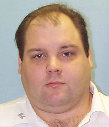
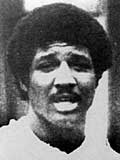
Thomas Fortenberry
Mass murderer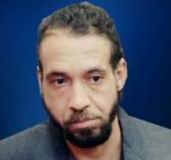 Julio Gonzalez
Mass murderer · USA · 1990
Julio Gonzalez was sentenced to 174 twenty-five-year sentences (a total of 4,35…
87 victims
Julio Gonzalez
Mass murderer · USA · 1990
Julio Gonzalez was sentenced to 174 twenty-five-year sentences (a total of 4,35…
87 victims
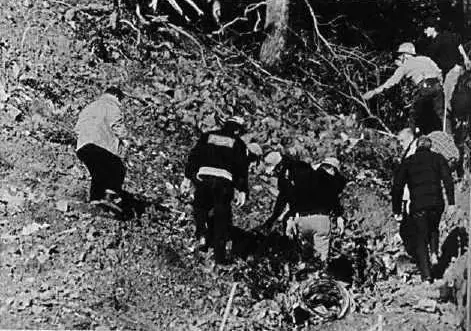 David Burke
Mass murderer · USA · 1987
David Augustus Burke (May 18, 1952–December 7, 1987) was an employee of USAir,…
43 victims
David Burke
Mass murderer · USA · 1987
David Augustus Burke (May 18, 1952–December 7, 1987) was an employee of USAir,…
43 victims
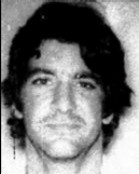 George Jo Hennard
Mass murderer · USA · 1991
George Jo Hennard carried out a mass killing at a Luby’s Cafeteria in Killeen,…
23 victims
George Jo Hennard
Mass murderer · USA · 1991
George Jo Hennard carried out a mass killing at a Luby’s Cafeteria in Killeen,…
23 victims
 James Huberty
Mass murderer · USA · 1984
James Oliver Huberty was a 41-year-old unemployed security guard. He was born i…
21 victims
James Huberty
Mass murderer · USA · 1984
James Oliver Huberty was a 41-year-old unemployed security guard. He was born i…
21 victims
 Ronald Gene Simmons
Mass murderer · USA · 1987
Ronald Gene Simmons was a retired United States Air Force sergeant. Over the Ch…
16 victims
Ronald Gene Simmons
Mass murderer · USA · 1987
Ronald Gene Simmons was a retired United States Air Force sergeant. Over the Ch…
16 victims
 Jonathan Nobles
Murderer · USA · 1986
Jonathan Nobles was a death row inmate. He was executed by lethal injection in…
2 victims
Jonathan Nobles
Murderer · USA · 1986
Jonathan Nobles was a death row inmate. He was executed by lethal injection in…
2 victims
 Michael Anthony Mullen
Murderer · USA · 2005
Michael Anthony Mullen was an inmate at Stafford Creek Corrections Center. He w…
2 victims
Michael Anthony Mullen
Murderer · USA · 2005
Michael Anthony Mullen was an inmate at Stafford Creek Corrections Center. He w…
2 victims
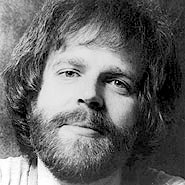 Jerry Harvey
Murderer · USA · 1988
Jerry Harvey (October 28, 1949 – April 9, 1988) was an American screenwriter an…
1 victim
Jerry Harvey
Murderer · USA · 1988
Jerry Harvey (October 28, 1949 – April 9, 1988) was an American screenwriter an…
1 victim
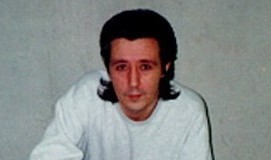 Scotty Lee Moore
Murderer · USA · 1983
Scotty Lee Moore was 42 years old at the time of his execution in Oklahoma. Moo…
1 victim
Scotty Lee Moore
Murderer · USA · 1983
Scotty Lee Moore was 42 years old at the time of his execution in Oklahoma. Moo…
1 victim
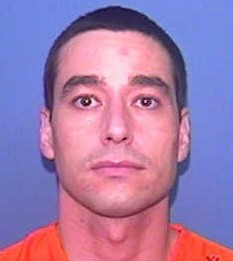 Leonardo Franqui
Murderer · USA · 1991
Leonardo Franqui was born on 09/26/70. He was an Italian national. The case inv…
2 victims
Leonardo Franqui
Murderer · USA · 1991
Leonardo Franqui was born on 09/26/70. He was an Italian national. The case inv…
2 victims
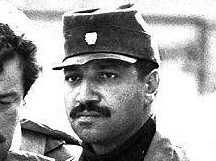 George Emil Banks
Mass murderer · USA · 1982
George Emil Banks was an American mass murderer and a former Camp Hill prison g…
13 victims
George Emil Banks
Mass murderer · USA · 1982
George Emil Banks was an American mass murderer and a former Camp Hill prison g…
13 victims
- Gender
- male
- Country
- USA
- Location
- Etowah County, Alabama, USA
- Date of birth
- February 14, 1964
- Age at first offence
- 20
- Characteristics
- —
- Victim profile
- Station owner's son, Ronald Michael Guest , clerk Wilbur T. Nelson , customer Robert William Payne and Payne's wife, Nancy Payne
- Method of murder
- Shooting
- Date(s) of murder
- August 25, 1984
- Years active
- 1984
- Date of arrest
- May 3, 1985
- Status
-
Executed
Executed by lethal injection in Alabama on August 7, 2003
Case name
Thomas Fortenberry
Timeline
- August 25, 1984 — Ronald Michael Guest, Wilbur T. Nelson, and Robert William Payne and Nancy Payne were killed at the Guest Service Station near Attalla, Alabama.
- March of 1985 — James Jenkins found a .44-caliber magnum Ruger Super Blackhawk revolver on the bank of Black Creek in Alabama City; the pistol contained four empty cartridges.
- April 18, 1985 — Etowah County Sheriff Roy McDowell received information that Jenkins had found the weapon.
- April 22, 1985 — Lawden Yates examined the pistol and determined that it was the weapon used to kill the four people at the Guest Service Station.
- May 2, 1985 — Investigator Carter and three other investigators went to the residence of Fortenberry’s father, where Fortenberry was living; Fortenberry signed a waiver of rights form at 6:53 p.m.
- May 3, 1985 — Fortenberry gave a tape-recorded statement at about 12:50 a.m. and was left alone with his father for “probably fifteen to thirty minutes” around 11:00 or 11:30; Underwood was brought to the courthouse around 5:00 or 5:30; Fortenberry gave a handwritten statement at 5:25 p.m.
- May 4, 1985 — Fortenberry gave a detailed statement recorded by a court reporter at 1:08 p.m.
- January 1, 1986 — After he had escaped and been captured, Fortenberry gave a statement in the county jail in Bowling Green, Kentucky, wherein he again admitted his guilt.
- February 15, 1986 — A jury returned a verdict convicting Fortenberry on both counts at about 6:00 p.m. and recommended the death penalty; the trial court then sentenced Fortenberry to death.
- 1988 — Fortenberry v. State, 545 So. 2d 129 (Ala. Crim. App. 1988) (Direct Appeal), affirmed.
- 1989 — Fortenberry filed an appeal; the district court and appellate proceedings discussed finality of the direct appeal in 1990.
- 1989 — Ex parte Fortenberry, 545 So. 2d 145 (Ala. 1989).
- 1990 — Fortenberry v. Alabama, 495 U.S. 911 (1990).
- 1994 — Fortenberry v. State, 659 So. 2d 194 (Ala. Crim. App. 1994) (PCR), affirmed the denial of post-conviction relief.
- 1995 — Fortenberry v. Alabama, 516 U.S. 846 (1995).
- July 17, 2002 — The U.S. Court of Appeals for the Eleventh Circuit issued its decision in the habeas corpus appeal (affirming denial).
- August 5, 2003 — Fortenberry’s mother made a tearful plea to Gov. Bob Riley during a clemency hearing conducted by the governor’s legal adviser, Troy King.
- August 7, 2003 — Fortenberry was executed by lethal injection in Alabama.
- August 8, 2003 — Reporting described the execution.
Background
Thomas J. Fortenberry was on Death Row and was executed on August 7, 2003. He died by lethal injection. Fortenberry was 39 at the time of execution.
The offence
On August 25, 1984, four people were killed at the Guest Service Station near Attalla, Alabama. The victims were Ronald Michael Guest, the son of the station owner; Wilbur T. Nelson, a clerk or employee; and Robert William Payne and his wife Nancy Payne, customers at the station. Fortenberry was convicted and sentenced to die for the deaths of four people during the robbery at the Guest Service Station.
Investigation
Police found the murder weapon and traced it to a gun repair shop partly owned by Fortenberry’s father. Investigators obtained statements from three people who had seen the pistol in Fortenberry’s possession shortly before the murders.
A .44-caliber magnum Ruger Super Blackhawk revolver was found on the bank of Black Creek in Alabama City by James Jenkins in late March 1985. The pistol contained four empty cartridges. Etowah County Sheriff Roy McDowell received information about the find on April 18, 1985. Sheriff Roy McDowell obtained the pistol and cartridges and delivered them to a state firearms expert, Lawden Yates, at the Birmingham crime lab. On April 22, 1985, Yates examined the pistol and determined it was the weapon used to kill the four people at the Guest Service Station.
The pistol was especially distinctive because “somebody had had fashioned a bolt to retain the cylinder pin.” The weapon had been stolen from Fortenberry’s father, Jerry Fortenberry, and Jerry Gable, who were partners in a gun repair business located at Gable’s residence.
In May 1985, after Fortenberry waived his rights, he told investigators about the pistol and showed them where he disposed of it. Police found the pistol at the same spot where Fortenberry said he had thrown it.
Arrest
Around 6:00 in the evening of May 2, 1985, Investigator Carter and three other investigators went to the residence of Fortenberry’s father, where Fortenberry was living. Terry, Fortenberry’s eighteen-year-old brother, answered the door, said their father was over at Jerry Gable’s, and then brought investigators to a bedroom where Fortenberry was lying in bed. Fortenberry got up, put on his clothes, and agreed to go with investigators.
At the courthouse, investigators read Fortenberry his Miranda rights when they left the house, even though he was not questioned at that time. Fortenberry signed a waiver of rights form at 6:53 that evening.
Trial
Fortenberry was charged in a two-count indictment with the capital offense of murder wherein two or more persons are murdered and robbery-murder.
Fortenberry pleaded “not guilty,” and the case went to trial in the Circuit Court, Etowah County. The jury found him “guilty as charged” and unanimously recommended punishment by death.
Confessions and inconsistent accounts
Fortenberry gave several inconsistent accounts of the murders during questioning by police. He showed investigators where he disposed of the pistol, which was the same spot where the pistol had been found.
At about 12:50 a.m. on May 3, 1985, Fortenberry gave a tape-recorded statement claiming that Harvey Underwood was solely responsible for the robbery and the murders. Fortenberry stated he was riding in his brother’s green Chevrolet truck with the stolen pistol when he came upon Harvey Underwood and “this other guy” in the woods; he stated the “other guy” was “passed out,” and that Underwood was drinking beer and smoking marijuana. Fortenberry stated that he and Underwood stopped at the Guest Service Station because they had run out of beer, and that Fortenberry sat in the truck while Underwood robbed the station and committed the murders. Fortenberry stated he returned Underwood to the place where he had met him and that Underwood kept the gun until Fortenberry got it from him a few days later and threw it into Black Creek. Fortenberry stated he never told the police because he was frightened of Underwood.
On May 3 at 5:25 p.m., Fortenberry gave a handwritten statement admitting his responsibility for the robbery and murders. He stated that he had gone to the Guest Service Station intending to steal money for gambling; he took some money from Nelson; he shot Guest and Payne outside the store; he returned inside to shoot Nelson; and then he fired a “pot” shot at Nancy Payne while she was trying to run for help.
On May 4, 1985 at 1:08 p.m., Fortenberry gave a detailed statement recorded by a court reporter admitting his guilt. He stated he pulled up in front of the station in his brother’s green and white Chevrolet truck, went in, pulled his gun on Nelson, demanded money, and held his gun on Bobby Payne. He stated Guest opened the station door, and that Fortenberry hid his gun from Guest. Fortenberry stated he got money from Nelson and was leaving when Bobby Payne followed him out of the store. He stated Guest then came up beside him and said “Tommy, put down the gun.” Fortenberry stated that he panicked and ordered Bobby Payne to give him money, whereupon Payne said Fortenberry would have to kill him to get his money. Fortenberry stated he then shot Bobby Payne and Guest, returned inside and shot Nelson, and then shot Nancy Payne when she ran toward the woods. Fortenberry stated he drove northbound for a while, then headed back toward Attalla, took $240 from Nelson, threw the gun into the woods, and went to a pool hall to establish an alibi. He repeated that his earlier story blaming the murders on Underwood was false.
Trial proceedings and witnesses
At trial, Fortenberry testified that he had not committed the murders. He testified he came upon “the fire place where everybody partied at” and had the pistol under his car, and that he saw Underwood drinking beer and another man who was “passed out.” Fortenberry testified he noticed a truck parked there and did not know if it was Underwood’s. He testified that he tried to sell the gun to Underwood. He testified that Underwood proposed going to Albertville together in Fortenberry’s car, that Fortenberry declined, and that Underwood suggested they take the truck parked nearby. Fortenberry testified that he and Underwood stopped for beer at the Guest Service Station and that he purchased some beer, then walked out as Underwood started going through the cooler. He testified he was in the truck when Guest pulled up and started to go into the store. He testified Nelson stopped Guest at the door, Guest returned to his car, and Fortenberry got out and walked back into the service station where he saw Underwood threatening Nelson with a knife. Fortenberry testified Underwood instructed him to get back in the truck; Guest backed his car and reentered the service station. Fortenberry testified Bobby and Nancy Payne arrived, and Bobby Payne went into the service station. He testified Underwood returned to the truck and exchanged his knife for the murder weapon. He testified a woman then got out of Guest’s car and “ran up the back of the store,” and that Guest started walking back to the station. Fortenberry testified he heard a shot and saw Underwood exiting the store followed by Bobby Payne, who was shouting at Underwood, and that when Nancy Payne ran toward the woods, Underwood shot her. Fortenberry testified they returned to the woods and Underwood instructed him to throw the gun in Black Creek, which Fortenberry did. He testified Underwood warned him not to tell anyone.
The prosecution case relied heavily on Fortenberry’s prior confessions and argued that his in-court explanation was inconsistent. A defense witness testified that Fortenberry had tried to sell the murder weapon to him.
Prosecution witness Tracy Henry Wood testified that she and her boyfriend at the time, Mike Guest, had arrived at the station shortly before the murders occurred; that Guest went inside to get a coke; and that she waited outside. She testified she saw a blue and white pickup truck with some people inside, and that a tall, tanned man with a large stomach came out holding two beers. She testified that Guest told her to get his father Alvis and tell Alvis to bring a gun because “there was going to be trouble.” Wood testified she heard two shots and then two more on her way back, and when she arrived she found the four victims. At trial, Wood was shown a photograph of Underwood but could not recall if she had ever seen him before. Wood never identified Fortenberry as being at the station.
Defense counsel pointed to the fact that in both Wood’s statement to police and her testimony at trial, Wood described the man with the large stomach with sandy hair and did not match Fortenberry’s description. Defense counsel argued to the jury that this man committed the crime consistent with Fortenberry’s testimony regarding Underwood.
Defense testimony also included Jerry Gable, who testified that Fortenberry was skilled enough to commit the four murders with the pistol.
The defense presented testimony from several family members about Fortenberry’s experience firing pistols.
The jury returned a verdict at 6:00 p.m. on Saturday, February 15, 1986, convicting Fortenberry on both counts.
Penalty phase
The trial court polled the jury about whether it was prepared to move immediately to the penalty phase. When the jury indicated that it wished to proceed, defense counsel moved for a continuance before beginning the penalty phase, arguing that defense counsel was unprepared and “would ‘be much better able to present [its] position for mitigation’” if a continuance were granted until the following Monday. The court denied this motion and began the penalty phase immediately.
The penalty phase lasted approximately forty-five minutes. The prosecution argued for the death penalty based on two aggravating factors: that the capital offense was committed in the course of robbery or attempted robbery and that the offense was especially heinous, atrocious or cruel (“HAC”). The prosecution argued the robbery factor based on the guilt-phase conviction and the HAC factor based on a multiple “execution style slaying.”
To make out a mitigation case, Fortenberry’s counsel called Fortenberry’s father as the only witness. Fortenberry’s father gave fourteen lines of testimony stating that his son was a twenty-two-year-old graduate of nursing school with no adult criminal record.
After receiving instructions and deliberating, the jury returned a verdict recommending the death penalty.
Two weeks later, at a separate sentencing hearing, the trial judge refused defense counsel’s request for a postponement of sentencing or a new sentencing hearing before a jury and sentenced Fortenberry to death.
The trial judge sentenced Fortenberry to death by electrocution, and found the aggravating circumstance that the intentional murder was committed while engaged in the commission of a robbery in the first degree.
Sentencing
The trial judge sentenced Fortenberry to death. Written findings included that Fortenberry had no significant history of prior criminal activity, having only one prior conviction for Burglary third degree.
The trial judge found no evidence that Fortenberry was acting under the influence of extreme mental or emotional disturbance or that he lacked capacity to appreciate the criminality of his conduct or to conform to the requirements of law. The judge also found no evidence that the victims participated or consented, and that Fortenberry’s participation was relatively minor, as well as no evidence that Fortenberry acted under duress or under substantial domination of another person.
The judge listed Fortenberry’s age at the time of the crime as twenty (20) years and found it as a mitigating circumstance. The judge found that Fortenberry had studied for and become licensed as a practical nurse and treated this as a mitigating circumstance. The judge concluded the mitigating circumstances were insufficient to outweigh the aggravating circumstance and fixed punishment at death.
Appeals
Direct appeal
Fortenberry v. State, 545 So. 2d 129 (Ala. Crim. App. 1988) affirmed. The appellate court held, among other rulings, that the confessions were not obtained during illegal detention and were admitted.
The appellate court described that four men had been indicted but were never prosecuted after it was discovered that a juvenile had accused them and was lying, and later detailed the identification and recovery of the murder weapon and the questioning of Fortenberry.
Post-conviction appeal
Fortenberry v. State, 659 So. 2d 194 (Ala. Crim. App. 1994) affirmed the denial of post-conviction relief and discussed procedural default of Batson claims.
U.S. Supreme Court
The U.S. Supreme Court denied Fortenberry’s petition for writ of certiorari on the collateral claims, including Fortenberry v. Alabama, 516 U.S. 846 (1995). Fortenberry v. Alabama, 495 U.S. 911 (1990) also reflected denial of certiorari.
Federal habeas corpus appeal (Eleventh Circuit)
On July 17, 2002, the U.S. Court of Appeals for the Eleventh Circuit affirmed the denial of Fortenberry’s habeas corpus petition. The district court had rejected eighteen constitutional claims, seven on the merits and eleven because of procedural default.
The Eleventh Circuit addressed three issues:
- The claim that prosecution peremptory challenges discriminated unconstitutionally on the basis of race.
- The claim that the jury instruction regarding the “heinous, atrocious and cruel” aggravating factor was unconstitutional.
- The claim that defense counsel was ineffective during the guilt and penalty phases.
The Eleventh Circuit held that Fortenberry’s Batson claim would fail because Powers could not be applied retroactively on collateral review to convictions that became final before Powers was decided.
The Eleventh Circuit also held that even if the jury instruction regarding HAC was unconstitutional, the error was not prejudicial because the sentencing judge found only one statutory aggravating circumstance and did not rely on HAC.
The Eleventh Circuit found that trial counsel’s failure to adequately investigate or present mitigating evidence at the penalty phase was unreasonable, but concluded that Fortenberry could not show prejudice because he did not establish additional mitigating evidence sufficient to undermine confidence in the sentence.
A concurring judge stated agreement with all of the opinion except that portion addressing the performance prong of the ineffective assistance analysis at the sentencing phase, and did not address it due to the lack of prejudice.
Trial counsel and defense team
The court appointed Stephen Harrison to represent Fortenberry at trial, and Walden Buttram to assist him. Neither Harrison nor Buttram had previously tried a capital case.
Outcome
Fortenberry was executed by lethal injection on August 7, 2003, in Alabama. He died shortly after 6 p.m. His execution was at Holman Prison, in Atmore, with pronouncement at 6:16 p.m.
He gave his only last words as: “no last words.”
In the death chamber, he smiled faintly, flashed an “I love you” hand sign to two prison ministry friends in an adjoining witness room, looked toward the fluorescent lights, and appeared to go to sleep.
He motioned twice to Ben Sherrod and another witness showing the international hand sign for “I love you.” The color drained from his face, his eyes closed, his chin quivered several times, and he became still.
Aftermath
The Alabama Department of Forensic Science picked up Fortenberry’s body at the prison gate for an autopsy, and it was to be turned over to his family for burial in Gadsden.
His final meal request was shrimp, but it was not available in the prison kitchen, so he ate snacks from vending machines in the visitation area.
Prison spokesman Brian Corbett said Fortenberry slept well the night before the execution, refused to eat breakfast on the execution day, and was moved to a visitation area at about 8:30 a.m., where he spent the day meeting with family members including his parents, Betty and Jerry Fortenberry. Corbett also said Fortenberry gave his Bible to his mother and his TV to a nephew, and gave a cup and other items to fellow Death Row inmates.
Ben Sherrod, a lay minister with the prison ministry Kairos, said: “The punishment is not in the dying, it's in the 19 years of hell he's lived through,” and told reporters afterward: “You watched a Christian die, a man that's now in the arms of our Lord.”
Freda Andrews stated she was in the witness room and chose not to watch the execution because she was afraid she would never be able to forget the scene, and said: “I feel that justice was completed today. I have peace about it.” She said: “Maybe they'll find some peace. I hope so. I prayed for them,” in connection with Sherrod’s remarks.
David Payne said: “I feel in my heart that justice was done today ... I know their family's got sorrow, now. I know what we've been through. I feel for their family. My prayers are with them.”
Bonnie Ingram said: “I've forgiven this boy and pray that God will give peace to his mother and peace to us.”
Other details
Jurors and sentencing recommendation
Jurors found Fortenberry guilty in 1985 of murdering the station owner’s son, Ronald Michael Guest; clerk Wilbur T. Nelson; customer Robert William Payne; and Payne’s wife Nancy.
Jurors unanimously recommended the death penalty after finding him guilty of two counts of capital murder: one for robbery-murder and the other for the murder of more than one person.
Details about the clemency plea and hearing
A clemency hearing took place on Monday at the state Capitol at which Fortenberry’s mother, Betty Fortenberry, told Gov. Bob Riley’s legal adviser, Troy King: “The day they arrested him for murder was the worst day of my life.” She also said: “I didn't believe it then and I don't believe it to this day that he did this by himself,”
David Payne said during the clemency hearing: “He deserves to get what he gets.” He added: “I've got a 17-year-old and a 15-year-old who will never get to see their granddad because he was murdered when he went to the store to get a pack of cigarettes.”
Jim McGlaughn, Fortenberry’s attorney of Gadsden, said: “I am asking for mercy here today,” and said: “There's nothing pleasant about Holman. Living at Holman for another 50 years is not getting away with anything,” in connection with a claim that the governor would not be easy if a commutation were granted.
Prior convictions and courtroom findings
The sentencing judge found one prior conviction for Burglary third degree.
Related testimony and coercion claims discussed on appeal
In the federal habeas appeal record, Fortenberry argued that police coerced his confession and that trial attorneys failed to do enough during the sentencing phase to convince jurors to spare his life, and also argued about the governor’s clemency hearing and lack of personal attendance by Gov. Bob Riley. The Eleventh Circuit discussed procedural default and evaluated the prejudice analysis for ineffective assistance.
People named
- Thomas J. Fortenberry — defendant and convicted person
- Ronald Michael Guest — victim, son of the station owner; age given as 21 in some reporting; Mike Guest also appears in some narrative
- Wilbur T. Nelson — victim; store clerk or employee; age given as 51 in some narrative
- Robert William Payne — victim; age given as 43 in some narrative
- Nancy Payne — victim; age given as 29 in some narrative
- Harvey Underwood — named by Fortenberry as responsible in some statements
- James Jenkins — finder of the revolver
- Roy McDowell — Etowah County Sheriff
- Lawden Yates — state firearms expert at Birmingham crime lab
- Marlin Carter — chief of the investigators for the Etowah County Sheriff’s Office
- Investigator Johnny Grant — testified regarding obtaining Fortenberry and the interview process
- Captain Grant — also referenced in testimony about requesting Fortenberry to come to the office
- Hershel Womack — investigator referenced with Carter and Grant
- Aubrey Newman — investigator referenced with Carter
- Terry — Fortenberry’s eighteen-year-old brother who answered the door and brought investigators to Fortenberry
- Jerry Fortenberry — father; partner and victim related to stolen pistol
- Jerry Gable — partner in gun repair business; name appears with Jerry Fortenberry as partners
- Ricky Downing, Thomas Neander, Steve Whiteside — people whose statements placed the murder weapon in Fortenberry’s hands
- Stephen Harrison — appointed trial counsel
- Walden Buttram — assistant counsel
- Tracy Henry Wood — prosecution witness
- Jim McGlaughn — attorney in clemency narrative
- Betty Fortenberry — mother of Fortenberry
- Jerry Fortenberry — father of Fortenberry and witness at mitigation
- Brian Corbett — Department of Corrections spokesman
- Ben Sherrod — lay minister with Kairos prison ministry
- Freda Andrews — Nancy Payne’s sister
- Kelly Hathaway — niece of Nancy Payne
- David Payne — son of Robert and Nancy Payne
- Bonnie Ingram — daughter of Robert Payne
- Troy King — governor’s legal adviser
- Gov. Bob Riley — governor
- Jim McGlaughn — defense attorney mentioned in clemency-related reporting
- Michael W. Haley — respondent-appellee in federal habeas case caption
- Stephen Harrison; Walden Buttram — trial counsel and assistant counsel
Weapon and method references
The murders involved four victims shot during the robbery at a gas station. Fortenberry and appeals repeatedly referenced a .44 magnum Black Hawk revolver and a .44-caliber magnum Ruger Super Blackhawk revolver. Fortenberry referred to a shot he called a “pot” shot at Nancy Payne.
Spotted an error, or have more information about this case?