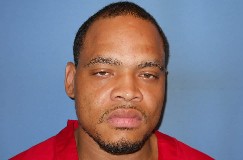
Leslie Galloway
Murderer Joshua Wayne Andrews
Murderer · USA · 2000
Joshua Wayne Andrews was a serial killer accused of killing several people in V…
5 victims
Joshua Wayne Andrews
Murderer · USA · 2000
Joshua Wayne Andrews was a serial killer accused of killing several people in V…
5 victims
 Juan Carlos Alvarez
Murderer · USA · 1998
Juan Carlos Alvarez, born on March 9, 1977, in San Luis, Mexico, was a Hispanic…
5 victims
Juan Carlos Alvarez
Murderer · USA · 1998
Juan Carlos Alvarez, born on March 9, 1977, in San Luis, Mexico, was a Hispanic…
5 victims
 Leon Davis Jr.
Murderer · USA · 2007
Leon Davis Jr. was sentenced to death on April 29, 2011, for the execution-styl…
5 victims
Leon Davis Jr.
Murderer · USA · 2007
Leon Davis Jr. was sentenced to death on April 29, 2011, for the execution-styl…
5 victims
 Raymond Lee Oyler
Murderer · USA · 2006
Raymond Lee Oyler was convicted for starting the 2006 Esperanza fire in Riversi…
5 victims
Raymond Lee Oyler
Murderer · USA · 2006
Raymond Lee Oyler was convicted for starting the 2006 Esperanza fire in Riversi…
5 victims
 Terry Lee Hankins
Murderer · USA · 2000
Terry Lee Hankins was convicted by a jury of capital murder and was sentenced t…
5 victims
Terry Lee Hankins
Murderer · USA · 2000
Terry Lee Hankins was convicted by a jury of capital murder and was sentenced t…
5 victims
 Robert William Clayton
Murderer · USA · 1985
Robert William Clayton was a Tulsa death row inmate. He had an IQ of 68 and pre…
1 victim
Robert William Clayton
Murderer · USA · 1985
Robert William Clayton was a Tulsa death row inmate. He had an IQ of 68 and pre…
1 victim
 Michael Bernard Bell
Murderer · USA · 1989
Michael Bernard Bell was sentenced to two death sentences for the murders of Ji…
5 victims
Michael Bernard Bell
Murderer · USA · 1989
Michael Bernard Bell was sentenced to two death sentences for the murders of Ji…
5 victims
 Andrew Thomas
Murderer · USA · 1997
Andrew Thomas and his co-defendant, Anthony Bond, were indicted for the felony…
1 victim
Andrew Thomas
Murderer · USA · 1997
Andrew Thomas and his co-defendant, Anthony Bond, were indicted for the felony…
1 victim
 Andrew Allen Cook
Murderer · USA · 1995
Andrew Allen Cook was convicted in the Superior Court of Monroe County, Georgia…
2 victims
Andrew Allen Cook
Murderer · USA · 1995
Andrew Allen Cook was convicted in the Superior Court of Monroe County, Georgia…
2 victims
 Lindsay Beckett
Murderer · Australia · 1997
Lindsay Hoani Beckett (born 27 March 1974) was convicted of the murders of scho…
2 victims
Lindsay Beckett
Murderer · Australia · 1997
Lindsay Hoani Beckett (born 27 March 1974) was convicted of the murders of scho…
2 victims
- Gender
- male
- Country
- USA
- Location
- Gulfport, Harrison County, Mississippi, USA
- Date of birth
- May 21, 1983
- Age at first offence
- 25
- Characteristics
- rape, sexual assault, torture, dismemberment
- Victim profile
- Shakeylia Anderson, 17
- Method of murder
- Cutting her throat, burning, and running over
- Date(s) of murder
- December 6, 2008
- Years active
- 2008
- Date of arrest
- 3 days after
- Status
-
Sentenced to death
Sentenced to death on September 24, 2010; Mississippi Supreme Court affirmed the conviction and death sentence in June 2013
Case details
Leslie Galloway III, also known as Leslie Galloway and Leslie “Bo” Galloway, III, was convicted of capital murder and sentenced to death by lethal injection by a jury after the jury determined he committed the murder of Shakeylia Anderson while he was (1) engaged in sexual battery; (2) a person under sentence of imprisonment at the time; (3) a felon previously convicted of an offense involving the use or threat of violence to another person; and (4) that the murder was especially heinous, atrocious, or cruel.
Background
Shakeylia Anderson was a seventeen-year-old high school student. On the evening of Friday, December 5, 2008, Anderson and her cousin Dixie Brimage were at Anderson’s grandmother’s house in Gulfport, Mississippi, talking and doing each other’s hair. Anderson’s uncle, Alan Graham, stopped by briefly. When Graham entered the house, he heard a phone ringing in the living room and saw the incoming call was from “Bo.” Graham walked through the house and found Anderson and Brimage hanging out in a bedroom. Graham mentioned that someone’s phone was ringing, and Anderson said it was hers. Graham overheard Anderson on the phone and got the impression that she was getting ready to go out and meet someone.
The offence
At approximately 10:00 that evening, Anderson walked out of her grandmother’s house. She was wearing a jacket, blue jeans, and brown boots and carried her book bag. Brimage watched Anderson through the grandmother’s glass front door as Anderson walked toward a white Ford Taurus parked in the driveway. Brimage saw Anderson stand by the car for a moment and talk to a man. After about five minutes, Anderson got in the white Ford Taurus with the man and the vehicle drove away.
On the following evening, Martin Smith was hunting with dogs in a secluded, wooded area west of Highway 15 in northern Harrison County. Smith was searching for one of his dogs that had strayed from the pack when he came across an unclothed dead body lying on a dirt logging road. Smith called law-enforcement personnel.
Hunters found Anderson’s body the next day after she was last seen getting into Galloway’s car.
Prosecutors said Anderson had been raped and severely burned and had been run over by a vehicle. The jury heard testimony that Galloway used his mother’s car to drag Anderson after he had raped her, cut her throat, and set her on fire. Prosecutors said Anderson was last seen getting into Galloway’s car on December 5, 2008. Prosecutors said the body was discovered by hunters in the Desoto National Forest several days after she died.
Investigation
Crime scene observations and medical findings
Investigators found the naked body of a black female lying in the middle of a logging path. Investigator Michelle Carbine of the Harrison County Sheriff’s Department received a call that a body had been found in a wooded area. Carbine arrived at the scene in the early morning hours of December 7, 2008. It was too dark to begin processing the body, so Carbine decided to secure the crime scene and wait until daylight. Carbine returned around 6:30 a.m. with evidence technician Nancy Kurowski and medical examiner Dr. Paul McGarry.
Carbine said the deceased female had a red tint to her body, missing hair, and blood underneath the facial area. The body was smeared with blood and dirt, partially burned, and mangled with scrapes, gouges, and lacerations. The body bore at least three tire marks.
Near the scene of the body, investigators found a burned patch of grass and drag marks indicating that something or someone had been dragged from that area to the spot where the body lay. Officials found broken glass from a bottle of New Amsterdam gin and a burned piece of cloth. Pieces of glass were recovered. Numerous tire tracks were near and in a turning pattern around the female’s body. Photographs and impressions of the tracks were made and measurements were taken. Dr. McGarry theorized that the female had been run over by a vehicle, most likely a car.
Identification efforts
Carbine determined that the deceased female was Anderson. Based on Brimage’s description of the man with whom Anderson had left that Friday evening and Graham’s recollection of “Bo” calling Anderson’s phone, Carbine began looking for a light-skinned black male approximately five feet, five inches tall, from the Moss Point area, nicknamed “Bo,” who drove a white Ford Taurus.
Leads and surveillance
On the evening of December 9, 2008, Lieutenant Ken McClenic of the Jackson County Sheriff’s Department received information that Harrison County was looking for a black man with the nickname “Bo” who drove a white Ford Taurus. McClenic identified Leslie Galloway as a possible suspect. Having obtained a residential address for Galloway, McClenic drove by and observed a white Ford Taurus in the driveway. McClenic and other deputies began conducting surveillance of the residence. Later that same evening, the white Ford Taurus was reported leaving the residence. Officers stopped the vehicle a short distance away. Galloway and Cornelius Triplett, a friend of Galloway’s, were inside the vehicle. Galloway was placed under arrest.
Vehicle handling and evidence collection
Carbine responded to the scene. Carbine walked around the Taurus and noticed a small piece of possible evidence flapping underneath the passenger side. Since the vehicle was going to be towed and Carbine feared the substance might be lost, she collected the item. Officers noticed broken glass on the lip of the trunk. The vehicle was towed and secured at Bob’s Garage.
A search warrant for the car was obtained and executed by Kurowski and two other investigators. When the vehicle was raised on a lift, officers noted that one side of the undercarriage appeared to be wiped cleaner than the other. Pursuant to a second search warrant, the car was turned over to the Harrison County Sheriff’s Department and taken to a work center for processing.
Kurowski processed the car. Kurowski made tread impressions of the white Ford Taurus for comparison. The tire tracks at the crime scene matched the type of tire on the white Ford Taurus Galloway was driving when he was arrested.
From the interior of the car, Kurowski collected blood just above the trunk-release latch and blood from the left rear passenger door near the door handle. From different places underneath the car, Kurowski collected several pieces of a stringy tissue-like substance. Both the blood and the tissue substances were matched to Anderson’s DNA.
Search of residence
A search warrant was obtained and executed for Galloway’s residence. Officers seized a pair of Nike shoes, an Atlanta Braves baseball hat, a Burger King shirt with the name tag “Bo,” and an empty bottle of New Amsterdam gin. DNA testing revealed the presence of Anderson’s DNA on the shoes and on the baseball hat.
Arrest
Galloway was arrested after officers stopped the white Ford Taurus during surveillance and found Galloway inside the vehicle with Cornelius Triplett.
Trial
Guilt phase findings
Galloway was indicted and tried for the capital murder of Anderson. A jury found him guilty of capital murder based upon sexual assault.
Penalty phase findings and death sentence
During the penalty phase, the jury heard testimony from Galloway’s friends and family that he was a good father and that they would visit him if he was given life imprisonment. The jury also heard testimony from corrections officers explaining that Galloway had not caused any trouble during his prior incarceration.
The State introduced a “pen pack,” which included Galloway’s prior conviction for carjacking and demonstrated that Galloway was under supervision of the Mississippi Department of Corrections (MDOC) when he murdered Anderson. Unpersuaded by Galloway’s mitigating proof and finding four aggravating factors, the jury returned a sentence of death.
A jury determined that Galloway deserved the death penalty for raping, burning, and running over a 17-year-old Harrison Central High School student. The jurors spent about two hours deliberating a sentence after returning to the Harrison County courtroom shortly before 2:00 p.m. Friday on September 24, 2010.
Sentencing
The jury sentenced Galloway to death by lethal injection, and the sentence was imposed by the Harrison County Circuit Court.
Appeals
Galloway appealed and asserted thirty assignments of error.
The Mississippi Supreme Court issued its decision in en banc session on June 06, 2013 (case number 2010–DP–01927–SCT). The Mississippi Supreme Court affirmed Galloway’s conviction and death sentence.
Issues raised in the appeal and treatment by the court
Galloway asserted plain and reversible error in permitting Dr. Paul McGarry’s “junk science” testimony in support of the allegation of anal sexual battery. The court determined no reversible error occurred, concluding that the opinion that the anal tear was evidence of “anal rape” did not go beyond Dr. McGarry’s scope of expertise and did not improperly invade the province of the jury.
Galloway asserted reversible error because the trial court failed to respond in a reasonable manner to a jury note regarding “does murder escalate the sex automatically to sexual battery?” The court concluded the instructions were not imprecise or ambiguous and found no merit in the claim.
Galloway asserted reversible error in admitting DNA test results without opportunity to confront the DNA analyst who did the testing. The court found no error, stating that a lab technician who analyzed the test results and testified was sufficient under Mississippi law as applied and that no Confrontation Clause violation occurred.
Galloway asserted ineffective assistance of counsel for failing to object to aspects of Dr. McGarry’s testimony. The court found the ineffective-assistance claim failed.
Galloway asserted error regarding admission of his incomplete first statement while his second statement was suppressed. The court found no merit, concluding the trial court prohibited reference to the December 18 statement unless the State opened the door with the first statement, and the defense made no attempt to introduce the second statement.
6 and 7. Galloway asserted violations related to exclusion of penalty-phase evidence about future danger and prison conditions and asserted due-process violations. The court found no merit.
Galloway asserted prosecutorial misconduct. The court addressed the contentions and found no merit.
Galloway asserted severe prejudice from nonconfronted hearsay statements. The court addressed testimony from Investigator Carbine, Lieutenant McClenic, and Dubourg and found no reversible error, including findings that defense counsel opened the door to some testimony and that any error was harmless where DNA was present.
Galloway asserted reversible error from speculative testimony on an important issue. The court found the trial court did not abuse its discretion in overruling the objection.
Galloway asserted unwarranted delay violated his speedy-trial right. The court applied Barker factors, weighed length of delay as presumptively prejudicial, addressed reasons for delay, and found no constitutional speedy trial violation.
Galloway asserted error in denial of proposed sentencing instructions. The court found no reversible error.
Galloway asserted error in sustaining objections to defense closing arguments at the sentencing phase. The court found the contentions meritless in the issues presented and found harmlessness where error occurred.
Galloway asserted plain and reversible error by requiring disclosure at an omnibus hearing of the general nature of the defense. The court found no constitutional violation on plain-error review.
Galloway asserted error in allowing Dubourg’s expert testimony. The court found Dubourg was qualified and found no abuse of discretion.
Galloway asserted reversible error in allowing DNA statistical probabilities without confrontation of the person who created the program and database. The court found the issue waived and also found no Confrontation Clause violation.
Galloway asserted that Dixie Brimage’s in-court identification was unreliable and suggestive. The court found the claim waived for lack of objection at trial and rejected it under plain-error review.
Galloway asserted the trial court’s inadequate response to the jury note resulted in a reasonable probability of conviction for consensual vaginal sex “conduct that is not crime.” The court found the argument without merit.
Galloway asserted evidence was insufficient to sustain the predicate felony of sexual battery and thus insufficient to sustain the capital-murder conviction. The court found the evidence sufficient, distinguishing Williams.
Galloway asserted error excluding evidence of the victim’s prior sexual behavior including letters in her school locker. The court found no error based on limine rulings and findings that Galloway made no attempt to introduce witnesses at trial within the scope allowed.
Galloway asserted error in denying his motion to suppress evidence. The court found no merit.
Galloway asserted error allowing victim-impact evidence in the guilt-innocence phase over defense objection. The court found the trial court erred in not sustaining an objection to testimony about siblings as irrelevant but found the error harmless beyond a reasonable doubt.
Galloway asserted ineffective assistance of counsel. The court discussed and found prejudice lacking for many claims and found some claims required post-conviction proceedings.
Galloway asserted constitutionally insufficient evidence supporting an aggravating circumstance based on a prior conviction for a crime of violence. The court found no merit.
Galloway asserted the “especially heinous, atrocious, or cruel” aggravating circumstance was constitutionally invalid. The court found the instruction legally sufficient and rejected the claims.
Galloway asserted a constitutionally intolerable risk regarding voir dire and juror oaths. The court found the argument meritless.
Galloway asserted error in limiting nonelector jurors to “resident freeholders for more than one year.” The court found the claim procedurally barred for lack of contemporaneous objection and also found it meritless.
Galloway asserted Mississippi’s capital-punishment scheme was unconstitutional on its face and as applied. The court rejected the constitutional challenges.
Galloway asserted prosecutorial discretion violated equal protection, due process, and the Eighth Amendment. The court found no merit.
Galloway asserted reversal based on cumulative harm. The court found no individual errors or cumulative near-errors requiring reversal of conviction or sentence.
Statutory review under Mississippi Code
The Mississippi Supreme Court performed the review required under Mississippi Code Section 99–19–105(3), determining:
- the death sentence was not imposed under the influence of passion, prejudice, or any other arbitrary factor;
- the evidence supported the jury’s finding of statutory aggravating circumstances as enumerated in Section 99–19–101;
- the sentence was not excessive or disproportionate compared to similar cases.
The court concluded that Galloway’s death sentence was affirmed and the conviction and sentence were upheld.
Outcome
The Mississippi Supreme Court affirmed Galloway’s conviction and the sentence of death imposed by the Harrison County Circuit Court, concluding that the jury did not consider invalid aggravating circumstances and that the sentence was neither excessive nor disproportionate in comparison with other factually similar cases.
Other details
People and relationships mentioned
- Shakeylia Anderson was Anderson’s victim.
- Dixie Brimage was Anderson’s cousin and was an eyewitness who watched Anderson get into the white Ford Taurus.
- Alan Graham was Anderson’s uncle.
- Sandra Anderson was Anderson’s mother.
- Jerry Anderson was Anderson’s father.
- Ollie Varghese was Galloway’s mother.
- Tawonna Pope was Anderson’s cousin.
- Martin Smith was a hunter who discovered the body.
- Investigator Michelle Carbine was part of the Harrison County Sheriff’s Department.
- Evidence technician Nancy Kurowski processed the car.
- Medical examiner Dr. Paul McGarry conducted the autopsy.
- Lieutenant Ken McClenic was from the Jackson County Sheriff’s Department.
- Bonnie Dubourg was a forensic DNA analyst for the Jefferson Parish (Louisiana) Sheriff’s Department.
- Julie Golden was a DNA analyst at the same lab.
- Cornelius Triplett was Galloway’s friend who was inside the vehicle when Galloway was arrested.
- James Futch was Anderson’s boyfriend who admitted he had sexual intercourse with Anderson days prior to her disappearance and death.
- Dr. Leroy Riddick testified as the defense forensic expert.
- Dr. Ronald Acton was identified as the defense’s DNA expert.
- Deputy Catchings testified in the trial as referenced in the appeal issues.
Vehicle and physical items mentioned
- Anderson was last seen getting into a white Ford Taurus.
- Traces of Anderson’s remains were found under the Ford Taurus.
- The State used evidence including blood and tissue collected from the Taurus.
- Shoes, an Atlanta Braves baseball hat, a Burger King shirt with the name tag “Bo,” and an empty bottle of New Amsterdam gin were seized from Galloway’s residence.
- At the crime scene, investigators found a bottle of New Amsterdam gin and broken glass and a burned piece of cloth.
Verbatim quotations
“Does murder escalate the sex automatically to sexual battery?”
“I don't know what happened that night,” Ollie Varghese said. “My son is not a monster. I just don't want him to get the death penalty. That's my baby. Both families are hurting behind this. If I could bring her back, I would.”
“I haven't been able to sleep and I still won't be able to sleep until his eyes are closed,” Sandra Anderson said.
“It's been hard,” Sandra Anderson said. “I knew she suffered, but I didn't know she went through all she did.”
“It's been overwhelming. It was joyful,” said Shakeylia's father, Jerry Anderson.
“The ultimate fact is that on December 6, 2008 Leslie Galloway beat, brutally raped and cut the throat of 17-year-old high school student Shakeylia Anderson,” said Huffman.
“the roll over injury doesn't affect the anus” because the anus and anal canal are “away from the injuries [caused by] the vehicle. This is in a very protected part of her body between her buttocks, below her pelvis and behind her vagina.”
“[T]he injuries that were present in her inner legs and over the area of her vagina and anus were in no way produced by spreading of the legs. Her injuries were those of a rolling type of crush injury where her legs stayed together, her arms got broken, but her legs did not get broken.”
“The injuries that are produced by forceful penetration with a penis dilate the anus. It gets bigger and bigger and bigger with more penetration.”
“It would be so painful that it would be a paralyzing type of pain, kind of pain that makes a person collapse and be helpless.”
Jury sentencing deliberations and procedural timing mentioned
- The jury deliberated about two hours before returning a sentence on September 24, 2010.
- The jury was described as spending about two hours deliberating a sentence for the convicted capital murderer after returning to the Harrison County courtroom shortly before 2:00 p.m.
- The jury had determined guilt earlier with the same jury members before the sentencing phase deliberations.
Timeline
- December 5, 2008 — Anderson was last seen getting into a white Ford Taurus with the man referred to as “Bo.”
- December 6, 2008 — Prosecutors described the assault and killing events, including that Galloway beat, brutally raped, and cut the throat of Shakeylia Anderson.
- December 7, 2008 — Investigator Carbine returned around 6:30 a.m. Paul McGarry to process the secured crime scene.
- December 9, 2008 — Lieutenant Ken McClenic received information about the suspect and identified Leslie Galloway; a white Ford Taurus was reported leaving the residence and Galloway was arrested after being stopped in the vehicle.
- December 10, 2008 — Galloway spoke with Carbine and admitted picking up Anderson on December 5.
- December 18, 2008 — A second statement was given by Galloway as described in appellate discussion.
- January 29, 2009 — A preliminary hearing was conducted.
- June 8, 2009 — An indictment was returned.
- July 10, 2009 — Galloway filed a motion to dismiss asserting speedy trial rights.
- July 23, 2009 — Galloway was formally arraigned; trial was set for February 8, 2009 as described in the appellate record.
- August 31, 2009 — An agreed scheduling order was entered with the trial still set for February 8, 2010.
- January 13, 2010 — The trial court entered an order directing the Harrison County Board of Supervisors to pay for expenses incurred for the use of the DNA lab in Louisiana.
- February 11, 2010 — A new agreed scheduling order set the start of trial on May 10, 2010; Galloway waived speedy-trial rights for the period from February 8, 2010 until May 10.
- April 27, 2010 — The trial court granted funds to obtain forensic pathologist Dr. Riddick.
- May 4, 2010 — Galloway filed a continuance seeking additional time to consult with Dr. Riddick.
- September 21, 2010 — Trial began.
- September 24, 2010 — The jury returned to determine sentence; jury sent Galloway to death row and he was sentenced to death.
- June 06, 2013 — The Mississippi Supreme Court issued its en banc decision affirming conviction and death sentence.
Spotted an error, or have more information about this case?