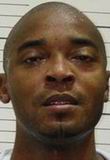
Andrew Thomas
Murderer Russell Ellwood
Murderer · USA · 1991
Russell Ellwood was a former taxi driver. Authorities suspected him of killing…
20 victims
Russell Ellwood
Murderer · USA · 1991
Russell Ellwood was a former taxi driver. Authorities suspected him of killing…
20 victims
 Robert Martines Perez
Murderer · USA · 1994
Name: Robert Martines Perez · Other name used in proceedings: Robert Martinez P…
15 victims
Robert Martines Perez
Murderer · USA · 1994
Name: Robert Martines Perez · Other name used in proceedings: Robert Martinez P…
15 victims
 Billy Frank Vickers
Murderer · USA · 1993
Billy Frank Vickers Vickers was executed by lethal injection in Texas on Januar…
14 victims
Billy Frank Vickers
Murderer · USA · 1993
Billy Frank Vickers Vickers was executed by lethal injection in Texas on Januar…
14 victims
 Orlando Ganal
Mass murderer · USA · 1991
February 15, 1991 — Orlando Ganal Sr. injured his back while working at his job…
4 victims
Orlando Ganal
Mass murderer · USA · 1991
February 15, 1991 — Orlando Ganal Sr. injured his back while working at his job…
4 victims
 Bruce Douglas Pace
Murderer · USA · 1988
Defendant: Bruce Douglas Pace · Date of birth: 12/12/59 · Case number (trial co…
1 victim
Bruce Douglas Pace
Murderer · USA · 1988
Defendant: Bruce Douglas Pace · Date of birth: 12/12/59 · Case number (trial co…
1 victim
 Anna Mansdotter
Murderer · Sweden · 1889
Anna Månsdotter was executed by beheading with an axe in Kristianstad on August…
1 victim
Anna Mansdotter
Murderer · Sweden · 1889
Anna Månsdotter was executed by beheading with an axe in Kristianstad on August…
1 victim
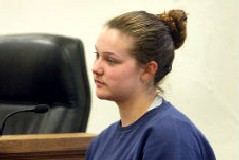 Lulonda Flett
Mass murderer · Canada · 2011
Lulonda Flett (accused; sentenced to five life sentences) · Evelyn Laforte (mot…
5 victims
Lulonda Flett
Mass murderer · Canada · 2011
Lulonda Flett (accused; sentenced to five life sentences) · Evelyn Laforte (mot…
5 victims
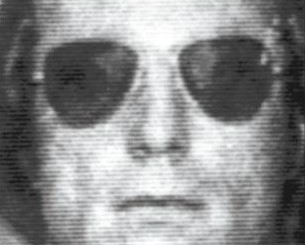 Frank James Coppola
Murderer · USA · 1978
Frank James Coppola (1944–August 10, 1982) was a former police officer from Por…
1 victim
Frank James Coppola
Murderer · USA · 1978
Frank James Coppola (1944–August 10, 1982) was a former police officer from Por…
1 victim
- Gender
- male
- Country
- USA
- Location
- Shelby County, Tennessee, USA
- Date of birth
- February 24, 1973
- Age at first offence
- 24
- Characteristics
- bank robbery, drugs
- Victim profile
- James Day (armored truck guard)
- Method of murder
- Shooting
- Date(s) of murder
- April 21, 1997
- Years active
- 1997
- Date of arrest
- —
- Status
-
Sentenced to death
Sentenced to death on December 14, 2001
The offence
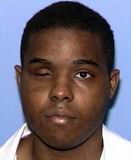
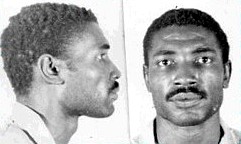
Andrew Thomas and his co-defendant, Anthony Bond, were indicted for the felony murder of James Day.
Thomas and Bond saw an armored truck guard leaving a Walgreens drug store on Summer Avenue in Memphis, Tennessee, shortly after 12:30 p.m. on April 21, 1997. Thomas ran up, shot the guard in the back of the head, and grabbed a deposit bag. The deposit bag contained $18,843.01 in cash, checks, and food stamps. Thomas jumped into a white car being driven by Bond. Thomas and Bond abandoned the white car on a street behind Walgreens, got into a red car that Thomas had borrowed from his girlfriend, and drove away.
A Walgreens’ employee heard the gunshot and then saw the armored truck guard, James Day, lying in the parking lot. The employee saw a man running from the scene with a gun and the deposit bag. The assistant manager of Walgreens ran outside and saw Day face down in a pool of blood. Day was conscious and told the man, “Call my wife.” Day remained conscious and continued to talk until an ambulance arrived.
Investigation
Several witnesses described the cars used by Thomas and Bond and gave descriptions of the occupants to the police. One witness testified that he saw a white car “speed” around the armored truck in the front of the store and that the car was within four feet of him. Witnesses later identified Thomas as the passenger in the white car.
After the shooting, Day was identified as having suffered a spinal cord injury from the gunshot wound.
Thomas was identified as the gunman who shot the guard in the back of the head from a still photograph made from a videotape captured by Walgreens’ surveillance cameras. A videotape made from the original was also played for the jury at a slower speed.
Thomas had an extensive criminal record. Prior indictments showed that on January 4, 1993, he had committed armed robberies; on February 1, 1993, he had committed armed robberies twice; on March 8, 1993, he had committed armed robberies once; on March 12, 1993, he had committed armed robberies once; on March 15, 1993, he had committed armed robberies twice; and on June 25, 1993, he had committed armed robberies once.
Arrest
The record did not set out any specific arrest details for Andrew Thomas.
Trial
Thomas and Bond were tried together before a single jury.
Evidence presented
The prosecution introduced testimony from Faye Day Cain, the victim’s widow. She testified that her husband had worked two jobs to support his family before he was shot, and that she was unable to work due to a medical condition known as thrombophlebitis. She testified that since her husband’s death, she and the couple’s minor son lived on disability payments and social security benefits. Cain testified that the victim had been her husband, confidant, lover, and best friend, and that after the shooting they could no longer have physical contact or intimacy. She testified that the victim “couldn’t stand to be touched” and that “the least little noise would turn him into a frenzy.” She testified that she had suffered great emotional pain, that she was no longer a happy person, and that she cried often. Cain testified that Cedric, the couple’s son, was twelve when his father was shot and that before the shooting they had enjoyed riding motorcycles, having breakfast, and doing “father and son” things. After the shooting, she testified, Cedric became “hurt and angry.”
The jury also saw a videotape of the shooting captured by Walgreens’ surveillance cameras, with a slower-speed version played at trial.
Eyewitness and identification testimony
Several witnesses described the cars used by Thomas and Bond and gave descriptions of the occupants to police.
A witness testified that he saw a white car “speed” around the armored truck in the front of the store and that it was within four feet of him.
Medical testimony on the cause of death
The medical examiner for Shelby County, Tennessee, Dr. O. C. Smith, testified that the cause of Day’s death was sepsis, “secondary to the rupture of his bladder resulting from spinal cord injury caused by the gunshot wound to his head.” Smith testified that he considered Day’s death a homicide. He stated that the “infection from the ruptured bladder” could be “directly related back to [the] gunshot wound.” Smith conceded that Day suffered from heart disease, high blood pressure, diabetes, and obesity, but he stated that these conditions did not cause the death.
Dr. Smith’s assistant, Dr. Cynthia Gardner, testified that Day’s death resulted from injuries caused by the gunshot wound.
Trial narrative concerning the apartment and conduct after the shooting
Later on the afternoon of April 21, 1997, Thomas and Bond arrived at the apartment of Thomas’s girlfriend. According to her, the two men were “excited” and “out of breath.” After telling Bond to get rid of the gun, Thomas began taking money, checks, and food stamps from small white envelopes that had been in Bond’s jacket. Thomas and Bond divided the money.
The woman testified that later that same day Thomas bought a customized car with gold plates and spoke wheels for $3,975 in cash. The car was titled in the woman’s name.
While watching a news report that evening at the hotel about the shooting, Thomas told her that the victim “did not struggle for his life” and that he had “grabbed the nigger by the throat and shot him.”
On the day after the shooting, the girlfriend opened a bank account in her name and deposited $2,401.48 in cash. Two days later, she bought a shotgun because Thomas said they needed it “for protection.” The woman testified that Thomas later bought a gold necklace for himself and wedding rings for both of them.
After getting married in May, the couple separated two months later. Thomas told her not to tell police about the robbery.
Jury verdict
The jury found that the evidence supporting the sole aggravating circumstance outweighed the evidence of mitigating circumstances beyond a reasonable doubt. The jury imposed the death penalty after making this determination.
Sentencing
After the trial, the Court of Criminal Appeals affirmed the conviction and the death sentence.
On September 26, 2001, the jury returned a sentence of death for Thomas and a sentence of life without parole for Bond.
Appeals
The Court of Criminal Appeals affirmed the conviction and the death sentence after concluding that twenty-two issues raised by the defendant were without merit.
Outcome
The Supreme Court of Tennessee issued an opinion involving Andrew Thomas and his co-defendant, Anthony Bond, relating to the felony murder indictment and Thomas’s death sentence.
Aftermath
Day did not immediately die from the gunshot wound to the back of his head. The gunshot damaged his spinal cord and resulted in paraparesis, a profound weakness in one’s abdomen and legs, and neurogenic bladder, a loss of bladder and bowel control due to nerve damage.
Faye Day Cain testified that her husband underwent numerous surgeries, needed constant care and medical attention, and was unable to work. Cain testified that he was confined to one room, was unable to use the bathroom, and became depressed.
In late September of 1999, Day was rushed to the hospital for emergency surgery after his bladder ruptured. The condition caused an infection; Day’s condition continued to worsen; and he died on October 2, 1999.
Dr. O. C. Smith and Dr. Cynthia Gardner testified at trial that Day’s death resulted from the gunshot-related injuries.
A videotape of the shooting captured by Walgreens’ surveillance cameras was played for the jury, including a slower-speed version made from the original.
After the conviction and sentencing, Thomas wrote letters to various attorneys asking for help while consistently maintaining his innocence. The letters attracted the attention of current attorneys at the Winston & Strawn law firm.
Bond wrote a letter admitting that he and Angela Jackson lied about the Walgreens robbery. Bond wrote, “Me and . . . Angie played you playa,” and “Its a cold game and a cold world and we in both of them so its freezing.” Bond wrote that investigators had wanted a shooter and that he gave them “you.” Bond wrote that he knew Thomas had made advances toward his girlfriend, and that “Since you tried to cross me I crossed you.” Bond also wrote, “Angie knew that me and Bobby hit the Fargo truck,” and explained that Angela Jackson had been “fooling around with Bobby Jackson behind Andrew’s back.” Bond wrote, “So, ‘Angie didn’t snitch on Bobby even though she knew the business.’” Bond’s letter was described as the centerpiece of Thomas’s attempt to get his conviction overturned.
In the fall of 2007, Bond admitted under oath that he was the writer of another handwritten letter obtained by Thomas’s lawyers. Experts compared the two letters and concluded that the same person wrote both.
Thomas’s appeal also raised challenges to the trial testimony of the State’s medical experts. The appeal asserted that Day’s medical records did not support a claim that his blood pressure dropped as the medical examiners stated or that his lower thoracic spine was damaged. It asserted that records showed Day’s blood pressure was briefly elevated and then returned to a normal range, and that records showed Day had an injury to the central part of his thoracic spine, not the lower part. The appeal asserted that the records did not establish any connection between this injury and the gunshot wound and did not support Gardner’s testimony that an injury to the lower thoracic spine caused Day’s neurogenic bladder. The appeal also raised questions about the quality of medical care Day received during the years leading up to his death and during his final medical crisis, including questions about whether his diabetes and heart disease were diagnosed and treated and why, when he had blood in his urine and was taking Coumadin, a potent anti-coagulant, his urologist recommended that he drink more fluids.
Spotted an error, or have more information about this case?