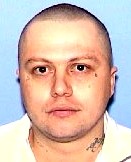
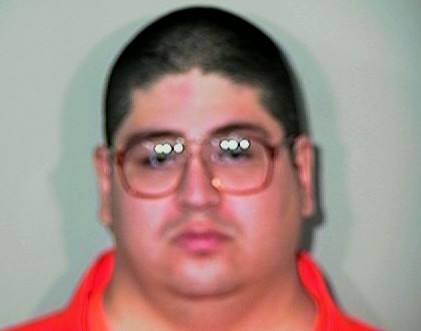
Tomas Raul Gallo
Murderer Robert Martines Perez
Murderer · USA · 1994
Name: Robert Martines Perez · Other name used in proceedings: Robert Martinez P…
15 victims
Robert Martines Perez
Murderer · USA · 1994
Name: Robert Martines Perez · Other name used in proceedings: Robert Martinez P…
15 victims
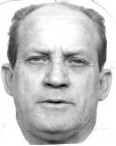 Billy Frank Vickers
Murderer · USA · 1993
Billy Frank Vickers Vickers was executed by lethal injection in Texas on Januar…
14 victims
Billy Frank Vickers
Murderer · USA · 1993
Billy Frank Vickers Vickers was executed by lethal injection in Texas on Januar…
14 victims
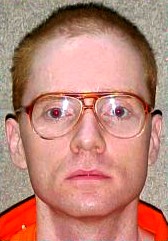 Robert Glen Jones
Murderer · USA · 1996
Defendant: Robert Glenn Jones (ADC#070566) · Co-defendant: Scott Nordstrom (ADC…
7 victims
Robert Glen Jones
Murderer · USA · 1996
Defendant: Robert Glenn Jones (ADC#070566) · Co-defendant: Scott Nordstrom (ADC…
7 victims
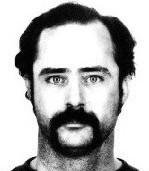 Robert Alton Harris
Murderer · USA · 1978
Robert Alton Harris was an American career criminal and murderer who was execut…
2 victims
Robert Alton Harris
Murderer · USA · 1978
Robert Alton Harris was an American career criminal and murderer who was execut…
2 victims
 Silvo Plut
Serial killer · Slovenia / Serbia · 1990
Silvo Plut was a Slovenian serial killer. He was born 29 May 1968 in Novo mesto…
3 victims
Silvo Plut
Serial killer · Slovenia / Serbia · 1990
Silvo Plut was a Slovenian serial killer. He was born 29 May 1968 in Novo mesto…
3 victims
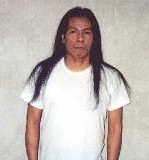 Jerald Harjo
Murderer · USA · 1988
Jerald Wayne Harjo was convicted of first degree murder in Seminole County, Okl…
1 victim
Jerald Harjo
Murderer · USA · 1988
Jerald Wayne Harjo was convicted of first degree murder in Seminole County, Okl…
1 victim
 Mary Courtney York
Murderer · USA · 2013
Mary Courtney York was a Del City woman. She previously entered a guilty plea t…
1 victim
Mary Courtney York
Murderer · USA · 2013
Mary Courtney York was a Del City woman. She previously entered a guilty plea t…
1 victim
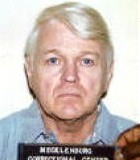 Earl Bramblett
Mass murderer · USA · 1994
Earl Bramblett was convicted in Virginia of capital murder, murder, arson, and…
4 victims
Earl Bramblett
Mass murderer · USA · 1994
Earl Bramblett was convicted in Virginia of capital murder, murder, arson, and…
4 victims
 Christine Coffman
Murderer · USA · 2005
Christine Coffman was a 45-year-old woman from Milwaukie. She pleaded guilty to…
1 victim
Christine Coffman
Murderer · USA · 2005
Christine Coffman was a 45-year-old woman from Milwaukie. She pleaded guilty to…
1 victim
- Gender
- male
- Country
- USA
- Location
- Harris County, Texas, USA
- Date of birth
- March 1, 1975
- Age at first offence
- 28
- Characteristics
- rape
- Victim profile
- 3 year old hispanic female
- Method of murder
- Beating
- Date(s) of murder
- December 11, 2003
- Years active
- 2003
- Date of arrest
- —
- Status
-
Sentenced to death
Sentenced to death on February 24, 2004
Overview
Tomas Raul Gallo was convicted in February 2004, of the capital murder of an individual under six years of age, under Tex. Penal Code § 19.03(a)(8). Based on the jury’s answers to the special issues under Texas Code of Criminal Procedure Article 37.071, sections 2(b) and 2(e), the trial judge sentenced Gallo to death under Article 37.071, § 2(g). The Texas Court of Criminal Appeals affirmed the trial court’s judgment and sentence of death.
Timeline
- 12/11/2003 — Offense date; Gallo was 28 at the time of the offense in Harris County, Texas.
- 12/11/2001 — In Harris County, Texas, Gallo sexually assaulted and struck a 3-year-old Hispanic female in the head, resulting in her death.
- 02/24/2004 — Gallo was sentenced to death; he was 28 at sentencing and the punishment charge occurred with a jury determination of mental retardation as Special Issue No. 2.
- 09/26/2007 — Meyers, J. delivered the opinion of the Texas Court of Criminal Appeals; the judgment and sentence of death were affirmed.
Background
Gallo’s personal details were listed as follows: TDCJ Number 999469; name Tomas Raul Gallo; date of birth 03/01/1975; age at sentencing 28; education level 11 years; race and gender White Male; hair color Brown; height 5' 10"; weight 202; eye color Black Native; prior occupation listed as Monterey California hydro-water blaster, laborer.
His prior prison record was listed as None.
The offence
Gallo sexually assaulted and struck a 3-year-old Hispanic female in the head in Harris County, Texas, resulting in her death.
The capital-murder conviction was for the murder of an individual under six years of age (Tex. Penal Code § 19.03(a)(8)).
Investigation and evidence issues at trial
Admission of photographs
In his fifth point of error, Gallo claimed that the trial court erred in admitting “numerous, repetitious, [and] gruesome” photographs of the dead three-year-old victim in violation of the Eighth and Fourteenth Amendments to the United States Constitution. He complained that “[t]he photographs of the deceased child are hideous” and that their admission “created a very serious risk that the jury would be unable to put aside their natural emotional repulsion and disgust and make their guilt and/or sentencing decision in a rational manner.”
He asserted that the photographs were unfairly prejudicial, especially because “[t]here was ample other evidence to illustrate the facts in the instant case[,]” including the medical examiner’s report, which gave “a very detailed description of the child's body.”
Gallo challenged admission of State’s Exhibits 66-68, 70-79, 81-100, and 118-120. The court treated admissibility of a photograph as within the trial judge’s sound discretion and applied relevant evidence principles under Texas Rule of Evidence 401 and Rule 403.
Gallo filed a pre-trial “Motion to Suppress Gruesome Photographs.” At the beginning of the motion, he generally and globally moved “to exclude all gruesome photographs of the victim.” He invoked the relevance rule and Rule 403 balancing test. During testimony, the court addressed whether objections were preserved.
State’s Exhibits 118, 119, and 120 were photographs of the victim as she appeared at the hospital. When offered, Gallo stated, “No objections other than previously lodged[,]” apparently referring to the pre-trial motion. The court admitted the photographs, reasoning the pre-trial motion specifically referred to “[m]edical [e]xaminer's photographs,” and his “objections . . . previously lodged” reference was not sufficiently specific to preserve error for these three exhibits, citing Tex. R. App. P. 33.1. The appellate court also noted that all three photographs showed no more than the injuries the victim suffered shortly before her death at a time when Gallo was the only adult with her.
The remaining complained-of photographs were taken during the medical examiner’s investigation. State’s Exhibits 66-68, 70-79, and 81-90 were identified by Chief Medical Examiner Dr. Luis Sanchez, who testified he had reviewed 290 photographs and 61 glass slides before selecting these twenty-three photographs to illustrate the results of the external examination and external injuries the victim suffered shortly before her death. The color photographs were described as 3½" x 5" and depicted the unclothed victim lying on the medical examiner’s table from different angles, showing over 200 contusions and lacerations inflicted in the last hours of her life. The appellate court stated the photographs were no more gruesome than expected in this sort of crime.
State’s Exhibits 91-99 were also 3½" x 5" color photographs described as more gruesome because they showed injuries discovered during the internal examination. Specifically, Exhibits 91 and 92 were close-up views of cracked ribs, with the rib removed in Exhibit 91. Exhibits 93-99 showed various views of the underside of the victim’s scalp, the victim’s skull, and one picture of the victim’s brain. The medical examiner used the photographs to show the massive damage inflicted, including a twelve-inch fracture that began at the base of her skull. The appellate court stated these photographs were highly probative to show the full extent of the injuries and that there was no danger the jury would attribute removal of rib, scalp, or skull cap to Gallo.
Gallo also challenged State’s Exhibit 100. Exhibit 100 was an 8½" x 11" piece of paper with a reproduction of State’s Exhibit 79, a photograph showing damage to the victim’s vagina in a slightly larger format; the original 3½" x 5" image was reproduced as a 6¼" x 6¾" color image, overlapping a 5¾" x 4" color picture depicting how a healthy child’s intact vagina should appear. The appellate court found the exhibit helped the jury understand the extent of injuries, and it referenced evidence suggesting the vaginal injuries were inflicted during the same continuous transaction that resulted in her death. It stated the evidence of additional injuries was probative of Gallo’s mental state and the specific circumstances of the murder.
The appellate court held the trial court did not abuse its discretion in admitting any challenged photographs and overruled point of error five.
Motion for continuance (surprise witness)
In his sixth point of error, Gallo argued the trial court erroneously denied his motion for a continuance regarding the State’s “surprise witness,” Thomas Michael Gilstrap, who testified about statements Gallo made to him while they were inmates at the Harris County Jail.
Gallo asserted he was denied effective assistance of counsel and due process because he was unable to properly investigate and cross-examine Gilstrap.
The appellate court reviewed denial of a motion for continuance for abuse of discretion, requiring a showing of actual prejudice. It concluded Gallo failed to show what surprise remained or how counsel could have been more effective with more time.
Gilstrap contacted the prosecutor on Thursday, February 5, 2004, after the State’s case-in-chief began. On that same day, the prosecutor informed defense counsel that he intended to call Gilstrap. Defense counsel filed a motion for continuance on February 9 requesting more time to investigate Gilstrap’s criminal and mental-health history.
During a bench conference, the prosecutor stated: “Gilstrap called him on February 5, after Gilstrap saw defense counsel ‘on TV trying to blame the [victim's] mother.’” The prosecutor further stated he was unaware of Gilstrap’s existence prior to that time and that he provided defense counsel with Gilstrap’s criminal history and jail records.
In a hearing outside the jury’s presence, Gilstrap testified that Gallo admitted killing the victim and said he would “beat the case” because he failed an IQ test and was mentally retarded.
Gilstrap’s prior convictions and status were described: he acknowledged prior convictions, he was currently on parole, had a prior parole violation for assaulting his wife, had a prior heroin problem, and had been sent to “M.H.M.R.” while in jail because he was depressed. The trial court overruled defense counsel’s objection and decided “to allow the testimony.”
Before the jury, Gilstrap testified he contacted the District Attorney’s Office after he saw media coverage of Gallo’s case on television. He acknowledged his prior convictions, parole status, substance-abuse problems, and that he was depressed while in jail. Gilstrap testified Gallo talked to him about the offense while they were housed in the Harris County Jail in January 2003.
The appellate record included the following verbatim statements attributed to Gallo as related by Gilstrap:
- “I'm the one that killed that little girl.”
- Gallo told Gilstrap he was watching his girlfriend’s daughter while she was at work, the child was “bothering” him and “making a lot of noise,” he “spanked her four or five times,” she “quit breathing” after he “slammed her into the bathtub,” and he “got real scared,” “tried to clean her up,” and “called her mother at work.”
- Gallo also told Gilstrap that “he failed the IQ test” and “he'd probably beat the case because he was retarded.”
Defense counsel cross-examined Gilstrap about details of his assault on his wife, his “26 years of heroin abuse,” the medications he was taking in the jail “psych ward,” his cocaine abuse, his thirty-year criminal history, and the fact that he waited so long to come forward with information pertaining to Gallo.
The appellate court found that given extensive cross-examination, Gallo failed to show prejudice and overruled point of error six.
Expert witness issues
Exclusion of Dr. George Holden testimony on filicide
In his seventh point of error, Gallo asserted the trial court erroneously excluded expert testimony of Dr. George Holden “regarding the issue of filicide,” alleging denial of a meaningful opportunity to present a complete defense.
The appellate discussion described Texas Rule of Evidence 702 and standards for reliability, including clear and convincing proof of relevance and reliability; and treatment of “soft” science evidence.
The trial court held a hearing outside the jury’s presence. Holden testified he was a college professor with a Ph.D. in developmental psychology and that he had “research expertise in the area of parent/child relationships and family violence.”
Holden explained “filicide” was “what researchers call the phenomenon of parents that kill their children.” He testified “mothers are [statistically] more likely to kill their children than fathers” and there are many “different motives or causes behind why parents may kill their children,” including “when discipline goes ary [sic].”
The court required clarification. Verbatim exchanges included:
- THE COURT: Can you tell me again what, I mean, just like maybe a couple of lines, sentences on what the focus of the testimony is suppose[d] to be in front of the jury[?]
- [DEFENSE COUNSEL #1]: The risk factors, which is where he's going now.
- THE COURT: Whose risk factor?
- [DEFENSE COUNSEL #1]: The general risk factors in filicides and then the risk factors of [the victim's mother] Cristina Arredondo.
- THE COURT: That puts the child at risk?
- [DEFENSE COUNSEL #1]: Her risk, what makes her a risk and potential suspect for the perpetration of the homicide.
- [DEFENSE COUNSEL #2]: As far as a profile goes, Judge, a profile for someone.
- [DEFENSE COUNSEL #1]: Risk factors.
- THE COURT: Thank you, that's what I was looking for. You are wanting to set up a profile for somebody that kills their own child?
- [DEFENSE COUNSEL #1]: Yes, ma'am.
Holden testified he reviewed Arredondo’s “psychological report” and “C.P.S. records” and concluded she had risk factors associated with physical child abuse including:
- youth;
- limited income and education;
- the stress of having two young children;
- “personality attributes identified as antisocial and narcissistic, angry and capable of manipulative behavior”;
- “rigid child rearing attitudes” with the use of physical punishment;
- “evidence that [the victim] was a difficult, challenging child”;
- “a series of relationship problems with adult men”; and
- being a victim of both physical and psychological domestic violence herself.
On cross-examination, Holden testified: “[t]he science of predicting one who is capable of killing is inexact” and “there hasn't been extensive enough research into the characteristics of filicide in order to come up with a set profile.”
At the conclusion of the hearing, the trial court ruled inadmissible, stating:
- THE COURT: I am not going to allow that testimony, in fact, for a couple of different reasons. No. 1, I think, sort of the last sentence out of the witness' mouth sort of sealed it, not extensive enough research for him to give any kind of risk factors as to the study of filicide, which the Court has questions as to whether that's a legitimate field of expertise and whether it would be helpful to the jury or not, so I am going to - - I am not going to allow that testimony.
- THE COURT: * * * I don't find his testimony with regard to the studies of filicide or child abuse to be reliable[.]
The appellate court held the trial court did not abuse its discretion and that the exclusion did not prevent Gallo from arguing the victim’s mother could have committed the crime. Point of error seven was overruled.
Trial arguments and rulings
Prosecutor’s closing argument (objections sustained; mistrial denied)
In his eighth point of error, Gallo contended the State “purposefully attacked appellant over the shoulders of defense counsel” during its closing argument at the guilt phase.
He complained about a portion of the prosecutor’s closing argument quoted in the record:
- [PROSECUTOR]: This focus on Cristina and the 911 calls, I haven't got a clue what [defense counsel's] clue is about on that one. I mean, come on, the 911 numbers, a hang-up call, what does that tell you? He had a hypothesis like he does most of the time with Mr. Sanchez - - Dr. Sanchez, that the 911 calls are land lines over here while the 20-minute gap is over here (indicating). Where in the hell is the evidence on that? There isn't any. It's his theory to run you down a rabbit trail so you'll lose focus of Tomas Gallo.
Defense counsel objected. The court sustained the objection, and the court instructed the jury: “Please disregard the last comment.” Defense counsel requested a mistrial. The court denied it with “Overruled.”
The appellate court performed a harm analysis and concluded Gallo was not harmed because curative action occurred (instruction to disregard) and evidence supporting conviction included Gallo’s own admissions and DNA evidence connecting him to the offense.
Gallo also challenged closing argument where the prosecutor used curse words twice. The record included the following verbatim exchange:
- [PROSECUTOR]: . . . Alexis didn't name anybody else as being present in that home when her sister was murdered, not a one. The only one mentioned was Tomas Gallo, the only name given. It doesn't take a rocket scientist at that point to figure out who your suspect is, and it kind of helps when you've got an idea who you are looking for and the son-of-a-bitch is running - -
- [DEFENSE COUNSEL]: Objection, Your Honor.
- THE COURT: Sustained.
- [DEFENSE COUNSEL]: We ask for an instruction to disregard.
- THE COURT: The jury will be instructed to disregard the last comment.
- [DEFENSE COUNSEL]: And we respectfully move for a mistrial.
- THE COURT: Overruled.
A second portion included:
- [PROSECUTOR]: When he's the one running, hiding in a car two streets over and he's smoking marijuana and he's eating pizza . . .
- [PROSECUTOR]: . . . That baby was laying there, like he says, it was for that 20 minutes worth of phone calls. How did - - why didn't he dial 911? Why didn't he dial 911? He didn't dial 911 because he is the killer. He's thinking, oh, shit, what have I done? What am I going to do now?
- [DEFENSE COUNSEL]: I object again - -
- THE COURT: Sustained.
- [DEFENSE COUNSEL]: I ask the jury be instructed to disregard.
- THE COURT: [Prosecutor], please refrain - - please use proper language.
- [PROSECUTOR]: Yes, ma'am.
- [DEFENSE COUNSEL]: We ask that a mistrial be granted.
- THE COURT: Overruled.
The appellate court found Gallo’s preservation and briefing arguments inadequate for the constitutional claim and overruled point of error eight.
Statement voluntariness instruction
In point of error four, Gallo asserted the trial court erroneously denied his requested instruction on voluntariness of his statement. His proposed instruction included required warnings and treatment of statements made as a result of custodial interrogation, along with a sentence that if “Defendant's mental retardation or mental impairment prevented him from making an understanding waiver of his right to remain silent or his right to counsel, you will find that the statement was taken in violation of the Constitution or laws of Texas and/or the United States, and you will not consider the statement for any purpose against him.”
The appellate court held it would have been improper for the trial court to include mental retardation in its voluntariness instruction, citing Penry v. State and prohibiting instructions that focus on a particular factor rendering a statement involuntary as an impermissible comment on weight. Point of error four was overruled.
Mental retardation issues (Atkins)
The first three points of error concerned mental retardation, framed within Atkins v. Virginia and later guidance from Ex parte Briseno.
The appellate court described mental retardation as a disability characterized by: (1) “significantly subaverage” general intellectual functioning; (2) accompanied by “related” limitations in adaptive functioning; (3) with onset prior to age 18. It also described additional evidentiary factors and discussed that Atkins requires that executing a mentally retarded person is unconstitutional, with procedural and substantive mechanisms left to states. The appellate court noted Texas had not established a statutory scheme and used temporary judicial guidelines in Ex parte Briseno.
It also stated that a jury determination of mental retardation is not required in the overall Atkins framework, referencing Schriro v. Smith and Briseno.
Special Issue No. 2 and burden of proof
In this case, the jury determined mental retardation as “Special Issue No. 2” in the punishment charge: “Do you find, taking into consideration all of the evidence, that the Defendant is a person with mental retardation?” The jury unanimously answered this special issue in the negative.
The appellate court held that when presented at trial, the defendant bears the burden to prove mental retardation by a preponderance of the evidence.
Point of error one: sufficiency of evidence
Gallo claimed evidence was legally and factually insufficient to support the jury’s determination that he was not mentally retarded. The defense expert was Dr. Richard Garnett, a psychologist with thirty-five years of experience in the field of mental retardation.
The appellate record described Garnett’s evaluation: he did not administer any IQ or adaptive behavior tests; he personally interviewed Gallo at the Harris County Jail in 2002, where Gallo was “very talkative” and “interactive,” but at times Garnett “couldn't quite follow what he was saying.” Garnett reviewed school records, criminal-justice records, the transcript of an interview with Gallo’s mother, and results of a 2002 psychiatric evaluation conducted by the State’s expert.
School history as described included attendance in the Palo Verde Unified School District in California from 1980 to 1993. Garnett testified records showed lack of achievement and pattern of performing well below grade level. Garnett testified about the Iowa Test of Basic Skills in 1984 at age eight: overall score was in the “low five percentile,” vocabulary “considerably higher.” Garnett described age nine results “still at pretty low levels,” including many first and second percentile scores and “very little learning over the year.” At age twelve, scores ranged from the first percentile to the 22nd percentile, but 11 of 15 subscales were at or below the six percentile. Garnett testified that special resource or special education classes began around age 13 and Gallo was later placed into “Second Chance,” an alternative to juvenile detention. At age 14, Gallo achieved a full-scale IQ score of 74 on the Wechsler Intelligence Scale for Children-Revised (WISC-R). Garnett testified the standard error of measurement was “five points above and below” and that “95 times out of a hundred the score is going to be in that range.”
Adaptive behavior described included a full-scale score of 71 on an “Adolescent Behavior Inventory,” which Garnett testified fell in the same range as IQ. Garnett testified about a “Personality Inventory for Children” and scores including a standard score of 60 and a cognitive development score of 61, which were “not the same as the IQ scores.” Garnett further testified that in 1991, in eleventh grade, Gallo read at fifth-grade level, “math was 3.9,” and “spelling was 5.4.” In 1992 at age seventeen, basic skills test scores were at or below the fifth-grade level. Garnett testified that Wide Range Achievement Test and Woodcock Johnson test results showed at or below sixth-grade level in spelling, math, and reading, and school records stated he remained eligible for special education. Garnett testified Gallo stopped attending school in 1993.
Garnett concluded Gallo had an IQ score two standard deviations below average, limitations in at least two areas of adaptive behavior, and signs of mental retardation before age 18, concluding Gallo was mentally retarded.
Defense witnesses at punishment included:
- Melinda Bates, who had taught Gallo in the tenth grade culinary-skills resource class for children with learning disabilities or cognitive problems. She testified Gallo read at a third-grade level in tenth grade, had “cognitive delays,” struggled with school despite adapted resource classes, and that he was polite, respectful, and obedient. Bates testified the school used “limited cognitive functioning” rather than mentally retarded, and grading in resource classes was based on effort and motivation.
- Charlene Gallo, Gallo’s mother. She testified she had to constantly repeat things for him to understand; he looked at her “in a blank way” and pretended to understand. She testified he could not perform simple tasks such as taking out trash, gluing wings on a model airplane, following a grocery list, making change, using a map or globe, reading a clock with numbers, or fixing things around the house. She testified he did not learn the alphabet until fifth or sixth grade and had trouble tying his shoes. She testified it was difficult for him to navigate his neighborhood and that he used landmarks instead of street signs; she testified he took his driver’s test orally because he could not read it. On cross-examination, she acknowledged prior descriptions to school and juvenile authorities described him as “above average,” that she described him as a “leader” in Little League, that he had friends, and that after arrest as a teenager he began going to school and doing more chores. She testified he worked in fast food restaurants as a teenager and that as an adult he found work and lived on his own.
The State’s expert witness at punishment was Dr. George Carl Denkowski. The record described that Denkowski reviewed records, interviewed four former high-school teachers and Gallo’s former probation officer, and personally evaluated Gallo. Denkowski tested Gallo at age 27 in 2002 and obtained a full-scale IQ score of 68. Denkowski also tested depression and anxiety using “Beck Depression Inventory” and “Beck Anxiety Inventory,” with scores indicating he was “seriously depressed and moderately anxious.” Denkowski testified people seriously depressed “tend to produce IQ scores that are about eight points lower.” He testified lack of achievement and motivation in school would have contributed to lowering IQ. He believed Gallo’s IQ was above 70 after taking into account previous IQ and depression/anxiety. Denkowski testified that Gallo showed lack of motivation rather than lack of ability, and that school achievement scores on the “Iowa Test of Basic Skills” indicated adequate learning ability when motivated. Denkowski testified grades tended to increase after juvenile trouble and after foster care placement. He testified Gallo’s mother rated him above average on a Personality Inventory for Children across multiple skill areas and that “even when you discounted for that tendency it showed that in her mind he functioned just as well as any other child.” Denkowski testified she also reported depression, anxiety, and an “extremely high” delinquency level in high school. He adjusted an “Adolescent Behavior Inventory” score to 85 because “bad norms” made comparisons to older children unreliable.
Denkowski testified about Gallo’s work history with “Hydroblast” in Houston using high-pressure hoses to wash inside of reactor tanks, including scaffolds in confined spaces, wearing a respirator, learning “extra oxygen in case something blew up,” passing tests on safety and proper use, and using a “problem solving strategy” to remember pictures and words and numbers to pass tests on retake. Denkowski testified mentally retarded people are “highly deficient” in that strategy. Denkowski testified about adaptive behavior assessment in 2002, including “adaptive composite” scaled score of 71 and scaled score range of 69 to 77. He testified Gallo had a “high level of adaptive behavior” based on “chronic drug selling,” “ability to mediate gang conflicts,” and “ability to maintain employment.” Denkowski testified he was deficient in “functional academics,” but explained many fall behind due to early behavior problems and do not catch up. He testified Gallo was deficient in “health and safety,” but reasoned delinquent background people may not worry about it or learn it because “it's just unimportant to them.” Denkowski concluded Gallo was not mentally retarded.
Other State witnesses at punishment included:
- James Smallwood, a high school culinary-skills teacher. He testified Gallo was in the Restaurant Division serving lunch to teachers, and Gallo performed jobs from dishwasher to short-order cook. He testified Gallo did not like “the front of the house,” but excelled as a short-order cook involving “a lot of timing” and “thinking skills,” had good communication skills, was good at dealing with and leading people, and helped with gang problems and creating a “safe zone” at the high school.
- Susan Distal, a juvenile-probation officer from 1991 to 1993. She testified she had frequent contact and never suspected mental retardation, had meetings with teachers and family members without discussions about mental retardation, and that Gallo never appeared to have problems understanding questions. Distal testified Gallo sometimes lacked motivation in school: “He would bring in his report card and when he was willing and ready to do the work and motivated to do it his grades would go up. When he wasn't they would go down.” She also testified he was confined in a juvenile facility for about sixty-two days as part of probation and officials never referred him for evaluation for mental retardation.
The appellate court described the evidence as dueling experts with evidence both for and against mental retardation, including that Gallo’s IQ was above 70 prior to age 18 and below 70 at age 27, and that Denkowski attributed lower score to lack of motivation, serious depression, and moderate anxiety. It also discussed resource classes, school achievement scores, and evidence that Gallo worked in fast food restaurants, passed safety and procedure tests at Hydroblast, had relationships, was involved in a gang, and sold drugs.
The appellate court concluded the evidence was sufficient to support the jury’s determination that Gallo failed to prove mental retardation and that the judgment was not so against the great weight and preponderance of the evidence as to be manifestly unjust. Point of error one was overruled.
Point of error two: denial of mistrial and continuance after Briseno
Gallo argued the trial court erred in denying his motion for mistrial and motion for continuance when Briseno was handed down in the midst of trial. He claimed defense needed time to study Briseno and its effect on presentation.
The appellate discussion stated the Briseno opinion was published Wednesday, February 11, 2004. Defense counsel moved for a mistrial Thursday, February 12, after both sides rested and before closing arguments at guilt phase. The defense argued at trial that Briseno introduced a new way to try these cases by focusing on “lay witness” battle and potentially changed the challenge strategy.
The record included the following verbatim statement by defense counsel: [The] A.A.M.R. had a definition that involved IQ score and adaptive behavior functioning and onset before the age of 18. We geared our defense for meeting that challenge. We obviously have raised the retardation debate, but more importantly we intend to raise it at punishment with that rule in place, with that goal in mind to try to meet the existing case law as we understood it up until yesterday. And what the Court has done now, which we certainly, with all due respect, you know, we'll challenge the underlying premise of Briseno, which is that Texas may in some way subvert the Eighth Amendment protections of Atkins by coming up with some sort of citizen-sponsored standard that you have to meet to be in Texas retarded. And I think that just completely subverts the whole idea of Atkins and ultimately, I hope, would result in a finding that the Eight[h] Amendment would be violated by such a process. But in any event, with all due respect to the Court, we now have a new way of trying these cases which we are surprised by and which will be to the detriment of our client if we're forced to go forward. I told the Court in chambers that we're prepared to defend against the definition we had of the adaptive behavior scales which had been argued back and forth between the experts. We chose not to bring civilian witnesses to banter back and forth on the [minutia] of the adaptive behavior when we had what we thought was strong expert testimony. The Court now, in Judge Cochran's opinion stands that strategy on it's [sic] head and says that's not going to get the job done. Had I known that before yesterday, I would have done this: Prepared this case differently, and I would be prepared to go forward with the emphasis on lay witnesses. As I read Briseno, she concedes or argues that there's going to be experts, we take that for granted, each side will employ someone to carry their argument forward. But the real battle will come in the lay witness category and in our opinion she elevates that lay witness battle over adaptive behavior, you know, in violation of the Eighth Amendment. But in my opinion it doesn't count, her's [sic] does, and I would have done things differently had I had access to this before yesterday. So for all these reasons, Your Honor, we would respectfully move for a mistrial.
The State responded that Briseno placed the burden on the defense but did not change the definition of mental retardation, and the trial court denied the motion for mistrial.
Defense then requested additional time to gauge strategy for punishment, and the court stated it would reconsider in terms of punishment. Defense filed a written motion for continuance on Tuesday, February 17, after the State rested on punishment but before the defense presented punishment evidence. Defense argued it planned to rely only on expert testimony regarding adaptive behavior but Briseno elevated lay witnesses on adaptive behavior.
The trial court ruled that it denied the continuance request, stating it had planned an extra day but there was an extra day; the court referenced illness and stated: “I think you indicated you sent somebody to California to try to find some people. Obviously that's not a lengthy continuance. You were actually given a day to try to find some additional people, and so your request for continuance will be deny [sic].” The appellate court also stated the motion for continuance was granted for one day, but additional time was denied.
Gallo argued at trial Briseno changed AAMR definition by assigning superior status to lay witness testimony, but the appellate court stated this characterization was inaccurate, explaining that Briseno stated the AAMR and Texas Health and Safety Code criteria would be followed. It found no prejudice. Point of error two was overruled.
Point of error three: jury instructions on mental retardation
Gallo argued the trial court erroneously rejected proposed instructions regarding mental retardation.
He proposed a definition requiring the jury to consider whether the State had proven beyond a reasonable doubt that he was not mentally retarded. He also proposed alternative definitions from his motion “Defendant’s Alternative Requested Charges - Mental Retardation” including several versions describing “significantly sub-average general intellectual functioning,” limitations in everyday life, and onset before age 18.
The trial court denied his requested definitions and instead instructed the jury with an instruction defining mental retardation as “significantly sub-average general intellectual functioning that is concurrent with deficits in adaptive behavior and originates during the developmental period, onset prior to the age of 18,” and defining adaptive behavior and sub-average general intellectual functioning using psychometric criteria and standardized instruments. The special issue instruction was: “Do you find, taking into consideration all of the evidence, that the Defendant is a person with mental retardation?”
Gallo argued the State should have the burden beyond a reasonable doubt under Article 37.017, § 2(c). The appellate court relied on Briseno and the holding that the defendant bears the burden by a preponderance of the evidence to establish mental retardation. Point of error three was overruled.
Other legal claims at appellate level
Impact of execution mitigation evidence
In point of error nine, Gallo argued the trial court erroneously excluded evidence of the impact his execution would have on his family and friends, violating the Eighth Amendment right to present mitigating evidence. The appellate court rejected the argument, citing Holberg v. State, McFarland, and Fuller v. State, and stated such evidence is objectionable because it does not pertain to background, character, record, or circumstances of the offense. Point of error nine was overruled.
Residual doubt instruction
In point of error ten, Gallo argued the trial court erred in denying an instruction allowing jurors to consider residual doubt as a mitigating circumstance when answering the mitigation special issue and the continuing threat special issue. The appellate court held there was no constitutional right to have jurors’ residual doubts about guilt considered as mitigating factors, citing Franklin v. Lynaugh and Blue v. State, and also noted no constitutional right to a jury instruction about residual doubt. Point of error ten was overruled.
Closing argument on mitigation
In point of error eleven, Gallo argued the trial court erroneously refused his request to give the final closing argument on the mitigation special issue. The appellate court held the arguments were rejected in Masterson v. State and overruled point of error eleven.
Death penalty procedure; indictment challenges
In point of error twelve, Gallo argued the trial court erred in denying a motion to preclude the death penalty as a sentencing option or to quash the indictment based on Apprendi v. New Jersey and Bush v. Gore. The appellate court stated it previously rejected these arguments, citing Rayford v. State and Threadgill v. State, declined to revisit them, and overruled point of error twelve.
Execution protocol; pancuronium bromide challenge
In point of error thirteen, Gallo argued the trial court erred in denying his pretrial motion to preclude the death penalty, challenging the use of pancuronium bromide in lethal injection. The appellate court stated his execution was not imminent and that the method currently administered was not determinative of how it would be administered at the moment of his execution. It held the claim was not ripe and overruled point of error thirteen.
Outcome and appellate disposition
The appellate court affirmed the trial court’s judgment and the sentence of death. The opinion was delivered by Meyers, J. and published on September 26, 2007.
The opinion panel included:
- Meyers, J., delivered the opinion, in which Keller, P.J., and Price, Johnson, Keasler, Hervey, Holcomb, and Cochran, JJ., joined.
- Womack, J., concurred.
The appellate court stated it reviewed appellant’s thirteen points of error and found them to be without merit.
Other details
- The record noted an indictment and trial history: Gallo was initially indicted and tried for the offense in 2002; a mistrial was granted on January 2, 2003, because of a disabled juror; and he was re-indicted on February 20, 2003.
- The record included a note that an order on appellant’s motion for continuance showed it was granted, but it was not otherwise reflected in the record, and he did not receive a continuance.
- The appellate opinion referenced Article numbers in the Texas Code of Criminal Procedure unless otherwise indicated.
- A note stated “Soft” sciences include the social sciences or fields based primarily upon experience and training as opposed to the scientific method, citing Nenno.
- The opinion referenced Miranda v. Arizona.
- It stated Garnett testified at the guilt phase of the trial; at punishment, defense counsel stated he “would reoffer the evidence [he] offered during the guilt phase.”
- It included a phonetic note about “Wechsler,” and an assumption that WISC-R at age 14 was taken, with Denkowski administering a version of the Wechsler Adult Intelligence Scale (WAIS) at age 27.
- It described that State witnesses regarding mental retardation testified at guilt phase except Susan Distal, who testified at both phases; at punishment, the State “reoffer[ed] all the evidence from the case in chief.”
- A note defined adaptive skill areas under the AAMR quoted in Atkins, listing: communication; self-care; home living; social skills; community use; self-direction; health and safety; functional academics; leisure; and, work.
Spotted an error, or have more information about this case?