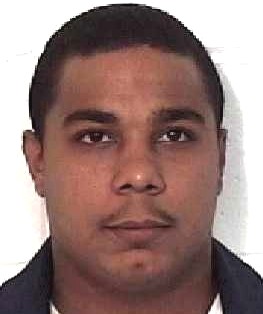
Exzavious Gibson
Murderer Brian Kevin Rosenfeld
Murderer · USA · 1985
Brian Kevin Rosenfeld Brian Kevin Rosenfeld was sentenced to three concurrent l…
23 victims
Brian Kevin Rosenfeld
Murderer · USA · 1985
Brian Kevin Rosenfeld Brian Kevin Rosenfeld was sentenced to three concurrent l…
23 victims
 Yahweh ben Yahweh
Murderer · USA · 1980
Yahweh ben Yahweh was born and legally named Hulon Mitchell Jr. (October 27, 19…
23 victims
Yahweh ben Yahweh
Murderer · USA · 1980
Yahweh ben Yahweh was born and legally named Hulon Mitchell Jr. (October 27, 19…
23 victims
 Russell Ellwood
Murderer · USA · 1991
Russell Ellwood was a former taxi driver. Authorities suspected him of killing…
20 victims
Russell Ellwood
Murderer · USA · 1991
Russell Ellwood was a former taxi driver. Authorities suspected him of killing…
20 victims
 Robert Martines Perez
Murderer · USA · 1994
Name: Robert Martines Perez · Other name used in proceedings: Robert Martinez P…
15 victims
Robert Martines Perez
Murderer · USA · 1994
Name: Robert Martines Perez · Other name used in proceedings: Robert Martinez P…
15 victims
 Lakhvir Singh
Murderer · United Kingdom · 2009
Defendant: Lakhvir Singh Known alias/nickname: "The Curry Killer" Method used:…
1 victim
Lakhvir Singh
Murderer · United Kingdom · 2009
Defendant: Lakhvir Singh Known alias/nickname: "The Curry Killer" Method used:…
1 victim
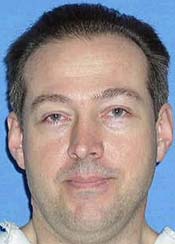 David Ray Harris
Murderer · USA · 1985
David Ray Harris was convicted of capital murder for the pre-dawn shooting of M…
1 victim
David Ray Harris
Murderer · USA · 1985
David Ray Harris was convicted of capital murder for the pre-dawn shooting of M…
1 victim
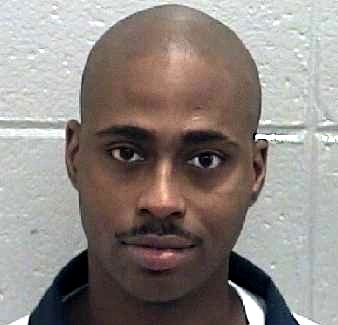 Demarcus Ali Sears
Murderer · USA · 1990
Demarcus Ali Sears was 25 years old when he was sentenced to death in September…
1 victim
Demarcus Ali Sears
Murderer · USA · 1990
Demarcus Ali Sears was 25 years old when he was sentenced to death in September…
1 victim
 Megan Huntsman
Murderer · USA · 1996
Megan Huntsman was 40 at sentencing. She was a mother of three children who wer…
6 victims
Megan Huntsman
Murderer · USA · 1996
Megan Huntsman was 40 at sentencing. She was a mother of three children who wer…
6 victims
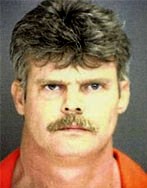 Scott Thomas Erskine
Murderer · USA · 1989
Scott Thomas Erskine was convicted of the murder of two California boys and was…
3 victims
Scott Thomas Erskine
Murderer · USA · 1989
Scott Thomas Erskine was convicted of the murder of two California boys and was…
3 victims
- Gender
- male
- Country
- USA
- Location
- Dodge County, Georgia, USA
- Date of birth
- 1972
- Age at first offence
- 18
- Characteristics
- armed robbery, drugs
- Victim profile
- Douglas Coley, 46 (convenience store clerk)
- Method of murder
- St abbing with knife
- Date(s) of murder
- February 2, 1990
- Years active
- 1990
- Date of arrest
- Same day
- Status
-
Life imprisonment
Sentence of death imposed June 20, 1990; commuted to life imprisonment
Case record: Exzavious Gibson
Background
Exzavious Lee Gibson was 25 years old when he was sentenced to death. He was convicted by a Dodge County jury of murder and armed robbery.
Douglas Coley was the victim. He was 46 years old and worked at the Eastman convenience store.
Gibson used crack cocaine the day of the crime. He told police he needed money for drugs and that he did not like Douglas Coley after being lectured for his behavior.
Gibson’s state appeal challenging the fairness of his trial was denied by Augusta Judicial District Superior Court Judge J. Carlisle Overstreet. The appeal was pursued although Gibson had no legal counsel.
The offence
On February 2, 1990, the victim operated a family-owned grocery store in Eastman. Late in the afternoon of February 2, 1990, Eastman’s chief of police, driving by the store during a routine patrol, saw a crowd at the front entrance. A man ran to the chief’s car and reported there was blood all over the store and no one visible inside.
Police entered the store through a side door after the main entrance was locked and a member of the victim’s family broke open the side door. The police chief discovered the victim’s body “behind the counter and blood just totally everywhere.”
An autopsy was conducted. The victim had been cut numerous times, and the knife blade had broken off in the vertebrae of the victim’s neck, severing the victim’s spinal cord and immediately paralyzing him from the neck down. The autopsist testified that the autopsist found 39 “stab and slash and superficial cut wounds on [the victim’s] body.” The autopsist testified that many of the superficial wounds in the front of the victim’s chest and neck were inflicted by what was left of the knife after it had broken off in the victim’s neck.
Gibson confessed shortly after he was arrested. Gibson first gave a brief written statement acknowledging killing the victim, claiming he needed money for drugs. Later that evening, Gibson gave a longer tape-recorded statement in which he stated he had been in the store earlier that day and had used profanity in the presence of the victim, who lectured him about his behavior. Gibson stated that when he returned later, he intended not only to rob the victim but also “to hurt him” because “I didn’t like him.”
Investigation
Eastman’s chief of police saw a crowd at the front entrance and was told by a man that there was blood all over the store and no one visible inside. The chief radioed for assistance and then approached the store. After entering the store, the police discovered the victim’s body behind the counter.
A man had been seen running away from the store. One of the women in the crowd recognized him and knew where he lived. She accompanied a police officer to Gibson’s home. Leaving her in the car, the police officer knocked and asked permission to enter. A woman answered and told the officer to come in. The officer noticed drops of fresh blood on the floor in the living room and asked whether anyone had run into the house. She answered “her grandson” and directed him to a bedroom down the hall.
In the bedroom, the officer saw bloody money under the bed and looked under it, finding the rest of the money (almost $500) and a wallet. The officer determined the wallet belonged to the victim. Looking around, he saw some bloody clothes near a closet that fit the description of the clothing worn by the man seen running away from the store. The officer opened the closet door and found Gibson “crouched down” and sweating profusely. Gibson was arrested and taken to jail.
Arrest
The police arrested Gibson shortly after the robbery-slaying. Gibson was arrested the same day as the crime.
Trial
Convictions and sentencing
Exzavious Lee Gibson was convicted by a Dodge County jury of murder and armed robbery.
He was sentenced to death on the murder conviction and to life imprisonment for the armed robbery.
The jury found that the offense of murder (a) was committed while the defendant was engaged in the commission of the offense of armed robbery and (b) was outrageously and wantonly vile, horrible and inhuman in that it involved aggravated battery. The evidence supported these findings.
Trial proceedings and evidentiary rulings
During the trial, multiple issues were addressed:
Change of venue (pretrial publicity). Gibson argued the trial court erred by denying his motion for change of venue. The court determined that offering only three newspaper articles did not amount to a “barrage” of pretrial publicity giving rise to a presumption of prejudice. The defendant could prevail on excessive pretrial publicity only if he could show actual prejudice “from the jury selection process itself -- the voir dire examination and qualification of prospective jurors.”
State requests to charge timing. Gibson argued there was an error connected to the state’s timing for requests to charge. The court held there was no statutory requirement that the state submit its requests to charge at least 24 hours before trial and that the trial court did not abuse its discretion by denying the defendant’s motion to compel such submission. The court noted that the state did not submit any requested charges at trial.
Exclusion of the news media from pretrial hearings. Gibson argued the trial court erred by denying his motion to exclude the news media from the pretrial hearings. The trial court did not err by refusing to close the pretrial proceedings to the media.
Suppression of physical items seized from the bedroom. Gibson contended the trial court erred by denying his motion to suppress physical items—bloody money, bloody clothes, and the victim’s wallet—seized from Gibson’s bedroom. Gibson argued there was no evidence the arresting officer was authorized to enter his bedroom and that his later consent to search was not preceded by Miranda warnings and was induced by an illegal entry.
The court found that Gibson’s grandmother invited the arresting officer into her home and told the officer the defendant was “in the far back bedroom” and the officer could “go on back and talk to him.” Thus, even pretermitting any question of “hot pursuit,” the officer was authorized to enter the defendant’s bedroom. The court held the consent was not tainted by an illegal entry. The court also held that Gibson was Mirandized at least twice the same evening he gave his consent, and Gibson executed a written consent to search stating he had “been informed of my constitutional right . . . to refuse to consent to . . . a search” of the premises. The court concluded consent was not invalid and there was no error.
Attorney General response to subpoenas and alleged denial of effective assistance. Gibson complained about the Attorney General’s response to his attempt to subpoena information held by witnesses employed by the state crime laboratory. The Attorney General moved to quash the subpoenas, assess costs, and find the defendant’s attorney in contempt. Gibson’s attorney withdrew the subpoenas after stating he did not wish to “suffer” the court’s contempt and had no funds to pay the costs. Gibson argued the state’s “bullyboy” tactics “compelled” his withdrawal of the subpoenas and denied him effective assistance of counsel. The court found Gibson did not withdraw the subpoenas until midway through the trial, after being encouraged by the trial court to insist on the subpoenas if he wished because “being fined or . . . having to incur any personal cost in this matter is so remote as to be non-existent.” The court noted only two crime-laboratory witnesses testified and that one had not been subpoenaed by the defense while the autopsist testified he had complied with the subpoena and brought to court all items in his possession called for by the subpoena. The court found the threats were distasteful but did not find Gibson was “compelled” to withdraw or that the state impaired representation.
Grandmother’s statement and motion for mistrial. The arresting officer testified that Gibson’s grandmother answered questions after the officer entered the residence. The defendant objected and moved for a mistrial. The trial court sustained the objection and instructed the jury to disregard testimony about what the grandmother had asked the officer. Gibson argued the testimony at issue was “pure hearsay” and the trial court erred by denying his motion for mistrial. The denial was held not to be an abuse of discretion.
Pre-autopsy photographs. It was not error to admit pre-autopsy photographs demonstrating the nature and location of wounds.
Sentencing phase cross-examination about crack cocaine. Gibson testified at the sentencing phase that he was using crack cocaine the day of the crime. On cross-examination, the defendant answered that he thought the effects lasted “Maybe an hour, hour and a half.” The state asked whether “all these experts” who said effects lasted “about fifteen minutes” did not know “what they're talking about?” The state withdrew the question after the defendant objected, and the jury was instructed to disregard it. Gibson’s motion for mistrial was denied, and there was no abuse of discretion.
Letter “To The Police” at sentencing phase. The state offered in evidence a letter the defendant had written “To The Police” about his “magnificent” escape attempt. Gibson objected on grounds that the letter was “irrelevant” and “interjects another crime, an unindicted crime, into this case, an attempt to escape.” The trial court overruled the objections. The court held the letter was relevant and that testimony about the escape attempt had already been admitted without objection. The court stated that the lack of notice was not raised at trial and may not be raised for the first time on appeal.
Jury instructions and burden for life sentence. Nothing in the court’s jury instructions could reasonably be construed as placing any burden on the defendant to justify a life sentence.
Imposition of death sentence. The court found the death sentence was not imposed as the result of passion, prejudice or other arbitrary factor and was not excessive or disproportionate to similar cases.
Timeline facts included in the record
- Late in the afternoon of February 2, 1990 — the killing occurred at the Eastman convenience store where the victim was working; Gibson was seen running away.
- February 2, 1990 — Gibson was arrested the same day.
- February 20, 1990 — Gibson was indicted.
- June 11 through June 14, 1990 — Gibson was tried.
- June 21, 1990 — Gibson filed a motion for new trial.
- October 22, 1990 — the motion for new trial was heard.
- November 19, 1990 — the motion for new trial was denied.
- January 19, 1991 — the case was docketed in the Supreme Court of Georgia.
- April 8, 1991 — the appeal was argued orally.
- June 10, 1991 — the case was decided.
- 1992 — Gibson’s direct appeals were exhausted when the United States Supreme Court denied certiorari.
- December 20, 1995 — Gibson filed a petition for writ of habeas corpus.
- March 11, 1997 — the habeas corpus court denied Gibson’s request for relief.
- February 22, 1999 — the habeas case was decided.
- April 9, 1999 — reconsideration was denied.
Appeals
Direct appeal
Gibson filed a notice of appeal after the motion for new trial was denied. The Supreme Court of Georgia affirmed the conviction and death sentence.
The case included references to:
- GIBSON v. THE STATE. S91P0499. (261 Ga. 313) (404 SE2d 781) (1991).
- Gibson v. State was affirmed.
Federal certiorari
The United States Supreme Court denied certiorari. Gibson v. Georgia, 502 U. S. 1101 (112 SC 1188, 117 LE2d 430) (1992).
State habeas corpus and certificate of probable cause
On December 20, 1995, Gibson filed a petition for writ of habeas corpus asserting ineffective assistance of counsel, prosecutorial misconduct, and other claims.
The habeas corpus court denied relief on March 11, 1997. Gibson filed an application for a certificate of probable cause to appeal. The Supreme Court of Georgia denied the application for certificate of probable cause to appeal.
The dissent stated that it would reverse and order a new habeas hearing following appointment of counsel.
In the majority disposition, it held there was no federal or state constitutional right to appointed counsel in Georgia habeas corpus proceedings and rejected Gibson’s claims.
The opinion also addressed:
- scheduling under Uniform Superior Court Rule 44 for capital habeas litigation,
- adoption of a final order drafted by the state,
- procedural default of remaining habeas claims because they could have been raised on direct appeal and were not, including allegedly prejudicial remarks by the state in its closing argument, alleged failure to disclose exculpatory evidence, and the constitutionality of the Unified Appeal Procedure.
Sentencing details
In addition to the robbery and murder convictions, the record includes sentencing-phase evidence and related findings:
- Gibson testified at the sentencing phase that he was using crack cocaine the day of the crime.
- The state introduced evidence of an escape attempt by Gibson three months before trial. The escape occurred from his cell at the city jail and he was caught inside the building.
- The police discovered a letter addressed “To the Police” on Gibson’s bunk when they first noticed he was missing. The letter described his “magnificent escape” in a mocking, condescending tone.
- The letter and police testimony were introduced over defense objection.
- Gibson’s counsel used Gibson’s testimony in the sentencing phase to explain that the event was not actually an escape but an attempt to get transferred from the city jail to the County jail, which Gibson believed to be more comfortable.
- The sentencing phase included mitigation evidence through testimony by Gibson’s aunt, Faustine Christopher, and another witness, Sharon Jordan, and Gibson’s own testimony.
- Gibson’s aunt testified that Gibson’s father left his mother when Gibson was only a few months old, that Gibson’s parents had never been married, and that when Gibson was only two years old, Gibson’s mother was murdered.
- Faustine Christopher testified that she raised Gibson, that Gibson had been a playful child until he began to get into trouble when he was 14 years old.
- Sharon Jordan testified that she had known Gibson during the short time he had lived in Dodge County and that he had a peaceful nature.
- Gibson testified expressing remorse and explaining that he had been high on drugs when he killed the victim and that he was only 17 years old when he committed the murder.
Gibson’s counsel argued for mercy, stating to spare Gibson, and the jury returned a recommendation of death.
Aftermath
Gibson’s state appeal challenging the fairness of his trial was denied, although he had no legal counsel.
The sentence of death imposed on June 20, 1990 was later commuted to life imprisonment.
Other details
Identification of counsel and parties mentioned
- James L. Wiggins was listed as District Attorney.
- Timothy G. Vaughn and Cheryl L. Alford were listed as Assistant District Attorneys.
- Michael J. Bowers was listed as Attorney General.
- Thomas A. Cox, Jr. was listed for appellee.
- W. Dennis Mullis was listed for appellant.
- William P. Smith III, General Counsel State Bar; Bondurant, Mixson & Elmore; Emmet J. Bondurant; Rogers & Hardin; C. B. Rogers; Alston & Bird; G. Conley Ingram; Kilpatrick Stockton; Miles J. Alexander; Gambrell & Stolz; Linda A. Klein; David A. Webster; Gerald R. Weber, Jr. were listed as amici curiae.
- Thurbert E. Baker, Attorney General; Paige Reese Whitaker, Assistant Attorney General, were listed for appellee.
- King & Spalding; Joseph R. Bankoff were listed for appellant.
People and roles referenced in the habeas proceedings
- Elizabeth Wells appeared as amicus curiae at the habeas corpus evidentiary hearing to protest the case going forward.
- A lawyer with the Resource Center appeared as amicus curiae, and the Resource Center repeatedly moved for a continuance of the evidentiary hearing because volunteer counsel had not been located.
- Gibson’s trial counsel was William Dennis Mullis. He was the contract public defender for the judicial circuit and had previously defended two death penalty cases.
Psychological evaluations and competence
- Dr. Robert J. Storms conducted the court-ordered psychological evaluation to determine competency. Dr. Storms determined Gibson was competent to stand trial and was not insane at the time of the murder.
- Dr. Storms informed counsel Gibson’s IQ was in the 80s and that Gibson was not mentally retarded.
- Dr. Storms told counsel he had not uncovered any past history of child abuse and described Gibson as having been in considerable trouble with the law, leading to stays in various youth detention institutions.
- Dr. Storms stated Gibson “had not had a particularly wonderful upbringing” and “it seems like he essentially raised himself.”
- An independent examination was performed by Dr. George T. Anderson. Dr. Anderson reported Gibson had a tested IQ of 76, described as borderline intelligence, and stated Gibson was “certainly not retarded.”
- Dr. Anderson stated Gibson’s IQ was probably five or six points higher than his tested score because Gibson had not tried very hard and “didn't act like he cared one way or the other.”
Mitigation witnesses and family history
- Gibson had no brothers or sisters.
- Gibson’s aunt and witness was Faustine Christopher.
- Gibson’s grandmother lived in Dodge County but did not testify because she “didn't want to get involved” and Gibson’s counsel believed she could not offer much favorable evidence.
- Another witness was Sharon Jordan.
Confession and conduct described in the habeas opinion
- Gibson told police he entered the store and began stabbing the victim without saying anything or giving the victim a chance to turn over the money without a fight.
- Gibson told police he had no regrets about what he had done.
- The habeas opinion stated Gibson “had no regrets about what he had done” in the context of the recorded statement referenced.
Determination of ineffective assistance claim
The court found Gibson’s trial counsel’s representation was not deficient and that Gibson could not show prejudice. The habeas opinion detailed that counsel investigated, examined the state’s file, interviewed witnesses, filed pretrial motions including a Brady motion, attempted to subpoena state crime lab employees, moved to suppress physical items and statements, and litigated change of venue and other issues.
Spotted an error, or have more information about this case?