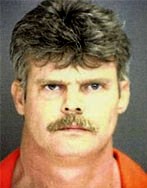
Scott Thomas Erskine
Murderer Brian Kevin Rosenfeld
Murderer · USA · 1985
Brian Kevin Rosenfeld Brian Kevin Rosenfeld was sentenced to three concurrent l…
23 victims
Brian Kevin Rosenfeld
Murderer · USA · 1985
Brian Kevin Rosenfeld Brian Kevin Rosenfeld was sentenced to three concurrent l…
23 victims
 Yahweh ben Yahweh
Murderer · USA · 1980
Yahweh ben Yahweh was born and legally named Hulon Mitchell Jr. (October 27, 19…
23 victims
Yahweh ben Yahweh
Murderer · USA · 1980
Yahweh ben Yahweh was born and legally named Hulon Mitchell Jr. (October 27, 19…
23 victims
 Russell Ellwood
Murderer · USA · 1991
Russell Ellwood was a former taxi driver. Authorities suspected him of killing…
20 victims
Russell Ellwood
Murderer · USA · 1991
Russell Ellwood was a former taxi driver. Authorities suspected him of killing…
20 victims
 Robert Martines Perez
Murderer · USA · 1994
Name: Robert Martines Perez · Other name used in proceedings: Robert Martinez P…
15 victims
Robert Martines Perez
Murderer · USA · 1994
Name: Robert Martines Perez · Other name used in proceedings: Robert Martinez P…
15 victims
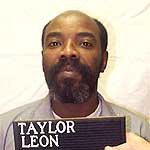 Leon Taylor
Murderer · USA · 1994
State of Missouri v. Leon Taylor, 7944 S.W. 2d 925 (Mo.banc). On April 14, 1994…
1 victim
Leon Taylor
Murderer · USA · 1994
State of Missouri v. Leon Taylor, 7944 S.W. 2d 925 (Mo.banc). On April 14, 1994…
1 victim
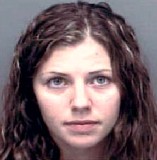 Ashley Humphrey
Murderer · USA · 2003
Ashley Humphrey was the wife of Timothy "Tracey" Humphrey. She was born Oct. 13…
1 victim
Ashley Humphrey
Murderer · USA · 2003
Ashley Humphrey was the wife of Timothy "Tracey" Humphrey. She was born Oct. 13…
1 victim
 Took Leng How
Murderer · Singapore · 2004
Defendant: Took Leng How (vegetable packer) · Victim: Huang Na (female, 8 years…
1 victim
Took Leng How
Murderer · Singapore · 2004
Defendant: Took Leng How (vegetable packer) · Victim: Huang Na (female, 8 years…
1 victim
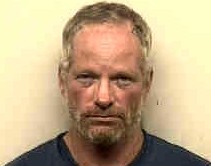 Garland Milam
Murderer · USA · 2005
Garland Milam was a drifter who lived in the woods behind a strip mall. He was…
3 victims
Garland Milam
Murderer · USA · 2005
Garland Milam was a drifter who lived in the woods behind a strip mall. He was…
3 victims
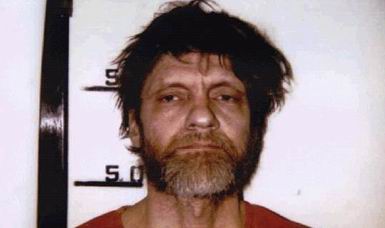 Theodore Kaczynski
Murderer · USA · 1985
Theodore John “Ted” Kaczynski (born May 22, 1942), also known as the Unabomber…
3 victims
Theodore Kaczynski
Murderer · USA · 1985
Theodore John “Ted” Kaczynski (born May 22, 1942), also known as the Unabomber…
3 victims
- Gender
- male
- Country
- USA
- Location
- California/Florida, USA
- Date of birth
- December 22, 1962
- Age at first offence
- 27
- Characteristics
- rape, serial rapist
- Victim profile
- Renee Baker, 26 / Jonathan Sellers, 9, and Charlie Keever, 13
- Method of murder
- Strangulation
- Date(s) of murder
- June 23, 1989 / March 27, 1993
- Years active
- 1989–1993
- Date of arrest
- —
- Status
-
Sentenced to death
Sentenced to death September 1, 2004
Case details
Scott Thomas Erskine was convicted of the murder of two California boys and was sentenced to death on September 1, 2004. He was incarcerated at San Quentin State Prison.
Timeline
- June 23, 1989 — Renee Baker was murdered in Palm Beach.
- March 27, 1993 — Charlie Keever and Jonathan Sellers disappeared while riding bicycles along the river bottom of the Otay River in Palm City.
- Two days later — Charlie Keever and Jonathan Sellers were found inside an igloo-type fort made of brush along the banks of the Otay River in Palm City.
- Summer of 1993 — Erskine committed a rape of a San Diego woman.
- 1980 — Erskine beat a 14-year-old boy unconscious during an attempted rape.
- 1984 — Erskine was paroled.
- 1988 — Erskine moved to Orlando, Florida with Deborah.
- 1994 — A probation officer completed a report about Erskine for his sentencing for the rape of the San Diego woman and suggested police take a look at Erskine in the boys’ killings.
- March 2001 — The San Diego Cold Case squad reopened the investigation of the unsolved murders of Jonathan Sellers and Charlie Keever.
- September 2003 — Erskine went on trial for the two murders.
- October 1, 2003 — The jury found Erskine guilty of murder, with disagreement on the sentence.
- April 2004 — A second jury decided punishment for the murder and unanimously recommended the death penalty.
- September 1, 2004 — A California judge upheld the jury’s recommendation and gave Erskine the death penalty.
- Six days later — Erskine was transported to San Quentin.
- August 2004 — Erskine was sentenced in Florida to life without parole for murdering Renee Baker.
- September 1, 2004 — Erskine was scheduled to be transferred from the county jail to San Quentin’s death row within the next 10 days.
Background
Erskine grew up in southern California. At age 5, he darted into traffic on the Pacific Coast Highway outside San Diego and was hit by a station wagon. He remained in a coma for 60 hours. Although physically he appeared recovered, he frequently complained to his mother about headaches and experienced “black out” moments during which he could not remember what he was last doing.
At age 10, Erskine began molesting his 6-year-old sister and forced her to perform oral sex upon him. He soon began abusing her friends and threatened to kill them if they told anybody.
At age 15, Erskine escaped from a juvenile detention facility, pulled a knife on a 13-year-old girl, and raped her. The next morning, he assaulted a 27-year-old female jogger with a knife.
In 1980, while on his way to interview for a camp counselor’s position, Erskine beat a 14-year-old boy unconscious during an attempted rape. He also raped another inmate while imprisoned.
Erskine begged the San Diego judge at the time to spare him from adult prison. Despite his mother’s pleas to send her son to a mental institution, he was sentenced to four years in prison and was paroled in 1984.
After his release, Erskine met a woman named “Deborah,” whom he dated on and off. He moved to Orlando, Florida, with her in 1988. They were married that year and had a son, Brandon. The marriage was brief and dysfunctional; Erskine physically abused his wife, including kicking her in the stomach when she was pregnant, and she eventually left him. Erskine later moved back to Southern California.
While awaiting the start of his trial, Florida investigators matched Erskine’s DNA in the unsolved case of Renee Baker, murdered on June 23, 1989.
Erskine was scheduled to be sentenced later in the week following June 3, 2004 and was expected to follow a jury’s recommendation sending him to death row.
The offence
Murder of Jonathan Sellers and Charlie Keever (March 27, 1993)
On March 27, 1993, Jonathan Sellers (9) and Charlie Keever (13) disappeared while riding bicycles along the river bottom of the Otay River in Palm City.
They were found two days later inside an igloo-type fort made of brush along the banks of the Otay River in Palm City. Both boys were naked from the waist down, were bound with rope, and had their mouths gagged.
Jonathan Sellers was hanging from a caster bean tree branch. His genitals showed obvious signs of sexual assault, and a noose was tied around his neck.
Charlie Keever was lying on the ground with his head resting on a pile of his and Jonathan’s clothes. His genitals were bleeding from extensive bite marks, and he also had a rope around his neck.
The pathologist determined that Charlie Keever was alive when the bite marks were inflicted.
A semen-containing sample was found in Charlie’s mouth. Testing later determined neither boy was physically mature enough to produce sperm, meaning the semen could only have originated from the killer.
Erskine’s DNA was found on two cigarette butts near the bodies.
During closing arguments, prosecutor Valerie Summers told the jury that Erskine “He found them. He took them. He killed them. He left them in the rain and then walked away,” and she said “They would be 24 and 21 years old today.”
Jurors were shown photos of the crime scene. Jonathan was shown “at the entrance of the make-shift fort hanging from a caster bean tree branch,” described as “naked from the waist down,” with legs and arms bound with rope and his mouth gagged, with “a noose tied around his neck.” Charlie was shown “on the ground” with his head resting on a pile of clothing, also described as “naked from the waist down,” with legs and arms bound and his mouth gagged, and with “his genitals were bleeding from extensive bite marks,” and “he, too, had a rope around his neck.”
The evidence presented during trial included a cleaned cat skull prominently displayed in the fort, and investigators later consulted experts in satanism about the skull before deciding it was another dead end.
Renee Baker murder (June 23, 1989)
Authorities said Erskine raped and killed Renee Baker (26) in Palm Beach on June 23, 1989.
Baker’s nude body was found face down at the Wild Life Sanctuary off the Southern Boulevard Causeway. The official cause of death was listed as assault and drowning. Her clothing, sandals, and purse were neatly piled on the sand 66 feet from her body. It appeared that she had been dragged about nine feet from a beach area to the Intracoastal Waterway.
A Marlboro cigarette butt found near the body pointed to Erskine as the killer in 2002.
During the case about Baker, details were described from a probable cause affidavit. The affidavit said Erskine worked at the nearby Huneywell Fireworks stand and lived in a trailer on the property where he worked. A former co-worker identified a woman named Renee who frequented the fireworks business and recognized Renee Baker when shown her picture.
The affidavit said Baker’s 1978 Plymouth Arrow broke down at the Albertsons supermarket on Lake Worth Road in Lake Worth. The affidavit stated that on the night she died, Baker’s car broke down at the Albertsons grocery store on Lake Worth Road and Military Trail, less than a mile from the firework stand where Erskine also slept. The affidavit said that Erskine probably came up from behind, reached up around Baker’s body, locked his fingers behind her neck in a full nelson, and dunked her under water; salt water filled her lungs. The affidavit also said her fight for life was violent and shoulder muscles around her neck ripped an inch and a quarter deep. It further stated that Erskine put Baker in a chokehold until she passed out and repeatedly sexually assaulted her until she regained consciousness and escaped (as described in the case proceedings).
In connection with the Florida plea, Erskine pleaded guilty to second-degree murder and received life in prison. He also agreed to be interviewed about the unsolved murder of Lena Marion Teinilla.
Lena Marion Teinilla (1989)
As part of the Florida plea deal, Erskine agreed to be interviewed by Palm Beach police about the unsolved murder of Lena Marion Teinilla, 38, of suburban Lake Worth. Teinilla’s body had been found between Donald Trump’s Mar-a-Lago and the Bath and Tennis Club after she had been stabbed repeatedly and strangled. Palm Beach police Capt. Elmer Gudger stated that Erskine was not classified as a suspect in Teinilla’s death and said he was a person of interest.
Investigation
DNA linkage and Cold Case reopening
In March 2001, the San Diego Cold Case squad reopened the investigation of the unsolved murders of 9-year-old Jonathan Sellers and 13-year-old Charlie Keever.
Police tested cotton swabs found in Charlie’s mouth that contained semen. Since neither boy was physically mature enough to produce sperm, the semen could only have originated from the killer. The DNA sample was entered into CODIS and police soon got a hit, with the DNA belonging to Scott Erskine.
The case had previously gone cold for nearly eight years. The long and expensive investigation included exhuming a dead body, posing as journalists, consulting experts in satanism, and taking biological samples from hundreds of potential suspects.
Police received only one accurate tip during their eight-year hunt. The tip came from a probation officer in 1994, days after the first anniversary of the boys’ deaths. A detective testified that the man cited by the probation officer “was a low-priority guy.”
Investigators had far more serious people and had not followed up on the tip. Detective David Ayers testified he left with papers detailing what was known about Erskine’s background, stored the reports into a manila envelope in a cardboard box, and was never asked to do follow-up. Holmes testified he did not follow up on it.
Holmes testified that records were not complete because many of Erskine’s earlier crimes were not known at the time and most involved women or girls as victims, while the search had focused on cases where boys were strictly the victims.
Holmes testified that over the years police received anonymous letters and signed letters about who did the crime and investigated tips from letters.
Holmes testified that police tested envelopes and stamps for DNA, investigated tips from letters, and kept the slayings in the news to generate more tips.
Holmes described that detectives whittled down a list of about 6,000 registered sex offenders to around 300 based on ties to the South Bay and the kind of crimes they had committed, interviewed dozens of homeless men in the river bottom, collected, froze, and stored DNA samples from hundreds of suspects, and collected fingerprints from hundreds of people.
Holmes testified that they used special equipment to see whether they matched the imprint of the tip of a finger found on tape used to gag one of the boys.
Holmes testified that civic leaders wanted to clean out the river bottom by moving homeless people who lived in the area; police asked them not to and the river bottom cleanup was put on hold for two years.
In the mid-1990s, Holmes said police went to Mexico and dug up a dead body of a pedophile involved in a child pornography ring based out of Southern California. Holmes described that a federal warrant had been issued for the person and that it was reported he died of a gunshot wound where he was staying in Mexico. Holmes testified that the body had decomposed badly and was found buried in a pauper’s grave; police removed a section of rib and preserved it in their lab for future DNA testing.
Holmes also testified that detectives posed as magazine writers to obtain information from a man refusing to talk to police, who opened up to “the writers” but had nothing of value to say.
Arrest and charging
Erskine was convicted of rape and kidnapping related to a separate San Diego case, was declared a sex offender, and was sentenced to 70 years in prison for that case. As a convicted sex offender, Erskine submitted his DNA to a database.
He was later charged in connection with the murders of Jonathan Sellers and Charlie Keever after DNA linkage in March 2001.
In connection with the Florida case, Erskine was formally charged in 2003 and did not get sentenced until August 2004.
Trial
Murder trial
In September 2003, Erskine went on trial for the two murders.
Jurors saw photos depicting the boys’ positions and restraints. Jonathan Sellers was described as hanging from a caster bean tree branch, naked from the waist down, legs and arms bound with rope, mouth gagged, and with a noose tied around his neck. Charlie Keever was described as on the ground with his head resting on a pile of clothing, naked from the waist down, legs and arms bound, mouth gagged, and genitals showing bleeding from extensive bite marks, with a rope around his neck.
The jury found Erskine guilty of murder on October 1, 2003, but the jurors could not agree on the sentence. Eleven jurors voted for the death penalty while one juror insisted on giving Erskine life without parole. The judge declared a mistrial on the penalty phase.
Defense lawyers Larry Ainbinder and Juliana Humphrey argued about delay in connecting Erskine to the murders. They argued that police received a 1994 tip based on Erskine’s criminal history and sexually deviant tendencies and therefore should have developed a case against Erskine in 1994 rather than in 2001 when new DNA testing techniques linked him to the slayings. They argued the delay denied Erskine’s right to a fair and speedy trial and asked the judge to throw out the death penalty.
Prosecutor Valerie Summers argued that even if police pursued Erskine as their only suspect, they would not have been able to make a case against him for years and that barring a confession they would have had to wait for DNA testing technology to advance to convict based on DNA taken from the crime scene.
A judge ruled against the defense, finding police did everything possible to find the killer.
Florida plea proceedings (Renee Baker)
Erskine pleaded guilty to second-degree murder in the death of Renee Baker via satellite video from San Diego where he had been convicted of the 1993 rape, torture, and murder of two boys he abducted.
Palm Beach County Circuit Judge Lucy Chernow Brown sentenced Erskine to life in prison for the murder of Renee Baker.
Erskine answered questions in a monotone voice and wore a teal green, jail-issued jumpsuit. Palm Beach County Public Defender Carey Haughwout and San Diego Public Defender Larry Ainbinder flanked him.
Assistant State Attorney Angela Miller detailed the crime during sentencing, describing events based on a probable cause affidavit.
During the hearing, Brown asked, “You are pleading guilty because you are guilty, correct?” and Erskine replied, “Yes, ma'am,” in response.
Sentencing
Initial guilt and penalty proceedings
On October 1, 2003, the jury found Erskine guilty of murder. The penalty phase ended in disagreement and the judge declared a mistrial on the penalty phase after eleven jurors voted for death and one voted for life without parole.
Second jury recommendation and death sentence
In April 2004, Erskine went before a second jury to decide punishment for the murder. The jury unanimously recommended the death penalty.
On September 1, 2004, a California judge upheld the jury’s recommendation and sentenced Erskine to death. He was transported to San Quentin six days later.
A sentencing hearing included statements from family members:
- Jonathan Sellers’s mother, Milena Sellers, spoke to Erskine and said:
“I see my baby hanging from a tree, on his knees,” Jonathan's mother, Milena Sellers, screamed at Erskine. “And I just want to know why, why you did that to him. And I want to know, you know, did he mention God? Did he start praying? Or was he crying and asking God to help him? "Is that why you put him on his knees? I want to know, were you trying to mock God? Because God is real. And you will pay for what you did . . . God takes it very seriously.”
- Charlie Keever’s mother, Maria Keever, told Erskine:
“I was in an accident when I was 7 years old. I was run over by a truck,” she said. She said she was in a coma for two days and hospitalized for one year. “And I don't go killing people . . . That's not a reason to kill people .” She added, “And I hope someday, in jail, he gets his life sucked out of him like he did my son.”
- Jonathan Sellers’s older sister, Natasha Sellers, told Judge So:
“I've been waiting for this moment for half of my life,” she said.
“I didn't know how my brother died until this court proceeding began, when I came to find out the horrific way that he was taken from us. When I was 11, I tried to make myself believe that it was quick and he didn't suffer, but now I know the truth.”
She said she tried to recall good memories of him: “He was funny. He was beautiful. He had big, brown Bambi eyes, long eyelashes, a smile that can light up a room. ”
“But now,” she said, “I can't even think about that. Every time I think of my brother, I think of his last moments. I see the autopsy pictures. And I can't sleep. I feel like he was cold. He was alone. He was scared. He was just 9 years old. Charlie was only 13. ”
“One of them had to watch the other one die. That was torture. And now we're being tortured for the rest of our lives because they're not with us.... ”
“For the crimes that you committed on March 27th, you deserve to die,” she told Erskine. “My brother is dead. Charlie is dead. You deserve to die.” - Prosecutor Valerie Summers stated:
“San Diego County has never seen a man like this before and hopefully never will again,” prosecutor Valerie Summers said Wednesday during Erskine's downtown San Diego Superior Court sentencing.
During June 3, 2004 sentencing recommendation proceedings, Maria Keever said:
“I've waited so long for this day,” said Maria Keever, the mother of one of the victims. “Nothing will ever ease the pain of the loss of my son, but I'm relieved that justice was done.”
Appeals
No appeal outcomes were stated in the provided material.
Other details
Additional unrelated convictions and prison history
A California jury recommended execution for the double murder of 13-year-old Charlie Keever and 9-year-old Jonathan Sellers, with jurors having deadlocked earlier on punishment.
Before the start of the trial, Florida investigators matched Erskine’s DNA in Renee Baker’s unsolved murder. Erskine later pleaded guilty in Florida. It was also stated that he admitted to raping and killing Baker and was given life without parole.
Statements attributed to individuals in court
At June 3, 2004 proceedings, a juror named Mike stated:
“I've been waiting so long for this day,” said Maria Keever, the mother of one of the victims. “Nothing will ever ease the pain of the loss of my son, but I'm relieved that justice was done.” And juror Mike also stated: “There were pretty much no questions,” said a juror named Mike, who asked that his last name not be published. “One of the jurors said he thought life might be better, but we convinced him that the boys didn't have a choice.” An alternate juror added: “To me it was pretty cut and dry, but the defense lawyers put up a good fight.”
San Diego police Sgt. Bill Holmes stated:
“I was thinking, 'Justice is about to be done,' ” Holmes said. “Now justice has been done.”
During closing arguments, defense lawyers said:
Ainbinder said: “Don't respond with more suffering.”
He added: “Respond with an act of compassion.”
Humphrey added: “I am not ashamed to stand here and beg for his life. Stop the violence. Stop it.”
A juror stated:
“Lots of people have problems growing up, but they don't grow up to kill kids,”
Summers and Ainbinder used an enlarged photograph as Exhibit No. 6 showing how the boys were found. Summers stated while showing the photograph:
“He is a sexually sadistic, anti-social predator,” Summers said as she showed the photograph to the jury. “He selects vulnerable victims: people who are smaller than him and people who are weaker than him. This crime is as bad as it gets.” Ainbinder stated while holding up the photo: “This is a shocking and horrible photograph that I've been looking at for nearly three years. Whoever did this is sick – they can't be right.”
A juror said:
“I never used to lock my doors, but the night after I saw the photo I started locking them, and I'm still locking them.”
A juror said:
“The mental-health defense 'never really went anywhere with us.' ”
Defense lawyers argued that Erskine became a perverted violent criminal due to a severe head injury at age 5 and described his upbringing as an unloving, abusive household.
San Diego case background and jobs
It was stated that Erskine held numerous jobs in the 1980s and early 1990s while living in various parts of the country and attended business classes at Southwestern College. He worked as a car shuttle driver when the boys were killed.
The March 1993 murders occurred while Erskine was living in various parts of the country, and he had been arrested months after the slayings in the rape of a San Diego woman and was convicted and serving a 70-year prison term when charged in the boys’ slayings.
Victims and their ages as stated
- Jonathan Sellers: 9 years old.
- Charlie Keever: 13 years old.
- Renee Baker: 26 years old.
- Lena Marion Teinilla: 38 years old.
Spotted an error, or have more information about this case?