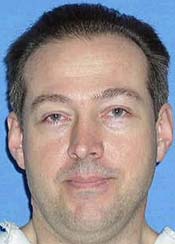
David Ray Harris
Murderer Brian Kevin Rosenfeld
Murderer · USA · 1985
Brian Kevin Rosenfeld Brian Kevin Rosenfeld was sentenced to three concurrent l…
23 victims
Brian Kevin Rosenfeld
Murderer · USA · 1985
Brian Kevin Rosenfeld Brian Kevin Rosenfeld was sentenced to three concurrent l…
23 victims
 Marvin Gray
Murderer · USA · 1975
Marvin Gray was convicted killer who claimed responsibility for 23 slayings and…
23 victims
Marvin Gray
Murderer · USA · 1975
Marvin Gray was convicted killer who claimed responsibility for 23 slayings and…
23 victims
 Yahweh ben Yahweh
Murderer · USA · 1980
Yahweh ben Yahweh was born and legally named Hulon Mitchell Jr. (October 27, 19…
23 victims
Yahweh ben Yahweh
Murderer · USA · 1980
Yahweh ben Yahweh was born and legally named Hulon Mitchell Jr. (October 27, 19…
23 victims
 Russell Ellwood
Murderer · USA · 1991
Russell Ellwood was a former taxi driver. Authorities suspected him of killing…
20 victims
Russell Ellwood
Murderer · USA · 1991
Russell Ellwood was a former taxi driver. Authorities suspected him of killing…
20 victims
 Lizzie Lloyd King
Murderer · USA · 1873
Elizabeth “Lizzie” Lloyd King (born 1847) was accused of murdering Charles Good…
1 victim
Lizzie Lloyd King
Murderer · USA · 1873
Elizabeth “Lizzie” Lloyd King (born 1847) was accused of murdering Charles Good…
1 victim
 Gregory Scott Johnson
Murderer · USA · 1985
Gregory Scott Johnson was scheduled to be executed by lethal injection at the I…
1 victim
Gregory Scott Johnson
Murderer · USA · 1985
Gregory Scott Johnson was scheduled to be executed by lethal injection at the I…
1 victim
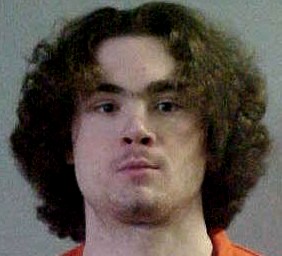 Paul Bradley Speer
Murderer · USA · 2002
Paul Bradley Speer was in jail awaiting trial for burglary. In March 2002, he a…
1 victim
Paul Bradley Speer
Murderer · USA · 2002
Paul Bradley Speer was in jail awaiting trial for burglary. In March 2002, he a…
1 victim
 Beauford White
Mass murderer · USA · 1977
Beauford White was executed by electrocution in Florida on August 28, 1987. Whi…
6 victims
Beauford White
Mass murderer · USA · 1977
Beauford White was executed by electrocution in Florida on August 28, 1987. Whi…
6 victims
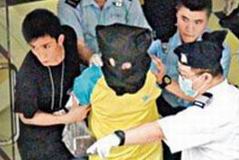 Lee Chi Hang
Mass murderer · Hong Kong · 1982
Lee Chi Hang (Chinese: 李志衡) carried out the Anne Anne Kindergarten stabbing in…
6 victims
Lee Chi Hang
Mass murderer · Hong Kong · 1982
Lee Chi Hang (Chinese: 李志衡) carried out the Anne Anne Kindergarten stabbing in…
6 victims
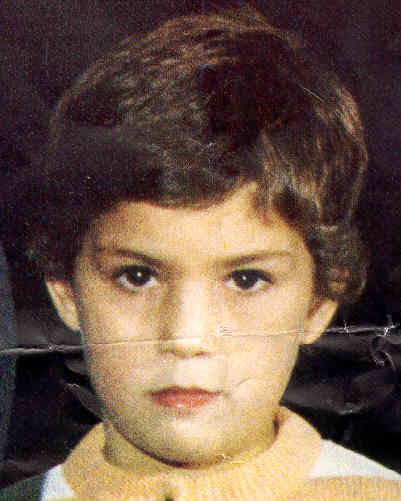 Vincenzo Campanella
Homicide · Italy · 1990
Vincenzo Campanella was a 17-year-old cousin of Santina Renda. He had mental pr…
2 victims
Vincenzo Campanella
Homicide · Italy · 1990
Vincenzo Campanella was a 17-year-old cousin of Santina Renda. He had mental pr…
2 victims
- Gender
- male
- Country
- USA
- Location
- Jefferson County, Texas, USA
- Date of birth
- October 19, 1960
- Age at first offence
- 25
- Characteristics
- kidnapping, drug addict, drug dealer, abuse, alcohol
- Victim profile
- Mark Mays (male, 30)
- Method of murder
- Shooting (.38-caliber pistol)
- Date(s) of murder
- September 1, 1985
- Years active
- 1985
- Date of arrest
- 4 days after
- Status
-
Executed
Executed by lethal injection in Texas on June 30, 2004
Overview
David Ray Harris was convicted of capital murder for the pre-dawn shooting of Mark Mays in Beaumont on September 1, 1985, and was sentenced to death. Harris later appeared as a prominent witness connected to Randall Dale Adams’ conviction for the 1976 murder of a Dallas police officer; Harris recanted testimony related to that case. Harris was executed by lethal injection in Texas on June 30, 2004.
Timeline
- Sept. 1, 1985 — Harris broke into Mark Mays’ apartment in Beaumont while Mays and his girlfriend, Roxanne Lockard, slept, awakened them at gunpoint, ordered Mays to lock himself in a hallway bathroom, led Lockard out and directed her into Harris’ pickup truck, and a shootout resulted in Mays’ death.
- Sept. 26, 1985 — Harris was indicted for capital murder in Jefferson County.
- Sept. 5, 1985, at 4:00 a.m. — Harris spoke with Sam Kittrell, Assistant Chief of Police in Vidor, at the Vidor police station and directed authorities to the site where he disposed of a stolen weapon.
- April 1986 — A Jefferson County jury found Harris guilty of capital murder and assessed a death sentence.
- April 16, 1990 — The U.S. Supreme Court denied certiorari review.
- Sept. 13, 1989 — The Texas Court of Criminal Appeals affirmed Harris’ conviction and sentence on direct appeal.
- Nov. 26, 1989 — The Texas Court of Criminal Appeals denied a rehearing.
- Nov. 27, 2001 — Judge Justice issued a memorandum opinion granting habeas corpus relief on punishment.
- Nov. 18, 2002 — The 5th U.S. Court of Appeals reversed the district court’s grant of relief.
- Dec. 16, 2002 — The 5th Circuit Court denied a panel rehearing and rehearing en banc.
- March 1, 2004 — The U.S.
- March 2004 — The state trial court scheduled Harris’ execution for June 30, 2004.
- April 15, 2004 — Harris filed a complaint in the U.S. District Court challenging Texas execution protocol.
- April 30, 2004 — Judge Gilmore dismissed Harris’ complaint.
- May 18, 2004 — Harris filed notice of appeal to the 5th U.S. Circuit Court of Appeals.
- June 3, 2004 — Harris filed a FRCP 60(b) motion for relief from judgment in U.S. district court.
- June 4, 2004 — Fifth Circuit expedited appeal and issued briefing schedule; appeal remained pending.
- June 7, 2004 — Judge Gilmore denied Harris’ Rule 60(b) motion.
- June 10, 2004 — Harris filed successive state habeas corpus application in the Texas Court of Criminal Appeals.
- June 29, 2004 — A temporary restraining order was issued; the state sought vacatur.
- June 30, 2004 — Harris was executed by lethal injection in Texas.
The offence
In the pre-dawn hours of September 1, 1985, Harris broke into the apartment of Mark Mays in Beaumont as Mays and his girlfriend, Roxanne Lockard, slept in a bedroom. Harris was armed with a .38 caliber revolver.
Harris awakened Mays and ordered Mays to lock himself in a hallway bathroom. Harris then led Lockard out the back door of the apartment at gunpoint and directed her to get into his pickup truck in a driveway behind the apartment complex.
Mays exited the back door and stood in front of Harris’ truck with a gun in his hands. Lockard testified that after hearing gunfire she got out of the truck and saw Mays in front of the vehicle, partially bent over. Lockard ran inside the apartment complex to ask someone to call police and an ambulance.
Police found Mays lying in a pool of blood with his gun underneath him. An autopsy revealed Mays died from multiple gunshot wounds. Evidence showed Mays fired his gun at least four times. Lockard testified she could not determine who fired first and that she did not see Harris when the gunfire erupted.
Harris testified that Mays shot first, hitting Harris in the neck then in the shoulder, before Harris ducked behind the door of his truck and began shooting at Mays. Harris testified that after shooting Mays several times, Harris ran to the front of the truck where he saw Mays on his hands and knees and shot him one last time, this time from about ten feet away. A forensic pathologist testified that the evidence indicated the muzzle of the gun was within twelve to twenty-four inches of Mays’ body when one of the fatal shots was fired.
After the fatal shooting, Harris got into his truck and fled.
At trial, Harris’ capital murder charge alleged intentionally causing the death of Mark Mays by shooting him with a firearm while in the course of committing or attempting to commit the offence of kidnapping of Roxanne Lockard. Lockard testified she was dating the deceased and that she was visiting the deceased in Beaumont; Lockard lived in Austin and arrived in Beaumont on Friday night, August 30, 1985. Lockard testified that after the deceased got home from work, she and the deceased sat at the pool, drank champagne, and celebrated Lockard’s purchase of a new car. Lockard testified that that evening they went to dinner, and the deceased had one or two drinks of Crown Royal bourbon at dinner. They arrived back at the deceased’s apartment sometime after midnight and went to bed. Lockard testified she was awakened at about 2:30 a.m. on September 1, 1985, by a light shining in her eyes, that she batted it away, and that the person holding the light later identified as appellant told her he had a gun and ordered the deceased to get out of bed and lock himself in the hallway bathroom. Lockard testified appellant directed her to enter his truck and that appellant looked directly into her face when they got in the truck. Lockard testified she heard gunfire but could not determine who fired the first shot; she got out of the truck and did not see appellant, but she noticed the deceased behind her car partially bent over like “he was throwing up.” Lockard testified that realizing Mays had been shot, she ran inside the apartment complex to find someone to call the police and an ambulance.
The Beaumont Police Department found the deceased lying in a pool of blood behind his apartment with his gun underneath him. The trial court record described trace metal test results positive for both of the deceased’s hands, evidence the deceased shot his gun at least four times, five spent nine millimeter cartridges on both sides of Lockard’s car near the rear of the vehicle, and a bullet hole in the fence surrounding the deceased’s apartment. The back door of the apartment had been pried open with a screwdriver found in the street behind Lockard’s car.
Harris testified at guilt/innocence that the screwdriver belonged to him but that he did not pry open the door with it because the door was unlocked. Harris testified he went to the deceased’s apartment to burglarize it and took a .38 caliber revolver with him because he thought “it would avoid anybody from getting hurt.” Harris testified that unlike Lockard’s testimony, the light from the hall awakened her and the deceased and that Lockard never “swatted” at the flashlight. Harris testified that inside the apartment the deceased acted “jumpy” as appellant told him to lock himself in the bathroom, that the deceased came out of the bathroom two or three times wanting to talk with appellant, but appellant refused. Harris testified that fearing the deceased might attack him, he “used” Lockard to safely get out of the apartment. Harris testified he did not recall if Lockard ever got into his truck; as he opened the door on the driver’s side he heard a loud noise and felt something hit him in the neck. Harris testified he realized the deceased had shot him and ducked behind the door of the truck, that the deceased shot him again hitting him in the shoulder, and that he fired back one time, ducked behind the door again, rose up and fired two more shots. Harris testified he repeated this sequence and believed the deceased was trying to kill him and was going to shoot him through the open doors of the truck. Harris testified he then ran to the front of the truck where he saw the deceased on his hands and knees and shot him one last time from about ten feet away. Harris thereafter got in his truck and drove away.
A pathologist who performed the autopsy testified that Mays had gunshot wounds on both arms, his right shoulder which wound was disabling, and his face, and that he had two wounds to his chest area which were fatal. A forensic pathologist testified that the stippling on Mays’ body was consistent with the muzzle of the gun being within twenty-four inches of the deceased’s body and could have been as close as twelve inches when one of the fatal shots was fired.
Investigation and pretrial events
After commission of the alleged offence, Harris requested an interview with Sam Kittrell, Assistant Chief of Police in Vidor. They talked at the Vidor police station on September 5, 1985, at 4:00 a.m. According to Kittrell, Harris had wounds on his right arm and side of his neck. Harris told Kittrell what happened in Beaumont and directed authorities to the site where he disposed of the weapon, which was stolen from a Beaumont resident earlier the night of the alleged offense. Harris also spoke to officers with the Beaumont Police Department while in Vidor.
Officer Patrick O’Quinn testified that Harris told him he was “looking for a piece” when he entered the deceased’s apartment and that the deceased “acted crazy” but never threatened him. O’Quinn testified that Harris’ first shot at the deceased missed, so he fired two more times, but the deceased was still moving so Harris fired once more to “finish him off.”
Harris was arrested 4 days later after he was pulled over for drunk driving.
Arrest and custody-related details
Harris was arrested 4 days after the September 1, 1985 shooting and was pulled over for drunk driving. Harris was also described as being court-martialed and dishonorably discharged from the U.S. Army.
Background and other prior matters
U.S. Army court-martial and discharge
Harris was court-martialed and dishonorably discharged from the U.S. Army. He was sentenced to confinement as a result of burglary and theft offenses he committed while stationed in Germany.
California criminal history presented at the capital murder trial
At the punishment phase of Harris’ capital murder trial, the State presented evidence of numerous prior offences committed by Harris, including burglaries, assaults, and robberies. The State also presented evidence that Harris had been convicted in California of robbery, burglary, and two counts of attempted burglary, and that he was sentenced to six and a half years in California prison. Evidence further described a conviction of possession of a deadly weapon by a prisoner while incarcerated in California, for which Harris received an additional two years. Evidence also described Harris’ previous felony convictions in California for robbery, burglary, larceny, and other crimes.
1976 Dallas police officer murder and the Randall Dale Adams case
The State also presented evidence concerning Harris’ involvement in the 1976 murder of a Dallas police officer for which Randall Dale Adams was convicted and sentenced to death. Harris admitted to police officers that he had bragged about being the triggerman because it enhanced his reputation as a bad, tough person. Harris was not charged in connection with the offense.
Harris testified at Adams’ trial that Adams shot and killed the police officer. After Harris’ capital murder trial, Adams’ conviction was set aside by the Texas Court of Criminal Appeals based on its determination that the State had suppressed evidence favorable to Adams, deceived the trial court, and knowingly used perjured testimony to gain his conviction. As the court wrote in its opinion on Harris’ direct appeal:
“[Harris] was only one witness who committed perjury during Adams’ capital murder trial. [Harris] recanted his trial testimony during the hearing on Adams’ writ of habeas corpus and attested to Adams’ innocence.”
The Adams case was subject of the documentary “The Thin Blue Line,” in which Harris appeared. The documentary claimed that Harris (then 16 years old), not Adams, was responsible for the murder of the Dallas police officer in 1976. Harris later recanted his testimony and Adams was released.
Additional narrative included that in 1976 a Dallas police officer, Robert Wood, was shot and killed during a traffic stop. Harris, then 16, was arrested while driving the stolen vehicle involved in the murder. Harris accused Randall Dale Adams, a hitchhiker Harris had met and given a ride earlier that day. Harris was the prosecution’s chief witness at Adams’ trial. Adams was convicted of capital murder and sentenced to death. In 1980, Adams’ death sentence was commuted to life in prison. Later, while in prison, Adams’ capital murder verdict was overturned based on the new evidence uncovered through the documentary, and Harris testified recanting earlier accusations of Adams. It was stated that Harris testified:
“Randall Adams knew nothing about this offense and was not in the car at the time.”
It was also stated that there were conflicting reports on whether Harris ever admitted to killing Wood.
Trial
Capital murder conviction and sentence
Harris was convicted of capital murder. On direct appeal, he raised multiple points of error. The Texas Court of Criminal Appeals affirmed Harris’ conviction and death sentence.
At trial, Harris was charged with intentionally causing the death of Mark Mays by shooting him with a firearm while in the course of committing or attempting to commit the offence of kidnapping of Roxanne Lockard. After the jury returned affirmative findings to the three special issues submitted pursuant to Art. 37.071, V.A.C.C.P, the trial court sentenced Harris to death.
Direct appeal
The Texas Court of Criminal Appeals affirmed Harris’ conviction and sentence on direct appeal. The record referenced:
- Harris v. State, 784 S.W.2d 5 (Tex.Cr.App. 1989) (Direct Appeal) — the Court affirmed the conviction.
The record also stated:
- “Affirmed.”
The record further described that the Court of Criminal Appeals held that (1) Harris was not entitled to a jury charge on voluntary manslaughter; (2) evidence was sufficient to support finding that Harris’ conduct in killing Mays was unreasonable in response to provocation by victim; (3) prosecutor’s statements during closing argument were not improper; and (4) denying Harris’ motions to challenge various prospective jurors for cause was not abuse of discretion. The record included that Clinton, J. joined in judgment only and that Teague, J. dissented.
State habeas proceedings
After affirmance of capital murder conviction and death sentence, petition for writ of habeas corpus was filed in the Criminal District Court, Jefferson County, Larry Gist, J., and denied. Petitioner appealed. The Court of Criminal Appeals held relief denied and that relief was denied after addressing an instruction about mitigating evidence. The record also referenced Ex parte Harris, 825 S.W.2d 120 (Tex.Crim.App.,1991) (State Habeas). The record described a dissent by Maloney, J., in which Clinton and Baird, JJ., joined.
Further procedural history included:
- Harris filed a state habeas corpus application on Sept. 12, 1990.
- Trial court issued order recommending denial of habeas corpus relief on Jan. 10, 1991.
- Texas Court of Criminal Appeals denied habeas corpus relief on Dec. 18, 1991.
- Texas Court of Criminal Appeals denied a rehearing on Jan. 29, 1992.
Appeals
U.S. Supreme Court certiorari denials and filings
The record described certiorari denials:
- April 16, 1990 — The U.S.
- March 1, 2004 — The U.S.
Federal habeas and related proceedings
The record included:
- Ex parte Harris, 825 S.W.2d 120 (Tex.Crim.App.,1991) (State Habeas).
- Harris v. Dretke, 2004 WL 1427042 (5th Cir.2004) (Sec. 1983).
The record included procedural history for federal habeas:
- Harris filed a petition for a writ of habeas corpus in U.S. District Court on April 28, 1992.
- Judge Justice conducted the first evidentiary hearing on July 15-16, 1996.
- Judge Justice conducted the second evidentiary hearing on Aug. 31, 1998.
- Judge Justice issued memorandum opinion granting habeas relief on punishment on Nov. 27, 2001.
- The 5th U.S. Court of Appeals reversed the district court’s grant of relief on Nov. 18, 2002.
- The 5th Circuit Court denied a panel rehearing and rehearing en banc on Dec. 16, 2002.
Execution-protocol challenge and temporary restraining order
Harris filed a complaint in U.S. District Court challenging Texas execution protocol on April 15, 2004. On April 30, 2004, Judge Gilmore dismissed Harris’ complaint. Harris then filed notice of appeal to the 5th U.S. Circuit Court of Appeals on May 18, 2004. Harris also filed a FRCP 60(b) motion for relief from judgment on June 3, 2004 and the appeal was expedited with a briefing schedule issued on June 4, 2004. On June 7, 2004, Judge Gilmore denied Harris’ Rule 60(b) motion. Harris filed a successive state habeas corpus application on June 10, 2004.
The record also included extensive legal discussion from the 5th Circuit involving a temporary restraining order that prohibited the State of Texas from using a particular combination of chemicals during the execution, and the state’s request for vacatur. The 5th Circuit vacated the temporary restraining order and dismissed the complaint, stating:
“Accordingly, we VACATE the temporary restraining order and DISMISS Harris's complaint.”
A dissent by Judge Dennis argued for upholding the temporary restraining order and cited, among other points, Texas’s refusal to disclose reliable information regarding an unpublished non-statutory lethal injection protocol and convergence on medical evidence and Nelson v. Campbell.
The dissent included:
“I dissent for the reasons assigned by the district judge.”
Sentencing
The record stated that a Jefferson County jury found Harris guilty of capital murder and assessed a death sentence in April 1986. The trial court sentenced Harris to death after affirmative findings to three special issues pursuant to Art. 37.071, V.A.C.C.P.
The record also stated that the execution was scheduled for June 30, 2004, and that procedural events occurred in the days immediately before that scheduled date, including a temporary restraining order and subsequent appeal decisions.
Final statement and execution
Harris was scheduled for execution after 6 p.m. Wednesday, June 30, 2004, and he was executed by lethal injection in Texas on June 30, 2004.
In multiple accounts, Harris’ final words included the following statement:
“Sir, in honor of a true American hero, 'let's roll,”'
“Lord Jesus receive my spirit. I'm done.”
In another account, Harris stated:
“Lord Jesus, receive my spirit. I'm done, warden.”
The record included that “Let’s roll” were the words spoken on 11 September 2001 by a passenger on Flight 93 before attacking the men who hijacked that flight, and that Harris quoted those words in his final statement.
One account stated that Harris was pronounced dead at 6:48 p.m., 11 minutes after the combination of drugs began flowing.
Other details
Names and ages of key individuals in the offence
Mark Mays was described as 30. Roxanne Lockard was described as 26 in one account. Harris was described as 24 at the time of the offence in court-record narration and as 43 at execution. It was stated that Harris was 24 in the offence timeline and 43 at execution.
Injury and evidence details described at trial and in accounts
The trial record described stippling consistent with the muzzle being within twenty-four inches and possibly as close as twelve inches. Additional accounts stated Harris was struck in the neck and arm and that Mays suffered wounds described as fatal including shots affecting shoulders, chin, chest, and other areas, depending on the narrative.
Victim-family witnesses
Mays’ family witnessed the execution in one account, including Roxanne Burkhart and Mays’ sister, Melissa Mays Davis, who described the execution as peaceful and humane.
Abduction and kidnapping characterization
Harris’ offence conduct was described as an attempted kidnapping in some narrative accounts, and the capital murder charge included kidnapping of Roxanne Lockard as the underlying kidnapping offence.
Spotted an error, or have more information about this case?