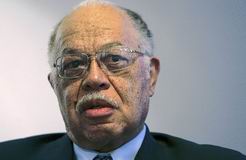
Kermit Gosnell
Murderer Robert Glen Jones
Murderer · USA · 1996
Defendant: Robert Glenn Jones (ADC#070566) · Co-defendant: Scott Nordstrom (ADC…
7 victims
Robert Glen Jones
Murderer · USA · 1996
Defendant: Robert Glenn Jones (ADC#070566) · Co-defendant: Scott Nordstrom (ADC…
7 victims
 Joshua Wayne Andrews
Murderer · USA · 2000
Joshua Wayne Andrews was a serial killer accused of killing several people in V…
5 victims
Joshua Wayne Andrews
Murderer · USA · 2000
Joshua Wayne Andrews was a serial killer accused of killing several people in V…
5 victims
 Juan Carlos Alvarez
Murderer · USA · 1998
Juan Carlos Alvarez, born on March 9, 1977, in San Luis, Mexico, was a Hispanic…
5 victims
Juan Carlos Alvarez
Murderer · USA · 1998
Juan Carlos Alvarez, born on March 9, 1977, in San Luis, Mexico, was a Hispanic…
5 victims
 Leon Davis Jr.
Murderer · USA · 2007
Leon Davis Jr. was sentenced to death on April 29, 2011, for the execution-styl…
5 victims
Leon Davis Jr.
Murderer · USA · 2007
Leon Davis Jr. was sentenced to death on April 29, 2011, for the execution-styl…
5 victims
 Raymond Lee Oyler
Murderer · USA · 2006
Raymond Lee Oyler was convicted for starting the 2006 Esperanza fire in Riversi…
5 victims
Raymond Lee Oyler
Murderer · USA · 2006
Raymond Lee Oyler was convicted for starting the 2006 Esperanza fire in Riversi…
5 victims
 David Roland Waters
Murderer · USA · 1995
David Roland Waters was an American office manager for American Atheists. He wa…
4 victims
David Roland Waters
Murderer · USA · 1995
David Roland Waters was an American office manager for American Atheists. He wa…
4 victims
 James Adolph Campbell
Murderer · USA · 1992
James Adolph Campbell was convicted by a North Carolina jury of first-degree mu…
1 victim
James Adolph Campbell
Murderer · USA · 1992
James Adolph Campbell was convicted by a North Carolina jury of first-degree mu…
1 victim
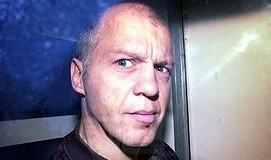 Michael Stone
Murderer · United Kingdom · 1996
Defendant: Michael Stone (born Michael John Goodban in 1960) · Victims: Lin Rus…
2 victims
Michael Stone
Murderer · United Kingdom · 1996
Defendant: Michael Stone (born Michael John Goodban in 1960) · Victims: Lin Rus…
2 victims
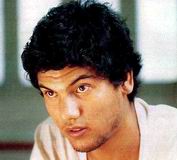 Marcelo Costa de Andrade
Serial killer · Brazil · 1991
Marcelo Costa de Andrade was found incompetent on April 26, 1993. He was sent t…
14 victims
Marcelo Costa de Andrade
Serial killer · Brazil · 1991
Marcelo Costa de Andrade was found incompetent on April 26, 1993. He was sent t…
14 victims
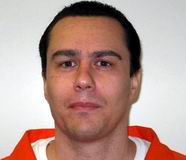 Troy Kell
Murderer · USA · 1986
Troy Michael Kell was an inmate on death row in Utah. He was born June 13, 1968…
2 victims
Troy Kell
Murderer · USA · 1986
Troy Michael Kell was an inmate on death row in Utah. He was born June 13, 1968…
2 victims
- Gender
- male
- Country
- USA
- Location
- Philadelphia, Pennsylvania, USA
- Date of birth
- February 9, 1941
- Age at first offence
- 65
- Characteristics
- child killer, child abuse, abuse, drugs, drug addict, mentally ill
- Victim profile
- Three babies who were born alive in his clinic / Karnamaya Mongar, 41
- Method of murder
- By severing their spinal cords with scissors / Lethal dose of anesthesia and painkillers
- Date(s) of murder
- 2006 - 2010
- Years active
- 2006–2010
- Date of arrest
- January 19, 2011
- Status
-
Life imprisonment
Sentenced to life in prison without the possibility of parole on May 15, 2013
Case record: Kermit Gosnell
Background
Kermit Barron Gosnell was an American physician from Philadelphia. He ran an abortion clinic and presided over the Women’s Medical Society.
Gosnell was born on February 9, 1941, in Philadelphia. He was the only child of a gas station operator and a government clerk in an African-American family. He was a top student at the city’s Central High School, from which he graduated in 1959. Gosnell graduated from Dickinson College in Carlisle, Pennsylvania, with a Bachelor’s degree. He received his Medical Degree at Jefferson Medical School in 1966.
Gosnell was reported to have spent four decades practicing medicine among the poor. He opened the Mantua Halfway House, described as a rehab clinic for drug addicts in the Mantua neighborhood of West Philadelphia near where he grew up, and he also ran a teen aid program. He became an early proponent of abortion rights in the 1960s and 1970s. In 1972, he returned from a stint in New York City to open an abortion clinic on Lancaster Avenue in Mantua.
Gosnell told a Philadelphia Inquirer reporter in October 1972: "as a physician, I am very concerned about the sanctity of life. But it is for this precise reason that I provide abortions for women who want and need them".
In the same year, he performed fifteen televised second-trimester abortions using an experimental “Super Coil” method invented by Harvey Karman. The coils were inserted into the uterus, where they caused irritation leading to the expulsion of the fetus. Complications were reported by nine of the women, with three of these reporting severe complications. The super coil experiment by Gosnell was dubbed the "mother's day massacre" by some. The 1972 Inquirer article also described Gosnell as a "respected man" in his community and as a finalist for the Junior Chamber of Commerce’s "Young Philadelphian of the Year" due to his work directing the Mantua Halfway House.
By the late 1980s, public records showed state tax liens were piling up against the halfway house, and the abortion clinic had a $41,000 federal tax lien.
Gosnell was married three times. His third and current wife was Pearl. Pearl had worked at the Women’s Medical Society as a full-time medical assistant from 1982 until their marriage in 1990. They had two children; the younger, being a minor, was described as being cared for by friends. Gosnell had four other children from his two previous marriages.
In the medical practice described around 2011, Gosnell was described as well known in Philadelphia for providing abortions to poor minority and immigrant women. It was claimed that Gosnell charged $1,600–$3,000 for each late-term abortion. Gosnell was also associated with clinics in Delaware and Louisiana. Atlantic Women’s Services in Wilmington, Delaware, was described as a place of work one day a week. The owner of Atlantic Women's Services, Leroy Brinkley, was described as also owning Delta Clinic of Baton Rouge, Louisiana, and facilitating the hiring of staff from there for Gosnell's operation in Philadelphia.
The offence
Gosnell routinely performed illegal abortions past Pennsylvania’s 24-week limit.
The case involved allegations that Gosnell and clinic staff killed babies born alive after attempted abortions. Prosecutors alleged that he killed seven babies born alive by severing their spinal cords with scissors, and that he was also responsible for the 2009 death of Karnamaya Mongar, a 41-year-old refugee from Bhutan, who died in his care.
The case also involved allegations of illegal drug prescription activity associated with the practice. Authorities alleged that Gosnell and his staff engaged in a continuing criminal enterprise by writing and dispensing fraudulent prescriptions for thousands of pills of OxyContin, Percocet, and Xanax, as well as syrups Phenergan and Promethazine with Codeine. Authorities also alleged that Gosnell and staff allowed customers to purchase multiple prescriptions under multiple names.
Investigation
Prior complaints and regulatory history
Pennsylvania Department of Health cited Gosnell in 1989 and 1993 for having no nurses in the recovery room. In 1996, he was described as censured and fined in both Pennsylvania and New York states for employing unlicensed personnel.
A pediatrician identified as Dr Schwartz, described as the former head of adolescent services at the Children’s Hospital of Philadelphia and later as Philadelphia’s health commissioner as of 2010, testified in a 2010 hearing. He testified that around 1996 or 1997 he hand-delivered a letter of complaint about Gosnell’s practice to the Secretary of Health’s office and stopped referring patients to the clinic, but received no response.
A civil lawsuit was filed in 2000 on behalf of the children of Semika Shaw. The complaint described that Semika Shaw called the clinic the day after an abortion to report heavy bleeding and died 3 days later of a perforated uterus and a bloodstream infection. The case alleged that Gosnell had failed to tell her to return to the clinic or seek emergency medical care. It was settled out of court in 2002 for $900,000.
Around 2001, Gosnell was described as claiming to provide children’s vaccines under a program administered by the Health Department’s Division of Disease Control. The claim was repeatedly suspended due to failure to maintain logs and for storing vaccines in unsanitary and inappropriate refrigerators, and at improper temperatures.
In December 2001, ex-employee Marcella Choung gave what the Grand Jury later called "a detailed written complaint" to the Pennsylvania Department of State and followed up with an interview in March 2002.
In 2006, a civil lawsuit filed by a patient was described as dismissed as out of time. The complaint described that Gosnell was unable to complete an abortion and then failed or refused to call paramedics or other clinical emergency personnel after the patient had needed help. The patient reported: "I really felt like he was going to let me die."
In total, 46 known lawsuits were described as having been filed against Gosnell over some 32 years.
Observers described a failure by Pennsylvania regulators to overlook repeated concerns, including lack of trained staff, "barbaric" conditions, and a high level of illegal late-term abortions.
2010 raid and search warrant
The Women’s Medical Society was raided on 18 February 2010 under a search warrant by investigators from the FBI and state police.
The raid was described as the result of a months-long investigation by the Drug Enforcement Administration (DEA), the Philadelphia Police Department, and the State's Dangerous Drug-Offender Unit into suspected illegal drug prescription use at the practice. The investigation also described the suspicious death of patient Karnamaya Mongar in 2009, which was said to bring to light additional information about unsanitary operations, use of untrained staff, and use of powerful drugs without proper medical supervision and control.
Staff from the Pennsylvania Department of State and Pennsylvania Department of Health attended the raid.
Investigators described the clinic as "filthy," "deplorable," "disgusting," "very unsanitary, very outdated, horrendous," and 'by far, the worst' than anything they had encountered. The account described blood on the floor and a stench of urine. It described a flea-infested cat wandering through the facility and cat feces on the stairs. It described semi-conscious women scheduled for abortions moaning in the waiting room or the recovery room where they sat on dirty recliners covered with blood-stained blankets. It described that all women had been sedated by unlicensed staff long before Gosnell arrived and that staff members could not accurately state what medications or dosages they had administered to waiting patients.
The account described that medications in inventory were past their expiration dates. It described surgical procedure rooms as filthy and unsanitary, resembling 'a bad gas station restroom.' It described instruments as not sterile. It described equipment as rusty and outdated. It described oxygen equipment as covered with dust and not inspected. It described a corroded suction tubing used for abortions as the only tubing available for oral airways if assistance for breathing was needed.
It described fetal remains stored haphazardly throughout the clinic in bags, milk jugs, orange juice cartons, and even cat-food containers. It described Gosnell admitting to Detective Wood that at least 10 to 20 percent of remains were probably older than 24 weeks. It described incisions made at the base of fetal skulls on some occasions. It described jars containing severed feet of fetuses. It described medical waste piled high in the basement. It described an intact 19-week fetus delivered by Mrs. Mongar three months earlier found in a freezer. It described that the remains of 45 fetuses were recovered and that at least two and probably three had been viable.
Gosnell’s license to practice was suspended on 22 February 2010. Findings were presented to a Grand Jury on 4 May 2010.
Arrest
Gosnell was arrested on January 19, 2011, five days after certification of the Grand Jury's report. He was charged with eight counts of murder.
Prosecutors alleged he killed seven babies born alive by severing their spinal cords with scissors. Prosecutors also alleged he was responsible for the death in 2009 of Karnamaya Mongar, a 41-year-old refugee from Bhutan, who died in his care.
Gosnell’s wife, Pearl, and eight other suspects were also arrested in connection with the case.
A Drug Enforcement Administration, Federal Bureau of Investigation, and Office of the Inspector General effort was described as seeking a 23-count indictment charging Gosnell and seven members of his former staff with drug conspiracy. The drug conspiracy related to the practice illegally prescribing highly-addictive painkillers and sedatives outside the usual course of professional practice and not for a legitimate medical purpose.
The third degree murder charge related to Karnamaya Mongar. Prosecutors alleged staff gave the 90-pound woman a lethal dose of anesthesia and painkillers. Gosnell’s lawyer asserted that Karnamaya Mongar had other drugs in her system not from Gosnell’s clinic, and that none of the infants were born alive. The Grand Jury rejected this claim, stating based on expert testimony that "it was the overdose of Demerol, not some mystery pill, that killed Mrs. Mongar."
The seven other murder charges were described as first degree murder charges relating to babies. Staff testimony described that staff saw the babies move or cry after complete birth and that deaths resulted from subsequent lethal action. The charges were tied to the “born alive rule,” described as a principle of common law defining that personhood arises immediately upon the victim being born alive, making unlawful killing constituting murder possible.
Steven Massof, a clinic employee who pleaded guilty to similar charges in 2011, testified that he snipped the spines of more than 100 infants after they had been born alive and described this as considered "standard procedure" at the clinic. Other employees were also described as testifying to similar points.
No physical evidence was described as existing for five of the seven cases, with charges based on staff testimony denied by Gosnell. A photograph was described as existing for the sixth case. Physical remains were described as obtained for the seventh.
The Grand Jury report stated: "A medical expert with 43 years of experience in performing abortions was appalled. This expert told us, 'I’ve never heard of it [cutting the spinal cord] being done during an abortion'."
The United States Attorney for the Eastern District of Pennsylvania also alleged that Gosnell’s former office staff ran a prescription "pill mill."
Alleged prescription activity
From June 2008 through February 18, 2010, Gosnell allegedly engaged in a continuing criminal enterprise by writing and dispensing fraudulent prescriptions for thousands of pills of OxyContin, Percocet, and Xanax, and syrups Phenergan and Promethazine with Codeine. Authorities alleged Gosnell and his staff allowed customers to purchase multiple prescriptions under multiple names.
The report described that for the first office visit Gosnell allegedly charged $115, increasing around December 2009 to $150. Staff reportedly wrote prescriptions that grew from several hundred per month in 2008 to over 2,300 filled in January 2010 at pharmacies. Gosnell, with staff, was described as distributing and dispensing more than 500,000 pills containing oxycodone; more than 400,000 pills containing alprazolam; and more than 19,000 ounces of cough syrup containing codeine.
Gosnell’s lawyer said: "Everybody's made him the butcher, this, that and the other thing without any trial, without anything being exposed to the public and everybody's found him guilty, that's not right". The lawyer accused the government of a "lynching" and stated: "This is a targeted, elitist and racist prosecution of a doctor who's done nothing but give (back) to the poor and the people of West Philadelphia."
Trial
Charges and plea activity before trial
In 2011, Gosnell, his wife Pearl, and eight other clinic employees were charged. Eight, including Gosnell’s wife, subsequently pleaded guilty, with most of them described as testifying against Gosnell. Three of those pleaded guilty to third-degree murder, described as carrying a 20- to 40-year term.
A gag order was imposed on both defense and prosecution in April 2011 barring them from talking to the media before the trial.
In December 2011, Pearl Gosnell pleaded guilty to performing illegal abortions, conspiracy, criminal conspiracy, and corrupt organization. Due to spousal privilege she was described as not required to testify against Gosnell though she might still go to prison.
The only employee on trial with Gosnell was Eileen O'Neill, described as an employee who allegedly held herself out as a doctor at the clinic when she was not licensed. O'Neill’s lawyer told jurors she never did so and performed medical duties only under Gosnell’s orders. O'Neill also did not testify in her defense.
The case went to jury deliberation on April 30, 2013. On May 13, 2013, the jury reported deadlock on two counts. After returning to deliberations, the jury convicted Gosnell of 3 counts of murder, one count of involuntary manslaughter, and many lesser counts. He was found not guilty on one of the counts of murder.
Dismissals during the trial
Opening statements were given on March 18, 2013 in a Philadelphia court.
On April 23, after the prosecution had rested its case, the judge dismissed three of the seven first-degree murder charges. The next day the judge reinstated charges related to one and dismissed another, explaining the wrong charge had been mistakenly dismissed. The judge dismissed the one count of infanticide, all five charges of abusing a corpse Gosnell had been charged with, and six of the nine charges of theft by deception faced by O'Neill. No formal ruling was described as having been given for these dismissals.
The remaining four first-degree murder charges could still have led to the death penalty. The 3rd-degree murder charges related to Karnamaya Mongar, the racketeering charge, and over 200 charges related to multiple violations of abortion law were described as left standing.
Gosnell’s defense attorney rested his case summarily without calling or questioning any witnesses, and without Gosnell taking the stand in his defense. Eileen O'Neill also did not testify.
Deal with prosecutors and waiving appeal
On May 14, 2013, Gosnell struck a deal with prosecutors. The deal required Gosnell to waive all his appeal rights regarding his conviction from the day earlier. In exchange, prosecutors allowed Gosnell to be sentenced to life in prison without the possibility of parole. Gosnell was immediately sentenced in the matter described as part of that agreement. On May 15, 2013, Gosnell was sentenced to life in prison for the third child’s murder.
Sentencing
On May 15, 2013, Gosnell was sentenced to life in prison without the possibility of parole.
Appeals
Gosnell waived his right of appeal pursuant to an agreement with prosecutors.
Outcome
Gosnell was convicted of 3 counts of murder and one count of involuntary manslaughter, with many lesser counts.
The sentencing imposed life in prison without the possibility of parole.
Other details
Persons and roles mentioned
Kermit Gosnell was described as married three times and having six children. His wife was Pearl Gosnell.
Pearl Gosnell was mentioned as a co-defendant who pleaded guilty on Dec. 13, 2011 to performing an abortion after 24 weeks of pregnancy, two counts of conspiracy, and participating in a corrupt organization. The narrative described an original Feb 15, 2012 sentencing date, deferred to March 21, 2012, then further deferred until Sept. 12, 2012.
Steven Massof was described as a clinic employee who pleaded guilty in November 2011 to two counts of third-degree murder for deaths of two babies born alive.
Eileen O'Neill was described as a medical school graduate without proper licensing who allegedly held herself out as a doctor. She faced theft by deception charges and had some counts dismissed at trial. She did not testify.
Karnamaya Mongar was identified as a 41-year-old refugee from Bhutan who died in Gosnell’s care. Her death formed the basis for a third-degree murder charge.
Other co-defendants were named in relation to alleged charges and plea arrangements, including Williams, West, Adrienne Moton, Elizabeth Hampton, Tina Baldwin, and Maddline Joe, with some plea outcomes described in the detailed charge list.
Trial sentencing day courtroom remarks and juror statements (verbatim)
The New York Times described members of the jury speaking publicly for the first time after sentencing. The foreman was David Misko, who said: "It was emotionally tolling for everyone involved,". When asked what led the jury to convict, he said: “Premeditation. It was business as usual. He snipped the necks no matter what.”
Misko said: "He just sat there smirking," and “It wasn’t good. I didn’t care for it.”
Sarah Glinski said: "He is an abortion doctor who tried to give people who may not have had the money the services they needed,". She said: "I think somewhere, something went wrong in his mind that made him do these things to these children that were born alive." She also said: "That doesn’t mean I don’t believe in the sanctity of life." She further said: "It was hard for me to admit that this kind of evil exists in this world,".
Joseph Carroll said he might need to seek counseling after hearing all the evidence and seeing disturbing images and items from the clinic, including jars of fetuses’ feet discovered by law enforcement officers during a drug raid in 2010.
Philadelphia district attorney R. Seth Williams was quoted as saying: "I will not mince my words: Kermit Gosnell is a monster," and: "Any doctor who cuts into the necks, severing the spinal cords of living, breathing babies, who would survive with proper medical attention, is a murderer and a monster."
Jack J. McMahon told reporters: "He believes he never killed a live baby," and: "The jury has made its decision on what happened here. We respect it, but that doesn’t mean it’s the truth."
Reported statement by Gosnell (verbatim)
Gosnell gave an interview to Fox 29 in February 2011, stating: "I expect to be vindicated." He said: "[Regarding the allegations] "to tell you the truth, I hope to read them in 3 to 6 months [...] because I have lived through negative publicity before." He also said: "It's something I have personally experienced several times before where my surgical abilities have been challenged, where the choices that I have made have not always been perfect." He further said: "If you are not making mistakes, you are not really attempting to do something, so I think that my patients are aware that I do my very best by them." He said: "The standard that I share with everyone that, I frequently say is that I provide the same care that I would provide my own daughter I feel." He said: "I have a story to tell. [...] my work to the community is of value." He reported receiving: "letters, I have gotten wonderful little messages of support, and confidence that I am a good person will prevail."
Civil litigation and legislative/regulatory impact
A wrongful death suit was described as brought by the family of Karnamaya Mongar against Gosnell and seeking to freeze his assets to prevent him from transferring them to other people to avoid paying. As of April 2013 the suit was described as still pending.
A hearing described as beginning in February 2011 involved the Consumer Protection and Professional Licensure Committee of the Pennsylvania State Senate led by Robert M. Tomlinson regarding failure of the Pennsylvania Department of State to provide oversight. A second committee hearing was described under the Public Health and Welfare Committee chaired by Pat Vance regarding the failure of the Pennsylvania State Health Department to stop Gosnell’s activities.
In late 2011, Pennsylvania passed a law described as SB 732 placing abortion clinics under the same health and safety regulations as other outpatient surgical centers.
In May 2013, Representative Joe Pitts began an inquiry into state oversight of abortion clinics. In June 2013, the House passed the Pain-Capable Unborn Child Protection Act. John Boehner described the bill as in response to Gosnell’s convictions.
In February 2011, Pennsylvania Governor and former State Attorney General Tom Corbett fired six employees and commenced action to fire eight others. The account described dismissals including Basil Merenda, Christine Dutton, and Stacy Mitchell.
The narrative described reported effects on inspections, including that inspections ceased under Tom Ridge and resumed only when complaints were received.
Timeline
- 18 February 2010 — The Women’s Medical Society was raided under a search warrant by investigators from the FBI and state police.
- 22 February 2010 — Gosnell’s license to practice was suspended.
- 4 May 2010 — Findings were presented to a Grand Jury.
- January 19, 2011 — Gosnell was arrested and charged with eight counts of murder.
- March 18, 2013 — Opening statements were given in a Philadelphia court.
- April 23, 2013 — The judge dismissed three of the seven first-degree murder charges after the prosecution had rested its case.
- April 30, 2013 — The case went to jury deliberation.
- May 13, 2013 — The jury reported deadlock on two counts.
- May 14, 2013 — Gosnell waived all appeal rights in exchange for sentencing to life without parole.
- May 15, 2013 — Gosnell was sentenced to life in prison without the possibility of parole.
Spotted an error, or have more information about this case?