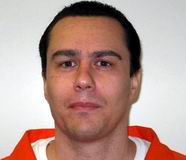
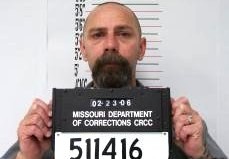
Troy Kell
Murderer Brian Kevin Rosenfeld
Murderer · USA · 1985
Brian Kevin Rosenfeld Brian Kevin Rosenfeld was sentenced to three concurrent l…
23 victims
Brian Kevin Rosenfeld
Murderer · USA · 1985
Brian Kevin Rosenfeld Brian Kevin Rosenfeld was sentenced to three concurrent l…
23 victims
 Yahweh ben Yahweh
Murderer · USA · 1980
Yahweh ben Yahweh was born and legally named Hulon Mitchell Jr. (October 27, 19…
23 victims
Yahweh ben Yahweh
Murderer · USA · 1980
Yahweh ben Yahweh was born and legally named Hulon Mitchell Jr. (October 27, 19…
23 victims
 Russell Ellwood
Murderer · USA · 1991
Russell Ellwood was a former taxi driver. Authorities suspected him of killing…
20 victims
Russell Ellwood
Murderer · USA · 1991
Russell Ellwood was a former taxi driver. Authorities suspected him of killing…
20 victims
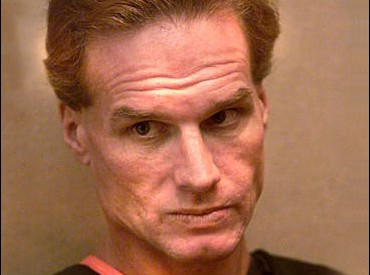 Gary Lee Sampson
Murderer · USA · 2001
Gary Lee Sampson (born 1959) was a convicted murderer in Massachusetts, United…
3 victims
Gary Lee Sampson
Murderer · USA · 2001
Gary Lee Sampson (born 1959) was a convicted murderer in Massachusetts, United…
3 victims
 Campo Elías Delgado Morales
Spree killer · Colombia · 1986
Campo Elías Delgado Morales was a Colombian Vietnam War veteran. He lived with…
30 victims
Campo Elías Delgado Morales
Spree killer · Colombia · 1986
Campo Elías Delgado Morales was a Colombian Vietnam War veteran. He lived with…
30 victims
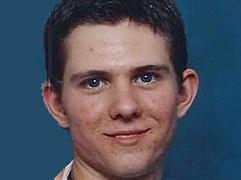 Stephen A. Marshall
Murderer · USA · 2006
Stephen A. Marshall committed suicide by shooting himself in the head when corn…
2 victims
Stephen A. Marshall
Murderer · USA · 2006
Stephen A. Marshall committed suicide by shooting himself in the head when corn…
2 victims
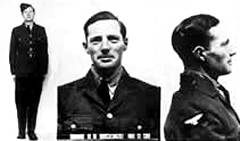 Gordon Cummins
Spree killer · United Kingdom · 1942
Gordon Frederick Cummins was called “The Count” due to his claims of noble birt…
4 victims
Gordon Cummins
Spree killer · United Kingdom · 1942
Gordon Frederick Cummins was called “The Count” due to his claims of noble birt…
4 victims
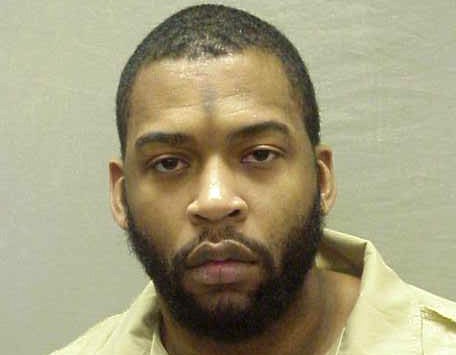 Brian Wakefield
Murderer · USA · 2001
Brian Wakefield was sentenced to death on March 4, 2004 for killing an elderly…
2 victims
Brian Wakefield
Murderer · USA · 2001
Brian Wakefield was sentenced to death on March 4, 2004 for killing an elderly…
2 victims
- Gender
- male
- Country
- USA
- Location
- Nevada/Utah, USA
- Date of birth
- June 13, 1968
- Age at first offence
- 18
- Characteristics
- retaliation, white supremacist
- Victim profile
- James "Cotton" Kelly, 21 / Lonnie Blackmon (inmate)
- Method of murder
- Shooting / Stabbing 67 times
- Date(s) of murder
- 1986 / July 6, 1994
- Years active
- 1986–1994
- Date of arrest
- —
- Status
-
Sentenced to death
Sentenced to life in prison in Nevada; sentenced to death in Utah on June 26, 1996
Case record: Troy Kell
Identity and background
Troy Michael Kell was an inmate on death row in Utah. He was born June 13, 1968. He was sentenced to life in prison by the State of Nevada for the 1986 murder of James "Cotton" Kelly. Shortly after his conviction, he was transferred to the Utah State Prison as part of a prisoner exchange program.
Once in prison, Kell became a white supremacist gang leader. Before the July 6, 1994 attack on inmate Lonnie Blackmon, Kell had been involved in race-related altercations with several black inmates, including Blackmon.
The offence: murder of Lonnie Blackmon
On July 6, 1994, Kell attacked and killed inmate Lonnie Blackmon at the Utah Department of Corrections Gunnison facility, stabbing Blackmon a total of 67 times. Kell’s associate, Eric Daniels, held Blackmon down during the attack. The murder was captured on prison security closed-circuit TV camera.
Blackmon was stabbed repeatedly in the neck, eyes, face, back and chest. The trial court’s detailed account stated that Kell removed his handcuffs with a partial handcuff key that had been altered with a homemade handle made from melted plastic utensils and also produced a shank. While Blackmon was standing with his back to Kell and talking to other inmates, Kell began to stab him repeatedly. Kell was free to use his unrestrained hands and arms during the attack, while Blackmon could only kick at his attackers to defend himself because he was still in handcuffs attached to his waist. The account stated that Payne choked and punched Blackmon and Daniels held onto his legs during the attack.
The detailed account stated that for over two and a half minutes, Kell slashed Blackmon with his shank, inflicting sixty-seven stab wounds, only two of which were described by the forensic examiner as being capable of inflicting death in the short term. It stated that despite Blackmon’s pleas to stop, Kell continued the assault and, after walking away, returned twice to inflict more wounds until Blackmon lay motionless on the floor of the cell block. The account stated that Blackmon bled to death and that Kell was charged with aggravated murder.
Investigation and evidentiary materials
The murder was captured on the prison security closed-circuit TV camera. The trial involved a courtroom located within the prison. The jury was required to view a videotape of the homicide.
Kell testified at trial that he killed Blackmon because Blackmon had overtly threatened him. Kell stated that Blackmon wanted to make an example of him to demonstrate Blackmon’s power in the prison. Kell stated that he believed Blackmon was making a threat when he overheard Blackmon say to another inmate on the day of the killing: "Yeah man . . . it's on. You know it," even though Blackmon made no threatening gestures toward Kell.
An eyewitness testified that during the attack Kell’s demeanor was "very business like, as cold as cold gets. It was like he was doing a job."
Trial
The trial proceeded in a courtroom within the Utah State Prison facility. The trial court decision to hold the trial in a courtroom located inside the prison was based on security risks particular to Kell, including his criminal background, prison disciplinary record, and overall prison history. It also cited logistical problems regarding security in trying Kell in the two courtrooms outside the prison, and the fact that many witnesses were either prison guards or high security inmates; transporting them outside the prison would have had extremely high security risks and costs. Because of those considerations, the trial court decided to hold the trial in the prison’s courtroom.
Charge and verdict
Kell was charged with aggravated murder, a violation of section 76-5-202 of the Utah Code. After being tried in a courtroom located inside the prison facility, Kell was convicted and sentenced to death.
The trial court instructed the jury on the lesser included offense of murder, as well as aggravated murder. The jury unanimously found Kell guilty of aggravated murder and sentenced him to death.
Jury selection and voir dire
Kell appealed and raised issues including claims that the trial court violated his constitutional right to a fair trial by denying him an impartial jury in its rulings on voir dire. The appellate decision addressed questions involving prospective jurors V.D. and R.F.
The appellate decision stated that V.D. had reservations about imposing the death penalty in all but two circumstances: when a child molester kills a child, and when a rapist kills his victim. The appellate decision stated that R.F. claimed the ability to listen to the facts and apply the law, but also made statements indicating that she would have a very difficult time imposing the death penalty herself. The appellate decision affirmed the trial court’s handling of juror-for-cause dismissals.
The appellate decision also addressed Kell’s five for-cause challenges denied by the trial court and stated that nothing in the record indicated the trial court abused its discretion in denying those challenges.
Instructing the jury on imperfect self-defense manslaughter
Kell argued that the trial court committed structural error by not instructing the jury on the theory of imperfect self-defense manslaughter. The appellate decision held that the trial court’s failure to instruct on the lesser included offense of imperfect self-defense manslaughter was harmless, reasoning that the jury chose to convict Kell of aggravated murder and rejected the option of convicting him of the lesser included offense of murder.
Viewing a videotape of the homicide
Kell argued that the trial court violated his constitutional right to a fair trial by allowing the jury to view a videotape of the homicide. The appellate decision concluded that the videotape’s high probative value far outweighed any potential prejudice and that the trial court did not err in allowing the jury to view it.
Evidentiary rulings in the guilt and penalty phases
Kell raised multiple evidentiary claims on appeal. The appellate decision addressed them in detail:
- A letter Kell wrote to a fellow inmate located in Nevada, identified as the "Dear Luther" a letter, was admitted. The appellate decision described it as clear and convincing evidence of racist motivation and a plan to kill Blackmon. It included the letter contents shown in the appellate decision’s footnote:
- “[¶ 3] It'll be interesting to see how things go in about 20 days. Be all alone with 4 niggers. I hate it when that happens Ha-ha. [¶ 4] Lately it's been plot, strategy of inflicting pain on a niggers. I'm getting too old for this ship though. [¶ 5] Things on this end will be getting live soon. Looks like I'll have to show me a nappy headed monkey what some of this white power is all about. They seem to never learn . . . .”
- The appellate decision addressed Kell’s post-homicide statements to a prison guard and concluded they were admissible without Miranda warnings because they were volunteered. The appellate decision quoted the guard interaction from a footnote:
- Defendant looked at a prison guard and said: "He really liked you, you know."
- The guard did not respond, and defendant said: "I can't stand all of the--"
- The guard said: "I don't know what that means."
- Defendant then said: "I hate monkeys with big mouths. I hate it when they talk about our women. They're taking over our race. I've got to do all I can to save our race. If everyone would take one out once in a while it would help a lot."
- The appellate decision addressed speculative evidence concerning Eric Daniels’ forgery of Blackmon’s medical request form, concluding that the body of evidence showed Daniels aided Kell in the attack and supported an inference that the forgery was part of a plan, rebutting Kell’s claim of “kill or be killed” circumstances.
- The appellate decision addressed the medical examiner’s report and concluded defendant had ample opportunity to cross-examine the medical examiner because the medical examiner relied on the report in testimony at trial.
- The appellate decision addressed rebuttal testimony by inmate Francisco Colon, describing it as having significant probative value to rebut Kell’s claim that the attack was not racially motivated. The appellate decision included quoted testimony from Colon in a footnote:
- "That's white power. [I have] been killing' niggers ever since [I] was an bitty-bitty Aryan."
- The appellate decision addressed the admission during the penalty phase of a small close-up autopsy photograph of Kell’s previous homicide victim and concluded the photograph was not gruesome in the sense relevant to the rule applied for gruesome photographs.
- Kell also asserted that evidence showing that no other homicides had ever occurred at the CUCF had no bearing and was presumptively prejudicial; the appellate decision stated it undermined Kell’s defense of “extreme emotional disturbance.”
- The appellate decision addressed evidence of Kell’s affiliation with a white supremacist prison gang, concluding it bore on motive and intent and also on Kell’s character, a mandatory element to be considered during capital sentencing.
- The appellate decision addressed numerous prison disciplinary incident reports documenting Kell’s frequent violent and dangerous behavior toward prison guards and other inmates, concluding they were properly admitted because they were highly probative of character and relevant for capital sentencing purposes and because defendant had the opportunity to cross-examine the authors who provided sworn testimony.
Prosecutorial arguments
Kell argued prosecutorial misconduct in both the guilt and penalty phases. The appellate decision held that, because Kell did not object to the comments during the trial, the issue was reviewed for plain error and did not result in a constitutional violation. It also addressed Caldwell v. Mississippi in the penalty-phase context, stating that Kell’s actions had been blamed on him rather than suggesting that Kell himself was responsible for the jury’s decision.
In the footnote, the appellate decision quoted the prosecutor’s argument during the penalty phase:
- "I anticipate . . . [the defense attorneys are] gonna come to you and they're going to say that it is up to each of you, as to whether or not the death penalty is given in this case, and I say that decision, in reality, was made by Troy Kell when he decided on two different occasions to brutally/viciously take the life of another individual. He made that decision. Troy Kell is the reason why you are here. He is the reason why I am here. He made those decisions himself, and it's those decisions that Troy Kell made which, in fact, should make your decision. It's not your fault; its not mine. It's Troy Kell's fault."
Mercy and sympathy instruction
Kell argued that the trial court erred during the penalty phase by denying a jury instruction including mercy and sympathy as mitigating factors. The appellate decision held that the statute did not identify mercy or sympathy as mitigating factors and followed precedent that a “no mercy” approach was not constitutionally required to include mercy or sympathy instructions.
Sentencing
The jury sentenced Kell to death after convicting him of aggravated murder. The detailed appellate decision described the trial court’s instructions and the jury’s verdict.
Kell’s appeal was considered by the Utah Supreme Court. The appellate decision stated that Kell was convicted and sentenced to death and affirmed the conviction and sentence.
Kell was sentenced to death by firing squad for his part in the murder of Lonnie Blackmon. The status also stated that Kell came within a month of execution by firing squad in 2003, but eventually chose to file an appeal.
Kell remained on death row, with appeals process continuing as of May 2008.
Appeals and outcome
The Utah Supreme Court issued an opinion titled State of Utah, Plaintiff and Appellee v. Troy Michael Kell, Defendant and Appellant, Sixth District, Sanpete County, The Honorable David L. Mower. The decision was dated 02/08/2002 and was identified as 2002 UT 19.
The appellate decision addressed twelve claims of error and concluded that:
- Kell was not denied the right to a public trial, the presumption of innocence, a fair trial, or equal protection by being tried in the prison courtroom.
- The trial court did not abuse its discretion or deny Kell the right to a fair trial as a result of jury voir dire process.
- The trial court’s failure to instruct on imperfect self-defense manslaughter was harmless.
- The trial court did not err in allowing the jury to view the videotape.
- Any evidentiary errors were harmless.
- Prosecutorial arguments did not violate the Eighth Amendment.
- The jury did not have to consider mercy and sympathy as mitigating factors.
- Admission of victim impact evidence was harmless and constitutional questions were not addressed.
- Section 76-5-202 of the Utah Code was not unconstitutional.
- Utah’s death penalty statutes were not unconstitutional.
- Capital sentencing proceedings were not flawed.
- Prison disciplinary proceedings did not preclude criminal prosecution and did not violate double jeopardy provisions.
The appellate decision stated: "We affirm his conviction and sentence."
Conviction for a previous murder
Kell was originally imprisoned in Nevada for the murder of 21-year-old James "Cotton" Kelly. In 1986, Kell was age 18 when he was asked to “do something” to Cotton Kelly for inappropriate advances toward Ms. Shaw. The appellate decision described that in 1986 Kell, Sandra "Sandy" Shaw, and a third young man, William "Billy" Merritt, drove into the desert with Cotton Kelly, and Kell shot Cotton Kelly six times in the face, killing him.
The murder was dubbed the "Show and Tell Murder" by Las Vegas media because Shaw and another teen (David Fletcher) returned to the scene of the crime with their friends to see the corpse. One of the friends eventually reported the incident to the police, leading to arrests and convictions of Shaw, Kell, and Merritt.
The appellate narrative included a quotation attributed to Ms. Shaw about her decision:
- “I made a horrible, immature decision to ask a friend to rough this man up so he would leave me alone,” Sandy says.
- “Cotton Kelly had been hassling me and pestering me to go out with him and to pose for nude pictures. He would call our house at all hours of the day and was so persistent that my mom phoned the police to request that they keep him away from me. But they didn’t have stalking laws in place then like we have today.”
For her part in the crime, Sandra Shaw was sentenced to life in prison without the possibility of parole. In 2004, the State Board of Pardons and Parole commuted her sentence making her eligible for parole. She served 21 years of her sentence and was released on parole in December 2008. William Merritt was released from prison after serving 12 years and later returned for subsequent crimes.
Kell was sentenced to life in prison without parole and transferred to Utah because of violent altercations between himself and other inmates and gang affiliations.
Other proceedings and later life
Kell became a white supremacist gang leader after arriving in prison.
On Thursday December 9, 2010, Troy Michael Kell married his Fiancee (not identified) at the Utah State Prison-Draper in a non-contact visitation room.
Documentary coverage
Documentary production HBO, in cooperation with Blowback Productions, filmed a documentary entitled, Gladiator Days: Anatomy of a Prison Murder, released in 2002. The documentary told the story of Kell and Eric Daniels’ murder of Lonnie Blackmon and included footage of the initial trial in 1996, statements from Kell, Daniels, guards, the state attorney, Blackmon’s brother, and Sandra Shaw (who was serving time elsewhere as the instigator of Kell’s first murder for which Kell was originally incarcerated), and footage of the attack captured by the CCTV within the Utah Prison in Gunnison, Utah.
Concurrence
The appellate decision stated that Chief Justice Howe, Associate Chief Justice Russon, Justice Durrant, and Justice Wilkins concurred in Justice Durham’s opinion.
Additional person details and roles mentioned
- Eric Daniels was Kell’s associate during the July 6, 1994 attack and participated by holding Blackmon down; he was described as Kell’s accomplice.
- Paul Payne was named in the detailed account as a person whose request to go to the medical facility had been denied due to punitive isolation, but who was permitted to shower on the lower tier rather than showers located on the second tier of the cell block; the detailed account stated Payne choked and punched Blackmon during the attack.
- James "Cotton" Kelly was the victim of Kell’s 1986 Nevada murder.
- Sandra "Sandy" Shaw was named as having asked for Kell to "do something" to Cotton Kelly and as having instigated Kell’s first murder.
- William "Billy" Merritt was named as a third young man who drove into the desert with Shaw and Kell and whose later release was described.
- David Fletcher was named as another teen who returned to the crime scene with Shaw’s friends to see the corpse.
- Lonnie Blackmon was Kell’s victim in the July 6, 1994 aggravated murder.
- Francisco Colon was named as an inmate who provided rebuttal testimony.
- Blackmon’s brother Larry was identified as reading a prepared statement to the jury during the penalty phase. The appellate decision included the prepared statement verbatim.
Spotted an error, or have more information about this case?