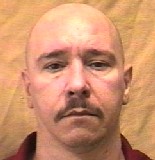
James Adolph Campbell
Murderer Brian Kevin Rosenfeld
Murderer · USA · 1985
Brian Kevin Rosenfeld Brian Kevin Rosenfeld was sentenced to three concurrent l…
23 victims
Brian Kevin Rosenfeld
Murderer · USA · 1985
Brian Kevin Rosenfeld Brian Kevin Rosenfeld was sentenced to three concurrent l…
23 victims
 Russell Ellwood
Murderer · USA · 1991
Russell Ellwood was a former taxi driver. Authorities suspected him of killing…
20 victims
Russell Ellwood
Murderer · USA · 1991
Russell Ellwood was a former taxi driver. Authorities suspected him of killing…
20 victims
 Robert Martines Perez
Murderer · USA · 1994
Name: Robert Martines Perez · Other name used in proceedings: Robert Martinez P…
15 victims
Robert Martines Perez
Murderer · USA · 1994
Name: Robert Martines Perez · Other name used in proceedings: Robert Martinez P…
15 victims
 Billy Frank Vickers
Murderer · USA · 1993
Billy Frank Vickers Vickers was executed by lethal injection in Texas on Januar…
14 victims
Billy Frank Vickers
Murderer · USA · 1993
Billy Frank Vickers Vickers was executed by lethal injection in Texas on Januar…
14 victims
 Sebastian Shaw
Murderer · USA · 1991
Sebastian Alexander Shaw was investigated in connection with the May 27, 1994,…
3 victims
Sebastian Shaw
Murderer · USA · 1991
Sebastian Alexander Shaw was investigated in connection with the May 27, 1994,…
3 victims
 Anibal Gonzalez Igonet
—
Aníbal González Igonet, apodado “El Loco del Martillo”, fue encarcelado tras un…
Anibal Gonzalez Igonet
—
Aníbal González Igonet, apodado “El Loco del Martillo”, fue encarcelado tras un…
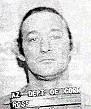 Arthur Martin Ross
Murderer · USA · 1990
Arthur Martin Ross · April 10, 1990 — Arthur Ross telephoned the victim and arr…
1 victim
Arthur Martin Ross
Murderer · USA · 1990
Arthur Martin Ross · April 10, 1990 — Arthur Ross telephoned the victim and arr…
1 victim
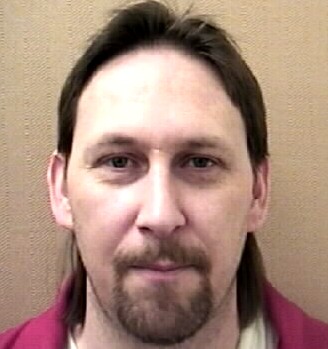 Carl Moseley
Murderer · USA · 1991
Carl Moseley was tried for first-degree murder. The State’s evidence included t…
2 victims
Carl Moseley
Murderer · USA · 1991
Carl Moseley was tried for first-degree murder. The State’s evidence included t…
2 victims
 Kevin Cobb
Homicide · 1996
Kevin Cobb, a male nurse, was convicted of manslaughter for the death of nursin…
1 victim
Kevin Cobb
Homicide · 1996
Kevin Cobb, a male nurse, was convicted of manslaughter for the death of nursin…
1 victim
- Gender
- male
- Country
- USA
- Location
- Rowan County, North Carolina, USA
- Date of birth
- September 21, 1961
- Age at first offence
- 31
- Characteristics
- rape
- Victim profile
- Katherine Price
- Method of murder
- St abbing with knife
- Date(s) of murder
- September 11, 1992
- Years active
- 1992
- Date of arrest
- 5 days after
- Status
-
Sentenced to death
Sentenced to death on July 8, 1993
Case overview
James Adolph Campbell was convicted by a North Carolina jury of first-degree murder, two counts of first-degree rape, kidnapping, armed robbery, and the burning of personal property. He was sentenced to death for the murder conviction. He also received life imprisonment for each of the two counts of rape, thirty years for kidnapping, forty years for armed robbery, and ten years for the burning of personal property, with all sentences ordered to run consecutively.
The case involved the body of Katherine Price being found in a field in Rowan County, North Carolina. Price had sustained twenty-two knife wounds to her neck.
Timeline
- September 8, 1992 — Campbell met Katherine Price, while he was searching for a weapon to kill himself and his ex-girlfriend, Tina Cline, whom he had raped two days earlier.
- September 11, 1992 — The body of Katherine Price was found in a field in Rowan County, North Carolina.
- September 16, 1992 — SBI Agent Bill Lane arrested Campbell on the charge of murder; Campbell waived his right to counsel and gave directions to evidence.
- October 26, 1992 — Campbell was indicted on several counts stemming from Katherine Price’s murder.
- May 1993 — A jury trial began.
- June 29, 1993 — The jury convicted Campbell on all counts.
- June 29, 1993 to July 8, 1993 — Sentencing hearing took place.
- July 8, 1993 — Campbell was sentenced to death in Rowan County Superior Court.
- July 28, 1995 — The North Carolina Supreme Court affirmed Campbell’s conviction and sentence of death.
- December 18, 1996 — Campbell filed a motion for appropriate relief in North Carolina Superior Court.
- August 1997 — An evidentiary hearing was held over six days in connection with the motion for appropriate relief.
- March 22, 1999 — The MAR court issued a written order rejecting Campbell’s motion; the North Carolina Supreme Court denied certiorari.
- July 19, 2000 — Campbell filed a petition for a federal writ of habeas corpus pursuant to 28 U.S.C. § 2254.
- May 10, 2006 — The federal habeas petition’s denial was affirmed by published opinion in the Fourth Circuit.
- July 8, 1993 — Execution date delay chronology later referenced this death sentence as the basis for the scheduling and delays that followed.
- December 11, 2006 — The Supreme Court of the United States denied Campbell’s petition to review the decision of the Fourth Circuit of Appeals, dismissing his appeal.
- January 10, 2007 — Execution date was set for James Adolph Campbell.
- January 27, 2007 — Execution was delayed by Wake County Senior Resident Superior Court Judge Donald W. Stephens, ruling that the Council of State must approve changes to execution procedures.
The offence
On September 11, 1992, the body of Katherine Price was found in a field in Rowan County, North Carolina. The body was found face down about twenty-five or thirty feet off the dirt road underneath some low-hanging limbs of a clump of trees. Two pieces of plaid material were found in the immediate vicinity of the body; one piece consisted of two pieces knotted together.
The medical testimony described a combination of stab wounds and incised wounds to Price’s neck, and multiple additional injuries. Dr. Thomas Clark testified that Price had a combination of fifteen stab wounds and seven incised wounds to her neck, each one-half to one-and-a-half inches deep. Dr. Clark further testified that Price had two wounds to her face, her left and right carotid arteries were cut, and one arterial stab had penetrated to her spine and caused profuse bleeding. Dr. Clark testified that Price died of the stab wounds to her neck. He also testified that Price could have lived a few minutes after the stabbing. Dr. Clark testified that blood found in Price’s vagina matched defendant’s and her own. Because Price’s neck was badly decomposed, Dr. Clark could not opine whether Price had been strangled.
Campbell’s confession described a sequence beginning with him meeting Price and then taking her to a secluded area, stabbing her in the side of her throat and stabbing her many more times because he wanted her to die. The confession also included that after raping Price twice, he began choking her in her car until his thumb went numb, then switched to strangling her with a piece of her shirt, removed her from the vehicle, and later set Price’s car ablaze.
Campbell confessed that he killed Price because he had been unable to kill Tina Cline. In the evening, he visited Teresa Allman, a woman with whom he had carried on a relationship since July, and they drove to where Campbell had left Price’s car before setting it ablaze.
Investigation and arrest
North Carolina police officers arrested Campbell five days after Price’s body was found.
SBI Agent Jedd Taub performed luminol testing on blood in the field, and testified that in his opinion the arc of blood deposition on tree branches, leaves, and ground was consistent with multiple stab wounds to the neck. He testified that the pattern he observed could have been caused by blood being thrown off a knife as it was pulled back or brought forward.
On September 16, 1992, SBI Agent Bill Lane arrested Campbell on the charge of murder. Agent Lane advised Campbell of his constitutional rights, and Campbell waived his right to counsel. Campbell told Lane that he would locate evidence for law enforcement and provide a complete statement, and stated that he first needed to see Teresa Allman and Tina Cline. When Allman was brought to see Campbell, he apologized to her for getting her involved.
Campbell directed agents to evidence including a red butterfly knife and showed them where a shirt and belt were located. After the evidence was gathered, Campbell gave a lengthy, detailed confession to the murder. The confession included an account of meeting Price on September 8, 1992, walking to the store the next morning, placing a butterfly knife to Price’s throat, forcing Price to drive to Airport Road, directing her down a dirt road, and then raping her twice and killing her.
Campbell also drew and signed a sketch of the murder scene.
Prior allegations and other incidents
Several witnesses testified about prior crimes Campbell had committed against them.
Tina Cline testified that she met Campbell in May 1992 and began dating him. She testified that on 6 September 1992 Campbell learned she was seeing another man, forced her into his car, forced her to drive to his camper and to a wooded area near the airport, and then raped her. She testified that she did not report it to police because she feared Campbell’s reprisal if the charge was unsuccessful. Cline also testified that the next day Campbell called her and told her he was going to commit suicide, repeatedly asked if she was all right, and said he knew he had hurt her.
Three other women testified about prior crimes. Jean Killian testified that she had been kidnapped by Campbell. Robin Sauls testified that Campbell had raped her. Ada Teal testified that Campbell jumped in her car, directed her to a trailer park and then to a field, asked her to exit the car while he was holding a knife, and after she refused they drove several places and ultimately Campbell drove her to a field where he raped her; she testified that she reported it to police after Campbell took her home.
At sentencing, the State also introduced testimony about prior conduct. Jennie Clayton testified that in June 1982 she was a secretary at Windsor Elementary School in Richland County, South Carolina. She testified that defendant was in the school seeking directions, she gave him directions, and while doing so he placed a sharp object against her throat and demanded keys to her car. She testified that she managed to get away. She testified that in November 1982 Campbell was convicted of aggravated assault based on this attack.
Linda Shadel testified that defendant took her to a field, tied her to a tree, and left her. She testified that she managed to escape and was arrested the next day. She testified that some time later he called her about her dog, telling her he knew she did not want to press charges and that her husband had forced her to do so. She testified that in November 1982 Campbell was convicted of housebreaking and grand larceny connected with his crimes against Shadel.
The State also introduced evidence that Campbell had been convicted in January 1980 for the assault on Jean Killian.
Confession and alleged conduct described at trial
Campbell’s confession, as presented through trial testimony, described the events leading to Katherine Price’s death. In that account, Campbell stated that he first saw Price walking to the store and that he was searching for a gun because he wanted to kill his former girlfriend, Tina Cline. He then described forcing Price to drive to Airport Road, removing the knife, and planning the encounter.
The confession included that Price agreed to have sex with him, but that Campbell stated, "you can call it rape." The confession described choking and strangling attempts, moving Price outside, stabbing her throat, watching the blood come out, and stabbing many more times because he wanted her to die. The confession also described attempting to dispose of evidence, and then setting Price’s car on fire using gasoline obtained with Teresa Allman.
Campbell later confessed in the presence of police that he killed Price because he had been unable to kill Cline.
Trial
Charges and convictions
Campbell was charged with first-degree murder, two counts of first-degree rape, first-degree kidnapping, the burning of personal property, and armed robbery. The jury convicted Campbell on first-degree murder and on all other charges.
Evidence at trial
The State introduced guilt-phase evidence including testimony about interactions before the murder, discovery of the body, physical evidence from the field, and testimony from multiple witnesses connected to Campbell’s confession and to prior crimes.
Brandy McIntyre testified that she left her trailer on the morning of 8 September 1992 to run errands and that Katherine Price was there when she returned. Brandy and Price walked to a nearby convenience store to purchase food, and as they walked Campbell approached them. Campbell asked Brandy what time her husband returned home from work. Brandy told him her husband was at home, and Price said nothing. When Brandy and Price returned from the store, Campbell was at Brandy’s trailer talking to Brandy’s husband, Thomas. Campbell spoke with Thomas about buying a shotgun for protection during a marijuana purchase, and Thomas rolled a joint of marijuana which the group smoked. Brandy did not see Price and Campbell talking during that time.
Thomas McIntyre testified that he first met Campbell at the trailer on 8 September 1992. He testified that Campbell asked him if Price had a boyfriend and that Thomas told him she did. Thomas testified that he never saw Price and Campbell talking.
Timothy Corriher testified that on the morning of 10 September 1992 a neighbor stopped at his house to tell him a car had burned near his property, that Corriher drove down Lipe Road and found the car, and that he alerted the police. An arson investigator testified that the car examination concluded an accelerant was involved and that a license plate taken from the car had been issued in Price’s name.
Tom Baker testified that on 11 September 1992 he discovered the body of Katherine Price in a field in the Mill Bridge area of Rowan County. An agent processed the field for evidence.
Jeffrey Beaver testified that Campbell called him in early September 1992 asking to borrow his gun. Later, Campbell came to Beaver’s trailer, they talked, and Campbell cried and stated he was in serious trouble. Beaver testified Campbell stated he had killed an innocent person two days before and that he could run, go back to prison, or kill himself. Beaver testified that Campbell told him he had to get rid of his knife and tennis shoes and that Beaver had seen Campbell with a red-handled butterfly knife at some point in the past. Beaver testified that he heard later a woman had been killed and called the police, giving them Campbell’s name.
Teresa Allman testified that she and Campbell began an intimate relationship in July 1992 and that she was with Campbell when he burned Price’s car. She testified that when she visited Campbell after his arrest, he told her he had killed an innocent girl and he was sorry.
In addition, the State presented testimony from women about prior crimes, including Jean Killian’s kidnapping testimony, Robin Sauls’ rape testimony, and Ada Teal’s testimony about being directed to a field and being raped.
The State also presented testimony from witnesses that Campbell had contacted them and confessed or discussed disposing of the knife and other items.
Campbell’s defense at trial
Campbell testified at trial that he did not murder Katherine Price. He claimed he previously confessed to killing her to protect Teresa Allman, who he claimed committed the murder. Campbell testified that on the day of the murder he drove with Price to an area where he often took Allman and that he and Price had consensual sex. He testified that Allman arrived at the scene, saw the two of them together, and killed Price in a jealous rage.
Campbell further testified that he had neither raped nor kidnapped the three women who testified for the prosecution about his prior crimes. In relation to the prior-crimes testimony, Campbell testified that he had had consensual sex with Sauls and that Killian had agreed to give him a ride, contrary to her testimony. He testified that contrary to Ada Teal’s testimony, the encounter included consensual sex after she agreed to give him a ride.
Sentencing
Sentencing hearing and witnesses
After the jury convicted Campbell on June 29, 1993, a sentencing hearing was held from June 29 to July 8, 1993.
At the hearing, six witnesses testified for Campbell. Campbell and his two sisters testified about his abusive childhood. A former employer discussed Campbell’s good work habits. The woman whom Campbell tried to blame for the murder described his capacity to love. Dr. Robert Rollins testified extensively about Campbell’s mental state.
The prosecution introduced testimony from two more women who had been accosted by Campbell. The prosecution presented testimony including that Campbell put scissors to the throat of one woman, and that he took another to a field, tied her to a tree, and abandoned her.
Aggravating and mitigating circumstances
The jury recommended a sentence of death. It found four aggravating circumstances:
- Campbell was previously convicted of four felonies involving the use or threat of violence.
- Campbell murdered Price to avoid arrest.
- The murder was committed while Campbell was engaged in rape and kidnapping.
- The murder was "especially heinous, atrocious, or cruel."
At least one juror found the existence of statutory mitigating circumstance that the murder was committed while Campbell was under the influence of mental or emotional disturbance. The jury also found non-statutory mitigating circumstances, including that Campbell was "emotionally neglected and has chronic feelings of deprivation, inadequacy and anger," and that Campbell had "a history of substance abuse which began at a very early age as a consequence of a lack of supervision and a lack of family structure."
All jurors concluded that the aggravating circumstances outweighed any mitigating ones and were sufficiently substantial to call for the death penalty.
Sentences imposed
The trial court accepted the jury’s recommendation and sentenced Campbell to death for first-degree murder. It sentenced him to life imprisonment for each of the two counts of rape, thirty years for kidnapping, forty years for armed robbery, and ten years for the burning of personal property. All sentences were ordered to run consecutively.
Appeals and post-conviction litigation
North Carolina Supreme Court
The North Carolina Supreme Court affirmed Campbell’s conviction and sentence of death.
The appeal included challenges to trial and sentencing proceedings, including:
- denial of a renewed motion for appointment of another psychiatrist and related claims about expert assistance,
- challenges to jury selection procedures,
- challenges to two trial court comments to the jury,
- challenges to allegedly improper closing argument comments,
- challenges to the trial court’s response to the jury’s sentencing questions,
- challenges related to a failed escape attempt by Campbell during sentencing and the adequacy of questioning of jurors,
- challenges to allegedly improper prosecution statements during closing argument,
- challenges to alleged failure to instruct about duplicative use of evidence for aggravating circumstances,
- challenges related to whether the jury should have been instructed about parole ineligibility,
- additional assignments of error conceded by Campbell as already decided against him,
- and procedural determinations about abandoned assignments of error.
The Supreme Court of North Carolina conducted proportionality review and held that the death sentence was supported by aggravating findings, was not imposed under passion, prejudice, or other arbitrary factors, and was not excessive or disproportionate considering similar cases. It concluded there was "NO ERROR."
Federal habeas corpus
In federal proceedings, Campbell filed a habeas petition challenging his convictions and sentence. The Fourth Circuit affirmed the dismissal of the federal habeas petition.
The Fourth Circuit’s opinion described:
- extensive evidence of guilt including Campbell’s confession and physical evidence directed by Campbell,
- Campbell’s Brady v. Maryland arguments about alleged failure to disclose certain evidence,
- Campbell’s conflict-of-interest claim related to Richard Locklear and his relationship with James Dooley,
- ineffective assistance of counsel arguments concerning both the guilt phase strategy and sentencing mitigation presentation,
- an Ake v. Oklahoma claim about psychiatric assistance,
- and a Simmons v. South Carolina claim regarding parole-ineligibility instructions.
The Fourth Circuit concluded the claims were without merit and affirmed dismissal.
Specific quotations preserved
Jury and court exchange during sentencing questioning
When responding to the jury’s written questions during sentencing deliberations, the court stated:
Now, . . . I'm just going to say this. This is just not of your concern. You're to take the instructions that I gave you in this case, and you're not to concern yourself with anything else. That's not -- that's just not for your concern.
Trial court interruption of defendant during testimony
During defense questioning of Campbell, the court interrupted as follows:
THE COURT: Excuse me, Mr. Davis. I think I've tested the jury's attention span for today.
DEFENSE COUNSEL: Yes, sir.
THE COURT: I'm going to call it off. You may step down, Mr. Campbell.
Court questioning of juror after attempted escape
During inquiry of Juror Mary Johnston outside the jury’s presence, the court said:
THE COURT: Ms. Johnston, it has become necessary to bring you in because during the recess, a matter has occurred. And unbeknownst to this Court, you were in the jury room. And I just happen to have to know at this time what if anything that you know to make sure that you can still be a fair and impartial juror.
JOHNSTON: I don't know anything except that I saw glass through a window. And nothing was said to me about anything except that I was not to leave the room.
THE COURT: All right. Do you know of anything at this time that you've seen or heard that would prevent you from being a fair and impartial juror during this sentencing hearing?
JOHNSTON: No.
Campbell’s confession quotations as presented in testimony
Campbell said in his confession:
"couldn't leave the girl there and I couldn't take her with me."
Campbell stated about sex under the circumstances:
"you could call it rape."
Campbell stated regarding his actions in stabbing:
"I sat and watched the blood come out of her throat and she was still moaning and groaning."
Campbell stated regarding why he kept stabbing:
"I stabbed her many more times because I wanted her to die."
Campbell also stated during the early narrative of his reasoning:
"he couldn't leave the girl there and he couldn't take her with him."
Status and execution-related events
After Campbell’s sentence of death was affirmed through state proceedings, execution scheduling and legal challenges resulted in changes to execution procedure approval and delays. On January 27, 2007, Wake County Senior Resident Superior Court Judge Donald W. Stephens ruled that the Council of State must approve changes to execution procedures, delaying the execution. On January 10, 2007, an execution date had been set. On December 11, 2006, the Supreme Court of the United States denied Campbell’s petition to review the decision of the Fourth Circuit of Appeals, dismissing his appeal.

Spotted an error, or have more information about this case?