
Jonathan Green
Murderer Russell Ellwood
Murderer · USA · 1991
Russell Ellwood was a former taxi driver. Authorities suspected him of killing…
20 victims
Russell Ellwood
Murderer · USA · 1991
Russell Ellwood was a former taxi driver. Authorities suspected him of killing…
20 victims
 Robert Martines Perez
Murderer · USA · 1994
Name: Robert Martines Perez · Other name used in proceedings: Robert Martinez P…
15 victims
Robert Martines Perez
Murderer · USA · 1994
Name: Robert Martines Perez · Other name used in proceedings: Robert Martinez P…
15 victims
 Billy Frank Vickers
Murderer · USA · 1993
Billy Frank Vickers Vickers was executed by lethal injection in Texas on Januar…
14 victims
Billy Frank Vickers
Murderer · USA · 1993
Billy Frank Vickers Vickers was executed by lethal injection in Texas on Januar…
14 victims
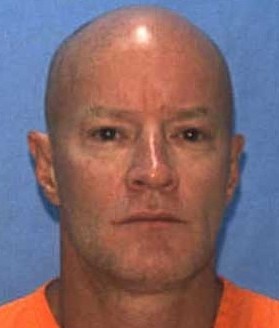 Loran Cole
Murderer · USA · 1994
02/21/94 — Defendant arrested. · 03/04/94 — Defendant entered a plea of “not gu…
1 victim
Loran Cole
Murderer · USA · 1994
02/21/94 — Defendant arrested. · 03/04/94 — Defendant entered a plea of “not gu…
1 victim
 Tom Lionel Burns
Homicide · 1958
Tom Lionel Burns was a retired driver and played the piano. He was 71 years old…
2 victims
Tom Lionel Burns
Homicide · 1958
Tom Lionel Burns was a retired driver and played the piano. He was 71 years old…
2 victims
 Daniel Lee Siebert
Serial killer · USA · 1979
Daniel Lee Siebert (53) was an American serial killer on Alabama's death row. D…
12 victims
Daniel Lee Siebert
Serial killer · USA · 1979
Daniel Lee Siebert (53) was an American serial killer on Alabama's death row. D…
12 victims
 Nicholas Sheley
Spree killer · USA · 2008
Nicholas Troy Sheley (born July 31, 1979) was an American ex-convict accused of…
8 victims
Nicholas Sheley
Spree killer · USA · 2008
Nicholas Troy Sheley (born July 31, 1979) was an American ex-convict accused of…
8 victims
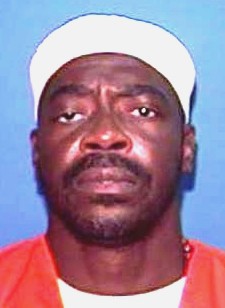 Clarence Hill
Murderer · USA · 1982
Clarence Hill was executed by lethal injection in Florida on September 20, 2006…
1 victim
Clarence Hill
Murderer · USA · 1982
Clarence Hill was executed by lethal injection in Florida on September 20, 2006…
1 victim
 Todd Lee Smith
Murderer · USA · 1995
Todd Lee Smith was sentenced to death on September 24, 1997. His convictions an…
2 victims
Todd Lee Smith
Murderer · USA · 1995
Todd Lee Smith was sentenced to death on September 24, 1997. His convictions an…
2 victims
- Gender
- male
- Country
- USA
- Location
- Montgomery County, Texas, USA
- Date of birth
- December 23, 1967
- Age at first offence
- 33
- Characteristics
- kidnapping, rape
- Victim profile
- Christina Neal (female, 12)
- Method of murder
- Strangulation
- Date(s) of murder
- July 21, 2000
- Years active
- 2000
- Date of arrest
- Next day
- Status
-
Executed
Sentenced to death on July 17, 2002; executed by lethal injection in Texas on October 10, 2012
Case overview
Jonathan Green was convicted by a Montgomery County jury of capital murder for the murder of 12-year-old Christina Neal during the course of committing or attempting to commit kidnapping or aggravated sexual assault. On July 17, 2002, the jury found future dangerousness and insufficient mitigating evidence, and the trial court sentenced Green to death.
Christina Neal’s family searched for her after she did not return home following an argument with her sister Victoria. After her body was located at Green’s residence, investigators found evidence including ligatures on Christina’s neck and wrists, burned remnants of her clothing and personal effects, and indications that she had been strangled. DNA testing and fiber evidence connected Green and his property to the offense.
Green later sought relief in multiple courts, including federal habeas proceedings and a competency-to-be-executed process. His execution date was set for June 30, 2010, and later scheduled execution occurred on October 10, 2012. He was executed by lethal injection in Texas.
Timeline
- June 21, 2000 — Christina Neal left her home after an argument with her sister Victoria; Green kidnapped Christina Neal in Montgomery County, Texas, and took her to his residence.
- June 23, 2000 — Christina Neal’s family called the Montgomery County Sheriff’s Office to report that Christina was missing.
- June 26, 2000 — The FBI joined the search for Christina.
- July 17, 2002 — A Montgomery County jury convicted Green and sentenced him to death after finding future dangerousness and insufficient mitigating evidence.
- December 1, 2004 — The Texas Court of Criminal Appeals affirmed Green’s conviction and sentence on direct appeal.
- March 23, 2005 — The Texas Court of Criminal Appeals denied Green’s state application for a writ of habeas corpus.
- February 15, 2008 — The U.S. District Court for the Southern District of Texas denied Green’s federal application for a writ of habeas corpus and denied a certificate of appealability.
- February 27, 2009 — The Fifth Circuit Court of Appeals denied a certificate of appealability.
- October 5, 2009 — The U.S. Supreme Court denied certiorari review of the Fifth Circuit’s decision.
- June 30, 2010 — An execution date was set for June 30, 2010.
- June 23, 2012 — Green filed a subsequent application for writ of habeas corpus in state court on grounds that he was incompetent to be executed.
- June 28, 2012 — The trial court held a hearing and found Green competent; the Court of Criminal Appeals stayed the execution to review the determination.
- June 27, 2012 — The Texas Court of Criminal Appeals lifted the stay of execution and affirmed the trial court’s finding of competency.
- September 28, 2012 — Green filed a motion in U.S. district court asking for a stay of execution.
- October 8, 2012 — A Houston U.S. district court stayed the execution of Jonathan M. Green and granted him a hearing on his competency.
- October 9, 2012 — The United States Court of Appeals for the Fifth Circuit vacated the stay granted by a Houston U.S. district court.
- October 10, 2012 — Jonathan Marcus Green was executed by lethal injection in Texas.
Background
In June 2000, Victor Neal, who was separated from his wife Laura, lived in the small community of Dobbin with his three daughters: sixteen-year-old Victoria, fifteen-year-old Jennifer, and the victim, twelve-year-old Christina.
On the evening of June 21, 2000, Victor and Jennifer left home to get dinner for the family. Victoria and Christina said that they would eat when they returned from a friend’s house. The friend, Maria Jimenez, lived just down the street from the Neal family. After Victor and Jennifer left, Victoria’s boyfriend (and Maria’s uncle), Manuel Jimenez, came by the house to pick up the two girls. After driving around for a while, the group went to Maria’s house where they stood outside talking with Maria and her two brothers, Martin and Jose. While standing outside by the truck, Victoria and Christina began arguing. Victoria walked away from the argument and toward Maria’s house, leaving Christina and Jose outside. Shortly thereafter, Jose told Victoria that Christina was angry and had left. When Victoria returned home, she discovered that Christina was not there.
The next morning, Victor saw Jennifer and Victoria sleeping on the couch and noticed the door to the girls’ bedroom was closed. Victor left for work, assuming Christina was asleep in the bedroom. When Victor got home about 3:00 p.m. or 4:00 p.m., Jennifer and Victoria told him that Christina had never returned home the night before. Victor asked the girls to go to Maria’s house and tell Christina to come home, but Christina was not at Maria’s house. After learning about the argument between Christina and Victoria the night before, Victor concluded Christina had spent the night at another friend’s house, and the family began searching the neighborhood.
Along the road near the Neal home, Victoria and Maria found Christina’s glasses described as “smashed and broken,” and Victoria testified that Christina had a habit of destroying her glasses when she got mad. Victor stopped looking for Christina around 11:00 p.m. or 11:30 p.m. The next morning, Victor asked his sister, Tereza Goodwin, to look for Christina while he was at work. Victor told Tereza to report her as a runaway if Tereza could not find her. Later that day, Tereza reported Christina missing to a Montgomery County Sheriff’s deputy, and local law-enforcement joined the family in searching for Christina. On June 26, the FBI joined the search.
On that same day, Jennifer and her mother found what appeared to be Christina’s panties at the edge of the woods across from the Neal home, and Victoria found Christina’s bracelet and necklace along a pathway in the woods.
The offence
Green kidnapped 12-year-old Christina Neal from a private residence in Montgomery County, Texas on June 21, 2000. Green took the victim to his residence and killed her by strangling her to death. Christina was also sexually assaulted. Green buried the victim in his backyard, dug up the body, and placed it inside his residence behind a chair. Investigators found the remains of Christina Neal in a bag near a chair in Green’s house.
The medical examiner concluded from bruising to the front and back of Christina’s neck and ligatures found on her neck and wrists that Christina was strangled to death. The medical examiner also discovered bruising to Christina’s upper left thigh and pelvic region, and testified that these injuries are very common on sexual assault victims.
Fibers recovered from the hole in Green’s backyard matched fibers found on Green’s clothing. Other fibers matched fibers recovered from the bag containing Christina’s body and from the ligatures, and fibers from carpet in Green’s house matched fibers recovered from Christina’s underwear and on a piece of cloth found in Christina’s mouth.
Investigation
Family, friends, neighbors, and police searched for Christina for days after she did not return home. During the search, Victoria and Maria found Christina’s glasses along a road near the Neal home. Victoria and Jennifer and Christina’s family found items in the woods, including panties, bracelet, and necklace.
Investigators questioned Jonathan Marcus Green, who lived in Dobbin. Green stated he had seen Christina before but denied any knowledge of, or involvement in, her disappearance. Green consented to a search of his home and property with the condition that he be present. Police conducted a brief search of the interior and perimeter of Green’s house and found nothing significant.
FBI Special Agent Justin Fox interviewed Green, showed him a picture of Christina, and asked for permission to search Green’s house. Fox and Detective Don Gay later spoke to Green on additional occasions at Green’s house. A statement to police by Manuel Jimenez, Victoria Neal’s boyfriend and Green’s next door neighbor, that he remembered a big fire on Green’s property the day after Christina disappeared prompted Fox to want to search the burn pile area. Green consented to a search of the burn pile area, but after evidence response personnel used a probe to check beneath the soil, Green withdrew his consent to search.
The initial probe indicated the ground had recently been dug up and released an odor of decaying flesh. Investigators obtained a search warrant. When police returned to execute the warrant, the burn pile had been dug up to reveal what Fox described as a shallow grave about six feet long, three feet wide, and several feet deep. There was a foul odor emanating from the grave.
Agent Hillard testified that after discovering Green had dug up the burn pile, the FBI called for a cadaver dog trained to find human remains. The dog entered Green’s house and alerted near a chair. Agent Hillard looked behind the chair and saw a human foot sticking out of a bag. The remains were identified as Christina Neal’s.
Police recovered burned remnants of Christina’s clothing and personal effects from the burn pile on Green’s property. They also found ligatures on Christina’s neck and wrists. DNA testing revealed that a hair recovered from Christina matched Green and did not match Christina. An autopsy revealed bruising to the front and back of Christina’s neck, which together with the ligatures led the medical examiner to conclude Christina was strangled to death. The medical examiner also testified that Christina’s injuries on the upper left thigh and pelvic region were common on sexual assault victims.
The investigation also included testimony and exclusions in hair analysis. Two black hairs that did not appear to be Christina’s were found in Christina’s pubic area. Mitochondrial-DNA testing excluded 99.7% of the African-American population as a source of the hair, and Green could not be excluded from the remaining 0.3%. A black cotton cloth recovered from Christina’s mouth was positioned so that the medical examiner testified to a medical certainty that the cloth did not cause Christina’s death.
Criminalist Bradley Mullins testified that fibers recovered from the hole in Green’s backyard matched fiber samples seized from Green’s property and residence. Fibers recovered from the body were also matched to fibers from Green’s residence carpet and to fibers on underwear, and fibers were matched to carpet fibers found on items including Christina’s underwear. A fiber on the panties recovered near the Neal home five days after Christina disappeared and nearly a month before the body was found had characteristics identical to carpet in Green’s residence.
Green admitted that he dug up the burn pile, claiming he only removed trash and did so to show the FBI that there was no body there. Agent Young testified that Green made a statement about unidentified Mexicans “setting him up” by placing a body in his house, and that at the time of the statement, no one had yet told him the police found a body in his house. The jury also heard evidence about Green attempting to conceal the body, including that Green dug up the body and placed it behind a chair.
Arrest
The record described the investigation leading to the discovery of Christina Neal’s remains at Green’s residence, following Green’s consent, withdrawal of consent, issuance of a search warrant, and the subsequent search using a cadaver dog. Green’s role was addressed during questioning and investigation, including Green’s admissions about digging up the burn pile.
Trial
Green was indicted for intentionally causing the death of Christina Neal by strangulation while in the course of committing or attempting to commit the offence of kidnapping or the aggravated sexual assault of Neal.
The defense called no witnesses. The jury found Green guilty of capital murder for murdering Christina Neal during the course of committing or attempting to commit kidnapping or aggravated sexual assault.
Sentencing
On July 17, 2002, a Montgomery County jury found that there was a reasonable probability that Green would commit future criminal acts of violence constituting a continuing threat to society, and that there was insufficient mitigating evidence to justify a sentence of life imprisonment. The trial court sentenced Green to death pursuant to the jury’s findings.
Prior criminal history evidence at the penalty phase
During the penalty phase, the State presented evidence that Green:
- committed two prior sexual assaults;
- stole a pony from a nearby petting zoo and stabbed it to death;
- had a misdemeanor conviction for unlawfully carrying a weapon;
- while incarcerated threatened to assault an officer for taking food and a toothbrush from him;
- threatened another inmate asserting that he “would make his heart stop”;
- threatened a deputy because he would not give him a second glass of juice;
- assaulted and robbed another inmate, slamming the other inmate’s head against a wall; and
- had a violent encounter with one of his jailers, requiring five or six officers to subdue him.
Appeals
Direct appeal
On December 1, 2004, the Texas Court of Criminal Appeals affirmed Green’s conviction and sentence on direct appeal. The court held that:
- evidence was legally and factually sufficient to support a capital murder conviction;
- evidence was legally sufficient to support a future dangerousness special issue;
- future dangerousness and mitigation special issues were not subject to factual sufficiency review;
- an affidavit contained sufficient probable cause to support issuance of a search warrant;
- the affidavit and search warrant adequately described the place to be searched;
- a jury charged with alternative theories of committing capital murder could return a general verdict if the evidence was sufficient to support a finding under any of the theories submitted; and
- the trial court was not required to define the terms “mitigate,” “militate,” “moral blameworthiness,” “probability,” “criminal acts of violence,” and “continuing threat” in the jury charge at punishment phase of the proceeding.
Green v. State was affirmed, and the court overruled the appellant’s points of error, including challenges to sufficiency of evidence at both stages, denial of a motion to suppress, and challenges to jury charge instructions at guilt and punishment stages.
The Texas Court of Criminal Appeals also denied Green’s state application for a writ of habeas corpus on March 23, 2005.
United States Supreme Court
On March 6, 2006, the United States Supreme Court denied certiorari review of the direct appeal. On October 5, 2009, the United States Supreme Court denied certiorari review of the Fifth Circuit’s decision.
Federal habeas and certificate of appealability
On February 15, 2008, the U.S. District Court for the Southern District of Texas, Houston Division, denied Green’s federal application for a writ of habeas corpus and denied a certificate of appealability. On February 27, 2009, the Fifth Circuit Court of Appeals also denied a certificate of appealability. In the Fifth Circuit’s discussion, Green sought a certificate of appealability based on claims that jury instructions did not require unanimity on which underlying felony was used to find capital murder, ineffective assistance for failing to object to the instructions, and incompetency to be executed. The court denied a certificate of appealability and dismissed the incompetency claim without prejudice as not yet ripe.
Competency to be executed
Green filed a subsequent application for writ of habeas corpus in state court on June 23, 2012 on grounds that he was incompetent to be executed. On June 28, 2012, the trial court held a hearing and found Green competent. The Court of Criminal Appeals stayed his execution to review the trial court’s determination, but on June 27, 2012, the Texas Court of Criminal Appeals lifted the stay of execution and affirmed the trial court’s finding of competency.
Green filed a motion in U.S. district court asking for a stay of execution on September 28, 2012. On October 8, 2012, a Houston U.S. district court stayed the execution and granted a hearing on competency. On October 9, 2012, the United States Court of Appeals for the Fifth Circuit vacated the stay granted by the district court.
Outcome
Execution
Pursuant to a court order by the 221st Criminal District Court in Montgomery County, Jonathan Marcus Green was scheduled for execution after 6 p.m. on October 10, 2012.
Green was executed by lethal injection in Texas on October 10, 2012. He was pronounced dead at 10:45 p.m., 18 minutes after the execution began.
Before and during the execution, Green was asked by the warden if he had a statement from the death chamber gurney. Green initially shook his head and then said: "I'm an innocent man. I never killed anyone. Y'all are killing an innocent man." He then looked down and said his left arm, where one of the needles carrying the lethal drug was inserted, was hurting him: "It's hurting me bad." Green then began snoring loudly, and the sounds stopped after about six breaths.
Green also made a final statement reflecting innocence and pain: "I'm an innocent man. I did not kill anyone. My left arm is killing me, it hurts bad."
Last meal
Texas no longer offered a special “last meal” to condemned inmates; instead, the inmate was offered the same meal served to the rest of the unit.
Statements by victims’ family (update)
After Jonathan Green was sentenced to death, Christina’s mother and father were allowed to make a statement to the man who raped and killed their daughter.
Christina’s mother, Laura Neal, said: "I hope he doesn't ever forget the smell of Christina's dead composing body. Because I won't," and "I just basically told him that he had no right to kill our daughter and that there's no reason for it," Christina’s father, Victor Neal, also made a statement that he felt the impact of Christina’s death.
Ten years after Christina’s murder, Laura Neal said: "Christina didn't have any rights. When he murdered her, raped her and kidnapped her, she had no rights. She was only 12-years-old. She never hurt anybody," and "She always liked to play basketball and football." Victor Neal said: "It was like somebody done ripped your heart plum out of you. That was the hardest news I ever got." Victoria Neal said: "After getting into a fight with her sister, Christina stormed out. She never showed back up. It's hard because I could have walked home with her, and maybe she still were here. I think about that everyday," Laura Neal also said: "I often wonder, 'Was she screaming? Was she hollering for her mom and dad? Was she even able to?'"
Other details
Defendant identifying information
Jonathan Marcus Green was identified as:
- TDCJ number: 999421
- Date of birth: 12/23/1967
- Education: 11 years
- Occupation: laborer
- Hair color: Black
- Eye color: Brown
- Height: 5' 11"
- Weight: 288
- Race: Black
- Gender: Male
- Prior prison record: None
- Date of offence: 06/21/2000
- County of offence: Montgomery
- Native county: Montgomery
Co-defendants
Co-defendants: None.
Prosecutorial and court scheduling notes
A media advisory described that Jonathan M. Green was scheduled for execution, and stated that he was scheduled for execution after 6 p.m. on October 10, 2012.

Spotted an error, or have more information about this case?