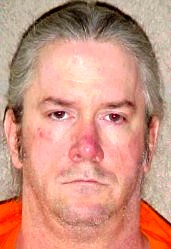
Todd Lee Smith
Murderer Brian Kevin Rosenfeld
Murderer · USA · 1985
Brian Kevin Rosenfeld Brian Kevin Rosenfeld was sentenced to three concurrent l…
23 victims
Brian Kevin Rosenfeld
Murderer · USA · 1985
Brian Kevin Rosenfeld Brian Kevin Rosenfeld was sentenced to three concurrent l…
23 victims
 Russell Ellwood
Murderer · USA · 1991
Russell Ellwood was a former taxi driver. Authorities suspected him of killing…
20 victims
Russell Ellwood
Murderer · USA · 1991
Russell Ellwood was a former taxi driver. Authorities suspected him of killing…
20 victims
 Robert Martines Perez
Murderer · USA · 1994
Name: Robert Martines Perez · Other name used in proceedings: Robert Martinez P…
15 victims
Robert Martines Perez
Murderer · USA · 1994
Name: Robert Martines Perez · Other name used in proceedings: Robert Martinez P…
15 victims
 Billy Frank Vickers
Murderer · USA · 1993
Billy Frank Vickers Vickers was executed by lethal injection in Texas on Januar…
14 victims
Billy Frank Vickers
Murderer · USA · 1993
Billy Frank Vickers Vickers was executed by lethal injection in Texas on Januar…
14 victims
 Larme Price
Serial killer · USA · 2003
Larme Price, 30, was accused of carrying out four unprovoked killings of shopke…
4 victims
Larme Price
Serial killer · USA · 2003
Larme Price, 30, was accused of carrying out four unprovoked killings of shopke…
4 victims
 Robert Leslie Roberson
Murderer · USA · 2002
Robert Leslie Roberson III was a white male. His hair color was brown, his heig…
1 victim
Robert Leslie Roberson
Murderer · USA · 2002
Robert Leslie Roberson III was a white male. His hair color was brown, his heig…
1 victim
 Michael Gene Blakley
Murderer · USA · 1998
Defendant: Michael Gene Blakley ADC#: 152228 Blakley was sentenced to death on…
1 victim
Michael Gene Blakley
Murderer · USA · 1998
Defendant: Michael Gene Blakley ADC#: 152228 Blakley was sentenced to death on…
1 victim
 Randolph Dial
Murderer · USA · 1981
Randolph Dial Randolph Dial was sentenced to life in prison on August 22, 1986.…
1 victim
Randolph Dial
Murderer · USA · 1981
Randolph Dial Randolph Dial was sentenced to life in prison on August 22, 1986.…
1 victim
 Eladio Martinez-Chavez
Murderer · USA · 1984
Everette Amiotte drove Martinez Chavez and Reynaldo Rondon to a place near Alar…
1 victim
Eladio Martinez-Chavez
Murderer · USA · 1984
Everette Amiotte drove Martinez Chavez and Reynaldo Rondon to a place near Alar…
1 victim
 Terrance James
Murderer · USA · 1983
Terrance James was convicted for the February 6, 1983 murder of Mark Allen Berr…
1 victim
Terrance James
Murderer · USA · 1983
Terrance James was convicted for the February 6, 1983 murder of Mark Allen Berr…
1 victim
- Gender
- male
- Country
- USA
- Location
- Coconino County, Arizona, USA
- Date of birth
- December 23, 1960
- Age at first offence
- 35
- Characteristics
- armed robbery, drug addict, alcohol
- Victim profile
- Joe Tannehill, 72, and Elaine Tannehill, 73
- Method of murder
- Cutting their throats
- Date(s) of murder
- August 1, 1995
- Years active
- 1995
- Date of arrest
- —
- Status
-
Sentenced to death
Sentenced to death on September 24, 1997; convictions and sentences affirmed on appeal
Case record: Todd Lee Smith
STATUS / Outcome
Todd Lee Smith was sentenced to death on September 24, 1997. His convictions and sentences were affirmed on appeal.
Timeline
- August 1, 1995 — Smith robbed and killed 72-year-old Joe Tannehill and Mr. Tannehill's 73-year-old wife, Elaine, in their trailer at a campsite in Coconino County.
- March 31, 1997 — Start of trial.
- April 24, 1997 — Verdict.
- September 24, 1997 — Sentencing.
The offence
On August 1, 1995, Smith robbed and killed Joe Tannehill, age 72, and Elaine Tannehill, age 73, in their trailer at a campsite in Coconino County. Smith bludgeoned them repeatedly with a gun, then slit their throats before leaving.
Smith left with a television set, seven necklaces, and approximately $130 in change.
The victims let Smith into their trailer because he had wrapped a shirt around his hand to make it look like he had cut himself.
Victims
- Joe Tannehill (72)
- Elaine Tannehill (73)
Investigation and context
The victims were at their trailer at a campsite in Coconino County when Smith entered and attacked them. The record described Smith’s impaired mental capacity and long-term addiction to drugs and alcohol as mitigating factors considered during sentencing.
Trial
Smith was convicted in Superior Court (Coconino) of:
- Two counts of first-degree murder, each felony and premeditated murder for each count
- Armed robbery
- First-degree burglary
Sentencing
Smith was sentenced to death for the murder convictions.
He was also sentenced to consecutive eighteen-year sentences for the noncapital crimes.
Aggravating circumstances
The Arizona Supreme Court upheld multiple aggravating circumstances:
(F)(5) Pecuniary gain — UPHELD
The Court found it undisputed that Smith went to the victims’ trailer to rob. It was stated that he had no money and no job, and that he was armed with a knife and a gun. The record described that he attacked the victims, stole their property, beat them, and slit their throats, and that he killed the victims when he believed they were resisting his efforts to rob them.
The Court rejected Smith’s argument that his only motive was to rob and that he killed the victims only after they attempted to resist him, and that this aggravator should not apply in this situation. The Court stated that Smith cited no authority for that proposition.
(F)(6) Heinous, cruel, or depraved — UPHELD (Cruel as to Mrs. Tannehill; not upheld for Mr. Tannehill)
Cruelty was upheld as to Mrs. Tannehill, and it was not upheld for Mr. Tannehill.
- The trial court found the state proved cruelty beyond a reasonable doubt for Mrs. Tannehill, but not for Mr. Tannehill.
- The Court agreed with the ruling as to cruelty.
The record stated that the evidence did not establish that Mr. Tannehill was conscious after the initial blows to his head. It was stated that a surgically implanted plastic plate in Mr. Tannehill’s head was shattered in the attack, but that the medical examiner could not pinpoint when during the attack this would have occurred. It was stated that it could have happened with the first blow, rendering the victim unconscious or killing him outright.
The record also stated that Mr. Tannehill had no defensive wounds, and that there was insufficient evidence to prove cruelty for him.
For Mrs. Tannehill, the Court found sufficient evidence. The record said Smith stated that he only knocked her down initially. It was stated that she had defensive wounds indicating that she was alive during the attack and had the opportunity to fear for her life and her disabled husband’s life. The record further described that she would have watched her elderly husband try to defend them by grabbing at Smith’s gun, that she would have seen Smith beat her husband with the gun before she herself was beaten, and that Smith beat her again when he saw her getting up from the first beating.
The record stated that cruelty can be found where a victim experiences mental anguish over the uncertainty of her own fate, and where a victim witnesses the killing of a family member before she herself is killed.
Heinous or Depraved was stated as not addressed.
(F)(8) Multiple homicides — UPHELD
The record stated that Smith did not challenge the trial court’s (F)(8) finding. It stated that Smith killed two people at the same time and in the same location.
(F)(9) Victim seventy or more years of age — UPHELD
The Court upheld the (F)(9) finding.
The record described Smith’s argument that the aggravating circumstance is unconstitutional because it considers whom the victim killed rather than the propensities of the defendant. The record stated that Smith cited no authority for this proposition, and that the Court found the age of the victim had a rational basis, making it an appropriate aggravating circumstance.
The record explained that by adopting the (F)(9) circumstance, the legislature determined that the young and the old are especially vulnerable, should be protected, and that their murders are more abhorrent than other first-degree murders. It further stated that this information is relevant to the defendant’s propensities because those who prey on the very young or the very old are more dangerous to society than other murderers.
The record stated that Smith did not dispute that both victims were more than seventy years old.
Mitigating circumstances
The Court found that the following mitigating circumstances existed, but were not sufficiently substantial to call for leniency:
- Mental impairment (the record stated it was “not ‘significant’ impairment”)
- Behavioral and personality disorders
- Long-term effect of head injuries
- Chronic substance abuse (stated as long-term addiction)
- Lack of criminal history
- Cooperation with law enforcement
- Family ties (stated as “love for his son”)
- Good conduct in court hearings
- Newfound religious beliefs
The Court found that Smith failed to prove by a preponderance of the evidence the existence of:
- (G)(1) Significant Impairment — [Mental or Alcohol/Drugs]
Procedural posture and appeals
Smith’s case proceeded as an automatic, direct appeal to the Arizona Supreme Court. The record described the appeal as from convictions in Superior Court (Coconino). The Arizona Supreme Court identified the case as:
- State v. Smith, 193 Ariz. 452, 974 P.2d 431 (1999)
- State v. Todd Lee Smith, 193 Ariz. 452, 974 P.2d 431 (1999)
The record stated that this was his automatic, direct appeal to the Arizona Supreme Court. The record further stated that the procedural posture involved affirmance: “Convictions and sentences affirmed.”
Other details
- Presiding Judge: Honorable H. Jeffrey Coker
- Prosecutor: Camille Bibles
- Aggravating circumstances addressed included: (F)(5) Pecuniary Gain, (F)(6) Heinous, Cruel or Depraved (Cruel upheld as to Mrs. Tannehill), (F)(8) Multiple Homicides, and (F)(9) Victim Seventy or More Years of Age.
- The record characterized the trial court’s findings on cruelty as proven beyond a reasonable doubt for Mrs. Tannehill but not proven for Mr. Tannehill.
- The record described Smith as having impaired mental capacity, behavioral and personality disorders, long-term addiction to drugs and alcohol, cooperation with law enforcement, controlled conduct during court hearings, and new-found religious beliefs as part of the mitigating context considered at sentencing.

Spotted an error, or have more information about this case?