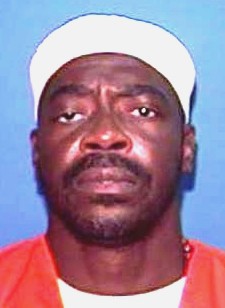
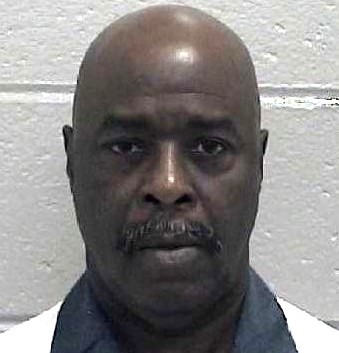
Clarence Hill
Murderer Ervil LeBaron
Murderer · USA · 1972
Ervil Morrell LeBaron (1925 to August 16, 1981) was the leader of a polygamous…
35 victims
Ervil LeBaron
Murderer · USA · 1972
Ervil Morrell LeBaron (1925 to August 16, 1981) was the leader of a polygamous…
35 victims
 Brian Kevin Rosenfeld
Murderer · USA · 1985
Brian Kevin Rosenfeld Brian Kevin Rosenfeld was sentenced to three concurrent l…
23 victims
Brian Kevin Rosenfeld
Murderer · USA · 1985
Brian Kevin Rosenfeld Brian Kevin Rosenfeld was sentenced to three concurrent l…
23 victims
 Marvin Gray
Murderer · USA · 1975
Marvin Gray was convicted killer who claimed responsibility for 23 slayings and…
23 victims
Marvin Gray
Murderer · USA · 1975
Marvin Gray was convicted killer who claimed responsibility for 23 slayings and…
23 victims
 Yahweh ben Yahweh
Murderer · USA · 1980
Yahweh ben Yahweh was born and legally named Hulon Mitchell Jr. (October 27, 19…
23 victims
Yahweh ben Yahweh
Murderer · USA · 1980
Yahweh ben Yahweh was born and legally named Hulon Mitchell Jr. (October 27, 19…
23 victims
 Russell Ellwood
Murderer · USA · 1991
Russell Ellwood was a former taxi driver. Authorities suspected him of killing…
20 victims
Russell Ellwood
Murderer · USA · 1991
Russell Ellwood was a former taxi driver. Authorities suspected him of killing…
20 victims
 Daniel Reneau
Murderer · USA · 1996
Daniel Earl Reneau was convicted of capital murder in connection with a robbery…
1 victim
Daniel Reneau
Murderer · USA · 1996
Daniel Earl Reneau was convicted of capital murder in connection with a robbery…
1 victim
 Erik Salvador Ayala
Murderer · USA · 2009
Erik Salvador Ayala opened fire indiscriminately outside an under-21 nightclub,…
2 victims
Erik Salvador Ayala
Murderer · USA · 2009
Erik Salvador Ayala opened fire indiscriminately outside an under-21 nightclub,…
2 victims
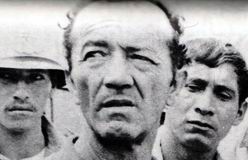 Daniel Camargo Barbosa
Serial killer · Colombia / Ecuador · 1974
Daniel Camargo Barbosa was a psychopathic serial killer from Colombia. It was b…
72 victims
Daniel Camargo Barbosa
Serial killer · Colombia / Ecuador · 1974
Daniel Camargo Barbosa was a psychopathic serial killer from Colombia. It was b…
72 victims
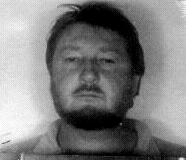 Larry Gene Bell
Murderer · USA
Larry Gene Bell (1948 – October 4, 1996) was awaiting execution in South Caroli…
3 victims
Larry Gene Bell
Murderer · USA
Larry Gene Bell (1948 – October 4, 1996) was awaiting execution in South Caroli…
3 victims
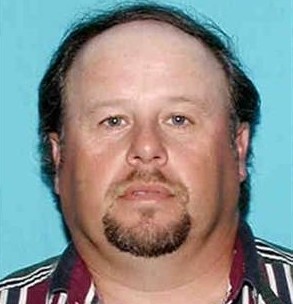 Ronald Dominique
Serial killer · USA · 1997
Ronald Joseph Dominique (born 1964) was an American serial killer from the Bayo…
23 victims
Ronald Dominique
Serial killer · USA · 1997
Ronald Joseph Dominique (born 1964) was an American serial killer from the Bayo…
23 victims
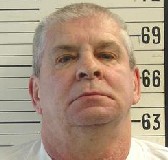 John Patrick Henretta
Murderer · USA · 1988
John Patrick Henretta was sentenced to death in Tennessee on April 6, 2002. · N…
2 victims
John Patrick Henretta
Murderer · USA · 1988
John Patrick Henretta was sentenced to death in Tennessee on April 6, 2002. · N…
2 victims
- Gender
- male
- Country
- USA
- Location
- Escambia County, Florida, USA
- Date of birth
- December 2, 1957
- Age at first offence
- 25
- Characteristics
- armed robbery, robbery, police officer, rape?
- Victim profile
- Stephen Taylor, 26 ( Pensacola Police Officer )
- Method of murder
- Shooting
- Date(s) of murder
- October 19, 1982
- Years active
- 1982
- Date of arrest
- —
- Status
-
Executed
Executed by lethal injection in Florida on September 20, 2006
Case record (Clarence Hill)
STATUS and identity
Clarence Hill was executed by lethal injection in Florida on September 20, 2006.
HILL, CLARENCE E; Clarence Edward Hill; Clarence E. Hill (also rendered as Clarence Edward Hill in some passages).
- Race: BLACK
- Sex: MALE
- Hair Color: BLACK
- Eye Color: BROWN
- Height: 6' 02"
- Weight: 211
- Birth Date: 12/02/1957
- Initial Reception: 05/27/83
- Current Facility: FLORIDA STATE PRISON
Offense Date: 10/19/1982
Legal status
Clarence Hill was convicted and sentenced to death for the killing of a Pensacola police officer during a bank robbery attempt, with additional convictions including attempted first-degree murder and armed robbery counts. The Supreme Court of the United States involved procedural challenges to Florida’s method of lethal injection. Hill’s execution occurred after further litigation.
Timeline
- 10/19/1982 — Clarence Hill and accomplice Cliff Jackson stole a pistol and an automobile in Mobile, Alabama, and later drove to Pensacola to rob a savings and loan association at gunpoint.
- 10/19/1982 — Pensacola Police Officer Stephen Taylor was shot and killed during the robbery incident; Officer Larry Bailly was wounded. Hill received five bullet wounds during the gun battle and was apprehended.
- 04/25/1983 — Hill’s trial began.
- 04/29/1983 — The jury returned guilty verdicts and recommended the death penalty by a vote of 10 to 2; the sentencing phase began.
- 05/27/83 — Hill was sentenced to death for the first-degree murder conviction (as reflected in sentencing information).
- 01/29/1990 — A temporary stay was entered effective January 29, 1990 at 7:00 a.m. (vacated later in 1990 proceedings).
- 06/2006 — The United States Supreme Court sent the case back for further review on a civil rights theory related to Florida’s lethal injection method.
- 09/20/2006 — Hill was executed by lethal injection at 6:12 p.m. (local time referenced in multiple passages).
People
Defendant
- Clarence Hill (Clarence E. Hill / Clarence Edward Hill)
Accomplice
- Cliff Jackson (accomplice)
- Jackson pled guilty and was given a life sentence.
Victim
- Police Officer Stephen Taylor, Pensacola Police Department
- Age: 26
- Badge Number: 183
- End of Watch: Tuesday, October 19, 1982
- Cause of Death: Gunfire
- Weapon used (general): Gun; Unknown type
Other officers
- Officer Larry Bailly
- Was wounded during the shootout.
- Pensacola Police Officer Stephen Taylor’s partner: Larry Bailly (referred to as partner Larry Bailly in the narrative).
Witnesses and family mentioned in execution coverage
- Gary Mace (Taylor’s cousin; one of 29 people who witnessed the execution)
- Suzanne Vickrey (Taylor’s widow; also witnessed the execution)
- Todd Doss (Hill’s attorney; witnessed the execution)
- Randall Bryant (warden; asked Hill at 6 p.m. if he had any last words)
- Anthony De Luise (Florida Gov. Jeb Bush spokesman in execution coverage)
- Assistant Chief John Mathis (attributed statements about the incident and Taylor)
- Robbie Cunningham (Department of Corrections spokesman in execution coverage)
- Serena Mangano (Hill’s wife; visited Hill Tuesday and Wednesday)
- Hill’s brother and a cousin (witnessed the execution, named only generally in one passage)
- Jack Taylor (brother of the slain police officer; witnessed the execution)
- Mark Elliott (spokesman for Floridians for Alternatives to the Death Penalty)
Officials and lawyers referenced in litigation coverage
- Jeb Bush (Governor referenced in execution and related litigation coverage)
- Todd Doss (defense attorney referenced across multiple passages)
- Carolyn Snurkowski (assistant deputy attorney general; statements attributed)
- D. Todd Doss (defense attorney referenced in one passage)
- Stephan Mickle (district judge referenced in discussion of Hill’s motion)
- Anthony Kennedy (U.S. Supreme Court Justice who granted a stay and directed further proceedings)
- Michael Peltier, Paul Flemming, Ron Word, and other named journalists appear in narrative passages as authors; they were not part of the case parties within the provided content.
The offence
On October 19, 1982, Clarence Hill stole a pistol and an automobile in Mobile, Alabama. Later that day Hill and accomplice Cliff Jackson drove to Pensacola and robbed a savings and loan association at gunpoint.
When police arrived during the robbery, Hill fled out the back of the savings and loan building while Jackson fled out the front door and was apprehended immediately. Hill approached two police officers from behind as they attempted to handcuff Jackson. Testimony established that Hill drew his pistol and shot the officers, killing one officer and wounding the other. A gun battle ensued in which Hill received five bullet wounds. Hill was caught a short time later.
Charges and convictions
Hill was indicted for:
- The first-degree murder of Officer Stephen Taylor
- Attempted first-degree murder of Officer Larry Bailly
- Three counts of armed robbery
- Possession of a firearm during the commission of a felony
Convictions and sentences described in the provided content include:
- First-degree murder of a police officer during a bank robbery
- Attempted first-degree murder
- Three counts of armed robbery
- Sentencing described as:
- Death sentence for the murder conviction
- Consecutive life sentences for the attempted murder and robbery convictions
- No sentence was imposed for the possession of a firearm conviction (as stated in one appellate summary)
In later summaries describing the convictions, Hill’s convictions were also described as:
- 1ST DG MUR/PREMED
- 1ST DG MUR/PREMED ATTEMPT
- ROBB. GUN/DEADLY WPN (3 CTS)
Investigation and arrest
Police apprehended Cliff Jackson immediately when he exited through the front door. Hill fled out the back door and later approached the officers attempting to handcuff Jackson from behind and began shooting. Officer Stephen Taylor died in the shootout; partner Larry Bailly was wounded. Hill was shot five times and was caught a short time later.
Trial
Trial start and end
- Trial began April 25, 1983
- Trial concluded April 29, 1983
Verdict and sentencing recommendation
- The jury returned guilty verdicts on all counts.
- By a vote of 10 to 2, the jury recommended that the death penalty be imposed.
Jury selection dispute during penalty phase
Hill challenged the trial court’s denial of a challenge for cause directed to a prospective juror, Johnson.
The voir dire colloquy included the following verbatim statements:
PROSECUTOR: Have you ever thought about what type of case would deserve a death sentence?
JOHNSON: Yes, sir, premeditated murder, and felony murder.
When asked by defense counsel how he was going to keep his preconceived opinion from affecting his deliberations, Mr. Johnson answered as follows:
“Well, basically, like I said, I have not associated that opinion with Mr. Hill. It was just a blank feeling that ··· someone that shoots someone else should be punished. ···· I feel anyone that shoots anyone else in the type of incident as much as I know about it now, the death penalty should be imposed upon them. That's basically what I felt at the time. (Emphasis supplied.)”
JOHNSON: I don't feel I have really been given any more facts than I have before coming into the courtroom.
DEFENSE COUNSEL: You formed an opinion before though?
JOHNSON: Yes, sir.
DEFENSE COUNSEL: Have you discarded that opinion?
JOHNSON: Not necessarily.
DEFENSE COUNSEL: Do you feel that in all cases of premeditated murder that the death penalty should be applied?
JOHNSON: It's a hard question to answer.
DEFENSE COUNSEL: Yes, sir, sure is.
JOHNSON: I'm not saying in all cases, dependent upon the evidence.
DEFENSE COUNSEL: Are you still inclined towards the death penalty in this case if in fact there is a conviction?
DEFENSE COUNSEL: That's the presumption that you came into this court with?
JOHNSON: Yes, sir. (Emphasis supplied.)
Prosecutorial comment in closing argument during resentencing
During closing argument in a resentencing proceeding, the prosecutor stated:
I want to end with this, if I can have one minute to tell you this.
The more things change, the more they stay the same. And in America things haven't changed. Processes have changed a lot, but things are still the same. One hundred and fifty years ago if the defendant left a town and stole a horse to come over to Pensacola, some desperado robbing a woman of her horse and he rode over here with a companion, and they robbed a bank in the main street of the town, and they were seen by hundreds of people, not hundreds of people, but many people in the main street of town, and the deputy sheriff came up to arrest the defendant's buddy, and the defendant shot the deputy in the back, they would have strung him up from the nearest tree that day. Now, the process has changed. He now has a jury trial. It's now taking years to do it, but things still remain the same. The crime calls for the sternest punishment for killing the deputy. He must hang from a tree. We're more merciful now. We'll shock him until he's dead. But that is the sentence that is appropriate in this case under the law. Thank you.
The appellate summaries characterized this as improper but harmless in the context described.
Prosecutorial comment during guilt phase deliberations
One appellate passage referenced a prosecutor asking the jury to consider him a “thirteenth juror” when it retired to deliberate its verdict in the guilt phase.
Other trial matters challenged on direct appeal
Hill appealed on eleven grounds including:
- Denial of challenge for cause to prospective jurors based on their views toward the death penalty
- Refusal to excuse jurors based on preconceived opinions about the case
- Denial of motion for change of venue
- Denial of motion for individual and sequestered voir dire
- Denial of request for additional peremptory challenges
- Denial of mistrial based on alleged prosecutorial misconduct
- Admission of testimony concerning irrelevant collateral crimes
- Admission into evidence photographs of the victim's body taken during the autopsy
- Refusal to give the jury specific instructions as to nonstatutory mitigating circumstances it could consider
- Failure to specify in the sentencing order which mitigating circumstances it considered
- Finding that the murder was committed in a cold, calculated, and premeditated manner
- Cumulative effect of alleged trial court errors
In the direct appeal described, the Supreme Court of Florida affirmed convictions and sentences except for the death sentence, and it vacated the death sentence requiring a new sentencing proceeding before a new jury due to the juror challenge for cause issue.
Sentencing
Statutory aggravating circumstances found at resentencing
In resentencing described in the provided content, the judge found five statutory aggravating circumstances:
- Hill had previously been convicted of another capital offense or violent felony
- Hill knowingly created a great risk of harm or death to many persons
- The murder was committed while Hill was engaged in the commission of a robbery
- The murder was committed for the purpose of avoiding or preventing a lawful arrest or escaping from custody
- The murder was cold, calculated, and premeditated
Mitigation found:
- Hill’s age (possible factor), with Hill’s age at the time of the offense stated as twenty-three years.
Erroneous aggravating circumstance issue and final support
In later appellate descriptions, the cold, calculated, and premeditated aggravator was characterized as erroneous in part, but the sentencing judgment was ultimately affirmed after weighing analysis described in the summaries.
At least one appellate summary described that the Florida Supreme Court affirmed the death sentence while concluding that the erroneous consideration did not compromise the weighing process, given the other aggravating and mitigating factors.
Appeals
Direct appeals and postconviction
Hill pursued direct appeals and postconviction relief.
Supreme Court of Florida decisions referenced in the provided content:
- Hill v. State, 477 So.2d 553 (Fla. 1985) (Direct Appeal)
- Hill v. State, 515 So.2d 176 (Fla. 1987) (Direct Appeal)
- Hill v. Dugger, 556 So.2d 1385 (Fla. 1990) (Postconviction)
- Hill v. State, 921 So.2d 579 (Fla. 2006) (Lethal Injection)
- Hill v. Moore, 175 F.3d 915 (11th Cir. 1999) (Habeas)
Supreme Court of the United States involvement on lethal injection
The U.S. Supreme Court was referenced as granting a stay and later sending the case back for further review related to claims about Florida’s method of lethal injection. Justice Anthony Kennedy ordered a hearing into Hill’s claim. A final appeal was narrowly denied on September 20, 2006.
Habeas and re-opened direct appeal
In one habeas description included:
- The United States District Court granted relief with respect to sentence.
- Hill moved Florida Supreme Court to reopen his direct appeal, which was granted.
- Florida Supreme Court again affirmed the sentence, and further federal habeas was denied (as described in the summarized holding).
Outcome
Clarence Hill was executed by lethal injection on September 20, 2006 at 6:12 p.m.
Hill had:
- No last words (as stated in execution coverage and in a “Final Words: None” field)
- Refused a final meal (as stated in a “Final Meal: Refused” field; execution coverage also described refusal of a meal including tacos, tossed salad and apple crisp)
Accomplice Cliff Jackson pled guilty and was serving a life sentence.
Aftermath (execution coverage details included in provided content)
Hill was strapped to a death gurney and treated as in the lethal injection protocol described as a combination of three drugs. Witnesses included Taylor’s cousin Gary Mace (with a statement read after the execution) and Taylor’s widow Suzanne Vickrey (who was unable to deliver prepared remarks and used sunglasses).
Gary Mace read the following statement:
"For almost 24 years our family has lived with the loss of Steve one day at a time," Mace said. "Today's actions do not close the book for us, they only turn the page that starts a new chapter. It is our prayer that in the future, when someone commits such a heinous crime as Clarence Hill and is found guilty and sentenced to death multiple times, as Hill was by the judicial system, that their sentence will be carried out in a timely manner, not 24 agonizing years later."
Hill did not respond when warden Randall Bryant asked him at 6 p.m. if he had any last words. Hill stared at the ceiling. At 6:02 Hill blinked several times before heavy lids drooped and his chest rose visibly twice. Medical staff checked his vitals at 6:11, and after two nods to Bryant from an anonymous execution team member, the warden declared Hill dead.
The execution was described as fulfilling his death sentence 24 years after he shot and killed Stephen Taylor.
Spotted an error, or have more information about this case?