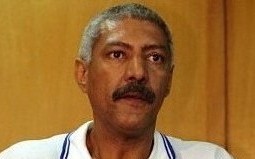
Edson Isidoro Guimaraes
Serial killer Sailson Jose das Graças
Serial killer · Brazil · 2005
Sailson Jose das Graças was a 26-year-old Brazilian man in prison awaiting tria…
43 victims
Sailson Jose das Graças
Serial killer · Brazil · 2005
Sailson Jose das Graças was a 26-year-old Brazilian man in prison awaiting tria…
43 victims
 Marcelo Costa de Andrade
Serial killer · Brazil · 1991
Marcelo Costa de Andrade was found incompetent on April 26, 1993. He was sent t…
14 victims
Marcelo Costa de Andrade
Serial killer · Brazil · 1991
Marcelo Costa de Andrade was found incompetent on April 26, 1993. He was sent t…
14 victims
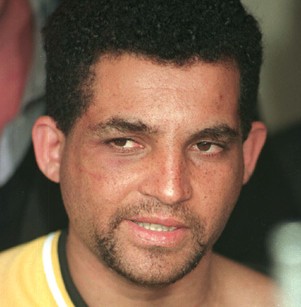 Francisco de Assis Pereira
Serial killer · Brazil · 1997
Francisco de Assis Pereira was a motorcycle courier who became known as the “pa…
11 victims
Francisco de Assis Pereira
Serial killer · Brazil · 1997
Francisco de Assis Pereira was a motorcycle courier who became known as the “pa…
11 victims
 Tiago Gomes da Rocha
Serial killer · Brazil · 2011
Tiago Henrique Gomes da Rocha was a former Brazilian security guard. Gomes da R…
39 victims
Tiago Gomes da Rocha
Serial killer · Brazil · 2011
Tiago Henrique Gomes da Rocha was a former Brazilian security guard. Gomes da R…
39 victims
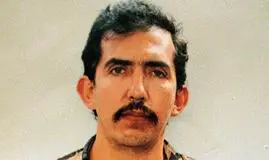 Luis Alfredo Garavito
Serial killer · Colombia/Ecuador · 1992
Luis Alfredo Garavito Cubillos, also known as "La Bestia" ("The Beast") or "Tri…
192 victims
Luis Alfredo Garavito
Serial killer · Colombia/Ecuador · 1992
Luis Alfredo Garavito Cubillos, also known as "La Bestia" ("The Beast") or "Tri…
192 victims
 Marilyn Edge
Murderer · USA · 2013
Marilyn Edge was a mother from Scottsdale, Arizona, accused of poisoning and ki…
2 victims
Marilyn Edge
Murderer · USA · 2013
Marilyn Edge was a mother from Scottsdale, Arizona, accused of poisoning and ki…
2 victims
 Gertrude Baniszewski
Murderer · USA · 1965
Name: Gertrude Baniszewski Also known as: Gertrude Wright; Nadine Van Fossan; G…
1 victim
Gertrude Baniszewski
Murderer · USA · 1965
Name: Gertrude Baniszewski Also known as: Gertrude Wright; Nadine Van Fossan; G…
1 victim
 Linda Jones
Murderer · USA · 1995
Linda Jones and Jack Jones had been married for nearly 30 years. They had two d…
1 victim
Linda Jones
Murderer · USA · 1995
Linda Jones and Jack Jones had been married for nearly 30 years. They had two d…
1 victim
 Jon Nödtveidt
Murderer · Sweden · 1997
Jon Andreas Nödtveidt (June 28, 1974 – August 16, 2006) was a lead guitarist an…
1 victim
Jon Nödtveidt
Murderer · Sweden · 1997
Jon Andreas Nödtveidt (June 28, 1974 – August 16, 2006) was a lead guitarist an…
1 victim
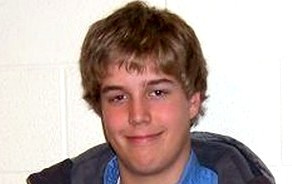 Nicholas Browning
Homicide · USA · 2008
Nicholas W. Browning — 15-year-old boy charged as an adult with four counts of…
4 victims
Nicholas Browning
Homicide · USA · 2008
Nicholas W. Browning — 15-year-old boy charged as an adult with four counts of…
4 victims
- Gender
- male
- Country
- Brazil
- Location
- Rio de Janeiro, Brazil
- Date of birth
- 1957
- Age at first offence
- 42
- Characteristics
- nurse, angel of death, to collect insurance money
- Victim profile
- Men and women (patients)
- Method of murder
- Poisoning (potassium chloride) - Asphyxiation (by removing oxygen masks)
- Date(s) of murder
- January-May 1999
- Years active
- 1999
- Date of arrest
- May 4, 1999
- Status
-
Imprisoned
Sentenced to 76 years in prison on February 21, 2000
Case record: Edson Isidoro Guimaraes
Background
Edson Isidoro Guimarães was a Brazilian nursing assistant and nurse’s aide at Salgado Filho Hospital in the Méier district of Rio de Janeiro, Brazil.
He was born in 1957.
The offence
Guimarães was a convicted serial killer.
He confessed to five murders and was convicted of four murders.
He was suspected of committing up to 131 murders in total.
Prosecutors said his victims were mostly unconscious or comatose patients. Guimarães killed patients by lethal injection and by removing oxygen masks.
Guimarães claimed that he chose patients whose conditions were irreversible, and who were in pain and suffering. He said he carried out the killings to ease the anxiety of families who were “agonising because a patient was suffering a lot.” He also said he was in peace because patients were in a coma and had no way of recovering.
Guimarães was thought to have killed up to 131 patients between January 1 and May 4 1999. Between 1 January and 4 May, 131 of 225 deaths in the hospital’s emergency ward occurred while Guimarães was on duty.
He was said to have confessed to five murders of seriously ill patients.
Investigation
Investigators were alerted after a higher than average death rate on his ward raised suspicions.
A cleaning lady reported that in late April she first spotted Guimarães drawing a syringe of deadly potassium chloride from the supply room, slipping it into his pocket, and then strolling into the intensive care unit. While Guimarães made his rounds, the cleaning lady said he pressed the needle into the IV drip bag of one of the unit’s half-dozen patients and hit the plunger. Moments later, the patient was dead.
Guimarães had been caught after a hospital porter saw him fill a syringe with potassium chloride and inject a comatose patient who immediately died.
Prosecutors and police described the evidence that Guimarães had been causing deaths on his shifts, including changes in death rates when he was moved away from the unit.
A possible motive involved undertaker referrals. It was said he was paid about $60 dollars a time to inform local funeral homes of a patient’s death so that they could contact the deceased’s relatives. According to Josias Quintal, Rio’s secretary for public security, “He may have begun doing it to earn money and then just lost control”.
A motive described by Flavio Silveira, the administrator of Salgado Filho, was that Guimarães said he wanted to abbreviate suffering and also make some money on the side, because “everybody gets some money on the side.”
During the investigation, it was also noted that death by potassium chloride was referred to as a “white death” in Brazil, leaving no identifying anatomical or chemical signature during routine autopsy. It was stated that autopsies on the last two patients showed red stains on their hearts and lungs characteristic of asphyxia, but such marks could occur after the failure of an oxygen mask, for instance.
Arrest
Guimarães was detained on suspicion of murdering patients.
He was caught in 1999 when a hospital porter saw him fill a syringe with potassium chloride and inject a comatose patient who immediately died.
On his arrest, he confessed to five murders.
When alerted by the cleaning lady, administrators transferred Guimarães to an outpatient unit on his next shift. The death rate in intensive care fell to zero. When he returned three days later, on May 4, four patients died, even as police waited in a nearby office to make an arrest.
Following Guimarães’ arrest, a check of hospital records revealed that the unit’s death rate more than doubled during Guimarães’ 12-hour shifts, from an average of just under two deaths to four or more.
Trial
Guimarães appeared on television on Globo with a video-taped statement in which he confessed to killing five seriously ill patients, saying his aim was “to ease the anxiety of families which were agonising because a patient was suffering a lot”.
Guimarães told reporters prior to his trial: “I don't regret what I did”, adding “I did it to those in irreversible comas and whose families were suffering.”
After his confession, Guimarães’ lawyer initially appeared to be preparing an insanity defense. In a recent court deposition, Guimarães, who had hired a new lawyer, changed his story.
In response to reporters at a press conference about whether he had poisoned patients, Guimarães said: “Some patients, yes.”
Asked if he had taken away patients’ oxygen masks, he said: “The oxygen mask was taken away, yes. There were five patients that this happened to... I chose the patients I saw suffering, generally patients with AIDS, patients who were almost terminal. I am calm because the patients were in a coma and had no way of recovering.”
He also said: “I do feel a bit sorry, OK, because I should not have taken anyone's life.”
Guimarães said that he confessed only because he was threatened by police.
He told reporters: “I am not sorry because I am at peace, because the patient was in coma and there was no prospect of recovery.”
He also insisted that while he had directed relatives of dead patients to the funeral home of a friend, he had never received any payment for it.
Following these statements, Marcelo Monteiro, a member of the prosecution team, said that Guimarães had been charged with only four murders. Monteiro said: “I'm completely convinced he's a murderer. The proof will demonstrate he's responsible for what happened.”
Monteiro also said: “I'm convinced the only truths he told today were his name, date of birth and address.”
Sentencing
Guimarães was convicted on February 21, 2000, of the murders of four patients.
He was sentenced to 76 years in prison on February 21, 2000.
Outcome
Guimarães remained convicted for the four murders he was charged with and sentenced for.
He was suspected of additional murders beyond those for which he was convicted.
Aftermath
Local newspapers investigated reports that Guimarães may have been paid a commission by undertakers to recommend their services to patients’ relatives.
Guimarães was dubbed an “angel of death”.
He had previously been described as a nurse’s aide at Salgado Filho Hospital.
He had initially confessed to five murders and later retracted aspects of his confession, insisting that he did not kill anyone and that he only confessed because police threatened to beat him.
He was thought to have killed up to 131 patients between January 1 and May 4, 1999.
Spotted an error, or have more information about this case?