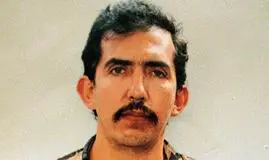
Luis Alfredo Garavito
Serial killer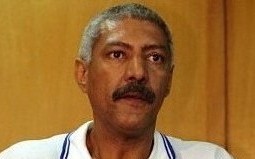 Edson Isidoro Guimaraes
Serial killer · Brazil · 1999
Edson Isidoro Guimarães was a Brazilian nursing assistant and nurse’s aide at S…
131 victims
Edson Isidoro Guimaraes
Serial killer · Brazil · 1999
Edson Isidoro Guimarães was a Brazilian nursing assistant and nurse’s aide at S…
131 victims
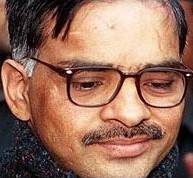 Javed Iqbal
Serial killer · Pakistan · 1998
Javed Iqbal (born 1956 in Lahore, Punjab, Pakistan; died October 8, 2001, in La…
100 victims
Javed Iqbal
Serial killer · Pakistan · 1998
Javed Iqbal (born 1956 in Lahore, Punjab, Pakistan; died October 8, 2001, in La…
100 victims
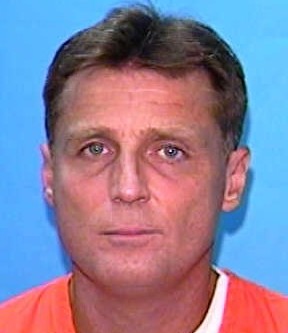 Glen Edward Rogers
Serial killer · USA · 1993
Glen Edward Rogers was a spree killer whose cross-country rampage in 1994-95 le…
70 victims
Glen Edward Rogers
Serial killer · USA · 1993
Glen Edward Rogers was a spree killer whose cross-country rampage in 1994-95 le…
70 victims
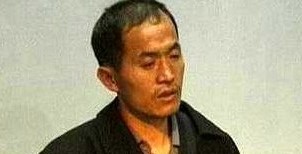 Yang Xinhai
Serial killer · China · 2000
Yang Xinhai (simplified Chinese: 杨新海; pinyin: Yáng Xīnhǎi; 17 July 1968–14 Febr…
67 victims
Yang Xinhai
Serial killer · China · 2000
Yang Xinhai (simplified Chinese: 杨新海; pinyin: Yáng Xīnhǎi; 17 July 1968–14 Febr…
67 victims
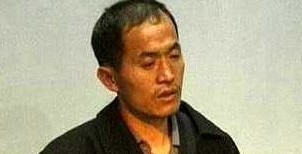 Yang Xinhai
Serial killer · China · 2000
Yang Xinhai (simplified Chinese: 杨新海; pinyin: Yáng Xīnhǎi; 17 July 1968–14 Febr…
67 victims
Yang Xinhai
Serial killer · China · 2000
Yang Xinhai (simplified Chinese: 杨新海; pinyin: Yáng Xīnhǎi; 17 July 1968–14 Febr…
67 victims
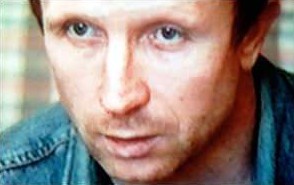 Anatoly Onoprienko
Serial killer · Ukraine · 1989
Anatoly Yuriyovych Onoprienko was born July 25, 1959, and was also known by the…
52 victims
Anatoly Onoprienko
Serial killer · Ukraine · 1989
Anatoly Yuriyovych Onoprienko was born July 25, 1959, and was also known by the…
52 victims
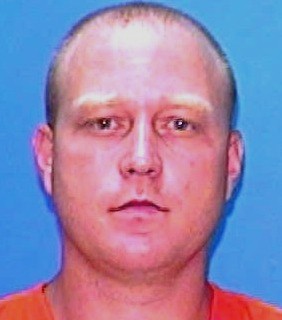 Eric Simmons
Murderer · USA · 2001
Name: Eric Simmons · Date of birth: 11/23/74 · Supreme Court of Florida opinion…
1 victim
Eric Simmons
Murderer · USA · 2001
Name: Eric Simmons · Date of birth: 11/23/74 · Supreme Court of Florida opinion…
1 victim
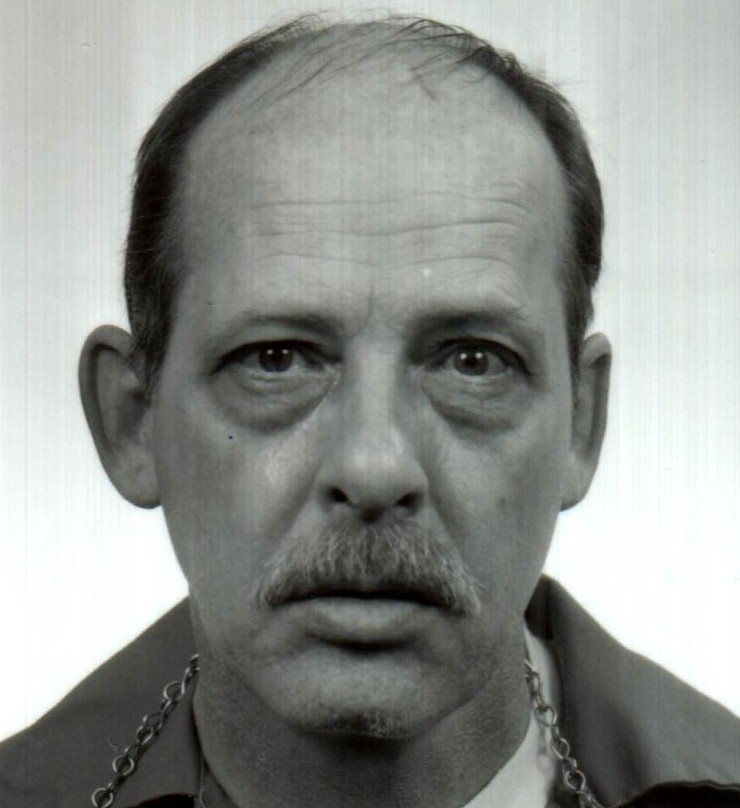 John Ingle
Murderer · USA · 1996
Name: John Ingle Sex/Race: White male Date of birth: 10-29-49 Age: not stated D…
1 victim
John Ingle
Murderer · USA · 1996
Name: John Ingle Sex/Race: White male Date of birth: 10-29-49 Age: not stated D…
1 victim
 Joseph Ferguson
Mass murderer · USA · 2001
Joseph Ferguson was a former security guard who committed a 24-hour rampage beg…
5 victims
Joseph Ferguson
Mass murderer · USA · 2001
Joseph Ferguson was a former security guard who committed a 24-hour rampage beg…
5 victims
 Jeff Emery
Murderer · USA · 1979
Jeff Emery was executed by lethal injection in Texas on December 8, 1998. He wa…
1 victim
Jeff Emery
Murderer · USA · 1979
Jeff Emery was executed by lethal injection in Texas on December 8, 1998. He wa…
1 victim
 Maria del Rosio Alfaro
Murderer · USA · 1990
Maria del Rosio Alfaro, also known as “Rosie” Alfaro, was sentenced to death on…
1 victim
Maria del Rosio Alfaro
Murderer · USA · 1990
Maria del Rosio Alfaro, also known as “Rosie” Alfaro, was sentenced to death on…
1 victim
 Donald Henry Gaskins
Serial killer · USA · 1969
Donald Henry Gaskins, also known as Donald “Pee Wee” Gaskins, was a serial kill…
200 victims
Donald Henry Gaskins
Serial killer · USA · 1969
Donald Henry Gaskins, also known as Donald “Pee Wee” Gaskins, was a serial kill…
200 victims
- Gender
- male
- Country
- Colombia/Ecuador
- Location
- Colombia/Ecuador
- Date of birth
- January 25, 1957
- Age at first offence
- 35
- Characteristics
- torture, mutilation, child abuse, rape, serial rapist
- Victim profile
- Boys aged between 6 and 16 years
- Method of murder
- St abbing with knife and screwdriver
- Date(s) of murder
- 1992 - 1999
- Years active
- 1992–1999
- Date of arrest
- April 22, 1999
- Status
-
Imprisoned
Sentenced to 1 , 853 years in prison on May 27, 2000 and November 3, 2001
Names and identifiers
Luis Alfredo Garavito Cubillos, also known as "La Bestia" ("The Beast") or "Tribilín" (American Spanish translation of Disney's "Goofy").
Background
Luis Alfredo Garavito Cubillos was born on 25 January 1957 in Génova, Quindío, Colombia. He was the oldest of seven brothers. In testimony, he described being a victim of sexual abuse when young and apparently suffering physical and emotional abuse by his father. He also grew up in an atmosphere of violence, was beaten by his father, Manuel Antonio Garavito, and was repeatedly raped by two male neighbors. He had five years of schooling and left home at 16. He worked as a store clerk and then as a street vendor who sold religious icons and prayer cards. As an adult, he drifted from job to job, drinking heavily and behaving aggressively until he moved on to the next town. He attempted suicide at least once and was under psychiatric care for five years, according to police reports.
He attempted to minimize his actions during an interview. He expressed intent to start a political career in order to help abused children.
The offence
Garavito raped and murdered children. His victims were poor children, peasant children, or street children, between the ages of 6 and 16. In his crimes, he approached children on the street or countryside and offered them gifts or small amounts of money. After gaining their trust, he took the children for a walk and, when they got tired, took advantage of them. He then raped them, cut their throats, and usually dismembered their corpses. Most corpses showed signs of torture. Most corpses showed signs of anal penetration; a bottle of lubricant was found in at least one set of killings.
The victims were living in a nearby town in at least one series of cases. In one account, the police described that they found 114 skeletons.
Garavito alleged that all of his crimes were committed when he was drunk and that he was taken over by a "superior being".
Modus operandi
Garavito’s modus operandi remained relatively stable. During daytime, he lured children of a lower social status out of crowded parts of the city into hidden areas with high plants. He promised payment for easy work, drugs, or other offers. He tied children up and then tortured, raped, and killed them, using at least one cut in the lateral part of the neck or decapitation. During the killings, Garavito was drunk.
He adjusted his outfits and tasks according to the local situation, including carrying a crate of oranges, helping with cattle transport, or harvesting sugarcane. He promised drugs to addicted children and paid stakes for children interested in games. Initially he offered money, then switched to a mixture of promises and a slightly raised amount of money so the children would not tell their parents immediately and would use it as fake income in exchange for a day off.
In one described episode, close to his home town, at 6 a.m. on the morning after Halloween (considered to be the "Evening of the Children" in Columbia), he found a victim by offering a child to help him collect sweets that the child had lost the night before.
In many cases, he very slowly tortured the children. In at least one described pattern, he tied children in a way that allowed them to still walk around over distance without escape. He did not bury bodies; he left them on the spot once he had found a suitable location, reusing locations over time. In very few cases, he put bodies in bags and sank them together with stones in water.
Until confessions, the public did not generally accept that one killer was responsible, and suspects such as satanists or other secret organizations were accused.
Investigation and discovery
February 1998 discovery
In February 1998, 2 naked corpses of children were discovered lying next to each other outside of the town of Genua, Colombia. The location was on the slope of a hill as most of the other crime scenes. On the next day, only metres away, a third corpse was found in advanced decomposition. All bodies had been tied at the hands. Numerous blood stains were detected in the area, along with a knife. The necks of the bodies and the external genitals were deeply cut or severed. A closer investigation revealed bite marks and signs of anal penetration; a bottle of lubricant was found too. The post mortem interval could not be determined, and DNA typing of collected stains could not be performed because of costs.
At that time, because several known serial killers were on the loose in Colombia, it was not clear if these were victims of other killers, including Pedro Alonso Lopez, described as the "monster/strangler of the Andes". The crime scenes and state of the corpses did not match the crimes of those other serial killers, including a description that Lopez only killed girls. Profiling was not possible due to organizational and funding problems.
Investigators noted that one victim’s mother commented that her son briefly returned home on the day he disappeared and told her that he would help a man with a cattle transport, and that it was odd that all children disappeared around 10 a.m. on different days.
Intensified investigations
A four-person unit from the D.A.'s Office of Investigations from the province Armenia started to look for similar homicides all over Colombia. Hundreds of cases were reported, but most of the children had neither been identified nor was there a description of their injuries. Retroactive identification by use of the teeth was often impossible because the children never had an X-ray or because the X-rays were buried after the earthquakes of 1998. Until then, 27 of the children killed by Garavito were not identified. Facial reconstruction was performed in few cases at the Institute for Legal Medicine in Bogota.
Additional killings and patterns
Another series of killings involved children aged 8 to 10 in the region Valle in 1995. Two of the four dead children were cousins. The children came from a weak social background, were described as not very intelligent, and disappeared shortly before noon. They were found on the slope of a hill with high-growing plants, not far outside of the town. The pattern of children being killed at one spot but on different days was described as a signature of Garavito. The children were tied up immediately after they arrived. Garavito was described as unable to stop even in dangerous situations.
On the early afternoon of june 8, 1996, a boy went missing in the town of Boyaca. The boy followed Garavito on his (the boy's) own bike with no violence taking place. The corpse was found 5 days later, decapitated, with the severed penis stuck inside of the mouth. The mother started a search and found that the boy had last been seen in a local shop with some other boys and a stranger who bought them sweets. The stranger was identified as Garavito, who stayed in town. He was questioned by police but stated that he sure bought the children sweets but then left alone.
Approximately 4 days later, Garavito killed a 13-year-old boy in the close by town Pereira.
Signatures at crime scenes
Decapitations, or at least their attempt, were described as typical for Garavito. Many times, because of decomposition, the only way to prove this was notches in the fourth vertebra of the neck. Soft tissue cuts documented were caused by a knife producing raw lacerations. Internal organs were usually left in place; on the abdomen, Garavito produced multiple stab wounds without anatomical cuts. One exception described involved a 10-year-old boy killed in January 1997, found under similar circumstances but with wounds produced by a stabbing weapon without a blade (impaling wounds).
Empty bottles of the cheapest brand of local schnapps were found at many scenes. Garavito had a habit of abusing alcohol and left empty bottles openly at scenes of crime.
The investigations described that Garavito subdivided suitable killing places into sectors and killed one child per sector. In many cases, the children were sometimes tied in a way that allowed them to still walk around over distance but not escape. Anal penetration was described as a common feature, though it remained unclear if it was a post mortem or peri mortem act.
Garavito drew precise maps out of his memory showing exact locations of corpses.
Mass grave and nationwide task force
Police dug up a mass grave of alleged victims: 25 boys in November 1997 in a ravine in the western coffee-growing city of Pereira. The discovery initially was thought by local authorities to be the work of a satanic cult. This prompted authorities to create a nationwide task force that began encountering similarities across cases. Authorities said children disappear frequently in Colombia, and that it was because there was no one to notice that the children were missing or to inquire about their whereabouts.
Garavito passed himself off as "a street vendor, monk, indigent, disabled person or a representative of fictitious foundations for the elderly and children's education," gaining entrance to schools as a speaker.
Investigators were led to Garavito when witnesses and hotel records placed him near many murders, and rope found in his home matched the cord used to tie victims’ hands, among other clues. Police said evidence against Garavito prompted the confession. Garavito was described as brown-haired and green-eyed, with a deep scar on his left arm.
Garavito spent time in Ecuador and was being investigated there in connection with other child deaths.
Arrest and identity issues
April 22, 1999 arrest episode
On April 22, 1999, in bushes close to a street leading out of the town Villavicencio (ca. 400000 inhabitants) in Colombia, a homeless man observed an adult male who tried to abuse a boy. On the same day, taxi drivers observed a man matching the description given by the boy. The man had no personal I.D. but gave the name and I.D. number of a man who was a politician in a small town. Because there was no computer or file network and no obligatory registration of the place of residence, his data could not be checked. Asked where he intended to go, he told police that he walked to a town that was 90ƒ away from the direction he had given. It seemed the man had lost orientation, and because of the matching personal description, he was put in prison.
Confirmation of identity
In March 1999, after police checked telephone numbers found in the prisoner's clothing, investigators discovered the prisoner's identity was wrong and that he was actually Garavito. By then, Garavtio had long been on the list of suspects.
A relative handed over a case (box) that Garavito had given to her. Inside were crypic notes and cut-out passport photographs of many of the deceased children, described as the only trophies Garavito collected. A calendar with further crypic notes was found and later identified as a list of victims according to dates. Since Garavito remembered all details of his crimes, including dates, it was not understood why he kept track with such a list.
On October 28, 1999, after several weeks of confirmatory investigations, Garavito was exposed to the fact that his identity was known and that evidence for his crimes was found. During the first questioning, he confessed to his crimes straight away and asked god and mankind for forgiveness.
Confessions and investigation scope
Garavito confessed to murdering 140 children. Based on skeleton locations listed on maps he drew in prison, the number of his victims could eventually exceed 300. He confessed to killing more than 200 boys since 1992, with a stated later count of 300. Police and prosecutors said Garavito admitted killing children in 54 cities across Colombia as well as in Ecuador.
At the time of continued investigation, he was still under investigation for the murder of 172 children in more than 59 towns in Colombia. Investigators also stated that he had admitted killing children in a wide range of locations, and that investigators were still working due to ongoing confessions to unknown crimes.
Trial and legal outcomes
Garavito was sentenced to custody in prison because he was considered sane in the sense of being responsible for his acts, and because he could not be sent to a forensic psychiatric institution for an indefinite time.
Sentencing framework described
The Colombian sentencing system added the sentences for every single offence. In one account, he was sentenced to about 2 600 years in prison, and later could not be imprisoned beyond a maximum term described as 30 years. After reform of the Colombian Penal Code in 2000, a person could neither be sentenced to death nor stay imprisoned for more than 40 years in total (article 37.1 of the Penal Code).
Because Garavito helped authorities in finding bodies, his sentence was decreased to 22 years in one description.
Plea bargain and reduced term in one case
A judge in Tunja convicted Garavito for the killing of 14-year-old Silvino Rodriguez. The headless and tortured body was discovered on the outskirts of the city in June 1996. The judge also found Garavito guilty of the attempted rape of the 12-year-old boy in the western city of Villavicencio in April 1999, the crime that led to his arrest. The judge sentenced Garavito to the country’s maximum prison term of 60 years. The sentence was reduced to 52 years and six months due to a plea bargain deal under which Garavito agreed not to contest any of the charges against him.
Number of convictions and sentencing totals described
He was found guilty in 138 of the 172 cases; the others were ongoing. The sentences for these 138 cases added to 1,853 years and 9 days. Because of Colombian law restrictions, he could not be imprisoned for more than 30 years.
Appeals and judicial review
In late 2006, a judicial review of the cases against Garavito in different local jurisdictions found that his sentence could be extended and his release delayed. The review attributed this to the existence of crimes he did not admit to and for which he was not previously condemned. Public response and media criticism referenced Garavito’s approaching early release.
Prison conditions and personal impressions
Garavito was held separate from other prisoners because it was feared he would be killed immediately. He feared getting poisoned and only took drinks given to him by few persons. His guards were described as on very good terms with him, and Garavito was described as relaxed and not shy toward them.
He wrote an informant-style report to the police describing what he remembered from a conversation and what they looked like after complaining that expensive gifts were not brought.
He told interviewers he wanted to understand the cause of his actions. He warned against walking alone in the streets. In a conversation, he was offered to comment on crimes of other serial offenders, including Jürgen Bartsch or Father Denke. He asked specifically about the number of victims, and did not keep track of the conversation.
He was described as giving an impression of being open and friendly, and at times tense. He stated he would not continue his killings outside of prison and that he had got everything sorted out in his mind.
In some accounts, he was shown a picture test in 2005 (M.B.) but failed to understand or solve the quiz items.
In prison, he feared violence from other prisoners, and the investigations and commentary also described his behavior as ongoing confessions to previously unknown crimes.
Media interview
In 2006, local TV host Pirry interviewed Garavito. The interview aired on 11 June 2006. During the interview, Pirry mentioned that the killer tried to minimize his actions and expressed intent to start a political career to help abused children. Pirry also described Garavito’s conditions in prison and commented that due to good behavior, Garavito could probably apply for early release within 3 years. After the interview aired, criticism of Garavito’s situation increased in notoriety in the media and in political circles.
Other details
Garavito had been arrested under a wrong identity and put in prison under that identity. Regular fingerprint identification had not been possible for organizational and technical reasons. Investigators later used telephone numbers found in clothing to discover his identity.
A courthouse-type narrative included that Garavito never appeared in court because of a regulation introduced to simplify cases in which the defendant fully confesses and objective proof matched the confession, allowing legally binding verdicts to be passed successively without a formal trial.
The announcement of Garavito’s confession generated disgust, indignation, and fear throughout Colombia.
Colombia was described as not having the death penalty for murder, and Gen. Rosso Jose Serrano, the chief of the national police, and many others called for an exception.
Garavito was described as having moved frequently since the killings began in 1992 and spent time in Ecuador.
Spotted an error, or have more information about this case?