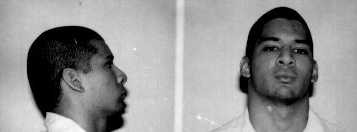
Derek Jermaine Guillen
Homicide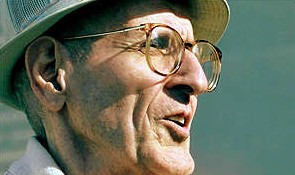 Jack Kevorkian
Homicide · USA · 1990
Jack Kevorkian (born May 26, 1928) was a controversial American pathologist. He…
130 victims
Jack Kevorkian
Homicide · USA · 1990
Jack Kevorkian (born May 26, 1928) was a controversial American pathologist. He…
130 victims
 David Koresh
Homicide · USA · 1993
David Koresh (born Vernon Wayne Howell; August 17, 1959 – April 19, 1993) led t…
79 victims
David Koresh
Homicide · USA · 1993
David Koresh (born Vernon Wayne Howell; August 17, 1959 – April 19, 1993) led t…
79 victims
 Todd Hall
Homicide · USA · 1996
Todd Hall was described by neighbors as "mentally slow" and was said to have su…
9 victims
Todd Hall
Homicide · USA · 1996
Todd Hall was described by neighbors as "mentally slow" and was said to have su…
9 victims
 Joshua Jenkins
Homicide · USA · 1996
Joshua Jenkins was a 15-year-old American killer who killed five members of his…
5 victims
Joshua Jenkins
Homicide · USA · 1996
Joshua Jenkins was a 15-year-old American killer who killed five members of his…
5 victims
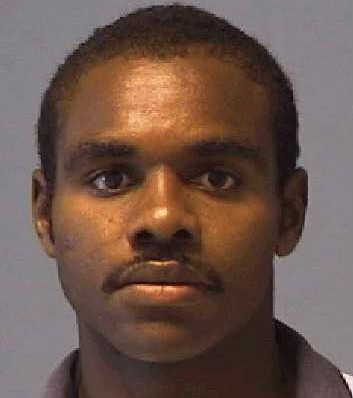 Clinton Bankston
Homicide · USA · 1987
15 August 1987 — Ann Morris (63), her sister Sally Nicholson (59), and Sally’s…
5 victims
Clinton Bankston
Homicide · USA · 1987
15 August 1987 — Ann Morris (63), her sister Sally Nicholson (59), and Sally’s…
5 victims
 Asher Weisgan
Spree killer · Israel · 2005
Name: Asher Weisgan · Birth–death: 1966 – December 22, 2006 · Nationality/occup…
4 victims
Asher Weisgan
Spree killer · Israel · 2005
Name: Asher Weisgan · Birth–death: 1966 – December 22, 2006 · Nationality/occup…
4 victims
 Larry Allen Stout
Murderer · USA · 1987
Larry Allen Stout, aged 33, pleaded guilty in a Virginia court to the robbery a…
1 victim
Larry Allen Stout
Murderer · USA · 1987
Larry Allen Stout, aged 33, pleaded guilty in a Virginia court to the robbery a…
1 victim
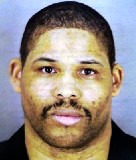 Bartholomew Granger
Murderer · USA · 2012
Name: Bartholomew Granger · Gender: Male · Race: Black · Age: 42 (age at time o…
1 victim
Bartholomew Granger
Murderer · USA · 2012
Name: Bartholomew Granger · Gender: Male · Race: Black · Age: 42 (age at time o…
1 victim
 Antuan Bronshtein
Murderer · USA · 1991
Antuan Bronshtein Antuan Bronshtein was born in the Soviet Union (Moldova) in K…
2 victims
Antuan Bronshtein
Murderer · USA · 1991
Antuan Bronshtein Antuan Bronshtein was born in the Soviet Union (Moldova) in K…
2 victims
- Gender
- male
- Country
- USA
- Location
- Bell County, Texas, USA
- Date of birth
- October 20, 1980
- Age at first offence
- 18
- Characteristics
- juvenile, rape, robbery
- Victim profile
- A 52-year old white female
- Method of murder
- St abbing with knife
- Date(s) of murder
- March 26, 1998
- Years active
- 1998
- Date of arrest
- —
- Status
-
Sentenced to death
Commuted to life in prison on June 22, 2005, after being sentenced to death on June 1, 1999
Case record
Identifiers
- Name: Derek Jermaine Guillen
- TDCJ Number: 999310
- Date of Birth: 10/20/1980
- Age at the crime: 17
- Education Level: 8
- Prior Prison Record: None
- Prior Occupation: Bell Texas laborer
- Race: Black male
- Gender: Male
- Hair Color: Black
- Eye Color: Brown
- Height: 5' 10"
- Weight: 158
- Native State: Native
- County: Bell
Timeline
- 03/26/1998 — Derek Jermaine Guillen and co-defendants burglarized and fatally injured a 52-year-old white female in Tempe; Guillen and the co-defendants robbed the victim of an indeterminate amount of money at knifepoint and fatally slashed the victim's throat prior to fleeing the scene.
- 06/01/1999 — Derek Jermaine Guillen was sentenced to death; age listed as 18 when received.
- June 22, 2005 — The death sentence was commuted to life in prison.
The offence
On 03/26/98 in Temple, Guillen and co-defendants Torree Hooker, James Godfrey, Derrick Dees, and Tyrone Fowler burglarized and fatally injured the victim, a 52-year-old white female. Guillen and the co-defendants were caught in the act by the victim. Guillen and his co-defendants robbed the victim of an indeterminate amount of money at knifepoint and fatally slashed the victim's throat prior to fleeing the scene.
Investigation
- Guillen and co-defendants were caught in the act by the victim.
Trial
Court and appeal
In the Court of Criminal Appeals of Texas, No. 73,491, Derek Jermaine Guillen, Appellant v. The State of Texas.
On direct appeal from Bell County.
The opinion was delivered Per curiam. HOLCOMB, J., concurred in the result. JOHNSON, J., dissents.
Conviction and sentencing basis
Guillen was convicted of capital murder in May 1999 under Tex. Penal Code Ann. § 19.03(a).
Pursuant to the jury's answers to the special issues set forth in Texas Code of Criminal Procedure article 37.071 §§ 2(b) and 2(e), the trial judge sentenced appellant to death. Art. 37.071 § 2(g).
Direct appeal to this Court was automatic. Art. 37.071 § 2(h).
Guillen raised two points of error but did not challenge the sufficiency of the evidence at either stage of trial. The court affirmed.
Voir dire issue (Point of error one)
Guillen asserted that the trial court erroneously directed voir dire be conducted in a manner contrary to the dictates of Article 35.13.
The trial court conducted voir dire in the following manner:
- first, a panel of prospective jurors gathered in the courtroom and the judge heard qualifications and excuses.
- The judge then instructed the panel on the general principles and law involved in the case.
- Next, the judge excused the panel, allotting each panel member a time to return for individual questioning by both sides.
- Finally, after the individual questioning of all of the panel members was complete, the entire panel re-assembled in the courtroom for further general questioning, the exercise of any additional challenges for cause, and the exercise of all peremptory strikes.
The appellate court addressed preservation of error. Defense counsel stated at trial: “Well, Your Honor, we do have another one related to the voir dire, venire situation and that is I believe that was asking co-counsel to be given a copy of the defendant's motion for individual voir dire examination. Ms. Young and I have just - frankly are just much more comfortable with the idea of doing individual voir dire. I understand the Court can do it whatever way the Court wants to , but it is our request that the Court allow us to do individual voir dire primarily for the purposes of we believe that we would be more effective assistance of counsel to our client if we did individual voir dire related to the use of peremptory strikes and challenges for cause. And frankly, I guess it's a way that I've done it in capital cases in the past and I'm just much more familiar with that way and more comfortable with it and we would believe it would help us be more effective assistance to our client specifically as it relates to peremptory challenges and challenges for cause. So, I suppose this is something we need to get decided how we're going to do it and so we can prepare for that and so that's a motion I would ask the Court to consider at this time. I don't know if the State has any position on it or not. But it's simply our request that we be allowed to do individual voir dire examination. (Emphasis added).”
The State responded that defense counsel was “completely correct” that the trial court had complete discretion over the procedure for exercising peremptory challenges.
The State characterized the method eventually used at trial as a “contemporary manner” of exercising peremptories and characterized appellant's proposed method as the “traditional way.”
Defense counsel then responded: “Your Honor, just for the record we'd just like to say that we would object to doing it the more contemporary way. I'm 50 and I'm not very contemporary and we're requesting that this individual voir dire be chosen. Individual, more traditional individual voir dire approach related to capital murder cases. We think it would help us be more effective for our client and we just want, you know, put that on the record. Appellant made no further objections to the procedure followed by the trial court.”
The appellate court concluded appellant failed to preserve error because the objection did not state grounds with sufficient specificity, and described the objection as a preference rather than based on a legal requirement.
Guillen also contended the trial court erred in denying his motion for new trial without a hearing, depriving him of an opportunity to show harm from improper jury selection. The appellate court held there was no occasion to determine whether harm occurred because error was not preserved, and ruled the trial court did not err in overruling the motion for new trial without a hearing.
Point of error number one was overruled. The court affirmed.
Challenges for cause (Point of error two)
Guillen complained that the trial court erred in denying his challenges for cause to nine veniremembers. He specifically identified only two of these nine; the appellate court reviewed those two.
The appellate court stated the test and preservation requirements for denied challenges for cause, including that to preserve error the appellant must demonstrate on the record:
- asserted a clear and specific challenge for cause,
- used a peremptory challenge on the complained-of venireperson,
- exhausted all peremptory challenges,
- requested additional strikes which were denied,
- and an objectionable juror sat on the jury.
The record showed Guillen exhausted all fifteen peremptory challenges, requested and received an additional challenge, used that challenge, and again requested but was denied further challenges. He objected to the seating of the twelfth juror.
The appellate court addressed the first complained-of prospective juror, J. D. Drake.
Prospective juror J. D. Drake
Guillen argued the trial court erred in denying his challenge to Drake because Drake indicated he would automatically answer the future dangerousness issue “yes” based upon his finding of guilt.
The appellate court reviewed Drake’s voir dire and summarized the exchange. After the prosecutor explained the process and that the State bore the burden of proof, Drake made the following comment: “I'm with you but I think I'm losing it because I'm having difficulty thinking how that if, if you prove to me beyond a reasonable doubt that he was guilty or if the person was guilty, how I would get to this point because in my mind I think I'm already prejudged that the probability of that happening again would be likely and so mine probably [sic] always be yes.”
The prosecutor told Drake that while he could base his answer to the future dangerousness issue purely on evidence presented at the guilt stage, Drake needed to consider all evidence presented at the punishment stage.
The prosecutor gave Drake a hypothetical fact situation illustrating scenarios where the future dangerousness issue might be answered in the negative.
After listening, Drake indicated he could see that there might be instances in which the future dangerousness question should be answered in the negative. Drake also reiterated that he believed the death penalty was appropriate in certain cases and that there were also situations where he did not believe it was appropriate.
During defense questioning, Drake expressed that in particular fact situations, such as with a premeditated murder, he felt the death penalty was appropriate. He also noted on his questionnaire: “Anyone who would take another human being's life in a premeditated manner is a sick animal and should be put to sleep.”
The appellate court concluded that the exchange showed Drake had strong feelings in favor of the death penalty in particular circumstances but did not establish that he would automatically answer the future dangerousness issue in the affirmative in every case. The court held appellant failed to show the views would substantially impair his ability to carry out his oath and instructions in accordance with law.
Because both complained-of challenges for cause were not shown to have been erroneously denied, Guillen could not show harm on appeal.
Point of error two was overruled. Finding no reversible error, the court affirmed the judgment of the trial court.
Delivery date
- Delivered: June 18, 2003
- En banc
- Do Not Publish
Outcome
- The Court of Criminal Appeals of Texas affirmed the judgment of the trial court after direct appeal.
Aftermath
- Derek Jermaine Guillen’s death sentence was commuted to life in prison on June 22, 2005, after a death sentence on June 1, 1999.
Other details
- Victim described as: white female, age 52
- Co-defendants named: Torree Hooker, James Godfrey, Derrick Dees, Tyrone Fowler
- Victim count: one victim
- Article references used in the appellate reasoning included Article 37.071 §§ 2(b), 2(e), and 2(g); Article 37.071 § 2(h); and Article 35.13 and Article 35.16(c)(2).
- The appellate court referenced the jury’s answers to special issues under Texas Code of Criminal Procedure article 37.071 §§ 2(b) and 2(e).
Spotted an error, or have more information about this case?