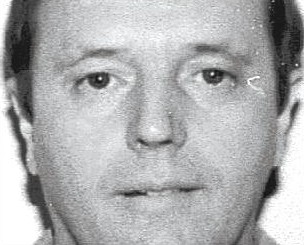
Michael Carl George
Murderer Brian Kevin Rosenfeld
Murderer · USA · 1985
Brian Kevin Rosenfeld Brian Kevin Rosenfeld was sentenced to three concurrent l…
23 victims
Brian Kevin Rosenfeld
Murderer · USA · 1985
Brian Kevin Rosenfeld Brian Kevin Rosenfeld was sentenced to three concurrent l…
23 victims
 Yahweh ben Yahweh
Murderer · USA · 1980
Yahweh ben Yahweh was born and legally named Hulon Mitchell Jr. (October 27, 19…
23 victims
Yahweh ben Yahweh
Murderer · USA · 1980
Yahweh ben Yahweh was born and legally named Hulon Mitchell Jr. (October 27, 19…
23 victims
 Russell Ellwood
Murderer · USA · 1991
Russell Ellwood was a former taxi driver. Authorities suspected him of killing…
20 victims
Russell Ellwood
Murderer · USA · 1991
Russell Ellwood was a former taxi driver. Authorities suspected him of killing…
20 victims
 Robert Martines Perez
Murderer · USA · 1994
Name: Robert Martines Perez · Other name used in proceedings: Robert Martinez P…
15 victims
Robert Martines Perez
Murderer · USA · 1994
Name: Robert Martines Perez · Other name used in proceedings: Robert Martinez P…
15 victims
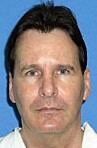 Robert Rowell
Murderer · USA · 1993
Robert Dale Rowell was a white male. He was 50 years old at the time of executi…
3 victims
Robert Rowell
Murderer · USA · 1993
Robert Dale Rowell was a white male. He was 50 years old at the time of executi…
3 victims
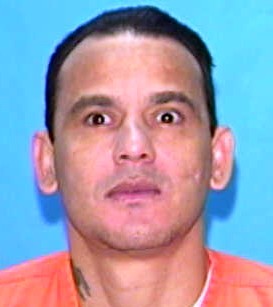 Norberto Pietri
Murderer · USA · 1988
Norberto Pietri was at Lantana Community Correctional Work Release Center await…
1 victim
Norberto Pietri
Murderer · USA · 1988
Norberto Pietri was at Lantana Community Correctional Work Release Center await…
1 victim
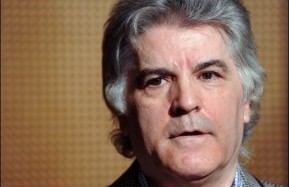 Pierre Bodein
Murderer · 2004
Pierre Bodein was nicknamed “Pierrot le fou,” or “Crazy Pierre.” He was 59 at t…
3 victims
Pierre Bodein
Murderer · 2004
Pierre Bodein was nicknamed “Pierrot le fou,” or “Crazy Pierre.” He was 59 at t…
3 victims
 Richard Reynolds
Murderer · USA · 1992
Richard Reynolds Reynolds was sentenced to death on April 13, 1995. Richard Rey…
1 victim
Richard Reynolds
Murderer · USA · 1992
Richard Reynolds Reynolds was sentenced to death on April 13, 1995. Richard Rey…
1 victim
 Miguel Rios
Murderer · USA · 1992
Miguel Rios was sentenced to death on April 2, 1996 for the shooting death of M…
2 victims
Miguel Rios
Murderer · USA · 1992
Miguel Rios was sentenced to death on April 2, 1996 for the shooting death of M…
2 victims
- Gender
- male
- Country
- USA
- Location
- Prince William County, Virginia, USA
- Date of birth
- 1957
- Age at first offence
- 33
- Characteristics
- torture, rape, robbery
- Victim profile
- Alexander Eugene Sztanko (male, 15)
- Method of murder
- Shooting
- Date(s) of murder
- June 16, 1990
- Years active
- 1990
- Date of arrest
- Next day
- Status
-
Executed
Executed by lethal injection at the Greensville Correctional Center in Jarratt at 9:18 p.m. on Thursday, February 6, 1997; the U.S. Supreme Court voted 7-2 to deny a stay of execution earlier on Thursday, and Gov. George Allen reviewed court rulings and would not stop the execution
Background
Michael Carl George was convicted and sentenced to death in the torture slaying of 15-year-old Alexander Eugene Sztanko. George was also connected to the May 1979 disappearance of 8-year-old Larry Perry. George was 39 and was from Stafford County.
The offence
On Saturday, June 16, 1990, Alexander Eugene Sztanko, then 15 years of age, traveled with his parents from their new home in Manassas, Virginia, to their former residence in Woodbridge, Virginia in order to remove some items that the family had left there. Sztanko left the Woodbridge residence at approximately 2:00 p.m. for a ride on his motorcycle, proceeding down a power-line easement and into a nearby wooded area.
As Sztanko rode through the woods, George drew the boy’s attention. George stopped the boy and grabbed him from the motorcycle, dragging him farther into the woods. George handcuffed Sztanko to a tree, sodomized the boy, and tortured him by repeatedly applying a stun gun to his genitals. Finally, George fired a nine millimeter pistol into the boy’s head, killing him.
Sztanko’s parents reported hearing the sound of gunfire coming from the woods within an hour of Sztanko’s departure.
At some point, either before or after the murder, George secreted Sztanko’s motorcycle and helmet approximately 20 feet off of the path in the woods and marked a topographical map with an “X” signifying the location of Sztanko’s body and an “O” corresponding to the site where the motorcycle was hidden.
The Commonwealth tried George on charges of capital murder based on the murder in the commission of a robbery while armed with a deadly weapon, and of robbery, abduction with intent to defile, and use of a firearm in the commission of a capital murder.
The prosecution theory included that Sztanko was sexually assaulted and robbed before being shot in the head, and that police believed George used a stun gun to shock the boy’s genitals.
Investigation
A Prince William County law enforcement officer noticed a blue and silver sport utility vehicle parked near the woods. The officer approached the vehicle and, through communications with the Department of Motor Vehicles, learned that it was registered to George. Soon afterward, an individual later identified as George approached the officer on foot. Before reaching the officer, however, George turned and ran along the side of the road and into the woods. After entering the woods, George knelt down for a few seconds and then proceeded farther into the woods, crouching as though he did not wish to be seen. Ultimately, George stood and walked toward the officer again.
The officer confronted George, who identified himself and explained that he was attempting to locate a place to hunt for turkeys. George was dressed completely in camouflage clothing, including a hat and black gloves, despite a temperature in the eighties; he was visibly shaking and sweating profusely. The officer questioned George concerning whether he had been in the area on the previous day. Although George first offered a categorical denial, when the officer challenged him, George admitted that, in fact, he had been there the day before. The officer placed George under arrest for trespassing and called for assistance.
George was carrying a knife, the topographical map marking the locations of the motorcycle and Sztanko’s body, and keys—including a handcuff key. After proceeding into the woods to the location where he had observed George kneel down, the officer discovered a pair of tennis shoes that were later identified as Sztanko’s. A bloodhound led law enforcement officers from the shoes to George’s vehicle and then into the woods to Sztanko’s body.
Arrest
George was arrested for trespassing after the officer challenged George and learned he had been in the area the day before.
Trial
Charges and evidence
The Commonwealth tried George on charges of capital murder based on the murder in the commission of a robbery while armed with a deadly weapon, robbery, abduction with intent to defile, and use of a firearm in the commission of a capital murder.
Trial testimony concerning the autopsy performed on Sztanko’s body revealed that death had resulted from a single gunshot wound to the head. Expert testimony established that a nine millimeter pistol seized during a search of George’s bedroom fired the fatal shot.
Abrasions discovered on Sztanko’s genitals were consistent with electrical burning. Expert testimony revealed that these injuries were inflicted while the boy was alive and that they would have proven extremely painful. An expert testified that a stun gun seized from George’s vehicle was capable of producing burns consistent with those found on Sztanko’s body.
Laboratory analysis disclosed the presence of seminal fluid on the boy’s shirt and thigh, but the origin of this substance could not be identified. Seminal fluid consistent with George’s and inconsistent with Sztanko’s was located on swabs from Sztanko’s pubic area and on George’s underwear. Blood stains on George’s pants were consistent with Sztanko’s blood, but inconsistent with George’s. Fibers located on the boy’s shirt were consistent with the material of George’s camouflage jacket.
Jury findings and verdict
The jury convicted George of all charges and imposed a sentence of death on the capital murder conviction. The jury found as aggravating predicates both that George would prove a future danger to society and that George’s murder of Sztanko was outrageously or wantonly vile.
Direct appeal
George’s convictions and death sentence were upheld on direct appeal: George v. Commonwealth, 411 S.E.2d 12 (Va. 1991). The Supreme Court denied George’s petition for certiorari on April 6, 1992: George v. Virginia, 503 U.S. 973 (1992).
Prosecutor closing argument and victim-impact issue
George challenged the closing argument made by the prosecution at the end of the guilt phase, contending it contained improper victim-impact information.
During his closing argument to the jury during the guilt phase of the trial, the prosecutor representing the Commonwealth stated:
There are three groups that I would ask you to consider in deciding what is appropriate in this case and . . . what his [George's] punishment should be.
The first group of people consist of Alex himself and the victims like him and really all of the children in this community. There has been a loss which cannot be replaced. That is so obvious that it should not even have to be said. One less boy on the football field. . . . One less boy to be coached. One less kid whose heartbeat is quickened by the sight of a pretty girl. There will be less laughter in the hallways of his school. There will be one less young man to grow to adulthood and follow in the footsteps and the example that his father has set for him. . . . You have to consider that loss. It is not replaceable. . . . I would ask you to consider a second group of people. The mother and father of this young man and all of the parents in this. . . . You have a mother and a father who you saw here during the course of this trial. You have to think about them. You should think about them in fixing punishment in these cases. A father who works his entire life to provide opportunities for his son. Who watches him grow, develop in a way he would like him to. A mother who goes down into the very shadow of death to give life to a new human being. Who watches him from afar with tenderness and kindness and who goes in despair when Michael George pulls the trigger. And, finally Ladies and Gentlemen, I would ask you to think about folks like yourselves and Mr. Ebert and me and all of the people in this Court, who have an obligation to protect the children of this community. J.A. 410-13.
The Supreme Court of Virginia characterized the issue on direct appeal as whether it was improper for the prosecutor to argue for punishment on the non-capital offenses that took into account Alex Sztanko’s human qualities and the impact of his death, and held it was not.
Homosexual defilement evidence issue
George asserted that the introduction during the guilt phase of evidence regarding his “homosexual defilement” of Sztanko created an impermissible risk that his conviction and sentence were the product of passion, prejudice, and arbitrary factors.
The appellate discussion addressed that the evidence related to two topics under that umbrella: torture of Sztanko with the stun gun and sodomy.
Jury instruction issue
George asserted that the instruction on the vileness predicate given to the jury that sentenced him to death was unconstitutionally vague as applied to him, and argued it was identical to a charge held unconstitutionally vague by the Godfrey Court, and that the vileness predicate was not given the constitutionally limited construction approved by the Supreme Court of Virginia in Smith v. Commonwealth.
The appellate discussion did not require deciding the constitutional adequacy of the instruction because any error was described as harmless and the death sentence rested on other findings.
Sentencing
After the jury convicted George of capital murder, the jury imposed a sentence of death. The jury found aggravating predicates of future dangerousness and that George’s conduct was outrageously or wantonly vile.
The statutory framework discussed in the appellate opinion provided that the Commonwealth had to prove beyond a reasonable doubt either future danger or the vileness factor involving torture or depravity of mind or an aggravated battery to the victim.
The trial judge charged the jury:
Before the penalty can be fixed at death, the Commonwealth must prove beyond a reasonable doubt at least one of the following two alternatives. First, that after consideration of his history and background there is a probability that he would commit criminal acts of violence that would constitute a continuing serious threat to society, or [second], that his conduct in committing the offense was outrageously or wantonly vile, horrible or inhuman in that it involved torture or depravity of mind. If you find from the evidence that the Commonwealth has proved beyond a reasonable doubt either of the two alternatives and as to that alternative you are unanimous, then you may fix the punishment of the Defendant at death, or, if you believe from all the evidence that the death penalty is not justified, then you shall fix the punishment of the Defendant at life imprisonment. J.A. 533.
Appeals
State habeas
After direct appeal, George filed a petition for a writ of habeas corpus in state court. The state habeas court denied and dismissed the petition. It concluded that each of George’s claims—with the exception of his claim of ineffective assistance of counsel—was barred because it was raised on direct appeal or was procedurally defaulted by failure to properly raise the claim during the trial and on direct appeal. The state habeas court found the ineffective assistance of counsel claim without merit.
The Supreme Court of Virginia denied George’s petition for review, and the Supreme Court again denied a petition for a writ of certiorari.
Federal habeas and Sixth Amendment claim
George filed a habeas corpus petition in June 1995 in the district court. The district court dismissed the petition, holding some claims were procedurally defaulted and others lacked merit.
George moved under Federal Rule of Civil Procedure 59(e) to alter or amend the judgment, asking the district court to alter its judgment to dismiss without prejudice his claim that the trial testimony of his fellow inmate was obtained in violation of his Sixth Amendment right to counsel. The district court altered its judgment to make the dismissal of the Sixth Amendment claim without prejudice.
On appeal, the U.S. Court of Appeals for the Fourth Circuit considered sufficiency of the evidence for capital murder in the commission of a robbery while armed with a deadly weapon, the closing argument issue, evidence related to “homosexual defilement,” the vileness predicate instruction, and a Sixth Amendment issue regarding Roger Settle.
Sufficiency of evidence on robbery-murder capital murder
George challenged whether evidence was constitutionally sufficient regarding robbery and robbery as a motivating factor for the murder.
The appellate opinion discussed that Virginia law defined robbery as “the taking, with intent to steal, of the personal property of another, from his person or in his presence, against his will, by violence or intimidation.” It also discussed that a murder in the commission of a robbery included killings taking place before, during, or after the robbery and closely related in time, place, and causal connection, and that the robbery must have been one of the motivating factors for the killing.
The appellate opinion described evidence including George telling a fellow inmate, Roger Settle, that he had “grabbed” Sztanko “and dragged him off of his bike,” and evidence that the motorcycle and helmet were found and marked with the locations on the topographical map.
The appellate court concluded the evidence supported the capital murder conviction.
Closing argument victim-impact issue
The appellate opinion applied a due process standard and concluded that the victim-impact argument did not infect the trial or sentencing proceeding with unfairness so as to deprive due process.
Evidence of sodomy and stun-gun torture
The appellate opinion concluded the evidence regarding the stun gun injuries and sodomy did not render the proceedings unfair under due process.
Vileness predicate instruction
The appellate opinion concluded that even if the instruction was deficient, any error did not provide a basis for relief described as because findings of guilt and future dangerousness provided firm ground.
Roger Settle Sixth Amendment issue
The Sixth Amendment claim asserted that testimony of Roger Settle, a fellow inmate who testified during trial about admissions George made while incarcerated together, was obtained in violation of George’s right to counsel because Settle was placed in George’s cellblock to obtain information.
The appellate opinion described that the Commonwealth had denied that Settle was a state agent. It concluded that the Sixth Amendment claim would be procedurally defaulted if attempted in state court because George had not raised it on direct appeal or in state habeas in a timely manner, and it found no cause to excuse the default.
The Fourth Circuit modified the district court’s judgment to dismiss the Sixth Amendment claim with prejudice as procedurally defaulted. The court otherwise affirmed.
The Fourth Circuit case information included:
- UNITED STATES COURT OF APPEALS FOR THE FOURTH CIRCUIT
- No. 96-1 MICHAEL CARL GEORGE, Petitioner-Appellant, v. RONALD J. ANGELONE, Director, Virginia Department of Corrections, Respondent-Appellee.
- No. 96-3 MICHAEL CARL GEORGE, Petitioner-Appellee, v. RONALD J. ANGELONE, Director, Virginia Department of Corrections, Respondent-Appellant.
- Appeals from the United States District Court for the Eastern District of Virginia, at Richmond.
- Argued: September 25, 1996
- Decided: November 14, 1996
- Affirmed in part and modified in part by published opinion.
- Judge Wilkins wrote the opinion, joined by Chief Judge Wilkinson and Judge Williams.
U.S. Supreme Court and stay
The U.S. Supreme Court voted 7-2 to deny a stay of execution for George earlier on Thursday. Justices John Paul Stevens and Ruth Bader Ginsburg voted to stay the execution.
Outcome
Execution and last moments
Michael Carl George was executed Thursday night for killing a 15-year-old boy. George was put to death by lethal injection at the Greensville Correctional Center in Jarratt. The inmate was pronounced dead at 9:18 p.m., a prison official said.
George made no final statement but told prison Warden David Garraghty that he gave a written statement to his minister, who read a Psalm to the inmate while he waited on the gurney. However, the minister left the prison without releasing the statement.
George’s mother, father, and three brothers were his last visitors.
Among the witnesses to the execution was Del. David G. Brickley, D-Prince William.
Clemency and governor’s position
Attorney Stephen Northrup filed an appeal petition and stay request with the U.S. Supreme Court. Northrup argued that prosecutor Paul Ebert’s comments about the crime’s impact on the victim’s parents was improper before the jury had issued a verdict. Northrup said he would ask Gov. George Allen for clemency.
Although no clemency request was filed, Gov. George Allen said Thursday he had reviewed the court rulings and would not stop the execution. The governor said:
As a father, I am particularly aware of, and sensitive to, the profound pain and loss suffered by the parents of the victim, taken from them at such a young age and in such a brutal manner,
The father of the victim, Attila Sztanko, said:
“He will be able to have prayers said. And then he's going to have a very easy way of leaving this Earth,'' Sztanko said. "Alex didn't have all that.''
The execution was slated for 9 p.m. Thursday at the Greensville Correctional Center in Jarratt.
Other details
Prior guilty plea in Larry Perry disappearance
Before the Sztanko slaying, George pleaded guilty to involuntary manslaughter and abduction in the May 1979 disappearance of 8-year-old Larry Perry, who lived near the same power line where the Sztanko boy was killed. George originally was charged with the Perry boy’s murder, but authorities agreed to the manslaughter plea because the victim’s body was never found. George served two years of a five-year sentence before being released in 1986 on mandatory parole.
Appeals process and death row context
Mark Miner, a spokesman for Attorney General James S. Gilmore III, described that state and federal appeal reforms implemented in July 1995 and later changes followed, with appeals moving faster due to time limits for next steps. Miner said:
“They're not losing any amount of appeals,'' Miner said. ``They're just having dates set into their appeals process. No longer should the appeals take 10 to 12 years. Now it will be three to four years.''
The execution was described as the state’s first in 1997, and the appellate process was described as leading to quicker conclusions under reforms. It was also described that of the 49 men on death row, 15 had been there longer than George. The U.S. Supreme Court denial of a stay and governor’s refusal to stop the execution were part of the week’s sequence.
Trial confession and prosecutor
The appellate opinion referred to a fellow inmate, Roger Settle, who testified that George told him that he had “grabbed” Sztanko “and dragged him off of his bike.” The appellate record also referred to prosecutor Paul Ebert’s comments challenged by attorney Stephen Northrup.
Attorney general and case counsel
Attorney Stephen Northrup sought a stay and planned to ask Gov. George Allen for clemency. Attorney General James S. Gilmore III was referenced in connection with spokesman Mark Miner’s comments about appeal reforms.
Case conclusion by Fourth Circuit
For the reasons set forth in the appellate opinion, the Fourth Circuit affirmed the dismissal of George’s habeas corpus petition but modified the judgment to dismiss the Sixth Amendment claim with prejudice as procedurally defaulted:
- AFFIRMED IN PART
- MODIFIED IN PART

Spotted an error, or have more information about this case?