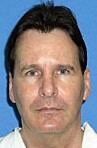
Robert Rowell
Murderer Brian Kevin Rosenfeld
Murderer · USA · 1985
Brian Kevin Rosenfeld Brian Kevin Rosenfeld was sentenced to three concurrent l…
23 victims
Brian Kevin Rosenfeld
Murderer · USA · 1985
Brian Kevin Rosenfeld Brian Kevin Rosenfeld was sentenced to three concurrent l…
23 victims
 Russell Ellwood
Murderer · USA · 1991
Russell Ellwood was a former taxi driver. Authorities suspected him of killing…
20 victims
Russell Ellwood
Murderer · USA · 1991
Russell Ellwood was a former taxi driver. Authorities suspected him of killing…
20 victims
 Robert Martines Perez
Murderer · USA · 1994
Name: Robert Martines Perez · Other name used in proceedings: Robert Martinez P…
15 victims
Robert Martines Perez
Murderer · USA · 1994
Name: Robert Martines Perez · Other name used in proceedings: Robert Martinez P…
15 victims
 Billy Frank Vickers
Murderer · USA · 1993
Billy Frank Vickers Vickers was executed by lethal injection in Texas on Januar…
14 victims
Billy Frank Vickers
Murderer · USA · 1993
Billy Frank Vickers Vickers was executed by lethal injection in Texas on Januar…
14 victims
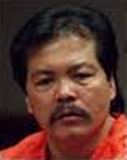 Orlando Ganal
Mass murderer · USA · 1991
February 15, 1991 — Orlando Ganal Sr. injured his back while working at his job…
4 victims
Orlando Ganal
Mass murderer · USA · 1991
February 15, 1991 — Orlando Ganal Sr. injured his back while working at his job…
4 victims
 Olaf Däter
Serial killer · Germany · 2001
Olaf Däter (born September 25, 1969 in Bremerhaven) was a German serial killer…
5 victims
Olaf Däter
Serial killer · Germany · 2001
Olaf Däter (born September 25, 1969 in Bremerhaven) was a German serial killer…
5 victims
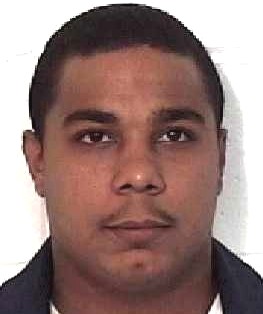 Exzavious Gibson
Murderer · USA · 1990
Exzavious Lee Gibson was 25 years old when he was sentenced to death. He was co…
1 victim
Exzavious Gibson
Murderer · USA · 1990
Exzavious Lee Gibson was 25 years old when he was sentenced to death. He was co…
1 victim
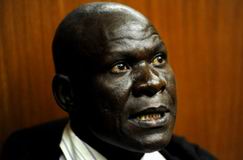 Madumetsa Jack Mogale
Serial killer · South Africa · 2008
Madumetsa Jack Mogale (born 1968/9) was a South African serial killer dubbed th…
16 victims
Madumetsa Jack Mogale
Serial killer · South Africa · 2008
Madumetsa Jack Mogale (born 1968/9) was a South African serial killer dubbed th…
16 victims
- Gender
- male
- Country
- USA
- Location
- Harris County, Texas, USA
- Date of birth
- April 8, 1955
- Age at first offence
- 38
- Characteristics
- robbery, drugs
- Victim profile
- Fellow inmate in prison / Raymond David Mata 38, and Irvin Wright, 52
- Method of murder
- St abbing with homemade knife / Shooting ( .22 caliber revolver)
- Date(s) of murder
- 198 ? / 1993
- Years active
- 1993
- Date of arrest
- —
- Status
-
Executed
Executed by lethal injection in Texas on November 15, 2005
Case details
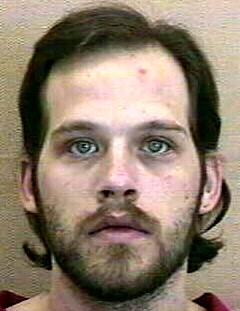
Robert Dale Rowell was a white male. He was 50 years old at the time of execution and was convicted in Harris County for a capital murder committed on May 10, 1993. He had brown hair and blue eyes, and he was 5 ft 08 in tall and weighed 168. He had 14 years of education. He was a mechanic by prior occupation. He had a history of armed robberies and other offenses, including prison violence.
Timeline
- May 10, 1993 — Robert Dale Rowell went to the Houston home of Irvin Wright, where Raymond Mata and Angie Perez were also living.
- March 1, 1994 — A Harris County grand jury indicted Rowell for the capital murder.
- April 7, 1994 — A jury sentenced Rowell to death for capital murder.
- December 18, 1996 — The Texas Court of Criminal Appeals affirmed Rowell’s conviction and sentence.
- October 6, 1997 — The U.S. Supreme Court denied Rowell’s petition for writ of certiorari.
- April 14, 1998 — Rowell filed an application for writ of habeas corpus in the trial court.
- September 11, 2002 — The Texas Court of Criminal Appeals adopted the state habeas court’s findings and conclusions and denied Rowell relief.
- September 2, 2003 — Rowell filed a habeas petition in a Houston U.S. district court.
- February 23, 2004 — The federal district court denied Rowell’s federal writ petition.
- January 25, 2005 — The 5th U.S. Circuit Court of Appeals denied Rowell’s request for permission to appeal.
- October 3, 2005 — The U.S. Supreme Court denied certiorari review.
- November 15, 2005 — Rowell was executed by lethal injection in Texas; he was pronounced dead at 6:24 p.m. CST.
Background
Rowell began committing robberies in 1973. He committed a string of armed robberies that resulted in his first trip to state prison. For these robberies, he received concurrent sentences of ten and twelve years, and he served part of the sentence before being paroled.
After he was paroled, Rowell went on another robbery spree. In 1980, he robbed two stores at gunpoint. During this spree, an armed Rowell robbed the manager of a restaurant while a Houston police officer was in the restaurant. After Rowell ran out of the restaurant, the officer, with his weapon drawn, followed and identified himself as a police officer. Rowell turned around, shot at the officer, and then ran again; the officer returned fire. Rowell was apprehended while lying under a vehicle in a parking lot about a half block away. He was sentenced on November 18, 1980, to 30 years in state prison served concurrently for each of the robberies committed during the spree.
While in prison, Rowell fatally stabbed another inmate between ten and fifteen times in the chest with a homemade knife. For this killing, Rowell was convicted of voluntary manslaughter and sentenced to eight years in prison.
Psychological testing indicated that Rowell was subject to depression, psychopathic behavior, deviancy, anxiety, social introversion, and drug and alcohol addiction. A psychiatrist who testified for the defense stated that Rowell’s psychological profile was unusual for a capital defendant because Rowell did not act impulsively; instead, he scored high in his ability to think rationally and act purposefully.
In a 1998 psychological evaluation report, Rowell stated:
"The whole neighborhood did drugs, and once you do them, you always want them. Before I did drugs, I stayed with my grandfather and fished, and I was happy."
The offence
Victims and location
In the early morning hours of May 10, 1993, Robert Dale Rowell went to the Houston home of Irvin Wright. Angie Perez and her husband, Raymond Mata, were also living in Wright’s home.
The accounts differed on some specific details of location and timing, but they consistently described Rowell arriving before dawn and encountering Mata and Perez at the home.
Entry, demand, and threat
Perez opened the door for Rowell. Rowell told Perez that he was going to get dope and money from Wright. Holding a gun, Rowell told Perez and Mata he would shoot them if they tried to leave.
Violence inside the home
After Rowell went into Wright’s room, Perez heard a thumping sound followed by Wright screaming for Rowell to stop hitting him. After about three minutes, Wright and Rowell went to Perez’s and Mata’s bedroom. Wright was staggering and covered in blood.
Rowell ordered the trio to get into the bathtub. He then shot them. Mata died from a gunshot wound, and Mata had also been struck on the back of his head with a hammer-type instrument. Wright and Perez survived.
One narrative described Wright as being beaten with a claw hammer, then led into the couple’s room. Another narrative described Rowell as beginning to hit Wright with a claw hammer, then, after Perez heard thumping sounds and screams, Rowell came into Mata and Perez’s bedroom bringing Wright staggering and covered in blood.
After the shooting and robbery
Police and trial evidence described Rowell as taking money after the shooting. Evidence described that Rowell stole money and drove away. One account described Rowell taking a shower and cleaning himself up.
One narrative stated that Rowell entered a crack house in an attempt to rob Irving Wright of drugs and money. Another narrative stated that Rowell arrived complaining about paying too much for crack cocaine. Prosecutors said Rowell went intending to rob Wright because he thought he had been overcharged for crack cocaine. The defense claimed there was no robbery and that Rowell only fired after Wright and Mata lunged for his gun.
Injuries and survival
Mata was killed by a gunshot wound and had also been struck on the back of his head with a hammer-type instrument. Wright and Perez were wounded; Perez survived to testify against Rowell, and Wright later died in a Houston hospital.
Perez later described what she heard and the circumstances of the shooting, including hearing thumping sounds and screams as Wright was beaten, and describing the herd into the bathroom tub followed by shots. Perez was described as hit in the hand and the head, with numbness in her leg and trouble walking.
Investigation and arrest
Police arrested Rowell at a steering column repair shop where he worked. Officers searched his work area and found a .22 caliber revolver with six spent cartridge casings in the chamber, the gun case, and Wright’s bank bag.
Other accounts described Rowell being arrested a short time later at an auto repair shop where he worked. Police found a .22-caliber revolver with six spent cartridge casings and a bank bag belonging to Wright.
Trial
Rowell was convicted of capital murder. He was sentenced to death.
A jury found Rowell guilty of capital murder, and he was sentenced to death on April 7, 1994.
Sentencing
Special issues
At sentencing, the jury was asked two special issue questions. The first question was in regard to the defendant’s future dangerousness to society. The answers would lead either to a life sentence or a death sentence.
The jury sent a note to the court during deliberations requesting clarification of the term “society” as used in special issue one. The trial judge responded:
"I am prohibited by law from expanding on the Court’s charge."
Rowell argued that his constitutional rights were violated when the court refused to define for the jury the term “society” in the future dangerousness special issue of the punishment charge.
Mitigating evidence
During the presentation of mitigating evidence at the sentencing phase, Rowell’s brother, two Texas Department of Criminal Justice employees, and two prison ministry counselors testified. Their testimony included that “Rowell was a good brother, son, and grandson; he was a good employee” and that “he found religion while incarcerated.” They also testified that Rowell would not be violent once “free from the influence of drugs.”
In the federal appellate discussion of the mitigation evidence, it stated that the jury was presented testimony that:
Rowell was a good brother, son, and grandson; he was a good employee; he had, with one exception of killing while incarcerated, a relatively clear prison record; he found religion while incarcerated; he was depressed and introverted; and he was previously a chronic drug user who would not be violent when free from the influence of drugs.
Appeals
Direct appeal
Rowell appealed his conviction and sentence to the Texas Court of Criminal Appeals. The court affirmed the conviction and sentence on December 18, 1996.
U.S. Supreme Court petition for certiorari
The U.S. Supreme Court denied Rowell’s petition for writ of certiorari on October 6, 1997. Later, after federal habeas proceedings and additional requests, the Court denied certiorari review on October 3, 2005.
State habeas
Rowell filed an application for writ of habeas corpus in the trial court on April 14, 1998. The state habeas court issued findings of fact and conclusions of law recommending that Rowell be denied relief.
The Texas Court of Criminal Appeals adopted the state habeas court’s findings and conclusions on September 11, 2002 and denied relief.
Federal habeas and certificate of appealability
Rowell filed a habeas petition in a Houston U.S. district court on September 2, 2003. On February 23, 2004, the federal district court denied Rowell’s federal writ petition.
Rowell sought permission to appeal to the 5th U.S. Circuit Court of Appeals. The court denied the request on January 25, 2005.
Rowell also sought a certificate of appealability (“COA”) from the Court of Appeals pursuant to 28 U.S.C. § 2253(c)(2). The Court of Appeals denied Rowell’s application for COA, holding that he failed to make a substantial showing of the denial of a constitutional right as to:
- his claim that his constitutional rights were violated when the trial court refused to define for the jury the term “society” in the future dangerousness special issue; and
- his claim that Texas law was unconstitutional because it failed to assign a proper burden of proof on the special issues and failed to provide for appellate review of the mitigating evidence.
The decision stated:
For the reasons detailed below, we DENY Rowell's application for COA because he has failed to make a substantial showing of the denial of a constitutional right as to his claims: (1) that his constitutional rights were violated when the trial court refused to define for the jury the term "society" in the future dangerousness special issue of the punishment charge; and (2) that Texas law is unconstitutional because it fails to assign a proper burden of proof on the special issues and fails to provide for appellate review of the mitigating evidence.
The decision also concluded that:
Having carefully reviewed the record of this case and the parties' respective briefing, for the reasons set forth above, we conclude Rowell has failed to satisfy this Court that reasonable jurists would find the district court's resolution of the issues debatable.
It further stated:
Therefore, we DENY Rowell a COA.
It stated:
Motions GRANTED. COA DENIED.
Other details
Prior occupations and education
Rowell had 14 years of education. He had been described as a mechanic. In court records, it was stated he earned his GED and associate's degree in prison.
Incarceration and drug use
Accounts described Rowell as having extensive prison history and as a chronic drug user. One account described him as injecting heroin and taking “anything else that I could get my hands on” after his age-related prison history and later drug use. Another account stated that, by the time of the killings, Rowell was using $500 worth of cocaine a day. Another account stated that he was injecting heroin and taking “anything else that I could get my hands on.”
The federal appellate discussion also described that during the punishment phase, the jury heard mitigation evidence that Rowell had been depressed and introverted and previously a chronic drug user who would not be violent when free from the influence of drugs.
Record of sentencing and parole
Accounts stated that Rowell was paroled after serving 4 1/2 years of his first robbery sentence. Accounts also described that after his 1980 sentences he received another prison term after fatally stabbing an inmate, then was paroled again in 1991, and later was arrested for the 1993 shootings.
Last statement and execution details
Rowell declined to speak with reporters as his death date approached.
Rowell made a final statement apologizing to the victim’s family and addressing people who would watch him die:
"I would like to apologize to the victims' family and all the grief I have caused them,"
"I would like to say I love the girls next to them,"
"Praise the Lord. Let's go warden. That's it."
During the execution, a narrative stated that he snorted twice as the drugs began taking effect. The lethal injection was then started, and he was pronounced dead at 6:24 p.m. CST.
Execution scheduling narrative content
Accounts described that Rowell was scheduled to be executed after 6 p.m. Tuesday, November 15, 2005. They also described other scheduled executions in Texas around the same time, including Shannon Thomas, but those scheduling narratives were not part of Rowell’s own disposition.
Outcome
Rowell was executed by lethal injection in Texas on November 15, 2005. He was pronounced dead at 6:24 p.m. CST.
Spotted an error, or have more information about this case?