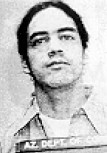
Darrick Gerlaugh
Murderer Ervil LeBaron
Murderer · USA · 1972
Ervil Morrell LeBaron (1925 to August 16, 1981) was the leader of a polygamous…
35 victims
Ervil LeBaron
Murderer · USA · 1972
Ervil Morrell LeBaron (1925 to August 16, 1981) was the leader of a polygamous…
35 victims
 Brian Kevin Rosenfeld
Murderer · USA · 1985
Brian Kevin Rosenfeld Brian Kevin Rosenfeld was sentenced to three concurrent l…
23 victims
Brian Kevin Rosenfeld
Murderer · USA · 1985
Brian Kevin Rosenfeld Brian Kevin Rosenfeld was sentenced to three concurrent l…
23 victims
 Marvin Gray
Murderer · USA · 1975
Marvin Gray was convicted killer who claimed responsibility for 23 slayings and…
23 victims
Marvin Gray
Murderer · USA · 1975
Marvin Gray was convicted killer who claimed responsibility for 23 slayings and…
23 victims
 Yahweh ben Yahweh
Murderer · USA · 1980
Yahweh ben Yahweh was born and legally named Hulon Mitchell Jr. (October 27, 19…
23 victims
Yahweh ben Yahweh
Murderer · USA · 1980
Yahweh ben Yahweh was born and legally named Hulon Mitchell Jr. (October 27, 19…
23 victims
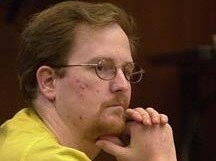 John Eric Armstrong
Serial killer · USA · 1992
John Eric Armstrong was a former USS Nimitz sailor of Dearborn Heights, Michiga…
18 victims
John Eric Armstrong
Serial killer · USA · 1992
John Eric Armstrong was a former USS Nimitz sailor of Dearborn Heights, Michiga…
18 victims
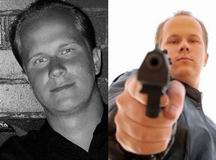 Matti Saari
Mass murderer · Finland · 2008
Matti Juhani Saari committed suicide by shooting himself in the head on 23 Sept…
10 victims
Matti Saari
Mass murderer · Finland · 2008
Matti Juhani Saari committed suicide by shooting himself in the head on 23 Sept…
10 victims
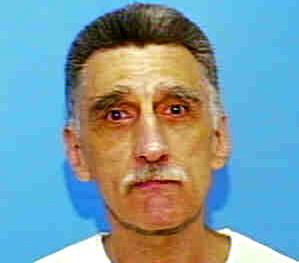 Robert Anthony Buell
Murderer · USA · 1982
Robert Anthony Buell was a former Akron city planner who lived in the nearby to…
1 victim
Robert Anthony Buell
Murderer · USA · 1982
Robert Anthony Buell was a former Akron city planner who lived in the nearby to…
1 victim
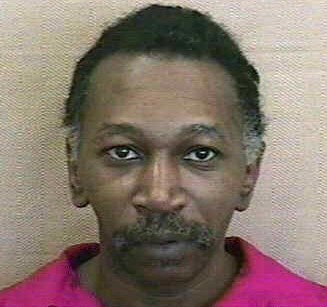 Wendell Flowers
Murderer · USA · 1981
1981 — Wendell Flowers was serving a life sentence for the murder of 81-year-ol…
2 victims
Wendell Flowers
Murderer · USA · 1981
1981 — Wendell Flowers was serving a life sentence for the murder of 81-year-ol…
2 victims
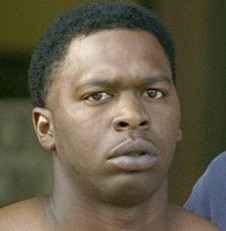 Anthony Bell
Spree killer · 2006
Anthony Bell was convicted of killing his wife and four in-laws in a May 2006 s…
5 victims
Anthony Bell
Spree killer · 2006
Anthony Bell was convicted of killing his wife and four in-laws in a May 2006 s…
5 victims
 Monique Lee
Murderer · USA · 2010
Monique Lee was the tenant whose eviction led to the killing of her landlord, O…
1 victim
Monique Lee
Murderer · USA · 2010
Monique Lee was the tenant whose eviction led to the killing of her landlord, O…
1 victim
- Gender
- male
- Country
- USA
- Location
- Maricopa County, Arizona, USA
- Date of birth
- J une 17, 1960
- Age at first offence
- 20
- Characteristics
- robbery
- Victim profile
- Scott Schwartz (male, 22)
- Method of murder
- St abbing with a screwdriver
- Date(s) of murder
- January 24, 1980
- Years active
- 1980
- Date of arrest
- —
- Status
-
Executed
Executed by lethal injection in Arizona on February 3, 1999
Parties and presiding officials
- Darrick Gerlaugh was the defendant.
- Scott Schwartz was the victim.
- Joseph Encinas and James Matthew Leisure were codefendants.
- Harry Roche was a person who was forced by Gerlaugh to drive in the getaway incident involving a pickup truck.
- Prosecutor: Vince Imbordino.
- Presiding Judge: I. Sylvan Brown.
Timeline
- January 24, 1980 — Scott Schwartz picked up hitchhikers Darrick Gerlaugh, Joseph Encinas, and James Matthew Leisure shortly before midnight.
- January 24, 1980 — Gerlaugh forced Schwartz to drive to a deserted area on the outskirts of Mesa, Arizona; the assault and killing of Schwartz occurred there.
- January 24, 1980 — Gerlaugh and the other men later resumed hitchhiking after Schwartz’s car broke down and were picked up by Harry Roche at about 2:00 a.m.; Gerlaugh forced Roche to stop and then intended to rob him.
- December 15, 1980 — Trial began.
- December 19, 1980 — Jury returned a verdict.
- February 11, 1981 — Sentencing occurred.
- 1987 — Gerlaugh was stabbed twice in the back by another inmate as prisoners returned to their cells from breakfast.
- February 3, 1999 — Gerlaugh was executed by lethal injection in Arizona.
Background
Darrick Gerlaugh picked up by Scott Schwartz shortly before midnight on January 24, 1980. Gerlaugh, Joseph Encinas, and James Matthew Leisure decided to hitchhike from Chandler to Phoenix and rob whoever offered them a ride. Their victim turned out to be Scott Schwartz. Schwartz had a leg injury, wore a leg brace, and used crutches.
Gerlaugh was already on probation for robbery. He was also a Native American prisoner in Arizona, and he later was described as the first Native American executed in Arizona since the death penalty was restored in 1976. Gerlaugh was also described as the first Native American with a death warrant to be allowed an ancient sweat lodge ceremony as part of his last rites. He spent two hours in a sweat lodge before his execution, praying and purifying himself, and he took part in a pipe ceremony.
On the day of execution, Gerlaugh kept his eyes shut while the death warrant was read and had no last words. He was pronounced dead at 7:09 MST. He spent his final hours talking with family members and taking part in American Indian religious rituals.
The offence
The men forced Schwartz at gunpoint to drive to a deserted location on the outskirts of Mesa. They forced Schwartz out of his car. Gerlaugh demanded money and ordered Encinas and Leisure to hold Schwartz on the road so he could run the victim over with the car.
The men repeatedly attacked Schwartz. Gerlaugh drove over Schwartz multiple times using the victim’s car, including using the left rear tyre on Schwartz’s body and revving the engine so the spinning wheel would kill him. When Schwartz seemed to be alive, Gerlaugh and Leisure stabbed him 30 to 40 times in the head, neck, and shoulders with a screwdriver; Leisure also stabbed him additional times described as ten to twenty times.
A pathologist testified that the assaults caused several injuries, any of which would have been fatal. Schwartz suffered numerous fractures, puncture wounds, and internal injuries from his head to his midsection. His entire body was covered with bruises and abrasions.
The men hid Schwartz’s body in a nearby field and covered it with alfalfa. Gerlaugh kept all of the money taken from Schwartz and the men left in Schwartz’s car. When the car broke down, they resumed hitchhiking.
Authorities said Gerlaugh later admitted he intended to rob Harry Roche. After Roche at first refused to stop because the roadside was too muddy, Roche stopped when Gerlaugh pointed a gun at his head. Roche sped away quickly after putting the truck in gear.
Investigation and arrest
The police interrogated Gerlaugh after his arrest, and he confessed to his participation in these crimes. When asked how he felt after he killed Scott Schwartz, he answered: “How do you feel when you kill game?” He added that he did not feel bad at all about killing the victim.
Trial
The case proceeded as a joint trial with Encinas. A jury convicted Gerlaugh of armed robbery, kidnapping, and first degree murder.
Quotations from the trial record included:
- Gerlaugh exclaimed: “You fucked up” and stated, “There’s no bullets in the gun.”
- Gerlaugh said he intended to kill Schwartz so as not to be identified by him for the robbery.
- Gerlaugh’s answer to the police included: “How do you feel when you kill game?”
- Gerlaugh admitted to the probation officer and during other proceedings that he intended robbery as part of hitchhiking.
Verdict
- Verdict was returned on December 19, 1980.
Sentencing
At sentencing on February 11, 1981, the trial judge set out aggravating and mitigating circumstances.
Sentences imposed
- Armed robbery (Count One): 21 years.
- Kidnapping (Count Two): 21 years.
- The sentences as to Counts One and Two were ordered to run concurrently. The sentencing order also provided that the sentences for Counts One and Two run consecutively to the sentences imposed in cause number 103047, and that credit for 377 days served in incarceration prior to sentencing was awarded for Counts One and Two in cause number 110814.
- First degree murder (Count Three): death.
Aggravating circumstances
- Prior conviction punishable by life imprisonment.
- Pecuniary gain.
- Especially heinous/ cruel/depraved.
Mitigating circumstances
- None sufficient to call for leniency.
During the judgment day sentencing proceeding, defense counsel attempted to raise a double jeopardy argument. The sentencing judge denied the request and proceeded with sentencing on Count Three.
Defense counsel made these statements in court:
- “Judge Brown, as to Count Three, I think I would like to state something as to legal cause on that.”
- “For the record, I believe that now that the Court has entered judgment of guilt and sentence as to Counts One and Two, the Court is now prohibited from sentencing my client on Court Three, Harris v. Oklahoma, which is 433 U.S. 682, 97 S.Ct. 2912, 53 L.Ed.2d 1054, a 1977 case wherein the case clearly shows that a conviction for a felony murder bars a trial even for underlying felonies.”
- “What they are talking about of course is that where you have a case where someone is charged with armed robbery and then also charged with a murder felony that you cannot try and convict them on all of those counts.”
- “This court might be well aware of the fact that I made a record many times on the fact that this Court should consider demanding prosecution elect which theory he was going to the jury under, whether it was premeditated murder or murder felony.”
- “This Court did not do that.”
- “This Court did not do that, therefore, again I think we are left in a dilemma that I think must be resolved in favor of my client wherein the Court by virtue of double jeopardy cannot now sentence my client on murder first degree since the Court has sentenced him on the two lesser underlying cases of armed robbery and kidnapping, all arising out of the same circumstance.”
- “That’s all I have as far as the record is concerned, Your Honor.”
The sentencing judge responded:
- “I take it this amounts not only as objection to the legal cause from proceeding with sentencing, but in effect a motion to dismiss at this point the finding of guilt and judgment of guilt entered by the Court and to that extent, your request and motion is denied.”
- “The Court will proceed with sentencing as to Court Three.”
At the presentencing hearing on February 4, 1981, defense counsel commented on the presentence report and supplemental report process. Prosecutor Imbordino responded to counsel’s comments on remorse, and the court made remarks about the seriousness of matters and that every factor was important.
Defense counsel made statements in court:
- “At this time, Your Honor, I have no further witnesses to present to the Court. I have some comments that I would make.”
- “One of the basic reasons I wanted to make some comments today as opposed to waiting is because I have had an opportunity to talk to Ed Delci who is doing the presentence report or who did the presentence report.”
- “It has some notes on the back so I can’t provide the Court with it today, but, perhaps, if he has received it and is able to provide the Court with it, fine.”
- “I forwarded just a brief synopsis of some interviews of some people who had contact with Darrick and was concerned that they be made available to the Court through the Probation Department.”
- “Fine. Thank you.”
- “It concerned not only the report that’s before the Court at this time, but also the presentence report that was written as to my client on his previous conviction of the robbery charge.”
- “And, that was that in both cases the presentence officers have indicated that they saw no particular remorse in my client for either of the acts, for example, this homicide that occurred or for the robbery that occurred in the past.”
- “The thing that concerned me about that is just to tell this Court that there is no remorse.”
- “Surely, someone might want to go a little deeper in that or into that or are we just saying, everyone must show remorse in the same way that, perhaps, you and I might expect someone to, by either expressing outwardly the sorrow or by, you know, outwardly showing physical appearances of remorse; crying, whatever.”
- “And, it seems to me a little superficial just to say that I see the facts of this case.”
- “We know, obviously, one large mitigating circumstance to Mr. Gerlaugh has is his age.”
- “The Court can take that into consideration, but I think that is the only obvious one, that I have a young client.”
- “And, he was young at the time of the commission of this act.”
- “But, I really found nothing and, again, I don’t know if the Court wanted more, but it disturbed me to the point to where I wanted to address myself to it.”
- “That I think there should be something more before this Court.”
- “Whether it is incumbent upon people who find my client has no remorse to say, I think, perhaps, he should be looked at so we can get, possibly, a psychiatric evaluation to determine whether or not, you know, what his makeup is, whether or not there is a remorseful situation involved here and what brought him to commit the acts that occurred.”
- “There just doesn’t seem to be anything, at all, about that.”
- “I didn’t feel and I still don’t, that I am in a position to tell this Court that my client needs psychiatric evaluation for understanding what is going on during his trial, understanding what is going on today or what will go on at his sentencing, because I know he does understand.”
- “He knows by his communications with me what these proceedings are and why they are occurring.”
- “And, yet, I just wanted to address myself to that as to whether or not the Court is going to consider that it wants or desires that further information.”
- “I am not telling you that I think there is a legal ground for it.”
- “I’m not saying that I think that it is error for this Court to sentence him without that type of further information, but I was also disturbed on the fact that there was no contact with my client’s family, no attempts to go out and see something more.”
- “Is there something more to give to this Court as far as mitigating circumstances of my client?”
- “That is my job.”
- “I have done as best as I can.”
- “It is a decision.”
- “That is all I have as far as the record is concerned, Your Honor.”
The trial court made statements in response:
- “I was going to inquire.”
- “Isn’t that one of the purposes of this hearing, to enable the defendant to bring forth to the Court any of the information that he feels has not been presented?”
- “Certainly, I would be happy to listen to anything you have to say regarding your opinions or expressions on remorse you, certainly want to inform the Court of.”
Prosecutor Imbordino made statements:
- “Your Honor, the only thing I would address myself to at this time would be the comment that Mr. Feldhacker on his client’s remorse stated.”
- “The report refers to the statements made by the defendant at the time he was arrested, when he was asked the question by the police officers, how he felt about killing Mr. Schwartz.”
- “And, Mr. Gerlaugh said, ‘It was just like killing an animal.’”
- “He showed no remorse at that time to those police officers.”
- “He was questioned by the Probation Officer on the same thing and, apparently, showed the same lack of reaction, the same lack of remorse.”
- “All I can say is that if he felt it, I don’t know whether it is important to this Court, whether or not he feels remorse, but he, certainly, has had an opportunity to express it and he didn’t do so.”
The court made statements:
- “Every factor is important to this Court and the Court is going to make its determinations based on all the information I have available to me and in accordance with the statutes.”
Defense counsel made remarks about his role and petition for psychiatric evaluation as part of the presentence hearing colloquy, stating:
- “A lot of times there are real problems when we address the Court in an attorney-client relationship-”
- “Today I don’t have anything that I am going to say to the Court about that,”
- “That is all I have, Your Honor.”
Appeals
Gerlaugh appealed the murder conviction and sentence. The case included federal habeas proceedings and appellate review.
Published opinions
- State v. Gerlaugh, 134 Ariz. 164, 654 P.2d 800 (1982).
- State v. Gerlaugh, 135 Ariz. 89, 659 P.2d 642 (1983).
- State v. Gerlaugh, 144 Ariz. 4-49, 698 P.2d 694 (1985).
- Gerlaugh v. Lewis, 898 F. Supp, 1388 (D. Ariz 1995).
- Gerlaugh v. Stewart, 129 F.3d 1027 (9th Cir. 1997).
Federal appeal (Ninth Circuit)
The federal appeal was titled:
- “Darrick Leonard GERLAUGH, Petitioner-Appellant, v. Terry STEWART, Director of Arizona Department of Corrections, Respondent-Appellee.”
- No. 95-99018.
- United States Court of Appeals, Ninth Circuit.
- Argued and Submitted May 23, 1997.
- Decided Nov. 4, 1997.
- Appeal from the United States District Court for the District of Arizona; Roger G. Strand, District Judge, Presiding.
- D.C. No. CV-85-01647-PHX-RGS.
- Before: REINHARDT, THOMPSON and TROTT, Circuit Judges.
- Opinion by Judge TROTT; Partial Concurrence and Partial Dissent by Judge REINHARDT.
The Ninth Circuit affirmed the district court’s denial of the petition for habeas corpus.
The Ninth Circuit addressed multiple claims related to:
- Failure to instruct on lesser included offenses,
- Admission into evidence of a codefendant’s confession,
- Admission of gruesome photos and testimony of Mr. Roche,
- Ineffective assistance of counsel at sentencing,
- Vagueness and application of the especially heinous/cruel/depraved aggravating factor,
- Pecuniary gain aggravator,
- Prior robbery conviction used for eligibility,
- Consideration of mitigating circumstances,
- Proportionality review,
- Claims about post-conviction process not being cognizable in federal habeas.
The Ninth Circuit included a special verdict statement about pecuniary gain:
- “Based upon the recent decisions of the Supreme Court of Arizona interpreting this aggravating circumstance and the fact that the evidence at trial clearly shows that you intended to obtain and did obtain money from the victim as well as the victim’s automobile, the Court finds that the defendant did commit the offense as consideration for the receipt or in the expectation of the receipt of something of pecuniary value.”
The Ninth Circuit also quoted extensive content from the federal proceedings including discussion of the performance of appointed counsel and the Cronic/Strickland issues. A concurring and dissenting opinion by Judge REINHARDT argued that counsel failed to make any closing argument during the penalty phase.
Supreme Court / clemency outcomes during execution proceedings
There was mention of a stay from the 9th Circuit Court of Appeals designed to give defense attorneys time to finish appealing to the U.S. Supreme Court. The U.S. Supreme Court refused to grant a reprieve.
The state clemency board refused to recommend a reprieve. A last-minute request from Gov. Mary Thomas of the Gila River Indian Community to reconvene to hear a plea for mercy was rejected. Arizona Gov. Jane Hull supported the panel’s decision.
Outcome
Gerlaugh was convicted of armed robbery, kidnapping, and first degree murder and was sentenced to death for the murder.
Gerlaugh was executed by lethal injection in Arizona on February 3, 1999.
Other details
Interrogation and confession statements
In addition to the “How do you feel when you kill game?” quotation, the federal narrative included that Gerlaugh:
- intended to commit robbery while hitchhiking,
- made a decision “to kill Mr. Schwartz so as not to be identified by him for the robbery,”
- intended for the left rear wheel strategy to kill him,
- decided to exit the car “to go over and finish killing Mr. Schwartz.” Gerlaugh’s confession was described as detailed and the police interrogated him after arrest, and he confessed to participation.
Distinct figures and ages mentioned
- In one execution-related description, Darrick Gerlaugh was described as “99-02-03” in Florence, with an age of 39 and then 38.
- Scott Schwartz was described as “22-year-old” in one section and as “young man” walking with leg brace and crutches in other sections.
- Gerlaugh’s father and parents testified in mitigation.
Victim-related details
- Schwartz had a motorcycle injury that led to his leg brace and crutches.
- The killing involved the victim’s Lincoln Continental.
- The men took $36 in one section and $37 in another, and the federal narrative described $37.00 in relation to robbery of Schwartz.
Last meal
The last meal was described as:
- New York steak cooked medium rare,
- Worcestershire sauce,
- 2 eggs,
- 8 strips bacon,
- 2 slices bread toasted w/butter,
- ½ pint peppermint ice cream,
- 16 ounces apple juice.
Prison incident
In 1987, Gerlaugh was stabbed twice in the back by another inmate as prisoners returned to their cells from breakfast.
Additional related incident discussed in appeal
A separate incident was described involving Gerlaugh’s participation with codefendant Matthew Leisure four days before the murder in this case: they forcibly entered the car of Tobin Gentry at gunpoint, drove to an isolated desert location, forced the victim to lie on his stomach, and the victim was pumped with four bullets into his back.
Counsel and psychiatric evaluation discussion
The Ninth Circuit discussed claims about the failure to call certain mitigation witnesses (Bertha Parkhurst, Helen Sanders, and Ramona Button) and the failure to use psychological evidence. It also discussed that Gerlaugh did not want to undergo a psychological examination because he did not want someone prying into his mind, and that he did not change his mind later.
Judge REINHARDT’s dissent described counsel’s failure to make a closing argument as a violation under Cronic and relied on the idea that closing argument was required during the penalty phase.
Clerical procedural and publication details included
- Trial began December 15, 1980 and verdict was returned December 19, 1980.
- Sentencing was on February 11, 1981.
- The opinions and federal habeas references were included as listed under “Published opinions.”
Spotted an error, or have more information about this case?