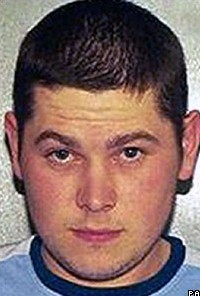
Trevor William Hamilton
Murderer Dale Cregan
Murderer · United Kingdom · 2012
Dale Christopher Cregan (born 6 June 1983) was convicted in the United Kingdom…
4 victims
Dale Cregan
Murderer · United Kingdom · 2012
Dale Christopher Cregan (born 6 June 1983) was convicted in the United Kingdom…
4 victims
 Rahan Arshad
Murderer · United Kingdom · 2006
Rahan Arshad (born 1970) was a taxi driver. He lived at Turves Road, Cheadle Hu…
4 victims
Rahan Arshad
Murderer · United Kingdom · 2006
Rahan Arshad (born 1970) was a taxi driver. He lived at Turves Road, Cheadle Hu…
4 victims
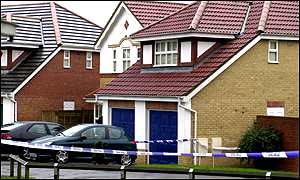 Anthony Smith
Murderer · United Kingdom · 2001
Anthony Smith was a former sergeant in the Coldstream Guards. He had left the C…
3 victims
Anthony Smith
Murderer · United Kingdom · 2001
Anthony Smith was a former sergeant in the Coldstream Guards. He had left the C…
3 victims
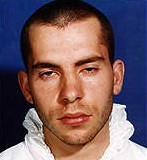 David John Copeland
Murderer · United Kingdom · 1999
David John Copeland was born in Isleworth, in the London Borough of Hounslow, a…
3 victims
David John Copeland
Murderer · United Kingdom · 1999
David John Copeland was born in Isleworth, in the London Borough of Hounslow, a…
3 victims
 Karl Bluestone
Murderer · United Kingdom · 2001
Karl Bluestone was a Gravesend police officer. · 28 August 2001 — Karl Blueston…
3 victims
Karl Bluestone
Murderer · United Kingdom · 2001
Karl Bluestone was a Gravesend police officer. · 28 August 2001 — Karl Blueston…
3 victims
 Genzo Kurita
Serial killer · Japan · 1948
Genzo Kurita ( 栗田 源蔵 , Genzo Kurita , 1926 - October 14, 1959) was a Japanese s…
8 victims
Genzo Kurita
Serial killer · Japan · 1948
Genzo Kurita ( 栗田 源蔵 , Genzo Kurita , 1926 - October 14, 1959) was a Japanese s…
8 victims
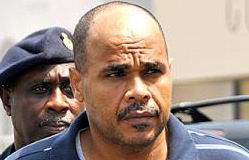 Cyril Darville
Serial killer? · The Bahamas · 1990
Cyril Darville was convicted for a murder committed in 1990. He had a prior rec…
9 victims
Cyril Darville
Serial killer? · The Bahamas · 1990
Cyril Darville was convicted for a murder committed in 1990. He had a prior rec…
9 victims
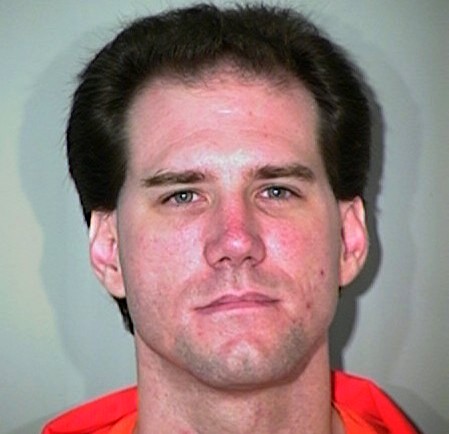 Richard Harley Greenway
Murderer · USA · 1988
27 March 1988 — Greenway and Christopher Lincoln burglarized the Tucson home of…
2 victims
Richard Harley Greenway
Murderer · USA · 1988
27 March 1988 — Greenway and Christopher Lincoln burglarized the Tucson home of…
2 victims
 Spencer Brasure
Murderer · 1996
Spencer Brasure was sentenced to death on August 25, 1998. The state’s highest…
1 victim
Spencer Brasure
Murderer · 1996
Spencer Brasure was sentenced to death on August 25, 1998. The state’s highest…
1 victim
 Donald Eugene Harding
Serial killer · USA · 1979
Donald Eugene Harding was convicted of the January 25, 1980 murders of Robert W…
7 victims
Donald Eugene Harding
Serial killer · USA · 1979
Donald Eugene Harding was convicted of the January 25, 1980 murders of Robert W…
7 victims
- Gender
- male
- Country
- United Kingdom
- Location
- County Donegal, Northern Ireland, United Kingdom
- Date of birth
- J une 19, 1 982
- Characteristics
- convicted rapist, kidnapping
- Victim profile
- Attracta Harron, 65
- Method of murder
- B lows to the head with a heavy object possibly with a cutting edge such as an axe or hatchet
- Date(s) of murder
- December 11, 2003
- Years active
- 2003
- Date of arrest
- March 28, 2004
- Status
-
Life imprisonment
Sentenced to serve 35 years before parole could be considered on August 4, 2006; whole life term ordered with release provisions of Article 5(1) of the 2001 Order not to apply
Case details
Trevor William Hamilton was convicted of the murder of Bridgit Attracta Harron on 12 April 2006 after a trial before a jury which commenced on 27 February 2006.
Hamilton was sentenced by Mr Justice McLaughlin in the Crown Court of Northern Ireland to life imprisonment for the murder of Attracta Harron. The judge ordered that the release provisions of Article 5(1) of the Life Sentences (Northern Ireland) Order 2001 would not apply to him, meaning he would spend the rest of his life in prison.
Timeline
- 11 December 2003 — Attracta Harron left home at 13 Curleyhill Road, Strabane, about 9.00am to walk to Murlough Chapel outside Lifford, County Donegal, to attend morning Mass, intending to walk home and then go shopping with her daughter Eilis; she did not arrive home.
- 16 February 2000 — Offences against Ms H occurred in the vicinity of Sion Mills, County Tyrone in the afternoon; Hamilton later pleaded guilty to one count of rape and the other charges.
- 17 December 1999 — Hamilton was convicted of five counts of indecent behaviour committed between 12 May and 25 June 1998.
- 14 December 2003 — Edward McAuley contacted police, telling them he had seen a woman fitting Mrs Harron’s description in a car sometime between 10am and 11.30am on the day Mrs Harron disappeared.
- 5 April 2004 — Police recovered Attracta Harron’s body from a burial site at the base of the river bank behind Hamilton’s home.
- 11 April 2004 — Attracta Harron was laid to rest in the cemetery attached to Murlog church.
- 12 April 2006 — Hamilton was found guilty of the murder of Attracta Harron.
- 4 August 2006 — Mr Justice McLaughlin sentenced Hamilton to life imprisonment; the judge ordered that release provisions of Article 5(1) of the 2001 Order would not apply.
People
- Trevor William Hamilton — accused; offender.
- Bridgit Attracta Harron — victim; 65 years old; recently retired librarian.
- Michael — husband of Attracta Harron; attended the trial.
- Eilis — daughter of Attracta Harron; planned shopping after Mass; Attracta was completing a prayer cycle on her behalf.
- Camille — daughter of Attracta Harron.
- Mary and Camille — sisters of Attracta Harron.
- Joseph — brother of Attracta Harron.
- Brienin Marie — another daughter of Attracta Harron; was too ill to attend the trial; provided a witness statement before her mother’s body was found.
- Edward McAuley — farmer who contacted police on 14 December 2003 after seeing a woman fitting Mrs Harron’s description in a car.
- Professor Crane — pathology report author quoted by the judge.
- Dr John Rutherford — Forensic Pathologist who reviewed the findings.
- Dr Bownes — Consultant Forensic Psychiatrist; described an “enduring predilection”.
- Dr Hanley — provided psychiatric and psychological reports.
- Acting Chief Inspector Gilmore — led the investigation team in PSNI as referenced by the judge.
- Mr Justice McLaughlin — presiding judge at sentencing.
- Mr Terence Mooney QC — prosecuting counsel.
- Mr Phillip Mooney, QC — senior defence counsel at trial.
- Mr Simon Reid, BL — junior counsel for prosecution.
- Mr Philip Mateer, BL — junior counsel for prosecution.
- Mr Des Fahy, BL — for defence.
- P Fahy and Co, Solicitors — instructed defence.
- Michael Eoin — son of Attracta Harron, referred to in victim impact statements.
Background
Attracta Harron was 65 years old and had retired just a short time before after lengthy and dedicated service as a librarian in Strabane. She was in excellent health, a devoted mother and wife, and was regarded with great affection and respect by all who knew her. She was physically fit and often walked the hills and countryside of Tyrone, Donegal and further afield. Her retirement was an opportunity for a new and fulfilling phase of her life.
She attended church on a daily basis, sang in the choir and participated fully in the life of her church and parish. She maintained a charitable view of people, was trusting of those she met, and was rarely suspicious of their motives. She accepted lifts from strangers.
The offence
Circumstances of disappearance and last known movements
On 11 December 2003, Attracta Harron left home at 13 Curleyhill Road, Strabane, about 9.00am to walk to Murlough Chapel outside Lifford, County Donegal, to attend morning Mass. It was her intention to walk home and then go shopping with her daughter Eilis; she attended Mass but never arrived home.
The trial judge stated that the motive for the original abduction of Mrs Harron was a sexual one and that Hamilton killed her as part of attempts to ensure he would not be caught.
Abduction and killing
Hamilton’s killing of Attracta Harron was found to involve abducting her, almost certainly after offering her a lift when she was close to the centre of Strabane on her way home from Mass. The judge considered that what happened thereafter could be put together only partly, and said it seemed sure that Edward McAuley saw her in Hamilton’s car within a half hour of the last sighting of her in Strabane.
The body was found on 5 April 2004 in a burial site at the base of the river bank behind Hamilton’s home, and when her body was hidden she had been stripped of all her clothes and placed in an animal feed sack. The judge stated that Hamilton burnt not just her clothes and personal effects in his garden but also set fire to his car.
Cause of death and injuries
Attracta Harron died from head injuries. The judge quoted Professor Crane’s report verbatim:
“This was the decomposing body of an adult female of apparent average build and measuring 154 cm (5 feet ½ inch) in height. The autopsy revealed no apparent serious natural disease to cause or accelerate death, however a detailed examination of the internal organs was precluded by the extent of the decomposition. There was a fibroid in the womb but this was just an incidental finding. There was clear evidence that she had sustained head injuries. There was a laceration on the left side of the scalp above the left ear and a further laceration, with clean-cut margins, just behind the pinna of the ear. The skull subjacent to these wounds was badly fractured and the fragments depressed inwards into the liquefying brain. A further laceration was located on the left side of the face extending from the root of the nose to the upper lip and this was associated with fractures of the nasal bones and the upper jaw. Although there was no apparent external injury to the right side of the head there was a fairly extensive curved fracture of the skull here which extended to the upper margin of the bony eye socket. The scalp and facial injuries would suggest at least three blows to the head with a heavy object possibly with a cutting edge such as an axe or hatchet. The damage to the right side of the skull could have been due to a further blow from a blunt object or as a result of counter pressure if one of the blows to the left side of the scalp was inflicted whilst the right side of the head was resting on a hard surface such as the ground. Although the skull was of somewhat less than normal thickness and density the extent of comminution of the bone would nonetheless indicate fairly substantial force having been used. There can be little doubt that these injuries would have been associated with significant damage to the underlying brain sufficient to cause fairly rapid death. No other antemortem injuries were apparent and there was no evidence of sexual assault.”
Dr John Rutherford reviewed the findings and found no significant difference in their opinions. He could find no clear indication of a particular type of weapon used, and suggested that an axe or other similar sharp edged object could have been used; however he would have expected more cleanly cut external wounds and perhaps more linear fracturing of the underlying skull. He broadened the possible “weapon” to include the edge of a brick or stone, a metal bar, a lump hammer or the heel of a boot.
The judge stated that very significant force was used and applied pitilessly with “chilling cruelty” and without regard for the suffering of a helpless woman unable to escape, fight back or otherwise defend herself.
Investigation and evidence presented
Recovery of body and forensic search
Police employed the use of the Victim Recovery Unit dogs from England on 20 February 2004 to detect and alert handlers to the presence of human remains. The court was shown a video without sound of a Springer Spaniel dog examining two cars and a small van before being taken to the Lantra that had been driven by Hamilton and subsequently burned out. The dog began barking and refused to get out once it entered the Lantra, focusing its search on the front passenger and rear seats. Further forensic examination in the rear and passenger compartments detected blood from material taken for examination. A car mat from the rear of the car also contained blood, and the investigation focused on Hamilton, including a comprehensive search of the property at Concess Road and in particular the sites of fires in the garden.
On 5 April 2004, highly trained dogs searched the property and river, and it was through the dogs that the remains were found.
Fires and car search
The Fire Brigade had been called to a car fire at 12.57pm on 11 December 2003 at Hamilton’s home. The call had been made by the aunt of the accused while Hamilton was not at 3 Concess Road at the time. Hamilton claimed to police investigating the fire that he had not left home all day and had access to his own telephone at home. When the Fire Brigade arrived, they were alarmed to find it close to an oil tank. Hamilton’s car was identified as a red Hyundai Lantra.
Prosecution counsel said the assertion that the car had not moved all day was untrue. The police later uncovered evidence that the car had been driven by Hamilton around and into Sion Mills and on roads between Sion Mills and Strabane that day. It was said that the call for the fire was followed by forensic examination where no source of combustion could be discovered, yet forensic examination showed the fire probably began in the front passenger compartment.
Items recovered and connections
Prosecution counsel said that recovered items included rosary beads, blue plasters, a religious text, a business card, red material and an AIB bank receipt. Counsel linked these items to Mrs Harron, stating:
- the rosary beads were identical to a set owned by Mr Harron;
- the bank receipt came from a withdrawal of cash made when Mr and Mrs Harron were at a wedding anniversary function in the south of Ireland on September 5, 2003;
- the business card was from an architect involved in the design of the new library in Strabane who was friends with Mrs Harron;
- the plaster matched those missing from a box of plasters Mrs Harron bought in Lidl and with the same batch number;
- the religious text came from a book of devotions available during a special service at the Church of the Immaculate Conception at Barrack Street or from a local religious shop in Strabane.
Prosecution counsel claimed an attempt was deliberately made to destroy items. Red material taken from the fire was sent for examination together with filaments of fibre taken from the Harron family car; these matched and showed signs of blood. The car mat showed blood traces and a DNA profile matched that of Mrs Harron.
Prosecuting counsel told the silent courtroom:
“You cannot elimiate Mrs Harron as being the person who was the source of the blood on the mat,”
and added:
“The chance of another person being the source of the blood other than Attracta Harron is so minute it can be safely discounted”.
Cell site analysis and phone records
Prosecution counsel said telephone records for Hamilton were examined using “cell site analysis” which showed his claim he was at home all day was incorrect. Counsel said Hamilton knew the house was empty all day because his mother was away all day and his father was out at work.
Maps, pictures, dogs, smells, and grave concealment
Prosecution counsel took the jury through maps and pictures marking sites of the fires, the oil tank, where items were recovered, the location of the stream to the house, and the shallow grave in the river where Mrs Harron’s remains were found. Counsel said a rancid smell, that of rotting flesh, was strong in the area where the grave had been dug, and the area around the discovery had all the hallmarks of not being consistent with the terrain.
Counsel said Mrs Harron’s body was pulled from a hide, concealed by slabs traced back to the back yard at 3 Concess Road. She was stripped naked and placed in a shroud made from a meal sack described as unique to the property, and other identical meal sacks were found at Hamilton’s home.
Post mortem and trauma findings at trial
Pathological examination showed she died from head injuries. It was stated she suffered at least three blows to the head from a heavy object with a cutting edge like that found on an axe or hatchet. The judge later described the State Pathologist conclusion that death was due to blunt trauma and not from natural causes. The trauma caused fractures to the skull and facial bones, and trauma to the brain caused rapid death.
Counsel asked the jury:
“Is it a coincidence her personal items were found in the back garden at Concess Road? Or that the items used to conceal her body were found in the back garden of Concess Road? Or that blood found in the car owned by Hamilton, and apparently destroyed by a mysterious fire on December 11, 2003, within a very short time of the last sighting of Mrs Harron?”
and added:
“It must be an unavoidable fact that the only time Mrs Harron got into that car was on December 11, 2003.”
Arrest and charge
Prosecution counsel said that suspicions of the police fell on Hamilton at an early stage and that he was charged with Mrs Harron’s murder in March 2004 before her body was found.
On 28 March 2004, 21-year-old Trevor Hamilton from near Sion Mills (about 3 miles from Strabane) was charged with Attracta’s murder.
Trial
Jury and court
The court selection process included an unsuccessful attempt by senior defence counsel, Mr Philip Mooney QC, to have the publication or broadcast of media reports suppressed. It was alleged the extensive media interest and reporting might prove prejudicial. A jury of six men and six women was selected to try Hamilton. The case was presided over by His Honour Mr Justice McLaughlin.
Defence position
A court heard that Hamilton, a 23-year-old farmer from Sion Mills, of Concess Road, denies murdering the 65-year-old librarian. He was charged with committing the murder on a date unknown between December 10, 2003, and April 6, 2004.
Hamilton was described as being brought in wearing handcuffs and flanked by two security staff, seated in the dock in front of the public gallery.
Prosecution opening and evidence overview
Prosecuting counsel, Mr Terence Mooney QC, said the evidence he would put before the court was a “clear, coherent and conclusive mixture of circumstantial evidence and forensic science examination”. He stated that when viewed in totality the jury would be left with compelling evidence leaving no room for doubt Hamilton murdered Mrs Harron.
Counsel said pathological and medical evidence would show Mrs Harron sustained blows to the head and face from a blunt instrument causing fractures and “massive damage to the underlying brain”. He stated due to the nature of the injuries the perpetrator intended to kill Mrs Harron and that the issue was whether Hamilton was guilty of the offence.
Counsel told the jury:
“So the issue really before you is not a question of whether or not Mrs Harron was killed...murdered... but the issue is if the accused is guilty of that offence, or that he committed that offence,”
and said:
“I say it is clear the murderer is Hamilton. When you consider the evidence in the case you will have no doubt he is the killer and inflicted the blows upon Mrs Harron that caused her to die.”
Counsel also gave an overview of Mrs Harron’s life, background and habits, stating she was well known in the town and that she made the daily journey from her home in Curley Hill to Murlog and then returned on foot again to Curley Hill to attend Mass.
Counsel described her distinctive clothing:
- a bright red coat and red jumper and grey slacks;
- she carried a handbag.
Counsel said the last time she was seen was about 10.45am as she re-crossed the bridge from Lifford into Strabane, noted passing a garage, and introduced CCTV footage showing her walking past Daly’s shop and filling station in Lifford.
Counsel said that after the CCTV footage the next believed sighting was by a farmer, Edward McAuley.
Edward McAuley’s report to police
Mr Mooney said Edward McAuley contacted police on December 14, 2003 after seeing a woman fitting Mrs Harron’s description in a car between 10am and 11.30am on the day Mrs Harron disappeared as he drove along Orchard Road near Sion Mills on his tractor.
Counsel said the witness recalled a car approaching at speed in the opposite direction. The witness noticed the passenger he believed to be the same woman from missing persons’ reports. Counsel said the witness described “red streaks on her face”, believed to be blood, and that she was moving her hands up and down over her chest. Counsel said the witness noted the woman’s red clothing, blonde hair, and described the car as being similar to his own sister’s.
Submission about the car and lies
Prosecution counsel said Hamilton claimed he had not left home all day and that his later statement was untrue. Counsel said Hamilton had access to his own telephone at home and that no source of combustion could be discovered, yet forensics showed the fire likely began in the front passenger compartment.
Evidence and concluding remarks
Counsel said that Mrs Harron’s body was hidden and concealed by slabs, and that other identical meal sacks were found at Hamilton’s home. Counsel described the injuries and blood evidence and urged the jury that there was no evidence Mrs Harron was alive after December 11.
Counsel stated:
“He lied to try and diminish the risk of a link being made between himself and Mrs Harron. His father was at work, his mother was in Ballymena shopping and he knew that house was vacant and there was no person to disturb him. There is no room for doubt. There is nothing to upset the proposition that we put forward. I put it to the jury that the perpetrator is in the dock, before you at this time. He put Mrs Harron in the car and some time on December 11 he killed her,”
and said there could be no doubt as to identity given the location of the body, personal effects found at Concess Road, the fires and the lies told by Hamilton.
Sentencing
Legal framework described by the judge
Mr Justice McLaughlin stated the determination of punishment was made within the framework of the Life Sentences (Northern Ireland) Order 2001, which came into operation on 8 October 2001. The judge said it required setting a tariff term in cases involving a life sentence for retribution and deterrence, while review commissioners determined release based on whether continued detention protected the public.
The judge discussed a Practice Statement formulated in May 2002 by Lord Wolff LCJ and referenced its status and continued effect in Northern Ireland, including discussion of R v McCandless and Attorney General’s Reference No 6 of 2004.
The judge decided in this case there was no dispute that the higher starting point applied and said he decided the higher starting point of 15/16 years applied.
Mitigation considered
The judge stated that the only possible mitigating factor pointed to was age. At the time of the offence, Hamilton was 21 years 6 months old. The judge stated he functioned in a normal way, enjoyed average intelligence and held down a regular job, and that medical evidence showed he did not suffer from any mental illness or abnormality of personality. The judge did not consider it appropriate to regard age as a mitigating factor.
The judge also stated he had a dreadful criminal record and reviewed it extensively:
- On 17 December 1999, Hamilton had been convicted of five counts of indecent behaviour between 12 May and 25 June 1998, involving exposing himself and masturbating before women drivers.
- He initially denied involvement, pleaded guilty later, then admitted to Dr Fred Browne he began to expose himself when he was 16 and his victims were women in their 20’s driving alone.
- After conviction he was placed on probation and referred to Barnardo’s project for young sexual offenders due to commence in February 2000; this did not occur due to his arrest in connection with rape and other offences committed on 16 February 2000.
- In connection with February 2000 charges, he was convicted of Rape, Attempted Buggery, Indecent Assault on a female (forced oral sexual contact) and making threats to kill.
The judge stated Hamilton served the sentence imposed after his 2000 convictions and was released with 50% remission on 18 August 2003.
Aggravating and other relevant factors found by the judge
The judge found aggravating and other relevant factors: (i) Extremely high culpability due to his previous record including violent sexual offences and credible threats to kill, and “violent and indignity on vulnerable women” described as part of his “stock in trade.” (ii) A pattern showing failure to respond to agencies, with devious behaviour to mislead them, seeking favourable outcomes, including a plea of guilty at the door of the court in the rape case and later assertion of innocence at the murder trial. (iii) Concealment of the body and destruction of evidence in a calculating and systematic fashion, involving great indignity and prolonging the agony of the family; the judge quoted Mr Harron Jnr:
“The fact that he hid her body massively increased my torture as we did not know if she was alive or dead. This uncertainty leads to a false hope that is exceptionally cruel.”
(iv) Abduction when she was alone, despite walking in public; she was held captive for a substantial period and driven in the opposite direction to her home. (v) Advanced state of decomposition when found precluded evidence establishing sexual assault; the judge said he was sure abduction was for a sexual purpose, supported by similarity to previous offending and by Dr Bownes’ description of an enduring predilection. (vi) Vulnerability at age 65: the judge considered a woman of 65 walking alone to be vulnerable under the guidance applied to higher starting point factors.
The judge also referred to the fact that the killing removed the main witness to the abduction and assault, while stating deterrence required recognition of offenders tempted to kill as part of cover up.
Assessment of psychiatric and psychological reports
The judge concluded from psychiatric and psychological reports by Dr Bownes and Dr Hanley that Hamilton had no mental illness, was of average ability, had no apparent antisocial personality disorder, and his mental functioning, judgment and perception were not impaired. The judge noted his upbringing and relationships appeared normal and that counsel for Hamilton did not rely on contents showing mitigation.
Sentence imposed
The judge concluded that a very high tariff figure was justified and described the case as exceptional due to rapid reoffending within months of previous convictions and release, the gravity of the offences committed in 2000, the similarity in circumstances, the death of Mrs Harron, and lack of remorse.
The judge said:
“I shall therefore order you to be sentenced to life imprisonment and that the release provisions of Article 5(1) of the 2001 Order shall not apply to you. This is necessary in my opinion to satisfy the demand for retribution and to deter others from committing such appalling acts. You will in consequence spend the rest of your life in prison.”
Appeals
The provided material contained a separate matter in the Court of Appeal in Northern Ireland: a reference by Her Majesty’s Attorney General for Northern Ireland (No 2 of 2001) (Trevor William Hamilton). It concerned sentences imposed at Enniskillen Crown Court on 19 September 2001 by His Honour Judge Foote QC after Hamilton pleaded guilty to four offences committed against a victim described as a woman in her late twenties.
Charges in the 19 September 2001 sentencing matter
The Court of Appeal listed the counts in the indictment:
- Count 1 — rape;
- Count 4 — attempted buggery, contrary to section 62 of the Offences Against the Person Act 1861;
- Count 5 — indecent assault, contrary to section 52 of the Offences Against the Person Act 1861;
- Count 6 — making a threat to kill, contrary to section 16 of the Offences Against the Person Act 1861.
The judge imposed the same concurrent sentence on each count: a custody probation order consisting of three years and eleven months’ detention in the Young Offenders’ Centre, followed by three years’ supervision by a probation officer. The Court of Appeal noted the incident arose in the vicinity of Sion Mills, Co Tyrone in the afternoon of 16 February 2000.
Outline of the 16 February 2000 incident (as described in the appeal reference)
The victim was waiting in Sion Mills for a bus to take her home to Newtownstewart when Hamilton offered her a lift. Instead of driving directly towards Newtownstewart, Hamilton headed along a country road on the pretext of collecting something from his mother’s house. He stopped in the yard of a house in a rural area, left the victim in the car, returned and got into the car, pushed her down on the seat and leaned on her with his full weight.
The Court of Appeal described abuse, placing his hand over her mouth, squeezing her neck, placing his hand on her private parts, and ignoring her pleas. It recorded his threat: "I'm going to fuck you" and that he dragged her out of the car by her wrist and hair, pulled her into a nearby caravan, closed the caravan doors and pushed her down on a seat, saying repeatedly that he was going to fuck her.
It described him sitting on top of her holding her wrist and squeezing her neck, attempting to kiss her placing his tongue in her mouth, forcibly pulling off much of her clothing, and threatening to kill her, which she believed to be serious. It described him placing his finger inside her vagina, then proceeding to rape her, attempting anal intercourse but being unsuccessful, then raping her again and compelling her to suck his penis, ejaculating over her pubic and abdominal areas. It recorded that the episode went on for about an hour. It said Hamilton required the victim to swear on her son's life that she would not tell the police, saying "He said that he was sorry for the marks on her neck and said that he could not believe what he had done."
It said Hamilton drove her to Newtownstewart and dropped her off, and the victim reported to police and took officers to the scene where Hamilton was working at his car. The Court of Appeal said the number plates had been removed and Hamilton claimed he had not been out in the car and had taken the plates off a couple of days before. It described evidence of clothing washed and Hamilton’s hair cut.
Sentencing considerations in the Court of Appeal reference
The Court of Appeal discussed the educational psychologist’s view of limited intelligence, including the quoted IQ description and its implications.
The Court of Appeal stated that if contested, it would have merited a sentence of 12 years. It stated the lateness of the plea of guilty reduced discount, and it considered a sentence of ten years fully justified. It said it could not regard six years and eleven months as adequate.
It then quashed the unduly lenient sentences and substituted:
- Count 1, rape: custody probation order, consisting of a custodial element of seven years, followed by one year’s probation supervision;
- Count 4, attempted buggery: five years’ imprisonment;
- Count 5, indecent assault: two years’ imprisonment;
- Count 6, making a threat to kill: two years’ imprisonment. All sentences would be concurrent. The probation supervision was to be subject to the condition that Hamilton must attend and participate in a sex offender treatment programme specified by the supervising probation officer and comply with instructions while participating.
The Court of Appeal included a verbatim quotation from the Wolfenden Committee report:
“To preserve public order and decency, to protect the citizen from what is offensive and injurious and to provide sufficient safeguards against exploitation and corruption of others, particularly those who are specially vulnerable because they are young, weak in body or mind, inexperienced or in a state of special physical, official or economic dependence.”
It also included a verbatim quote from R v Molloy:
“The courts must be concerned to protect women against the predatory instinct of males who see them as vulnerable objects for the gratification of their baser desires. We would return to the point which the court adumbrated in R v J M (1997, unreported), that in view of the increasing frequency of cases of rape, the courts will have to give serious consideration to reviewing the starting or baseline figure of seven years for a contested rape. We consider that sentencers should in any event regard it as no more than a general guide, rather than a fixed tariff for rape cases. Certainly in cases where the offence is aggravated by violence, sexual indignities or perversions, the scale should rise steeply and judges should not hesitate to visit such cases with penalties that they consider appropriate.”
Outcome
Hamilton was found guilty of the murder of Attracta Harron on 12 April 2006 and was sentenced on 4 August 2006 to life imprisonment with the release provisions of Article 5(1) of the 2001 Order not applying. The judge stated Hamilton would spend the rest of his life in prison.
The judge also quoted at sentencing that “The manner of her death was callous and brutal in the extreme .. . By whatever mechanism the fatal injuries were inflicted there can be no dispute that very significant force was used and it was applied pitilessly with chilling cruelty and without regard for the suffering of a helpless woman unable to escape, fight back or otherwise defend herself.”
Aftermath
Attracta Harron was laid to rest in the cemetery attached to Murlog church.
During the trial, Attracta Harron’s family was present in the courtroom, including her husband Michael, and the trial proceeded with media coverage and described emotional scenes.


Spotted an error, or have more information about this case?