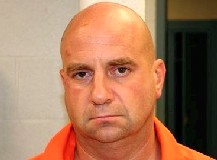
Steven Hayes
Murderer Joshua Wayne Andrews
Murderer · USA · 2000
Joshua Wayne Andrews was a serial killer accused of killing several people in V…
5 victims
Joshua Wayne Andrews
Murderer · USA · 2000
Joshua Wayne Andrews was a serial killer accused of killing several people in V…
5 victims
 Juan Carlos Alvarez
Murderer · USA · 1998
Juan Carlos Alvarez, born on March 9, 1977, in San Luis, Mexico, was a Hispanic…
5 victims
Juan Carlos Alvarez
Murderer · USA · 1998
Juan Carlos Alvarez, born on March 9, 1977, in San Luis, Mexico, was a Hispanic…
5 victims
 Leon Davis Jr.
Murderer · USA · 2007
Leon Davis Jr. was sentenced to death on April 29, 2011, for the execution-styl…
5 victims
Leon Davis Jr.
Murderer · USA · 2007
Leon Davis Jr. was sentenced to death on April 29, 2011, for the execution-styl…
5 victims
 Raymond Lee Oyler
Murderer · USA · 2006
Raymond Lee Oyler was convicted for starting the 2006 Esperanza fire in Riversi…
5 victims
Raymond Lee Oyler
Murderer · USA · 2006
Raymond Lee Oyler was convicted for starting the 2006 Esperanza fire in Riversi…
5 victims
 Terry Lee Hankins
Murderer · USA · 2000
Terry Lee Hankins was convicted by a jury of capital murder and was sentenced t…
5 victims
Terry Lee Hankins
Murderer · USA · 2000
Terry Lee Hankins was convicted by a jury of capital murder and was sentenced t…
5 victims
 Amber Bray
Murderer · USA · 1996
Amber Bray was a 20-year-old former Burbank high school honor student and cheer…
1 victim
Amber Bray
Murderer · USA · 1996
Amber Bray was a 20-year-old former Burbank high school honor student and cheer…
1 victim
 Mark Schwab
Murderer · USA · 1991
Mark Dean Schwab (born December 16, 1968; white; male; hair brown; blue eyes; 6…
1 victim
Mark Schwab
Murderer · USA · 1991
Mark Dean Schwab (born December 16, 1968; white; male; hair brown; blue eyes; 6…
1 victim
 Robert Consalvo
Murderer · 1991
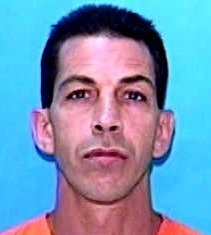
Defendant: Robert Consalvo Victim: Lorraine Pezza · 09/27/91 — Date of offense.…
1 victim
Robert Consalvo
Murderer · 1991
Defendant: Robert Consalvo Victim: Lorraine Pezza · 09/27/91 — Date of offense.…
1 victim
 Lucien Leger
Murderer · France · 1964
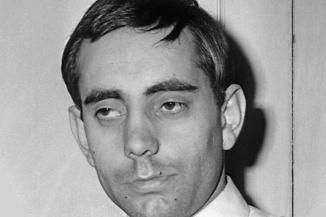
Lucien Léger was a French national who lived in Landas (France). He was describ…
1 victim
Lucien Leger
Murderer · France · 1964
Lucien Léger was a French national who lived in Landas (France). He was describ…
1 victim
- Gender
- male
- Country
- USA
- Location
- Cheshire, Connecticut, USA
- Date of birth
- May 30, 1963
- Age at first offence
- 44
- Characteristics
- abduction, arson, rape, robbery
- Victim profile
- Jennifer Hawke-Petit, 48, and her daughters Hayley Petit, 17, and Michaela Petit, 11
- Method of murder
- Strangulation - Smoke inhalation
- Date(s) of murder
- July 23, 2007
- Years active
- 2007
- Date of arrest
- Same day
- Status
-
Sentenced to death
Sentenced to death on December 2, 2010
Name
Steven Hayes
STATUS / outcome
Steven Hayes was sentenced to death in Connecticut on December 2, 2010. He was found guilty on 16 out of 17 counts related to the home invasion murders of Jennifer Hawke-Petit, age 48, and her daughters Hayley Petit, 17, and Michaela Petit, 11. William Petit, husband / father of the deceased, survived the attack. His sentence included six consecutive death sentences, one for each capital felony conviction, plus an additional 106 years for the remaining charges. The method of execution currently employed by Connecticut was lethal injection, and the state execution chamber was located in the Northern Correctional Institution in Somers.
Timeline
- July 23, 2007 — The Cheshire, Connecticut home invasion murders occurred, in which a mother and her two daughters were murdered during a home invasion in Cheshire, Connecticut.
- July 22, 2007 (late afternoon) — Jennifer Petit and her daughter Michaela went to a local grocery store in Cheshire and picked up food for the evening meal.
- October 5, 2010 — Steven Hayes was found guilty on 16 out of 17 counts related to the home invasion murders.
- November 8, 2010 — The jury returned with a recommendation for Hayes to be executed by the State.
- December 2, 2010 — A Superior Court Judge Jon C. Blue formally imposed six death sentences and a 106-year sentence for other crimes; Blue also gave an official execution date of May 27, 2011.
- May 27, 2011 — Hayes’ official execution date was set by Judge Jon C. Blue.
The offence
On July 23, 2007, during a home invasion in Cheshire, Connecticut, Jennifer Hawke-Petit and her daughters Hayley Petit and Michaela Petit were murdered. William Petit survived the attack after escaping and calling for help.
Investigation of the planned robbery and home invasion
Komisarjevsky targeted Jennifer Hawke-Petit and Michaela Petit at a local supermarket, followed them home, and planned to later rob the family by home invasion. Hayes and Komisarjevsky exchanged text messages that were introduced in court. Hayes’ texts to Komisarjevsky included:
- "I'm chomping at the bit to get started. Need a margarita soon"
- "We still on?"
- "Soon?"
- "Dude, the horses want to get loose. LOL." Komisarjevsky replied:
- "Yes"
- "I'm putting the kid to bed hold your horses"
Hayes’ confession described the plan to rob the house and flee the scene with the family bound and unharmed. Hayes attributed the outcome of the spree to a change in their plan.
Events during the home invasion
Upon early morning arrival, Hayes and Komisarjevsky found William Petit sleeping on a couch on the porch. With a bat Komisarjevsky had found in the yard, Komisarjevsky bludgeoned William and restrained him in the basement at gun point. The children and their mother were each bound and locked in their respective rooms.
Hayes said he and Komisarjevsky were not satisfied with their haul, and that a bankbook was found which had an available balance. Hayes convinced Jennifer Hawke-Petit to withdraw $15,000 from her line of credit.
A gas station's video surveillance showed Hayes purchasing $10 worth of gasoline in two cans he had taken from the Petit home. After returning to the house and unloading the gas, he took her to the bank. Bank surveillance cameras recorded Hawke-Petit informing the teller of her situation. The teller called 911 and reported the details to police. Hawke-Petit left the bank, was picked up by Hayes, who had escorted her there, and drove away. These actions were reported to the 911 dispatcher and recorded in real time. The teller stated that Hawke-Petit had indicated the assailants were "being nice", and she believed they only wanted money. The Cheshire police response began with assessing the situation and setting up a vehicle perimeter; these preliminary measures exhausted more than half an hour and provided time used by the assailants to conclude their modified plan.
Escalation and killings
During this time, Hayes and Komisarjevsky escalated the aggravated nature of their crimes. Komisarjevsky sexually assaulted Michaela, the 11-year-old daughter. Komisarjevsky photographed the sexual assault of the youth on his cell phone, then provoked Hayes to rape Hawke-Petit.
While Hayes was raping Hawke-Petit on the floor of her living room, Komisarjevsky entered the room announcing that William Petit had escaped. Hayes then strangled Hawke-Petit, doused her lifeless body and parts of the house, including the daughters’ rooms, with gasoline. The daughters, while tied to their beds, were both doused with gasoline; each had her head covered with a pillowcase. A fire was then ignited and Hayes and Komisarjevsky fled the scene.
Hayley Petit, 17, and Michaela Petit, 11, died from smoke inhalation. William Petit freed himself, escaped his confines, and called to a neighbor for help. The neighbor indicated he did not recognize Petit due to the severity of Petit's injuries.
In court testimony, William Petit stated that he felt a "jolt of adrenaline" coupled with a need to escape upon hearing one of the perpetrators state: "Don't worry, it's going to be all over in a couple of minutes." Petit also told the jury:
- "I thought, it's now or never because in my mind at that moment, I thought they were going to shoot all of us."
Hayes and Komisarjevsky fled using the Petit family car, were spotted by police surveillance, were pursued, apprehended, and arrested one block away. The whole invasion lasted seven hours. The scenario was revealed in a confession by Hayes just hours after the killings.
Confession details and blame between perpetrators
Detectives testified that Hayes exuded a strong stench of gasoline throughout the interrogation. Each perpetrator blamed or implicated the other as the mastermind and driving force behind the spree. There were attempts to blame William Petit as an accomplice.
A diary kept by Komisarjevsky was entered into evidence and also blamed William, calling him a "coward" and claiming he could have stopped the murders had he wanted to.
Victims
Jennifer Hawke-Petit, age 48, was a nurse and co-director of the health center at Cheshire Academy, a private boarding school. She met her husband, William Petit, in 1985 on a pediatric rotation at Children's Hospital when he was a third-year medical student at the University of Pittsburgh and she was a new nurse.
Hayley Petit, age 17, had just graduated from Miss Porter's School and was scheduled to attend Dartmouth College.
Michaela Petit, age 11, attended the Chase Collegiate School before her death.
William Petit, the sole survivor of the home invasion, was an endocrinologist in Cheshire. He survived by escaping to a neighbor's house despite his injuries. He had not returned to his medical practice since the murders, stating his desire to be active in the foundations set up to honor the memory of his deceased family.
Other details about the trial portrayal of violence and rape
Prosecutors alleged that Komisarjevsky raped Michaela and later forcing her to take a shower before tying her to her bed. Prosecutors alleged that Hayes raped Hawke-Petit before strangling her. Prosecutors alleged the two men set fire to the house by pouring gasoline on and around the girls' bed before fleeing, with Hayes and Komisarjevsky set fire to the house while the girls lay tied to their beds with Hawke-Petit dead on the lower floor of the house.
People
Steven Hayes (perpetrator)
Steven J. Hayes was born May 30, 1963, in Homestead, Florida. He was found guilty on October 5, 2010, on 16 out of 17 counts related to the home invasion murders.
On November 8, 2010, the jury returned with a recommendation for Hayes to be executed by the State. He was formally sentenced to death by Superior Court Judge Jon C. Blue on December 2, 2010.
Hayes was an inmate of the Connecticut Department of Correction. His criminal history showed him sentenced for his first offense at the age of 16. He was incarcerated in the Northern Correctional Institution, which housed the state's death row for men, in Somers.
Connecticut’s execution method was lethal injection, and the state execution chamber was located in the Northern Correctional Institution in Somers.
Joshua Komisarjevsky (accomplice)
Joshua A. Komisarjevsky was Hayes’ accomplice in the home invasion and murder of William Petit’s wife and two daughters. He was born August 10, 1980. Komisarjevsky was adopted by the son of playwright Theodore Komisarjevsky.
Komisarjevsky remained incarcerated at the Walker Reception Center in lieu of a $15 million bond until his conviction. His trial began September 19, 2011. He was convicted on October 13, 2011, on all 17 counts. On December 9, 2011, the jury recommended the death penalty. On January 27, 2012, Komisarjevsky was sentenced to death by lethal injection. Judge Blue set July 20, 2012, as Komisarjevsky’s execution date.
During the hearing, Komisarjevsky insisted he did not intend to kill anyone and spoke about the shame, hurt and disappointment he had caused:
"I will never find peace within. My life will be a continuation of the hurt I caused. The clock is now ticking and I owe a debt I cannot repay."
He said forgiveness was not his to have, and that he needs to forgive his worst enemy—himself.
Trial
Jury composition and deliberations (Hayes guilt phase)
In Hayes’ case, the jury was composed of seven women and five men. In the guilt phase of the Hayes trial, the jury deliberated for about four hours to arrive at its guilty verdicts on the counts that resulted in his conviction on 16 out of 17 counts.
Jury composition and deliberations (Hayes sentencing phase)
The second phase of the trial began on October 18, 2010, in which the jurors who found Hayes guilty decided if Hayes should be executed or face life imprisonment. The second day of jury deliberations started on November 6, 2010.
In the sentencing phase, jurors deliberated for about 17 hours over the course of 3½ days before arriving at their decision.
On November 8, 2010, the jury returned with a recommendation for Steven Hayes to be executed by the State. The jury recommended a death sentence on each of the six capital felony counts for which Hayes was convicted.
Hayes’ attorney’s statements to the jury
Hayes’ attorney Thomas Ullman told the jury that a sentence of life in prison would be the harshest possible punishment for Hayes because he was so tormented by his crimes and would be isolated in prison. Ullman said:
- "Life in prison without the possibility of release is the harshest penalty,"
- "It is a fate worse than death. If you want to end his misery, put him to death,"
- "If you want him to suffer and carry that burden forever, the guilt, shame, and humiliation, sentence him to life without the possibility of release."
Hayes’ reaction and post-traumatic stress assistance
After the verdict, Hayes’ defense attorney stated:
- "Hayes smiled upon hearing the jury's recommendation of a death sentence."
- "He is thrilled. He's very happy with the verdict. That's what he's wanted all along."
The Connecticut state judicial branch offered post-traumatic stress assistance to jurors who served in the triple-murder trial, and a spokesperson confirmed such assistance had never been done before by the state’s judicial branch.
Sentencing
On December 2, 2010, Judge Jon Blue formally imposed six death sentences, one for each of the capital charges Hayes was convicted of. Blue added a sentence of 106 years for other crimes Hayes committed during the home invasion, including kidnapping, burglary, and assault, and finished with:
"This is a terrible sentence, but is, in truth, a sentence you wrote for yourself in flames. May God have mercy on your soul."
Before the sentence, Hayes apologized for the pain and suffering he had caused to the Petit family and added:
"Death for me will be a welcome relief and I hope it will bring some peace and comfort to those who I have hurt so much,"
An official execution date of May 27, 2011 was set by Judge Jon Blue; Blue said the date was a formality because if Hayes appealed, his execution could be delayed for decades.
Appeals
No appeal details were included.
Outcome
Steven Hayes was condemned to death in Connecticut on December 2, 2010.
Joshua Komisarjevsky was sentenced to death by lethal injection on January 27, 2012.
Aftermath
Memorial and fundraising events
In 2007, John Carpenter, an employee of the Chase Collegiate School, ran the New York City Marathon raising $8,554 for the "Miles for Michaela" campaign, a scholarship benefit.
In 2007, William Petit established the Michaela Rose Petit '14 Scholarship Fund of the Chase Collegiate School. He also established the Hayley's Hope & Michaela's Miracle MS Memorial Fund.
On January 6, 2008, over 130,000 luminaria candles were lit in front of thousands of homes across Cheshire in "Cheshire Lights of Hope," a fundraiser for multiple sclerosis and a tribute to the Petit family. Founded by local couple, Don and Jenifer Walsh, the event raised over $100,000 for Hayley's Hope and Michaela's Miracle Memorial funds.
On October 5, 2010, the murder and its aftermath were featured on the newsmagazine show Dateline NBC in a segment entitled "The Family on Sorghum Mill Drive".
On December 9, 2010, William Petit appeared on The Oprah Winfrey Show in a full hour episode about the murders of his family and the work of the Petit Family Foundation established.
Letter claims and related court handling involving Komisarjevsky trial
Steven Hayes wrote a series of letters bragging that he had killed 17 women, made a snuff film documenting one of his alleged murders, and often kept their shoes as morbid trophies. The letters were written by Steven Hayes and were presented as grounds for a mistrial during proceedings related to Joshua Komisarjevsky’s defense. Judge Jon C. Blue denied the request for a mistrial. The letters were alleged to have been sent to a woman named Lynn in Wilson, N.C., and were intercepted by the Connecticut Department of Corrections in early October and handed over to prosecutors. A copy of one letter was leaked to the New Haven Register and excerpts were published.
One excerpt contained the following quote from Hayes:
"I was driving home from a bar when I noticed this girl hitchhiking at the entrance to the highway. She was short, hot and the perfect victim,"
Hayes claimed to have abducted the woman, taken her to a hotel and sexually assaulted her before asphyxiating the woman; the identity was stated as unknown in the material provided.
Hayes described another victim as a "drunk chick" he also picked up hitchhiking. Hayes said he tied her up to his bed for an entire weekend before killing her, and included the quote:
"I got most of it on tape, 16 hours, 2 CD's. By far the best snuff film ever created,"
The letters also alleged, as written in the material provided, that Hayes claimed to have raped dozens of women after using a date-rape drug to knock them out. Hayes claimed his victims were between the ages of 14 and 25. The material provided also included the quote about emotional pleasure from "pain and emotional abuse" his victim went through.
Hayes was described as claiming trophies from all 17 victims, including:
"The 17 kill trophies meant the most to me. Each trophy was one of a kind and completely specific to each victim,"
The trophies were described as sneakers. During Komisarjevsky’s trial, it came to light that a police search of Hayes’ home turned up a number of women’s sneakers.
Hayes criticized Komisarjevsky for his lack of ruthlessness, including the quote:
"I've searched my whole life for someone who could embrace and had the capacity for evil as I possess?I thought I finally found it in Josh. But events show Josh, while (he) had the proper evil intent, lacked in the most serious aspects, commitment and control."
The defense argument mentioned in the material provided stated that Komisarjevsky did not deserve the death penalty because it was Hayes who was responsible for the blood bath. The material provided stated that if Komisarjevsky was sentenced to death, he would join Hayes on Connecticut's death row.
Other details
Execution chamber and institutional details
The Northern Correctional Institution housed Connecticut’s death row for men and contained the state execution chamber in Somers.
Connecticut death penalty legislation context
In 2009, the Connecticut General Assembly sent legislation to abolish the state's death penalty to Governor M. Jodi Rell to be signed into law. On June 5, 2009, Rell vetoed the bill and cited the Cheshire murders as a reason.
On November 8, 2010, Rell issued a statement regarding the jury’s recommendation of a sentence of death for Hayes:
"The crimes that were committed on that brutal July night were so far out of the range of normal understanding that now, more than three years later, we still find it difficult to accept that they happened in one of our communities. I have long believed that there are certain crimes so heinous, so depraved, that society is best served by imposing the ultimate sanction on the criminal. Steven Hayes stands convicted of such crimes – and today the jury has recommended that he should be subjected to the death penalty. I agree"
Rell also reached out to the Petit family and the jurors, and stated that they have "seen and heard terrible things and faced extremely difficult choices." She said they "have served with honor and deserve our appreciation."
Notes sent by jurors
During deliberations, jurors struggled to agree on a sentence for Hayes and sent notes to the judge. The first day of deliberations, jurors asked:
- "What does it mean to unanimously find the existence of a statutory mitigating factor?" After meeting with the judge and resuming deliberations, a second note sought additional clarification on mitigating factors, specifically on mental capacity and "conforming to law."
Aggravating factors described in the material
Aggravating factors included committing the murders during the commission of third-degree burglary and committing the offenses in a "heinous manner, extreme physical or psychological pain above and beyond that which was necessary" and with "grave risk." John Webster, the managing director of the National Prison and Sentencing Consultants Inc., stated:
- "Death row on Somers is very isolated, there is very little human contact,"
Testimony and quotes attributed in the material provided
Detective testimony included that Hayes claimed:
- "Things got out of control." Detective Anthony Buglione testified about Hayes’ plan and emotion.
During William Petit’s testimony, Petit described feeling:
At the time William Petit was escaping, the perpetrator’s statement was:
- "Don't worry, it's going to be all over in a couple of minutes."
Spotted an error, or have more information about this case?