Michael Charles Hayes
Spree killer Bobby Joe Maxwell
Spree killer · USA · 1978
Name: Bobby Joe Maxwell Sex: M Race: B Type: T Motive: PC-nonspecific Method of…
11 victims
Bobby Joe Maxwell
Spree killer · USA · 1978
Name: Bobby Joe Maxwell Sex: M Race: B Type: T Motive: PC-nonspecific Method of…
11 victims
 Manuel Pardo
Spree killer · USA · 1986
Manuel Pardo, Jr. was a former police officer who was convicted of nine counts…
9 victims
Manuel Pardo
Spree killer · USA · 1986
Manuel Pardo, Jr. was a former police officer who was convicted of nine counts…
9 victims
 Michael Alan Silka
Spree killer · USA · 1984
Michael Alan Silka was killed during a shoot-out with the police on May 19, 198…
9 victims
Michael Alan Silka
Spree killer · USA · 1984
Michael Alan Silka was killed during a shoot-out with the police on May 19, 198…
9 victims
 Paul Steven Haigh
Serial killer · Australia · 1978
Paul Steven Haigh was an Australian serial killer. · 1978 — After being paroled…
7 victims
Paul Steven Haigh
Serial killer · Australia · 1978
Paul Steven Haigh was an Australian serial killer. · 1978 — After being paroled…
7 victims
 David Roland Waters
Murderer · USA · 1995
David Roland Waters was an American office manager for American Atheists. He wa…
4 victims
David Roland Waters
Murderer · USA · 1995
David Roland Waters was an American office manager for American Atheists. He wa…
4 victims
 Antuan Bronshtein
Murderer · USA · 1991
Antuan Bronshtein Antuan Bronshtein was born in the Soviet Union (Moldova) in K…
2 victims
Antuan Bronshtein
Murderer · USA · 1991
Antuan Bronshtein Antuan Bronshtein was born in the Soviet Union (Moldova) in K…
2 victims
 Don William Davis
Murderer · USA · 1990
Don William Davis was sentenced to death on March 6, 1992. Trial counsel for Do…
1 victim
Don William Davis
Murderer · USA · 1990
Don William Davis was sentenced to death on March 6, 1992. Trial counsel for Do…
1 victim
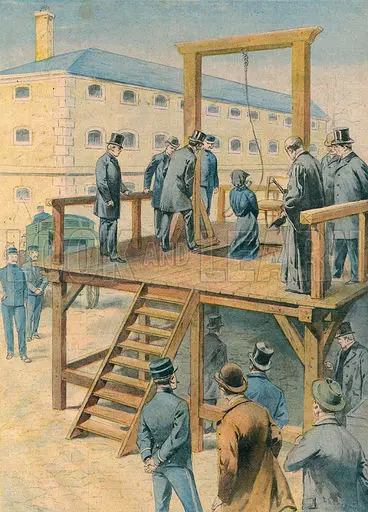 Mary Mabel Rogers
Murderer · USA · 1902
Mary Mabel Rogers (1883 – December 8, 1905) was the last woman legally executed…
1 victim
Mary Mabel Rogers
Murderer · USA · 1902
Mary Mabel Rogers (1883 – December 8, 1905) was the last woman legally executed…
1 victim
- Gender
- male
- Country
- USA
- Location
- Forsyth County, North Carolina, USA
- Date of birth
- January 13, 1964
- Age at first offence
- 24
- Characteristics
- mentally ill, drugs, alcohol, spree killer
- Victim profile
- Crystal Cantrell, Tom Nicholson, Melinda Hayes and Ronnie Hull (passersby)
- Method of murder
- Shooting
- Date(s) of murder
- July 17, 1988
- Years active
- 1988
- Date of arrest
- Same day
- Status
-
Released
Found not guilty by reason of insanity in 1989; committed to the State Mental Hospital in Raleigh; released in 2010
Case record: Michael Charles Hayes
Background
Michael Charles Hayes was born January 13, 1964, in Winston-Salem, NC. Hayes grew up in southern Forsyth County, North Carolina. After beginning to use drugs at age 13, Hayes became known for bullying and self-aggrandizing behavior, fueled by probable mental illness and drug abuse. After bouncing from job to job, Hayes began to work at a business purchased by his parents.
The business was Edwards' Moped Shop, located on Old Salisbury Road in southern Forsyth County, near the Davidson County line. After stealing funds from the business for a number of months, Hayes' parents threatened to sell the business and stop supporting him, an idea that helped to fuel Hayes' break with reality.
Hayes later “explained” his actions by claiming that he believed the passersby were demons that needed to be killed.
Hayes had yearly petitions to be set free that were usually met with protest from the victims' families and scrutiny by the media.
Other details
Hayes’ mental illness and drug abuse included a belief that passersby were demons that needed to be killed.
Hayes was given Haldol at Dorothea Dix State Mental Hospital in Raleigh, a drug often used to reduce aggression or treat schizophrenia. The psychosis went away, and Hayes went off the drug in 1989. Since then, he has never been on medication for mental illness.
In 1998, the N.C. General Assembly made attempts to change the law regarding verdicts of “not guilty by reason of insanity.” The most notable attempt came in 1998, when a handful of Republicans attempted to introduce a bill that would change an insanity verdict to “guilty but insane.” Such a change would allow for incarceration, rather than release, following psychiatric treatment.
In the years since the killings, the area of the killings transformed from rural to suburban, with the addition of shopping centers and subdivisions. The building that housed the moped shop was demolished in the late 1990s to make way for a construction waste landfill. Attempts to erect a memorial to Hayes' victims near the site were unsuccessful.
In September 2007, Hayes was again in the media spotlight after it was revealed that Dix Hospital had allowed him to leave the hospital to work at a Raleigh-area gas station. The gas station fired Hayes after receiving anonymous threats of firebombing the store or killing Hayes while he was working.
At a recent hearing in September 2007, numerous psychiatrists who had cared for Hayes testified that Hayes should be released from custody. On September 27, 2007, Hayes was denied release by Judge Steve Balog, despite testimony from numerous psychiatrists regarding Hayes’ mental stability.
On May 13, 2010, Judge Steve Balog signed an order for the conditional release of Hayes.
The offence
On the night of July 17, 1988, after exhibiting unstable behavior for a few weeks and following police reports of concern over his behavior, Michael Hayes shot nine passersby from the centerline of the darkened road in front of his parents moped shop on Old Salisbury Road. Four of those who were shot died: Crystal Cantrell, Tom Nicholson, Melinda Hayes, and Ronnie Hull.
The moped shop sat near the Forsyth and Davidson County lines, leading to confusion as to which law enforcement agency had jurisdiction.
Hayes was conceded to have killed four people and wounded five more in a 30 minute shooting spree July 17 on Old Salisbury Road.
At trial, Hayes was charged with four counts of first-degree murder and eight counts of assault.
In the Court of Appeals record, Hayes was indicted and tried on 4 counts of first degree murder, 5 counts of felonious assault with a deadly weapon and 2 counts of assault on a law officer.
Investigation
The matter involved police reports of concern over Hayes’ behavior prior to the killings.
Arrest
Hayes was arrested and tried in Forsyth County.
Trial
Hayes’ trial began in Forsyth County on March 27, 1989. The scene became a media circus, resulting in difficulties in trying to seat an impartial jury.
After several weeks of testimony, Hayes' defense attorneys convinced a jury that Hayes was insane at the time of the murders, resulting in a “Not Guilty by Reason of Insanity” verdict.
The jury began its deliberations after heated final arguments. With that and over two hours of instructions on the law from Judge James A. Beaty Jr., the jury began its deliberations. The eight women and four men deliberated from 4:30 to 6 p.m. without reaching a verdict and were to resume at 9:30 a.m.
During closing arguments, Michael A. Grace, who defended Hayes with Davis, stated: “If you find that Michael Hayes was not insane, you are saying there is no such thing as insanity in North Carolina.”
In heated final arguments, prosecutors said Michael Charles Hayes is a “cold, calculating” killer with “no respect for the law, no respect for human life, and no respect for any of God's creatures.” Assistant prosecutor Eric A. Saunders argued that Hayes had been a mean person all his life and said often, using it as a refrain to punctuate lists of incidents intended to show that Hayes is a cruel and amoral person: “He does what he wants to when he wants to, regardless of the consequences,” and “He just doesn't care.”
Saunders also asked: “How many times did he take the Lord's name in vain?” and said: “He said, 'Roll down the "g-- d--" window you "m-- f--"' at least three times, according to the testimony of Darlene Hull.”
District Attorney Warren Sparrow told the jury that Hayes' actions proved that he planned the killings and described Hayes’ purchase of the .22-caliber rifle: “He said that he wanted a larger caliber gun, he wanted a bigger (ammunition) clip for it,” Sparrow said. “He wanted to be, in his own words, a 'killing machine.' ” Sparrow also told the jury: “I submit to you that these are the acts of a person who is cold, cunning and calculating and wants to kill people,” Sparrow said.
In the arguments, Hayes’ attorney Gregory Davis said: “They felt that they had to put on a show for you,” and “They know as well as anybody who has heard this evidence that Mr. Hayes was insane at the time of the incidents.”
Grace said that Saunders was taking “bits and pieces of the case and twisting them” to argue that Hayes was sane. Grace stated: “I'm not going to pull at your emotions, not going to try and wrench sympathy from you for Michael Charles Hayes or anybody else,” and “I don't want to sound like Mr. Saunders, a man who is desperate and tried to convince you in 30 minutes of what you haven't heard from the witness stand. ”
Grace argued: “He was crazy, pure and simple. Use your own best judgment. Use your common sense. Let the truth speak,” Grace said. Grace added quietly: “You have an awesome task.”
Defense attorneys conceded that Hayes killed four people and wounded five more, but said he was insane at the time. The insanity defense succeeded in a first degree murder case in the state only once this century.
Two psychiatrists and a psychologist testified that Hayes suffered from some form of schizophrenia and was incapable of telling right from wrong at the time of the shootings. If the jury accepted those opinions, Hayes should be acquitted of all charges.
Prosecutors said Hayes did know what he was doing that night and described Hayes as a mean, cruel man whose thinking was muddled by constant marijuana use.
Evidence and testimony included that Hayes swore repeatedly during the shootings, Mrs. Hull was wounded, and Ronald Lee Hull was killed. Saunders reminded jurors of Hayes’ call to his friend Alan Kemper during the shootings and quoted: “I got a girl. I'm using her as a range marker,” Saunders said, his voice cracking. Saunders said Hayes’ plea to Kember to “get your gun and help me hold off the police” proved Hayes knew he was doing wrong.
Defense counsel argued that prosecution witnesses also testified that Hayes said bizarre things and acted strangely.
After the closing arguments, Jeffrey Parks, who was shot through the mouth by Hayes, cleaned his nails with a pen-knife through much of the defense arguments. Mrs. Hull shook her head from time to time as the attorneys tried to make their points.
Jeffrey Parks and family members were not moved by the arguments. R.B. Nicholson, whose son was killed, later said that the families listened but no one was moved.
District Attorney Warren Sparrow said afterward that he was satisfied with the way that he and Saunders presented the case and stated: “We did the best we could with the evidence we had,” he said.
Sentencing
Hayes was found not guilty of all charges by reason of insanity in 1989. Hayes was committed to the Dorothea Dix state mental health facility in Raleigh pursuant to G.S. 122C-261, et seq.
The record described Hayes’ appeal of a 1998 order issued after an annual re-commitment hearing pursuant to G.S. 122C-276.1 continuing Hayes' confinement at Dix for another year in order “to ensure the safety of others and . . . to alleviate or cure [Hayes'] mental illness.”
Appeals
Hayes appealed an order entered 27 October 1998 by Judge William Z. Wood in Forsyth County Superior Court. The Court of Appeals heard the case on 27 March 2000.
The Court of Appeals identified counsel: Attorney General Michael F. Easley, by Assistant Attorney General John G. Barnwell, for the State; Karl E. Knudsen for respondent-appellant. Chief Judge EAGLES authored the opinion, and Judges TIMMONS-GOODSON and HUNTER concurred.
The appeal concerned Hayes’ 1998 order after an annual re-commitment hearing.
At Hayes’ hearing for the 1998 re-commitment, Drs. Seymour Halleck and James Bellard (forensic psychiatrists) and Mr. Edwin Mundt (a Dix psychologist) testified that Hayes was not “actively” mentally ill. Hayes’ three experts testified that:
- Hayes exhibited no symptoms of “current, active” psychoses for ten years, or personality disorders for two years, prior to the 1998 re-hearing.
- Hayes’ prior drug and alcohol dependence, which the experts said was the sole cause of Hayes’ psychosis in 1988, had been successfully treated in the uncontrolled setting at Dix, where alcohol and drugs were still obtainable.
- Hayes was “statistically unlikely” to relapse into post-release drug and alcohol abuse.
- Hayes was committed to post-release psychotherapy and attendance at Narcotics Anonymous and Alcoholics Anonymous meetings.
- Hayes’ progress at Dix was attributable to his natural maturation though aging.
Non-physician staff testified to Hayes’ good behavior on his ward, normal interaction with other Dix patients, stable work history, and progress in various treatment programs.
Drs. Halleck, Bellard and Mundt discounted evidence of recent hostile behavior by Hayes: the 1997 “the slaw incident,” in which Hayes “got upset and became angry” with his job supervisor over his co-worker’s premature disposal of coleslaw from the hospital grill where Hayes is employed. The incident resulted in revocation of staff’s recommendation that Hayes be given increased privileges, including “off-campus” job privileges.
Hayes’ experts attributed the aggressive behavior to perfectionism and stress of “being a sane man in a mental hospital,” and considered it an isolated event not symptomatic of continuing mental illness.
On cross-examination, Drs. Halleck and Bellard stated that Hayes had a psychotic disorder in July 1988 and for at least three months thereafter. The record also stated that Hayes killed four people and wounded several others in July 1988.
Drs. Bellard and Halleck testified on cross-examination that through 1996, Hayes suffered from a personality disorder which, prior to July 1988, manifested itself in prolonged use of marijuana to “calm himself down” and several instances of cruelty to animals.
Dr. Halleck conceded that success in controlling drug and alcohol problems at Dix occurred in an environment where there were at least “some controls” and agreed that North Carolina has no formal means of supervising insanity parolees after their release. Dr. Bellard testified that without post-release treatment to help Hayes adjust to the outside world, Hayes “has a risk of returning to drug abuse because he has a history of it.” Mr. Mundt confirmed that early 1990’s testing showed that Hayes posed a serious risk of returning to the “biker lifestyle” if released.
Hayes’ experts testified that while the 1988 violent acts were “relevant” for determining post-release dangerousness, Hayes’ recent progress was a better predictor of danger. Dr. Bellard testified that although he was unaware of a 1992 report that Hayes had expressed a need to arm himself upon his release for his own protection, he believed Hayes no longer felt that way. Based on recent progress, Hayes’ experts concluded Hayes was no longer dangerous.
Other witnesses called by the state included Dr. Margery Sved (director of adult psychiatry at Dix since 1989), Dr. Jonathan Weiner (forensic psychiatry expert appointed to assist the trial court), and Dr. Jarrett Barnnhill (Hayes’ attending psychiatrist). They testified Hayes was still mentally ill and dangerous to others.
When called by Hayes, Dr. Barnhill testified that in Dix’s “structured setting,” Hayes was “highly functional” and currently free of symptoms of psychosis. Dr. Barnhill stated that Hayes posed a risk of relapse into drug addiction, which Dr. Barnhill believed was the sole cause of Hayes’ 1988 psychosis, and continued to display elements of a personality disorder including perfectionism, low tolerance for frustration, and inadequate impulse control, which left Hayes “vulnerable” to stressors present in the outside world.
Drs. Weiner and Sved diagnosed Hayes with a “long-standing,” albeit “markedly diminished,” personality disorder with antisocial and narcissistic traits, and Dr. Barnhill concurred in this diagnosis. Drs. Weiner and Sved reported a sixty percent likelihood that Hayes would relapse into substance abuse/addiction in an uncontrolled setting. They also testified to “suspicio[ns] of others' motives,” “limited” ability to empathize with other people, “perceptions that others will act against him of [sic] in some way out to get him,” and a “defensive, irritable and sarcastic” attitude when receiving “therapeutic feedback.” Drs. Sved and Weiner emphasized continued existence of “stressors” that triggered Hayes’ initial psychosis and increased likelihood of recurrence, including Hayes’ limited physical, emotional and financial ability to care for three children (two of whom were born during Hayes’ confinement) and his girlfriend, who also has “psychological difficulties.”
The state’s witnesses stated that Hayes’ history of violence was the best indicator of whether Hayes posed a danger to others and that there was a reasonable probability Hayes would be a danger if released. Dr. Barnhill stated that given the violent history and high risk of relapse into substance abuse in an uncontrolled setting, he “would probably never feel comfortable saying that [Hayes] is over his addiction[s], over his risk of future aggression, no matter how well he's doing now.”
After Hayes’ two-day hearing, the trial court re-committed Hayes to Dix for another year based on findings numbered No. 3 through No. 8 in the record. Those findings included:
- that at the time of the killings and felonious assaults on July 17, 1988, Hayes suffered from an acute psychotic episode lasting approximately four months from the week before the killings up to and including the time period treated and observed at Dorothea Dix Hospital in October 1988, evidencing a schizophreniform disorder and an Axis I mental illness;
- that although the psychotic phase had apparently not recurred since admission in 1989, it was unclear whether the mental illness would recur should Hayes be released;
- current Axis I diagnoses including “History of Schizophreniform Disorder” (or “History of Psychotic Disorder NOS [not otherwise specified, DSM Code 298.90]”), “Axis I, Cannabis Abuse (abstinent) in a controlled environment,” and “Axis I, Alcohol Dependence (abstinent) in a controlled environment”;
- Axis II personality disorder NOS with anti-social and narcissistic traits, treated but not cured, likely to continue;
- that the mental conditions existed or were related to those existing at the time of the homicides in 1988 and were probably causative factors;
- that the best predictor of future behavior was past behavior, especially the extremely violent homicidal behavior;
- that the four homicides and seven felonious assaults on July 17, 1988 were episodes of dangerousness and that, combined with mental conditions and conduct since July 17, 1988, there was a reasonable probability that seriously violent conduct would be repeated and Hayes would be dangerous;
- that the court found Hayes presently dangerous to others as defined by G.S. 122C-3(11)b.
The appellate decision addressed Hayes’ arguments, including challenges to the definition of “mentally ill” and to due process under Foucha v. Louisiana. The Court of Appeals overruled Hayes’ assignment of error regarding constitutional vagueness and concluded Hayes could still be found “mentally ill” by virtue of diagnosis of a personality disorder. The Court of Appeals also concluded the trial court did not violate Hayes’ right to due process.
The Court of Appeals affirmed the trial court’s order, holding: “Accordingly, we hold that the trial court did not violate Hayes' right to due process.” Judges TIMMONS-GOODSON and HUNTER concurred.
Outcome
The Court of Appeals affirmed. Hayes was committed to Dorothea Dix and later released in 2010.
The legal status for Hayes included release in 2010 after the insanity verdict finding and subsequent commitment and re-commitment proceedings.
Spotted an error, or have more information about this case?