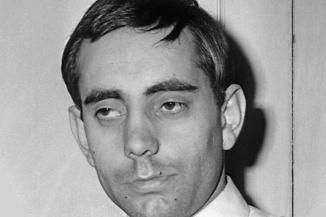
Lucien Leger
Murderer Jean-Laurent Olivier
Murderer · France · 1967
Jean-Laurent Olivier was born in 1944 in the Aisne. He was abandoned very early…
2 victims
Jean-Laurent Olivier
Murderer · France · 1967
Jean-Laurent Olivier was born in 1944 in the Aisne. He was abandoned very early…
2 victims
 Christian Ranucci
Murderer · France · 1974
Christian Ranucci (April 6, 1954 – July 28, 1976) was one of the last people ex…
1 victim
Christian Ranucci
Murderer · France · 1974
Christian Ranucci (April 6, 1954 – July 28, 1976) was one of the last people ex…
1 victim
 Hamida Djandoubi
Murderer · France · 1974
1968 — Hamida Djandoubi started living and working in Marseille, France, as a p…
1 victim
Hamida Djandoubi
Murderer · France · 1974
1968 — Hamida Djandoubi started living and working in Marseille, France, as a p…
1 victim
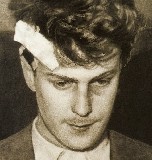 Jacques Fesch
Murderer · France · 1954
Jacques Fesch (April 6, 1930, Saint-Germain-en-Laye – October 1, 1957, La Santé…
1 victim
Jacques Fesch
Murderer · France · 1954
Jacques Fesch (April 6, 1930, Saint-Germain-en-Laye – October 1, 1957, La Santé…
1 victim
 Albert Foulcher
Murderer · France · 1993
Albert Foulcher was described as a former insurance agent and a gun enthusiast.…
5 victims
Albert Foulcher
Murderer · France · 1993
Albert Foulcher was described as a former insurance agent and a gun enthusiast.…
5 victims
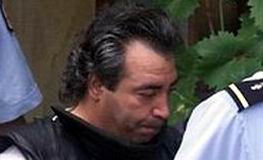 Alfredo Stranieri
Murderer · France · 1997
Alfredo Stranieri (born July 30, 1956) was nicknamed "the killer ads." Alfredo…
4 victims
Alfredo Stranieri
Murderer · France · 1997
Alfredo Stranieri (born July 30, 1956) was nicknamed "the killer ads." Alfredo…
4 victims
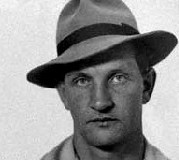 Donald Staley
Murderer · Canada · 1946
Donald Staley was a Canadian army veteran. He was 29 years old and was of Brace…
2 victims
Donald Staley
Murderer · Canada · 1946
Donald Staley was a Canadian army veteran. He was 29 years old and was of Brace…
2 victims
 Juan Salvez Soria
Murderer · USA · 1985
June 28, 1985 — Allen Bolden disappeared; his body was later found in a wooded…
1 victim
Juan Salvez Soria
Murderer · USA · 1985
June 28, 1985 — Allen Bolden disappeared; his body was later found in a wooded…
1 victim
 Orlando Ganal
Mass murderer · USA · 1991
February 15, 1991 — Orlando Ganal Sr. injured his back while working at his job…
4 victims
Orlando Ganal
Mass murderer · USA · 1991
February 15, 1991 — Orlando Ganal Sr. injured his back while working at his job…
4 victims
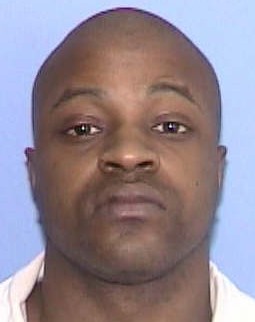 Clifton Lamar Williams
Murderer · USA · 2005
Clifton Lamar Williams (TDCJ Number 999515) was born on 08/23/1983. He was rece…
1 victim
Clifton Lamar Williams
Murderer · USA · 2005
Clifton Lamar Williams (TDCJ Number 999515) was born on 08/23/1983. He was rece…
1 victim
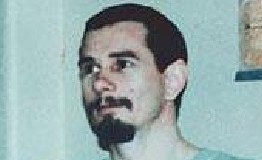 Peter Chester
Murderer · United Kingdom · 1977
Peter Chester (born 1955 in Blackpool, Lancashire, England) was a convicted mur…
1 victim
Peter Chester
Murderer · United Kingdom · 1977
Peter Chester (born 1955 in Blackpool, Lancashire, England) was a convicted mur…
1 victim
- Gender
- male
- Country
- France
- Location
- Paris, France
- Date of birth
- March 30, 1937
- Age at first offence
- 27
- Characteristics
- abduction, mutilation, kidnapping, rape
- Victim profile
- Jean-Luc Taron, aged 11
- Method of murder
- Strangulation
- Date(s) of murder
- May 26, 1964
- Years active
- 1964
- Date of arrest
- J uly 5, 1964
- Status
-
Died in custody
Sentenced to life in prison on May 7, 1966; released on October 3, 2005; died on July 16, 2008
Background
Lucien Léger was a French national who lived in Landas (France). He was described as a male student nurse from the shabby suburb of Villejuif and as a colorless, bespectacled man who wrote banal verse set to borrowed music. He paid to have his songs recorded and issued in a jacket decorated with his face and name.
The offence
Jean-Luc Taron, aged 11, was found face down beneath an oak tree at 5:30 on the morning of May 27. The back of the neck was severely bruised, and Jean-Luc’s nostrils were filled with loam. The case was described as involving smothering the cries of his victim and bringing about death by suffocation.
The killer sent messages indicating he had been the murderer. Jean-Luc had told Chief Inspector Jean Samson how he had run away from home after lifting 15 francs from his mother’s purse. Jean-Luc was tired of doing his homework, and his last assignment had been to conjugate the verb rire, to laugh. When he left his parents’ house on Paris’ middle-class Rue de Naples, he was wearing a tan corduroy jacket and carrying a Bugs Bunny comic book. A spot of mercurochrome on one leg was included in the killer’s reports (“I can no longer remember which,” the killer apologized in a phone call to Agence France-Presse). The boy’s jacket was said to be findable along highway N306 “just before Chatillon going toward Paris.”
The killer’s messages included a dialogue about Jean-Luc’s fear of wolves. Jean-Luc’s businessman father said: “Each time my boy entered a wood, he asked that question.”
The killer taunted police and newspapers with telephone calls, special-delivery letters and threats of another child murder unless he was immediately paid $100,000 in advance ransom. The messages included: “It is because I need money that I killed without pity, and I will kill again. Now I am waiting for the opportunity to snatch my next little child and to receive the ransom money. Afterward, you will no longer hear about me. Remember: ransom or death. Un bonjour de I'ètrangleur [Good day from the strangler].”
Investigation
Chief Inspector Jean Samson of Paris’ First Mobile Brigade investigated the murder. The initial view was that it was one of those senseless, psychotic murders committed by a madman who quickly gives himself away or fades into the anonymity of the city and is never caught.
Within a day, the case took a “bizarre turn.” The killer was described as a brazen publicity seeker who taunted the cops and the newspapers with the barrage of calls and letters and threats. To convince Chief Inspector Samson that he was indeed I’ètrangleur (the strangler), the criminal filled his messages with details that only the murderer could have known. In messages, the killer acknowledged handwriting experts’ description built from his messages, saying: “I do come from a well-educated background (my father was a high civil servant), and I do not lack intelligence.”
He also sent a sketch of the murder scene showing the killer (“me”) and the boy (“him”) in the exact positions Inspector Samson had calculated. An accompanying note said: “Expect another dramatic development.”
To explain the selection of victims and the dialogue about wolves, the killer’s messages referenced Jean-Luc’s fear of wolves and his father’s statement.
The investigation included hundreds of cops checking the route taken by the killer after he picked up Jean-Luc near his home, searching the 15th arrondissement where the killer said he lived, and stopping drivers of Citroen DS 19s, which the killer said he drove.
The killer continued sending messages for 18 days. By then, there had been 26 messages and 13 phone calls after the murder, and the killer remained at large.
Arrest
Léger was described as being trapped by the last bizarre stunt in his succession of bragging phone calls and letters to the police and press. A grey-haired man in his 40s, dressed as a worker, handed Jean-Luc’s Bugs Bunny comic book to a ticket puncher in the Porte de Clignancourt Metro station, then jumped on a train and disappeared. After police searched Léger’s apartment, a squad from the Suûr-eteÚ’s First Mobile Brigade was described as searching his apartment, and they found the lined rose-tinted pad on which all 58 of the strangler’s messages had been written.
Léger sat chatting with detectives at police headquarters. After 24 hours of grilling, Léger burst into tears and admitted: “Oui, je suis bien I'assassin du petit Luc.”
He later explained that he had been drawn to the little boy because: “he seemed as unhappy as I was when I was his age.”
Trial
In July 1964, Lucien Léger was arrested and charged with the abduction and murder of Luc Taron, an 11-year-old boy.
He made a confession while in police custody but retracted it several months later. He protested his innocence ever since.
In a judgment of May 7, 1966, the Seine-et-Oise Assize Court found the applicant guilty of the offences charged and sentenced him to life imprisonment.
Sentencing
Lucien Léger was sentenced to life imprisonment on May 7, 1966.
He became eligible for parole on July 5, 1979 after 15 years in prison. Between 1985 and 1998, he made numerous applications for release, all of which were refused. He also made several unsuccessful applications for a presidential pardon. In 1999 he requested his release on licence, and in January 2001 he made another application for release.
Despite a favourable opinion by the Sentence Enforcement Board, his January 2001 request was turned down by the Minister of Justice.
A parole release request rejected by the Douai Regional Parole Court on July 6, 2001 led to an appeal. On appeal, the National Parole Court upheld the rejection on November 23, 2001. The grounds included that planned rehabilitation had been put in doubt by the intervening bankruptcy of the person who had offered to put him up and give him work, and that he was unwilling to seek counselling even though he presented paranoid tendencies.
In January 2005, he again submitted a request for release on licence. The prison authorities supported the request and the public prosecutor opposed it, pleading in particular the risk that he might re-offend.
Appeals
Lucien Léger made unsuccessful applications in 1971 and 1974 for a retrial.
He also made unsuccessful applications for a presidential pardon. His January 2001 release on licence request was turned down by the Minister of Justice despite a favourable opinion by the Sentence Enforcement Board. His July 6, 2001 parole release rejection was upheld on appeal on November 23, 2001 by the National Parole Court.
Outcome
On October 3, 2005, more than 41 years after sentencing, Lucien Léger was released on licence following a decision that his conduct no longer stood in the way of his release and that the risk of his re-offending had dwindled almost to nothing. The court granted him release on licence subject to classic requirements relating to his place of residence and contacts with the judge responsible for the execution of sentence, along with specific conditions. Those included obligations to submit to medical examinations and treatment, not to distribute any publication or audiovisual work produced or co-produced by himself covering, in whole or in part, the offence committed, and to refrain from any public comment on the offence.
Lucien Léger died on July 16, 2008.
Other details
During a period described as “last week,” Léger was hustled toward the doors of St. Pierre jail by police officers from four police cars in a Versailles square, before a mob burst through police lines and pelted the prisoner with blows. The mob demanded: “Give him to us!” and “Kill the monster!” Léger was described as seeming elated, and he yelled above the uproar: “They're right! 1 am a monster!”
The plan to taunt and provide details through messages included that Léger “modestly acknowledged” the handwriting experts’ description: “I do come from a well-educated background (my father was a high civil servant), and I do not lack intelligence.”
The killer’s messages included Jean-Luc’s location and personal details, including Rue de Naples, Paris; highway N306 just before Chatillon toward Paris; and Porte de Clignancourt Metro station.
In addition, the killer’s communication involved Jean-Luc’s businessman father’s statement about wolves and the killer’s claimed attendance at the boy’s funeral, referenced as: “but I wasn't crazy enough to show myself”.

Spotted an error, or have more information about this case?