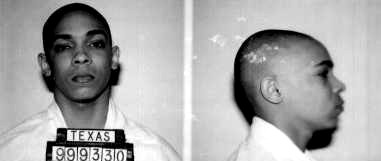
Anthony Haynes
Murderer Russell Ellwood
Murderer · USA · 1991
Russell Ellwood was a former taxi driver. Authorities suspected him of killing…
20 victims
Russell Ellwood
Murderer · USA · 1991
Russell Ellwood was a former taxi driver. Authorities suspected him of killing…
20 victims
 Robert Martines Perez
Murderer · USA · 1994
Name: Robert Martines Perez · Other name used in proceedings: Robert Martinez P…
15 victims
Robert Martines Perez
Murderer · USA · 1994
Name: Robert Martines Perez · Other name used in proceedings: Robert Martinez P…
15 victims
 Billy Frank Vickers
Murderer · USA · 1993
Billy Frank Vickers Vickers was executed by lethal injection in Texas on Januar…
14 victims
Billy Frank Vickers
Murderer · USA · 1993
Billy Frank Vickers Vickers was executed by lethal injection in Texas on Januar…
14 victims
 Richard McCroskey
Mass murderer · USA · 2009
Richard McCroskey pleaded guilty. He was sentenced to life in prison on Septemb…
4 victims
Richard McCroskey
Mass murderer · USA · 2009
Richard McCroskey pleaded guilty. He was sentenced to life in prison on Septemb…
4 victims
 Joseph Christopher Garcia
Murderer · USA · 2000
Joseph Christopher Garcia (TDCJ Number 999441) was convicted of capital murder…
2 victims
Joseph Christopher Garcia
Murderer · USA · 2000
Joseph Christopher Garcia (TDCJ Number 999441) was convicted of capital murder…
2 victims
 Tanya Nelson
Murderer · USA · 2005
Tanya Jaime Nelson (46) — defendant; of Roanoke Rapids, North Carolina; sentenc…
2 victims
Tanya Nelson
Murderer · USA · 2005
Tanya Jaime Nelson (46) — defendant; of Roanoke Rapids, North Carolina; sentenc…
2 victims
 Cory Morris
Serial killer · USA · 2002
Cory Morris was a part-time karaoke disc jockey. Relatives had allowed Morris t…
5 victims
Cory Morris
Serial killer · USA · 2002
Cory Morris was a part-time karaoke disc jockey. Relatives had allowed Morris t…
5 victims
 Pedro Nakada
Serial killer · Peru · 2005
Pedro Nakada, also known as Pedro Pablo Nakada Ludeña and “El Apóstol de la Mue…
25 victims
Pedro Nakada
Serial killer · Peru · 2005
Pedro Nakada, also known as Pedro Pablo Nakada Ludeña and “El Apóstol de la Mue…
25 victims
 Nathaniel Gordon
Homicide · USA · 1860
Nathaniel Gordon (c.1834 – February 21, 1862) was the first and only American s…
29 victims
Nathaniel Gordon
Homicide · USA · 1860
Nathaniel Gordon (c.1834 – February 21, 1862) was the first and only American s…
29 victims
- Gender
- male
- Country
- USA
- Location
- Harris County, Texas, USA
- Date of birth
- January 22, 1979
- Age at first offence
- 19
- Characteristics
- to avoid arrest
- Victim profile
- Kent Kincaid, 40 (off-duty Houston police officer)
- Method of murder
- Shooting
- Date(s) of murder
- May 22, 1998
- Years active
- 1998
- Date of arrest
- 2 days after
- Status
-
Sentenced to death
Sentenced to death on November 3, 1999
Case record
Identification
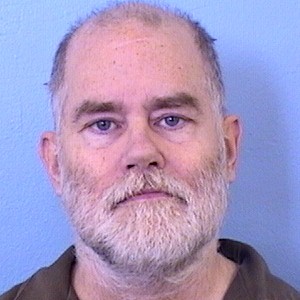
Anthony Haynes (also referred to as Anthony Cardell Haynes) was born on 01/22/1979. He was sentenced to death on November 3, 1999. His TDCJ number was 999330. The date received was 12 (as listed). His education level was 11/03/1999 (as listed). His age was 20 (as listed). His hair color was Brown. His height was 5' 7". His weight was 159. His eye color was Green. He was Native County and Native State (as listed). His race was Black and his gender was Male. His native state and native county were both listed as Harris Texas laborer (as listed).
Prior history and background
Anthony Haynes had no prior prison record (as listed). His prior occupation was Harris Texas laborer (as listed). He had no prior prison record (as listed).
The offence
On May 22, 1998, in Houston, Texas, Anthony Haynes and one co-defendant shot and killed a Houston police officer.
The State of Texas charged Haynes with the capital murder of a peace officer who was “acting in the lawful discharge of an official duty[.]” Tex. Penal Code § 19.03(a) (1). A jury convicted Haynes of capital murder.
Victim
The victim was Houston Police Department Officer Kent Kincaid, who was a white male. The facts also stated that Officer Kent Kincaid died a few hours later. The incident described Officer Kincaid as off-duty, leaving their home in a private vehicle on their way to meet some friends at a sports bar, and driving past a truck driven by Haynes.
Investigation
At around 10:30 p.m. on May 22, 1998, Officer Kent Kincaid and his wife left their home in a private vehicle on their way to meet some friends at a sports bar. As they drove past a truck driven by Haynes, something hit and cracked the Kincaid[s’] windshield. Officer Kincaid thought someone threw a rock at his car; Haynes had actually fired a shot at them.
Officer Kincaid turned his car around and followed Haynes’ vehicle until the two pulled along side each other. Officer Kincaid exited his vehicle, approached Haynes whore mained sitting in his truck, and said “You hit my window.” Haynes replied, “I accidentally threw something at your window.” Officer Kincaid said, “I am a police officer. Let's talk about it.”
After asking for Haynes’ license, [O]fficer Kincaid reached towards his back pocket, presumably to retrieve his police identification. Haynes lifted up a pistol, shot [O]fficer Kincaid in the head, and fled the scene. Officer Kincaid died a few hours later.
The police soon arrested Haynes. Haynes confessed to [O]fficer Kincaid's murder.
Arrest
The police arrested Haynes shortly after the shooting occurred. A separate narrative stated that Haynes was arrested two days after Kincaid's death.
Trial
Charges
Penal Code § 19.03(a) (1).
Verdict
Sentencing hearing
After a separate punishment hearing, the jury answered Texas’s special issues in a manner requiring the imposition of a death sentence.
Haynes was condemned for the 1998 fatal shooting of police Sgt. Kent Kincaid.
Appeals
Haynes unsuccessfully sought state appellate and habeas relief from his conviction and sentence.
The case also involved a federal appeals court decision ordering release or retrial:
- A federal appeals court ordered a Texas death row inmate convicted of killing an off-duty Houston police officer to be released or retried because a prospective juror improperly was excluded from his trial because of race.
- The decision was from the 5th U.S. Circuit Court of Appeals and referenced U.S. Supreme Court precedent from 1986 finding it unconstitutional to dismiss a juror because of race.
- Prosecutors contended the jurors were stricken because of their demeanor, but the appeals court said the district court judge who upheld the juror removals wasn’t even present during the individual questioning of jurors.
- The New Orleans-based court ordered a federal district judge to return Haynes' case to the trial court for a new trial or release him within six months.
The narrative described the trial jury selection and the race issue:
- The jury that convicted and then condemned Haynes included one black person.
- Of six potential black jurors interviewed during the selection process, four were stricken by prosecutors.
- One was eliminated by Haynes' lawyers.
- A second judge was presiding during the individual questioning.
- Wallace was on the bench while the jury pool was questioned as a group.
- There was no explanation for Wallace's absence during the individual questioning.
The ruling was posted late Tuesday and dated in a narrative as March 11, 2009.
Outcome
Anthony Haynes was sentenced to death on November 3, 1999.
A federal appeals court ordered a Texas death row inmate convicted of killing an off-duty Houston police officer be released or retried because a prospective juror improperly was excluded from his trial because of race, and the court ordered a new trial or release him within six months.
Other details
Co-defendants mentioned
The incident described one co-defendant. Co-defendants were named as Turner, Michael.
Publication snippet included verbatim
“Convicted Houston cop killer wins new trial Myssnews.com March 11, 2009 HOUSTON (AP) — A federal appeals court is ordering a Texas death row inmate convicted of killing an off-duty Houston police officer be released or retried because a prospective juror improperly was excluded from his trial because of race. Anthony Cardell Haynes, 30, was condemned for the 1998 fatal shooting of police Sgt. Kent Kincaid. In his appeal to the 5th U.S. Circuit Court of Appeals, Haynes, who is black, contended state District Court Judge Jim Wallace improperly allowed Harris County prosecutors to exclude two black people from consideration as jurors. The ruling violated Haynes' right to a jury process free from racial discrimination, his attorneys argued. The U.S. Supreme Court in 1986 found it unconstitutional to dismiss a juror because of race. Prosecutors contended the jurors were stricken because of their demeanor, but the appeals court said Wallace, who upheld the juror removals, wasn't even present during the individual questioning of jurors. In a ruling posted late Tuesday, the New Orleans-based court ordered a federal district judge to return Haynes' case to the trial court for a new trial or release him within six months. Haynes was arrested two days after Kincaid's death. The 40-year-old officer was off duty, riding with his wife, when the windshield of their car was hit by what authorities later determined was a .25-caliber bullet fired from a passing truck. Kincaid followed the truck and pulled up alongside in northwest Harris County. When he got out and said he was an officer and reached behind to get out his identification, he was shot in the head. Kincaid, a 13-year officer, was not armed at the time of the shooting. Anthony Cardell Haynes home last updates contact”

Spotted an error, or have more information about this case?