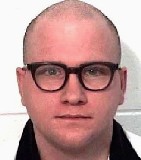
Travis Clinton Hittson
Murderer Brian Kevin Rosenfeld
Murderer · USA · 1985
Brian Kevin Rosenfeld Brian Kevin Rosenfeld was sentenced to three concurrent l…
23 victims
Brian Kevin Rosenfeld
Murderer · USA · 1985
Brian Kevin Rosenfeld Brian Kevin Rosenfeld was sentenced to three concurrent l…
23 victims
 Russell Ellwood
Murderer · USA · 1991
Russell Ellwood was a former taxi driver. Authorities suspected him of killing…
20 victims
Russell Ellwood
Murderer · USA · 1991
Russell Ellwood was a former taxi driver. Authorities suspected him of killing…
20 victims
 Robert Martines Perez
Murderer · USA · 1994
Name: Robert Martines Perez · Other name used in proceedings: Robert Martinez P…
15 victims
Robert Martines Perez
Murderer · USA · 1994
Name: Robert Martines Perez · Other name used in proceedings: Robert Martinez P…
15 victims
 Billy Frank Vickers
Murderer · USA · 1993
Billy Frank Vickers Vickers was executed by lethal injection in Texas on Januar…
14 victims
Billy Frank Vickers
Murderer · USA · 1993
Billy Frank Vickers Vickers was executed by lethal injection in Texas on Januar…
14 victims
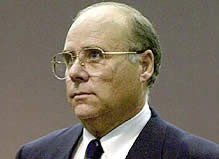 John Edward Robinson
Serial killer · USA · 1984
John Edward Robinson (born December 27, 1943) was an American serial killer. He…
8 victims
John Edward Robinson
Serial killer · USA · 1984
John Edward Robinson (born December 27, 1943) was an American serial killer. He…
8 victims
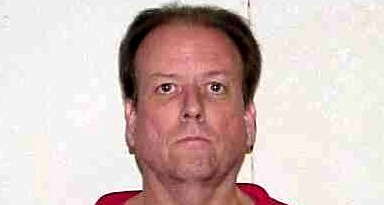 Leif Christian Halvorsen
Murderer · USA · 1983
Leif Christian Halvorsen was sentenced to death on September 15, 1983 in Fayett…
3 victims
Leif Christian Halvorsen
Murderer · USA · 1983
Leif Christian Halvorsen was sentenced to death on September 15, 1983 in Fayett…
3 victims
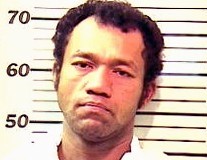 Lam Luong
Mass murderer · USA · 2008
Lam Luong was a Vietnamese refugee who was sentenced to death in Alabama for th…
4 victims
Lam Luong
Mass murderer · USA · 2008
Lam Luong was a Vietnamese refugee who was sentenced to death in Alabama for th…
4 victims
 Leroy Drayton
Murderer · USA · 1984
Leroy Joseph "Ricky" Drayton was executed by lethal injection in South Carolina…
1 victim
Leroy Drayton
Murderer · USA · 1984
Leroy Joseph "Ricky" Drayton was executed by lethal injection in South Carolina…
1 victim
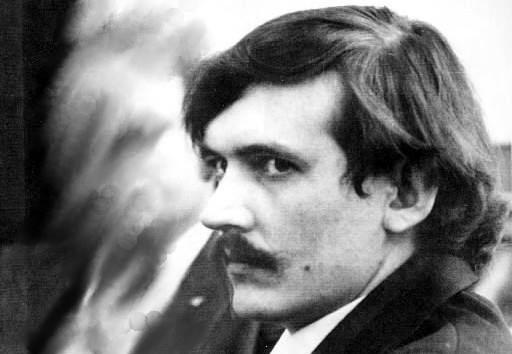 Roger Dale Stafford
Mass murderer · USA · 1978
Roger Dale Stafford was a white man who was 27 when he received death sentences…
9 victims
Roger Dale Stafford
Mass murderer · USA · 1978
Roger Dale Stafford was a white man who was 27 when he received death sentences…
9 victims
 Terri-Lynne McClintic
Murderer · Canada · 2009
Victoria Elizabeth Marie Stafford, an eight-year-old Canadian girl, was abducte…
1 victim
Terri-Lynne McClintic
Murderer · Canada · 2009
Victoria Elizabeth Marie Stafford, an eight-year-old Canadian girl, was abducte…
1 victim
- Gender
- male
- Country
- USA
- Location
- Houston County, Georgia, USA
- Date of birth
- 1971
- Age at first offence
- 22
- Characteristics
- dismemberment, rape?
- Victim profile
- Conway U. Herbeck, 20
- Method of murder
- Shooting
- Date(s) of murder
- April 4, 1993
- Years active
- 1993
- Date of arrest
- —
- Status
-
Sentenced to death
Sentenced to death on March 31, 1993
Case details
Travis Clinton Hittson was convicted of the malice murder of Conway Utterbeck, as well as counts of aggravated assault, theft by taking and possession of a firearm during the commission of a crime. The jury found that the murder was outrageously or wantonly vile, horrible or inhuman in that it involved depravity of mind, OCGA 17-10-30 (b) (7), and recommended that Hittson be sentenced to death. The trial court sentenced Hittson to death for the murder and to terms of years for the remaining convictions.
Hittson was sentenced to death in Houston County in March 1993 for killing 20-year-old Conway U. Herbeck, a fellow sailor. The state appeal challenging the fairness of his trial has been pending since December 1995, and the appeal was captioned HITTSON v. THE STATE. S94P0681. (264 Ga. 682) (449 SE2d 586) (1994) THOMPSON, Justice.
Timeline
- April 3, 1992 — Travis Clinton Hittson, his co-defendant Edward Vollmer and the victim, Conway Utterbeck, left Pensacola, Florida, where they were stationed on the U.S.S. Forrestal, and drove to the home of Vollmer's parents in Warner Robins, Georgia.
- April 4, 1992 — The crimes occurred on April 4, 1992.
- April 5, 1992 — Louise Davidson observed a black Thunderbird with Florida license plates emerging from a seldom used dirt road in Houston County; later, the victim's torso was discovered by loggers in an area off the same dirt road.
- June 16, 1992 — A portion of the victim's remains was discovered, leading to the defendant's indictment on June 30, 1992.
- June 30, 1992 — The defendant was indicted.
- February 1993 — Trial was held.
- March 17, 1993 — The defendant was sentenced on March 17, 1993.
- March 31, 1993 — Hittson was sentenced to death.
- December 7, 1993 — His motion for new trial was denied.
- February 3, 1994 — His case was docketed in this court.
- May 9, 1994 — The case was orally argued.
- October 31, 1994 — Decided.
- December 1, 1994 — Reconsideration denied.
- December 1995 — A state appeal challenging the fairness of his trial had been pending since December 1995.
- Sentenced to death on March 31, 1993 — Hittson was sentenced to death.
Background
Travis Clinton Hittson was 26 at sentencing. Hittson had never been convicted of a felony before the killing.
The victim, Conway Utterbeck (also referred to as Conway U. Herbeck), was 20 years old and was a fellow sailor.
Edward Vollmer was Hittson’s co-defendant.
Hittson was tried in Houston Superior Court before Judge McConnell. The state sought and the jury recommended a death sentence.
The offence
On April 3, 1992, Hittson, Edward Vollmer and the victim, Conway Utterbeck, left Pensacola, Florida, where they were stationed on the U.S.S. Forrestal. They drove to the home of Vollmer's parents in Warner Robins, Georgia. The elder Vollmers were out of town. The three men spent the first night in a shed on the property. They obtained a key to the house from a family friend the following day.
According to statements Hittson subsequently made to law enforcement officers, on the second day of the trip he and Vollmer went to several bars, leaving the victim at the Vollmers' home. As they drove back to the house, Vollmer stated that the victim planned to kill them, and they should "get" him first. Vollmer gave Hittson an aluminum baseball bat. The two entered the house to find the victim dozing.
Hittson stated that, at Vollmer's direction, he struck the victim several times in the head with the baseball bat, then dragged him into the kitchen where Vollmer waited. Hittson stated that the victim screamed, "Travis, whatever have I did to you?" While Vollmer stepped on the victim's hand, Hittson shot him in the head.
Hittson stated that he was "cold" and "had no emotion" when he shot the victim. Approximately two hours later, Hittson stated that Vollmer said they needed to dismember the body in order to get rid of the evidence.
Hittson stated that they used a hacksaw to remove the victim's hands, head and feet, but that he became sick after he removed a hand, and Vollmer completed the dismemberment. Hittson stated that Vollmer acted alone in removing the victim's genitals and carving out his rectum.
Hittson, together with Vollmer, packed the victim's remains in numerous garbage bags. They buried the victim's torso in Houston County, cleaned up the Vollmers' home, and hid the baseball bat in the Vollmers' shed. They then drove back to Pensacola where they buried the rest of the victim's remains.
The medical examiner testified at trial that, in his opinion, the victim died from a single gunshot wound to the head, but that it was not possible to determine whether the dismemberment occurred before or after death.
Investigation
Louise Davidson observed a black Thunderbird with Florida license plates emerging from a seldom used dirt road in Houston County. She suspected wrongdoing and noted the license number. When the victim's torso was discovered two months later by loggers in an area off the same dirt road, police determined that the car previously observed by Davidson belonged to Edward Vollmer.
Relying on information that the victim had gone to Warner Robins just before his disappearance, the Navy contacted the Houston County Sheriff's Department. Representatives of the Sheriff's Department travelled to Pensacola, Florida, and, along with agents from the Naval Investigative Service (NIS), interviewed a number of the victim's shipmates, including Hittson.
Hittson confessed and gave information leading to the discovery of the rest of the victim's remains.
Photographs of the victim's remains were admitted in evidence. The trial judge personally cropped a number of photographs of the victim prior to admitting them in order to make them less objectionable.
Arrest and interrogation
On June 25, 1992, following the discovery of the victim's torso in Houston County, a NIS agent escorted Hittson off ship for an interview with Escambia County, Florida, and Houston County, Georgia law enforcement officers in connection with the victim's disappearance. Some of Hittson's shipmates were similarly interviewed that day, and the NIS followed the same procedure in each case.
Hittson was read his rights under Article 31 (b) of the Uniform Code of Military Justice, informing him of his right to remain silent, his right to an appointed military lawyer, and cautioning him that anything he said could be used against him in a military or judicial proceeding. Hittson subsequently confessed to the murder.
Hittson argued that his confession was the product of an arrest lacking probable cause in violation of the Fourth Amendment and challenged the trial court's denial of his motion to suppress the statements. The trial court found that Hittson was not in custody at the time of his confession. The trial court alternatively found that even if the interview was custodial, there was probable cause to arrest Hittson. The appellate court held it was unnecessary to determine whether there was probable cause because the record supported the trial court’s finding that Hittson was not in custody.
The appellate court stated that other witnesses being interviewed in connection with the victim's disappearance were not in custody and were being treated no differently than Hittson. It also stated that the NIS agent who transported Hittson to the interview testified that had Hittson left the interview, he would have been required to return only if his commanding officer ordered him to do so, and that the record affirmatively showed Hittson was not restrained in any manner.
Hittson argued that the Article 31-B rights did not satisfy Miranda requirements; the appellate court stated that the Article 31-B rights read to Hittson satisfied Miranda requirements and that the record supported the trial court’s finding that Hittson voluntarily waived these rights prior to confessing.
Trial
Hittson was convicted of malice murder of Conway Utterbeck, as well as counts of aggravated assault, theft by taking and possession of a firearm during the commission of a crime.
Mental health evaluation and counseling rights
During trial, the state's psychologist administered Miranda warnings at the beginning of the evaluation, informing Hittson that he had the right to refuse to answer questions about his case, and that anything he said during the evaluation could be used against him during the trial of the case or during sentencing. Hittson stated that he understood the warnings and signed a waiver of rights form.
Hittson’s counsel was not present while the warnings were administered but arrived during the evaluation. The state's psychologist testified that defense counsel was present on the second day of the evaluation when Miranda warnings were again administered, as well as when Hittson made certain statements criticizing the victim.
During the sentencing phase, the defense offered in mitigation testimony of one of Hittson's shipmates that Hittson had admitted killing the victim but seemed to feel remorse. To rebut this, the state called its psychologist. The psychologist testified that when asked to characterize the victim, Hittson called him a "hillbilly" and a profane name.
Hittson argued that the psychologist's testimony violated his Fifth Amendment right against self-incrimination. The appellate court rejected the argument, stating that custodial communications made to a court-appointed mental health expert were testimonial in nature and generally must be preceded by Miranda warnings for the defendant's statements to be admissible during the state's case-in-chief or sentencing phase. The appellate court stated that defense counsel had notice of the evaluation and could be present throughout the proceedings, and that Miranda warnings were properly administered, that Hittson voluntarily waived his right to remain silent, and that Hittson willingly participated in the evaluation.
The appellate court also rejected Hittson’s claim that he waived his Fifth Amendment privilege only to the extent of permitting an evaluation to rebut a possible insanity defense. It also rejected claims that the trial court’s rulings prevented defense counsel from objecting to any part of the evaluation, and it concluded that the state psychologist’s request that Hittson characterize the victim did not exceed the scope of the court-ordered evaluation.
The appellate court also rejected the claim that the Sixth Amendment right to counsel was violated, stating that the trial court had left to defense counsel the decision of whether to be present during the evaluation and that it was undisputed that defense counsel chose to be present during most of the two-day evaluation.
Hittson also argued that his due process rights were violated because the trial court did not inform him that the state's psychologist would be permitted to testify to issues other than mental competency and criminal responsibility. The appellate court rejected the claim, stating that the trial court did not limit the issues upon which the state's expert could testify and that both the oral warnings and signed waiver form notified Hittson that anything he said to the psychologist could be used against him during the state's case-in-chief or during sentencing phase, and that defense counsel was present when Hittson made the statements, so he could not claim surprise.
Mitigation evidence and rebuttal
During the sentencing phase, defense counsel proffered testimony of Mary Shultz, a social worker with a master's degree who had interviewed Hittson's family, friends and teachers. Shultz stated that her testimony would concern Hittson's family history, substance abuse, IQ, and childhood, all of which would explain his behavior.
Following the proffer, defense counsel sought a ruling on whether the state would be able to rebut Shultz's testimony with testimony of a psychologist or psychiatrist. The trial court ruled that to the extent Shultz attempted to testify to Hittson's "psychological behavior" or "mental state," the state would be permitted to put up its own expert to testify "based on the same factors that [Shultz] cited." Defense counsel did not offer Shultz’s testimony at the sentencing trial and later argued that the trial court's ruling prevented the defense from offering relevant mitigating evidence. The appellate court rejected that argument, stating the trial court did not rule any portion of Shultz’s testimony was inadmissible, and that the trial court had ruled only that expert testimony on psychological behavior or mental state could be rebutted.
The appellate court stated that Hittson was not restricted in presenting evidence of family history or substance abuse because the evidence was testified to by a number of Hittson's childhood friends.
Voir dire
Hittson challenged the trial court’s conduct of voir dire in multiple respects. The appellate court addressed each claimed error:
- The appellate court found no error in limiting further questioning about a prospective juror’s feelings on life sentence and parole. The record showed that the juror had stated that when he was a child, his father had been murdered and the killer had been paroled after a short period of time. The trial court informed the juror that there were only two sentencing alternatives in the case, a life sentence or the death penalty, and inquired whether the juror could consider, for the purposes of the proceeding, that "a life sentence means a life sentence." The juror replied that he would.
- The appellate court found no reversible error in the trial court’s handling of questions to prospective juror Marchman about voting to impose the death penalty for an intentional killing, stating the court required the question be asked in context with other questions about mitigating and aggravating circumstances and the juror's ability to follow instructions.
- The appellate court found that the trial court did not prohibit inquiring whether prospective jurors would vote to impose the death penalty in a case of mutilation.
- The appellate court found no error in prohibiting Hittson from asking prospective jurors "under what circumstances" the death penalty should be imposed.
- The appellate court found the record did not support a claim that the trial court refused to allow questioning prospective jurors about considering evidence of intoxication in mitigation.
- The appellate court found no error in the trial court’s treatment of prospective jurors Conine and Minchew, noting Conine’s statement that a murder involving mutilation was the "type of crime" for which he thought the death penalty should be imposed, along with his "open mind." It noted Minchew’s statement that he was not morally capable of returning a death sentence and would be violating God's law if he did so, and that he would follow God's law rather than the trial court's instructions. The trial court denied Hittson’s motion to excuse Conine and granted the state's motion to excuse Minchew.
- The appellate court found the voir dire that lasted eight days and filled more than 2,000 pages of transcript was sufficiently broad to permit the defense to determine impartiality and fairness.
- The appellate court found no grounds for reversing based on failing to remove six jurors for cause, including determinations about Conine and Hatfield being qualified 43rd or later, and that the record did not show Hittson moved to strike prospective juror Willis for cause. It also addressed allegations about prospective jurors Byars, Dawson and Maze, finding equivocation but concluding the record supported the trial court’s findings that each was capable of serving as an impartial juror and would consider both evidence in mitigation and the option of a life sentence.
Sentencing
The jury recommended death.
Hittson argued that his death sentence was disproportionate to the life sentence given to Edward Vollmer, his co-defendant. The appellate court stated that in Hittson’s statement to law enforcement officers he admitted striking the victim with a baseball bat, taking a gun Vollmer offered him, and shooting the victim in the head, and that he assisted Vollmer in dismembering and burying the body, and concealing the crimes. It concluded it could not say that Hittson’s sentence of death was disproportionate to Vollmer’s life sentence and also found it not disproportionate to sentences in comparable cases, referencing OCGA 17-10-35 (c) (3).
The appellate court also addressed the trial court’s charge on mitigating circumstances and found no error.
During deliberations following the sentencing phase, the jury twice inquired whether Hittson would have an opportunity for "freedom" or parole if sentenced to life imprisonment. The trial court informed the jury that a life sentence meant the defendant would serve the remainder of his life in the penitentiary. Defense counsel stated on both occasions he had no objections to the substance of the trial court’s instruction, and Hittson could not object on appeal. The appellate court also found the response was not erroneous, and it found no error in the trial court instructing that the jury could recommend the imposition of the death penalty since the charge made it clear the recommendation would be binding.
The appellate court concluded the evidence supported the jury's finding of the aggravating circumstance and that the death sentence was not imposed as the result of passion, prejudice or other arbitrary factor. It also concluded the death sentence was neither excessive nor disproportionate to penalties imposed in similar cases, considering both the crime and the defendant.
Appeals
Hittson appealed his conviction and sentence.
His appellate claims included challenges to:
- the admissibility and scope of mental evaluation testimony by the state's psychologist,
- alleged Fifth Amendment, Sixth Amendment and due process violations related to counseling and evaluation,
- trial court rulings on mitigation evidence,
- alleged errors in voir dire,
- jury instructions on mitigating circumstances,
- sentencing proportionality compared with Vollmer,
- alleged violation related to providing a copy of statements to the state psychologist less than ten days prior to trial,
- alleged errors during closing arguments,
- alleged errors in handling jury questions about parole during life sentencing,
- alleged errors in jury selection and trial venue procedure under USCR 19.2 (B),
- and alleged instructional or procedural issues in multiple areas addressed by the appellate court.
The appellate court rejected each claim addressed and affirmed the imposition of the death sentence.
The decision was DECIDED OCTOBER 31, 1994 and RECONSIDERATION DENIED DECEMBER 1, 1994.
Other details
The trial court was referenced as being in Houston Superior Court before Judge McConnell.
The appellate opinion included an appendix listing comparable cases: Black v. State, 261 Ga. 791 (410 SE2d 740) (1991); Hall v. State, 261 Ga. 778 (415 SE2d 158) (1991); Todd v. State, 261 Ga. 766 (410 SE2d 725) (1991); Conklin v. State, 254 Ga. 558 (331 SE2d 532) (1985); West v. State, 252 Ga. 156 (313 SE2d 67) (1984); Cervi v. State, 248 Ga. 325 (282 SE2d 629) (1981); Baker v. State, 243 Ga. 710 (257 SE2d 192) (1979); Stanley v. State, 240 Ga. 341 (241 SE2d 173) (1977).
Prosecution included Edward D. Lukemire, District Attorney, and appellate counsel included Michael J. Bowers, Attorney General, Susan V. Boleyn, Senior Assistant Attorney General, Paige M. Reese, Assistant Attorney General, for appellee. Stephen N. Hollomon, Williams, Sammons & Sammons, Walter G. Sammons, Jr., represented appellant.
Notes included that the crimes occurred on April 4, 1992; a portion of the victim's remains was discovered on June 16, 1992, leading to the defendant's indictment on June 30, 1992; trial was held during February 1993; the defendant was sentenced on March 17, 1993; his motion for new trial was denied on December 7, 1993; the case was docketed on February 3, 1994; extensions of time were granted; and the defendant’s case was orally argued on May 9, 1994.

Spotted an error, or have more information about this case?