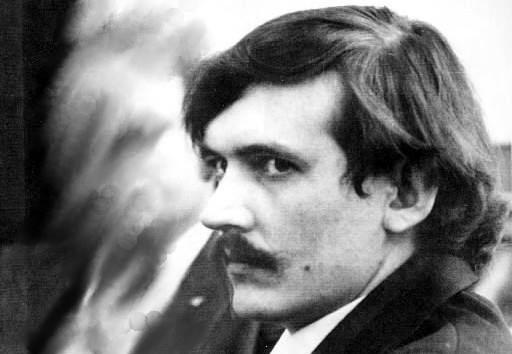
Roger Dale Stafford
Mass murderer David Burke
Mass murderer · USA · 1987
David Augustus Burke (May 18, 1952–December 7, 1987) was an employee of USAir,…
43 victims
David Burke
Mass murderer · USA · 1987
David Augustus Burke (May 18, 1952–December 7, 1987) was an employee of USAir,…
43 victims
 James Huberty
Mass murderer · USA · 1984
James Oliver Huberty was a 41-year-old unemployed security guard. He was born i…
21 victims
James Huberty
Mass murderer · USA · 1984
James Oliver Huberty was a 41-year-old unemployed security guard. He was born i…
21 victims
 Ronald Gene Simmons
Mass murderer · USA · 1987
Ronald Gene Simmons was a retired United States Air Force sergeant. Over the Ch…
16 victims
Ronald Gene Simmons
Mass murderer · USA · 1987
Ronald Gene Simmons was a retired United States Air Force sergeant. Over the Ch…
16 victims
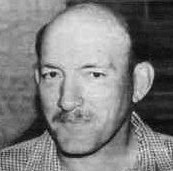 Patrick Henry Sherrill
Mass murderer · USA · 1986
Patrick Henry Sherrill Patrick Henry Sherrill committed suicide by shooting him…
14 victims
Patrick Henry Sherrill
Mass murderer · USA · 1986
Patrick Henry Sherrill Patrick Henry Sherrill committed suicide by shooting him…
14 victims
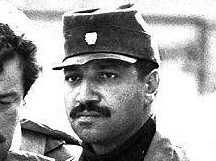 George Emil Banks
Mass murderer · USA · 1982
George Emil Banks was an American mass murderer and a former Camp Hill prison g…
13 victims
George Emil Banks
Mass murderer · USA · 1982
George Emil Banks was an American mass murderer and a former Camp Hill prison g…
13 victims
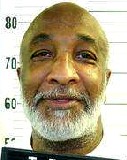 Walter Lee Caruthers
Murderer · USA · 1980
Walter Lee Caruthers was the defendant. Reginald Watkins was his co-defendant.…
1 victim
Walter Lee Caruthers
Murderer · USA · 1980
Walter Lee Caruthers was the defendant. Reginald Watkins was his co-defendant.…
1 victim
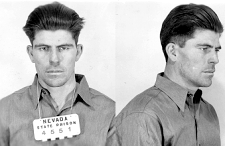 Raymond Plunkett
Murderer · USA · 1942
Raymond Plunkett was executed in the Nevada State Prison on June 30, 1944. He w…
1 victim
Raymond Plunkett
Murderer · USA · 1942
Raymond Plunkett was executed in the Nevada State Prison on June 30, 1944. He w…
1 victim
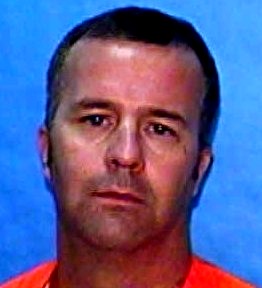 Leo Edward Perry
Murderer · USA · 1997
Leo Edward Perry was sentenced to death for the 02/21/97 murder of John Johnson…
1 victim
Leo Edward Perry
Murderer · USA · 1997
Leo Edward Perry was sentenced to death for the 02/21/97 murder of John Johnson…
1 victim
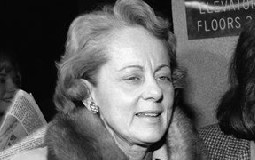 Jean Harris
Murderer · USA · 1980
Jean S. Harris was born Jean Struven in 1923 in Cleveland, USA. Her mother, Mil…
1 victim
Jean Harris
Murderer · USA · 1980
Jean S. Harris was born Jean Struven in 1923 in Cleveland, USA. Her mother, Mil…
1 victim
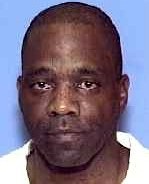 Robert Charles Ladd
Murderer · USA · 1978
Robert Charles Ladd was a Black man. He had black hair. Ladd had prior prison r…
4 victims
Robert Charles Ladd
Murderer · USA · 1978
Robert Charles Ladd was a Black man. He had black hair. Ladd had prior prison r…
4 victims
- Gender
- male
- Country
- USA
- Location
- Texas / Oklahoma, USA
- Date of birth
- 1951
- Age at first offence
- 27
- Characteristics
- robbery
- Victim profile
- Melvin Lorenz, 38, his wife, Linda, 31, and their son, Richard, 12 / Isaac Freeman, Louis Zacarias, Terri Horst, David Salsman, Anthony Tew and David Lindsey
- Method of murder
- Shooting
- Date(s) of murder
- June 22 /July 16, 1978
- Years active
- 1978
- Date of arrest
- March 13, 1979
- Status
-
Executed
Executed by lethal injection in Oklahoma on July 1, 1995
Case overview
Roger Dale Stafford was a white man who was 27 when he received death sentences. He was convicted of murders and sentenced to death in Oklahoma County, and he was later executed in Oklahoma by lethal injection on July 1, 1995.
Stafford was best known for killing six people in an Oklahoma City restaurant, including five teenagers, and for killing three members of a Texas family, including a 10-year-old boy.
Timeline
- June 22, 1978 — Stafford, his wife Verna Stafford, and his brother Harold Stafford drove from Tulsa to Oklahoma City to rob the Sirloin Stockade Restaurant; they waited until customers had left and then left their automobile and Roger Stafford knocked on the side door at around 10:00 p.m.
- June 22, 1978 — Bodies of Air Force Tech. Sgt. Melvin Lorenz, 38, and his wife Staff Sgt. Linda Lorenz, 31, were found near Purcell; their pickup and son were missing.
- June 24, 1978 — Authorities found Richard Lorenz, 12, about a mile from where his parents were found.
- July 16, 1978 — The trio drove from Tulsa to Oklahoma City; six employees of the Sirloin Stockade were herded into a walk-in freezer and shot about 10:45 p.m.
- July 23, 1978 — Harold Stafford died in a motorcycle accident in Tulsa.
- July 24, 1978 — Police began checking for links between the two cases.
- Jan. 2, 1979 — The OSBI released three composite sketches.
- Jan. 3, 1979 — A drunken Roger Dale Stafford made an anonymous call to the OSBI, saying he met two of the people in the composites; he gave names: Verna and Harold Stafford.
- March 13, 1979 — Roger Dale Stafford was arrested in a YMCA lobby in Chicago; he was returned to Oklahoma City the next day.
- Aug. 2, 1979 — Roger Dale Stafford was ordered to stand trial for the steakhouse murders.
- Oct. 17, 1979 — An Oklahoma County jury convicted Stafford and sentenced him to death.
- Dec. 20, 1979 — The Court of Criminal Appeals granted the first of numerous stays of execution.
- March 7, 1980 — A jury convicted Stafford of the Lorenz killings and sentenced him to death.
- April 2, 1984 — Fifteen hours before he was to be executed for the Lorenz killings, Roger Dale Stafford won a delay from the U.S. Supreme Court.
- Aug. 7, 1989 — A judge told Verna Stafford: "There's one of the hottest corners of hell vacant, with your name right above it," and sentenced her to two consecutive life terms.
- May 30, 1995 — Prison officials notified Roger Dale Stafford that his execution date was 30 days away and urged him to make arrangements.
- July 1, 1995 — Stafford was executed after 15 1/2 years on death row.
Background
Stafford’s death sentences arose from two separate incidents: the robbery and murder of three members of the Lorenz family in McClain County and the robbery and murder of six employees of the Sirloin Stockade in Oklahoma County.
The offences
Lorenz family murders (Interstate 35 near Purcell)
One account described Melvin Lorenz, 38, and his wife Linda Lorenz, 31, as Air Force sergeants traveling from their duty station in San Antonio, Texas, and heading north from there to attend the funeral of Melvin Lorenz’s mother. As they drove north, they passed through Purcell, Okla., and stopped on Interstate 35 near Purcell to help a woman whose car appeared to have trouble.
The woman was Verna Stafford, then wife of Roger Stafford. Roger Stafford and his brother Harold were described as lurking out of sight. When Melvin Lorenz walked over, Verna Stafford later described Roger confronting Melvin with a gun. She testified that Roger demanded his wallet, that Melvin would not give it to him, and that Roger was upset and shot him. She testified that Linda Lorenz tried to hit Verna but Verna fought back and that Verna caught Linda on the side of the face and lost her balance and Roger shot her.
The killers then heard a child’s voice calling for its mother and father from a camper atop the pickup truck, referring to Richard Lorenz. Verna Stafford testified that Roger said something to the effect that they should not leave anyone behind as a witness. Roger then used a knife to cut a hole in a screen in the camper and fired, killing Richard Lorenz.
The killers dumped the bodies of Melvin and Linda in a field beside the road. The crime was described as taking about 20 minutes. The trio then drove down the road, stopped, and heaved Richard’s body in a field.
They then drove to Will Rogers Airport in Oklahoma City and abandoned the truck, but not before stopping at a Stillwater restaurant for a bite to eat. Verna added that Lorenz had offered to give the Stafford some of his money, but not all of it.
Another account described Stafford’s netted money in the Lorenz episode as about $600. It also described that the Staffords then drove in the Lorenzes’ pickup until after the July 16, 1978 killings at the Oklahoma City steakhouse.
In the Lorenz episode, Melvin Lorenz was killed, Linda Lorenz was killed, and Richard Lorenz was killed. The victims’ ages were reported as 38, 31, and 12/13 in different passages.
Sirloin Stockade restaurant murders (Oklahoma City)
On July 16, 1978, Stafford, his wife Verna Stafford, and his brother Harold Stafford drove from Tulsa to Oklahoma City to rob the Sirloin Stockade Restaurant. The trio waited in the restaurant parking lot until all customers had left. Around 10:00 p.m., they exited their automobile; Roger Stafford knocked on the side door of the restaurant. The manager answered and was greeted by Roger and Harold Stafford pointing guns at him.
They forced the manager to take them to the cash register and the office safe. Inside the restaurant, the manager began taunting them, stating he could not understand why people rob others instead of working for themselves. Roger Stafford hit the manager and demanded that he call his employees to the cash register. Harold and Verna held the employees at gun point while Roger and the manager emptied the office safe containing about $1,290.00.
After they obtained the money, employees were ordered inside the restaurant’s walk-in freezer. The appellant asked Harold Stafford to help him in the freezer. Harold reminded the appellant that no one was to be hurt. The appellant responded: "they are going to get what they deserve." The appellant then shot the only black employee, and both men opened fire on the remaining employees. Verna Stafford testified that she heard a lot of gunfire and screaming.
Roger Stafford then told Verna that it was time for her to take part, placed his gun in Verna’s hand, and helped her pull the trigger. The court record states that all six Sirloin Stockade employees died as a result of the shootings.
Victims identified in the account were the manager and five employees: the manager Louis Zacarias, and four teenage employees Terri Horst, David Salsman, Anthony Tew, and David Lindsey. Another passage also referred to Isaac Freeman as a janitor whom Roger Stafford first killed during the restaurant murders and referenced a sequence where he then and his brother began shooting the others.
The robbers got away with about $1,200 in one passage.
Motive, planning, and role attribution
Verna Stafford later testified in court that her idea was to lure robbery victims by posing as a stranded motorist. She stated that she and her husband needed money to pay for a place to live in Tulsa with their three children. Harold’s motive in participating was described as getting money to pay for an abortion for his girl friend. Another passage said their original plan called for Roger and Harold to rob a store, but their targets were too busy, and they later considered robbing motels in Pauls Valley.
The court described that Stafford planned the armed robbery and carefully planned the crime. The evidence was also described as showing that the attack included forcing victims into a freezer and shooting them to death.
One passage described Stafford’s jail-cell statements to a cellmate. It quoted Stafford saying he “just banged away” when the time came to fire on the Lorenz family and stated that the age of his victims didn’t matter, adding: “It didn’t make any difference whether the person was 2 or 82,” attributed to a witness remembering Stafford saying it.
Investigation and arrest
Investigators followed leads in five states for six months and found no one. On Jan. 3, 1979, police received an anonymous phone call later traced to a drunken Roger Stafford. Stafford named his wife and brother as the killers. Police eventually traced Verna to Chicago, where they arrested her. Police arrested Roger Stafford in a YMCA lobby in Chicago on March 13, 1979. The timing of his return to Oklahoma City the next day was reported.
Another account described that in fleeing the Sirloin Stockade murders, they nearly crashed their beat-up station wagon into another vehicle; the driver managed to get a good look at the man behind the wheel, identified as Roger Stafford. A man waiting to pick up his girlfriend who worked at the restaurant (and who was one of the victims) gave a description of the green station wagon. A Stillwater man also identified the pickup and gave police descriptions of the occupants. Stafford was described as having been responsible for identifying the sketches drawn from the Stillwater man’s descriptions and calling police after the sketches were published.
Trial
Conviction and sentencing (Sirloin Stockade murders)
Stafford was convicted by an Oklahoma County jury of six counts of Murder in the First Degree (in Oklahoma County Case No. CRF-79-926). The jury imposed the death penalty on all counts.
The Oklahoma Court of Criminal Appeals affirmed the judgments and sentences on appeal. The appellate opinion stated that the appellant was convicted on six counts and sentenced to death, and that the judgments and sentences were affirmed.
Conviction and sentencing (Lorenz killings)
A jury convicted Stafford of the Lorenz killings and sentenced him to death on March 7, 1980.
Appeals and post-conviction litigation
Direct appeal of the Sirloin Stockade convictions (June 20, 1983)
In Stafford v. State, 1983 OK CR 86, 665 P.2d 1205 (decided 06/20/1983), Stafford’s appeal challenged several issues, including:
- The constitutionality of the death penalty statutory scheme, including alleged burden-shifting for mitigation under 21 O.S. 1981 § 701.11; the Court held the scheme did not offend the Eighth or Fourteenth Amendments.
- A claim that he should have been granted a preliminary hearing on aggravating circumstances; the Court referenced Johnson v. State and Brewer v. State and rejected the argument.
- Claims of ineffective assistance of counsel, including arguments about failure to offer psychiatric mitigation, allowing television cameras, and other alleged deficiencies; the Court found no error sufficient to warrant reversal.
- Claims involving voir dire recording and the absence of voir dire proceedings in the appellate record.
- Claims of denial of access to exculpatory evidence under Brady v. Maryland, involving an alleged written statement by Verna Stafford taken on March 8, 1979; the Court found due process rights were not violated because evidence about her initial denial and later admissions was presented to the jury.
- Hearsay challenges to testimony by Verna Stafford about statements attributed to Harold Stafford and the deceased manager; the Court held coconspirator statements were admissible and that the manager’s statement was not offered for its truth.
The appellate court found that the death sentences were not imposed under passion, prejudice, or other arbitrary factors. It found that the evidence supported four statutory aggravating circumstances and that sentences were not excessive or disproportionate. It affirmed the judgments and sentences.
The opinion included a statement that the Court compared the case with other prior decisions, including those where death sentences were affirmed and those where they were reversed or modified.
Post-conviction relief (July 15, 1991)
In 1991 OK CR 77, 815 P.2d 685, an application for post-conviction relief was considered on appeal. The appellate opinion addressed the constitutionality of the “especially heinous, atrocious or cruel” aggravating circumstance instruction and relied on Maynard v. Cartwright as an intervening change in law.
The Court concluded that the aggravating circumstance “especially heinous, atrocious or cruel” must fail in the case due to an unconstitutionally vague instruction. It then considered whether to modify the death sentence to life and addressed whether it could reweigh the remaining aggravating circumstances against mitigating evidence. It referenced Clemons v. Mississippi and found that appellate reweighing was permissible. It affirmed denial of post-conviction relief, finding that even without that aggravating circumstance the aggravating circumstances outweighed mitigating evidence.
Additional proceedings for resentencing of Verna Stafford (Aug. 7, 1989)
A judge sentenced Verna Stafford to two consecutive life terms on Aug. 7, 1989. The judge’s statement was included: "There's one of the hottest corners of hell vacant, with your name right above it,"
The record also stated she had sought resentencing and previously served an indeterminate sentence of 10 years to life.
Gift certificate received by an assistant attorney general after execution
A narrative passage described a post-execution event involving Assistant Attorney General Sandy Howard, who handled opposition to Stafford’s appeals. It stated that she received a $5 gift certificate to a Sirloin Stockade restaurant in the mail two days after Stafford’s execution. The back contained the writing: "Hey, you got away with it. I am murder (sic) and you help (sic) do it! I am innocent and you know it." It was signed Roger Dale Stafford 103767. The certificate was described as bought at a Sirloin Stockade restaurant in El Reno a year earlier. The narrative stated that the signature appeared to be that of Stafford based on comparison with his signature on legal documents.
Execution
Stafford was executed by lethal injection on July 1, 1995, after 15 1/2 years on death row.
Stafford’s last words were quoted in a narrative passage: "Oh, God," "I’m too good looking," "Tell the world you are seeing an innocent man murdered," "I've got nothing to lose by telling a lie. Someone, somewhere, somehow, please exonerate me. . . . " "Mickey, I love you. Mickey, you meet me at heaven's gate,"
Another quoted statement included: "Hallelujah, you are going to meet the Lord today,"
The narrative also described Mickey Stafford, Stafford’s third wife whom he married in 1988 while on death row, praying aloud in the witness room and repeatedly telling Stafford that she loved him during the eight minutes it took for the drugs to end his life.
Other people, roles, and names mentioned
- Melvin Lorenz, 38 — victim; Air Force Tech. Sgt.
- Linda Lorenz, 31 — victim; Air Force Staff Sgt.
- Richard Lorenz — victim; reported as 12/13.
- Verna Stafford — associated with Stafford; later testified and later described as arrested and receiving two consecutive life terms.
- Harold Stafford — Stafford’s brother; participant in both incidents and died in a motorcycle accident in Tulsa.
- Linda Lorenz’s son Richard Lorenz — referred to as a child calling for mother and father from a camper.
- Melvin Lorenz — also referred to as offering some money to the Stafford family.
- The Lorenzes’ pickup and camper — vehicles described in the Lorenz incident.
- Louis Zacarias — Sirloin Stockade manager.
- Isaac Freeman — janitor described as first killed by Roger Stafford in the restaurant murders.
- Terri Horst — teenage employee victim.
- David Salsman — teenage employee victim.
- Anthony Tew — teenage employee victim.
- David Lindsey — teenage employee victim.
- Sgt. Lannie Mitchell — first police officer on the scene; described quote was included: "I opened the freezer door, and all I could see was blood and brains," and "It was totally incomprehensible."
- Arthur Linville — Oklahoma Crime Bureau Agent; testified about the steakhouse murders; referenced quote was included: joy killing; and that they were doing exactly as they were told before being herded into the freezer.
- Detective/agent referenced in the narrative included Arthur Linville, and the OSBI released composite sketches.
- Roger Dale Stafford’s cellmate — referenced as witness to his jail-cell statements.
Charges and legal issues stated in opinions
In the direct appeal opinion, Stafford’s arguments and legal issues addressed included:
- The constitutionality of the death penalty sentencing scheme in relation to mitigation burden under 21 O.S. 1981 § 701.11.
- Whether a preliminary hearing on aggravating circumstances was required.
- Whether ineffective assistance of counsel occurred, including alleged failure to investigate psychiatric background.
- Whether admitting televised courtroom cameras violated any right.
- Whether introduction of color photographs was erroneous.
- Husband and wife privilege issues under 12 O.S. 1981 § 2504.
- Evidence and hearsay issues under 12 O.S. 1981 § 2801.
- Venue change denial under standards for impartial juries.
- Suppression of exculpatory evidence under Brady v. Maryland and whether it affected outcome.
- Statements made while in custody prior to being taken before a magistrate and suppression claims.
- Whether the death sentences were imposed under passion, prejudice, or other arbitrary factors under 21 O.S. 1981 § 701.13(C)(1).
- Whether statutory aggravating circumstances were supported under 21 O.S. 1981 § 701.12 and findings of great risk of death, heinous/atrocious/cruel nature, avoiding arrest/prosecution, and continuing threat to society.
Post-execution status
Stafford was executed on July 1, 1995 by lethal injection in Oklahoma.
Spotted an error, or have more information about this case?