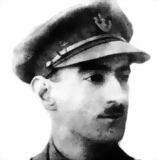
Frederick Holt
Murderer Albert Burrows
Murderer · United Kingdom · 1920
Albert Burrows (also named Albert Edward Burrows): married farm labourer who to…
4 victims
Albert Burrows
Murderer · United Kingdom · 1920
Albert Burrows (also named Albert Edward Burrows): married farm labourer who to…
4 victims
 Lock Ah Tam
Murderer · United Kingdom · 1925
Lock Ah Tam was 54 when he killed his wife and two daughters. He had been a suc…
3 victims
Lock Ah Tam
Murderer · United Kingdom · 1925
Lock Ah Tam was 54 when he killed his wife and two daughters. He had been a suc…
3 victims
 Sergei Golovkin
Serial killer · Russia · 1986
Sergey Golovkin was a Russian serial killer known as "The Fisher" or "The Udav"…
11 victims
Sergei Golovkin
Serial killer · Russia · 1986
Sergey Golovkin was a Russian serial killer known as "The Fisher" or "The Udav"…
11 victims
 Craig Gregerson
Murderer · USA · 2006
Craig Roger Gregerson (born c. 1986) was a Salt Lake City, Utah man convicted o…
1 victim
Craig Gregerson
Murderer · USA · 2006
Craig Roger Gregerson (born c. 1986) was a Salt Lake City, Utah man convicted o…
1 victim
 Dana Williamson
Homicide - Murderer · USA · 1975
Dana Williamson (born 09/18/59) was convicted and sentenced to death for the 11…
2 victims
Dana Williamson
Homicide - Murderer · USA · 1975
Dana Williamson (born 09/18/59) was convicted and sentenced to death for the 11…
2 victims
 Nicolai Bonner
Serial killer · 2005
Nicolai Bonner was an Israeli serial killer who, in 2005, under heavy influence…
4 victims
Nicolai Bonner
Serial killer · 2005
Nicolai Bonner was an Israeli serial killer who, in 2005, under heavy influence…
4 victims
 Alexander Hamilton
Murderer · USA · 2005
Alexander Hamilton (20) was an Antioch man convicted in Contra Costa County for…
1 victim
Alexander Hamilton
Murderer · USA · 2005
Alexander Hamilton (20) was an Antioch man convicted in Contra Costa County for…
1 victim
- Gender
- male
- Country
- United Kingdom
- Location
- Blackpool, Lancashire, North West England, United Kingdom
- Date of birth
- 1887
- Age at first offence
- 32
- Characteristics
- attempt to collect insurance money
- Victim profile
- Kathleen Breaks, 26 (his ex-lover)
- Method of murder
- Shooting
- Date(s) of murder
- December 24, 1919
- Years active
- 1919
- Date of arrest
- —
- Status
-
Executed
Executed by hanging at Manchester's Strangeways Prison on April 13, 1920
Overview
Frederick Rothwell Holt was a Lieutenant during the First World War. After being invalided out of the British Army, he was described as suffering from depression and amnesia, and he later sought to plead insanity at trial.
Holt lived in Lancashire with Kitty Breaks, who had already been married. In the early morning of Christmas Eve 1919, the 26 year old body of Kitty Breaks was found among the sand dunes at St Annes near Blackpool. She was shot three times with a revolver.
Holt’s revolver and gloves were found nearby. His lover was arrested and charged with her murder.
Timeline
- Early morning of Christmas Eve 1919 — Kitty Breaks’s body was found among the sand dunes at St Annes near Blackpool; she was shot three times with a revolver.
- 24 December 1919 — Kitty Breaks’s body was found near Blackpool among the sand dunes at St Annes.
- 23 February 1920 — Holt was tried at Manchester Assizes between the 23rd and 27th February 1920.
- 27 February 1920 — Holt’s trial at Manchester Assizes concluded within the period between 23rd and 27th February 1920.
- 13 April 1920 — Frederick Rothwell Holt was hanged at Manchester's Strangeways Prison by John Ellis at the age of 32.
Background
Frederick Rothwell Holt served with the 4th Loyal North Lancashire Regiment during World War One. While serving in France, he was invalided out of the army with shell-shock and was suffering from depression.
After he returned to Lancashire, he met and fell in love with Kitty Breaks, who was already married. Breaks left her husband and they lived together for a couple of years.
Holt returned to Lancashire with an inherited annual income of £500. Breaks was six years younger than Holt.
The offence
In the early morning of Christmas Eve 1919, Kitty Breaks was found among the sand dunes at St Annes near Blackpool. The body was 26 years old. She had been shot three times with a revolver.
Footprints were found in the sand near her body and were later confirmed to match Holt's boots. Holt's revolver and gloves were found lying nearby, and evidence including an ex-service revolver and one blood-stained glove was also found buried near by.
The prosecution case was that Holt murdered Breaks to claim on the insurance policy, and the jury preferred that theory of motive based on Kitty's £5,000 insurance policy. During November 1919, Breaks insured her life for £5,000 and made a will naming Holt as her beneficiary. The prosecution stated that Holt had persuaded her to make him her sole beneficiary.
Investigation and arrest
Soon afterwards, Lieutenant Frederick Holt was arrested and charged with Kitty Breaks’s murder.
Evidence associated with Holt included footprints matching his boots, and a Webley service revolver and blood-stained gloves found nearby in the dunes. Holt's revolver and gloves were also described as being lying nearby, and an additional blood-stained glove was described as being found buried near by.
Trial
Holt was tried at Manchester Assizes between 23rd and 27th February 1920 before Mr. Justice Greer.
Holt’s defending counsel was Sir Edward Marshall Hall. Hall showed Holt's persecution mania and told of Holt's accusations against the police of sending germ-laden fleas and dogs to his cell. Hall declared the defendant unfit to plead, but this was to no avail. The defence of insanity was rejected and Holt was found guilty.
At trial, it was described that Holt seemed not to be aware of what was happening in court. He claimed that the police had tried to kill him using mad dogs, germ-carrying flies and gas. Hall stated that Holt had gallantly served his country in the First World War and been injured, and that as a consequence of his injuries and being invalided from the army, Holt became insane. Hall stated that Holt was insane and did not realise or understand the consequences of his alleged actions.
The prosecution claimed that Holt had been living beyond his means and that he murdered Breaks to claim on the insurance policy.
Holt was found guilty. The jury preferred the prosecution’s theory of a motive based on Kitty’s £5,000 insurance policy.
Sentencing
Holt was sentenced to death by hanging.
Appeals
Holt appealed his death sentence. The appeal asserted that he had earlier contracted syphilis in 1920 in Malaya, and that it had unbalanced his mind. He was examined by Home Office psychiatrists who rejected the appeal. His appeal was dismissed.
Outcome
Frederick Rothwell Holt was executed by hanging on 13 April 1920 at Manchester's Strangeways Prison by John Ellis. He was aged 32.
Other details
Kitty Breaks was also known as Kathleen Breaks and was described as a lover and girlfriend in different parts of the case narrative.
Holt’s trial included the setting of insanity as a defence and the prosecution’s motive theory based on life insurance and a beneficiary arrangement.

Spotted an error, or have more information about this case?