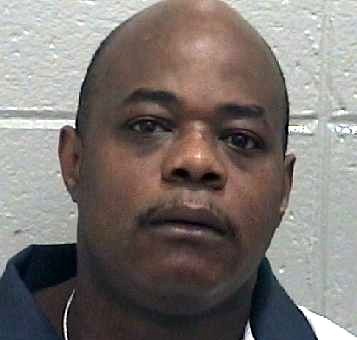
Robert Wayne Holsey
Murderer Brian Kevin Rosenfeld
Murderer · USA · 1985
Brian Kevin Rosenfeld Brian Kevin Rosenfeld was sentenced to three concurrent l…
23 victims
Brian Kevin Rosenfeld
Murderer · USA · 1985
Brian Kevin Rosenfeld Brian Kevin Rosenfeld was sentenced to three concurrent l…
23 victims
 Russell Ellwood
Murderer · USA · 1991
Russell Ellwood was a former taxi driver. Authorities suspected him of killing…
20 victims
Russell Ellwood
Murderer · USA · 1991
Russell Ellwood was a former taxi driver. Authorities suspected him of killing…
20 victims
 Robert Martines Perez
Murderer · USA · 1994
Name: Robert Martines Perez · Other name used in proceedings: Robert Martinez P…
15 victims
Robert Martines Perez
Murderer · USA · 1994
Name: Robert Martines Perez · Other name used in proceedings: Robert Martinez P…
15 victims
 Billy Frank Vickers
Murderer · USA · 1993
Billy Frank Vickers Vickers was executed by lethal injection in Texas on Januar…
14 victims
Billy Frank Vickers
Murderer · USA · 1993
Billy Frank Vickers Vickers was executed by lethal injection in Texas on Januar…
14 victims
 John William Byrd
Murderer · USA · 1983
John William Byrd, Jr. was executed by lethal injection for the murder of conve…
1 victim
John William Byrd
Murderer · USA · 1983
John William Byrd, Jr. was executed by lethal injection for the murder of conve…
1 victim
 Bobby James Moore
Murderer · USA · 1980
Defendant: Bobby James Moore Victim: Jim McCarble The federal habeas corpus rel…
1 victim
Bobby James Moore
Murderer · USA · 1980
Defendant: Bobby James Moore Victim: Jim McCarble The federal habeas corpus rel…
1 victim
 Gerhard Puff
Murderer · USA · 1952
Gerhard Arthur Puff (died August 21, 1954) was an American gangster. He was exe…
1 victim
Gerhard Puff
Murderer · USA · 1952
Gerhard Arthur Puff (died August 21, 1954) was an American gangster. He was exe…
1 victim
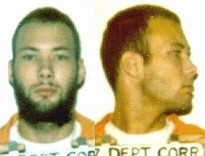 Daren Lee Bolton
Murderer · USA · 1982
Name: Daren Lee Bolton · June 27, 1986 — Bolton kidnapped the 2 1/2-year-old vi…
2 victims
Daren Lee Bolton
Murderer · USA · 1982
Name: Daren Lee Bolton · June 27, 1986 — Bolton kidnapped the 2 1/2-year-old vi…
2 victims
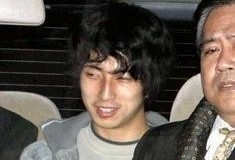 Yukio Yamaji
Homicide - Murderer · Japan · 2000
Yukio Yamaji (山地 悠紀夫; Yamaji Yukio; August 21, 1983 – July 28, 2009) was a Japa…
3 victims
Yukio Yamaji
Homicide - Murderer · Japan · 2000
Yukio Yamaji (山地 悠紀夫; Yamaji Yukio; August 21, 1983 – July 28, 2009) was a Japa…
3 victims
- Gender
- male
- Country
- USA
- Location
- Morgan County, Georgia, USA
- Date of birth
- 1965
- Age at first offence
- 30
- Characteristics
- robbery, to avoid arrest
- Victim profile
- Will Robinson, 26 (Deputy Sheriff)
- Method of murder
- Shooting
- Date(s) of murder
- December 17, 1995
- Years active
- 1995
- Date of arrest
- Same day
- Status
-
Sentenced to death
Sentenced to death on February 13, 1997
Case identification
Robert Wayne Holsey
Background
Robert Wayne Holsey was 31 at sentencing. He was convicted of murder in the shooting death of Deputy Sheriff Will Robinson. Holsey later appealed and contended that he was absent from a jury view in which the trial court and an unsworn store clerk answered questions from jurors. Because Holsey later acquiesced in the improprieties occurring during the jury view, the appellate court affirmed.
Holsey had been out on parole less than a year following convictions for assault and armed robbery at the time he shot and killed Deputy Sheriff Will Robinson.
The offence
Holsey entered the Jet Food Store in Milledgeville with a gun and demanded money shortly before 1:30 a.m. on December 17, 1995. After receiving money from the store's cash register, Holsey directed the store clerk to open the store's lottery machine. Holsey ordered the clerk into a back room, but the clerk was able to observe Holsey leave in a small red automobile. The clerk immediately called the police and provided a description of Holsey and his car.
Less than four minutes after Holsey left the food store, Deputy Sheriff Will Robinson stopped a red Ford Probe at a nearby motel. Holsey then fired. Forensic evidence showed that the deputy suffered a fatal head wound. Several guests at the motel observed a person matching Holsey's description returning to the red Ford Probe and speeding away.
After the shooting, police discovered the vehicle and gave chase, but Holsey was able to avoid apprehension.
Investigation
A police officer checked the Probe's license plate number, which matched the number transmitted by the victim, and illuminated the Cherokee and the Probe with his headlights while transmitting a request for additional support.
Holsey's girlfriend testified that shortly after the shooting Holsey called and asked her to meet him at his sister's house. Holsey told her to drive her blue Jeep Cherokee rather than her red automobile because the police were searching for a red Ford Probe. When she arrived at the house, Holsey was hiding behind a fence. Holsey had her drive him past the murder scene. When she refused his request to be driven to his mother's house where he could monitor a police scanner, Holsey had her drive him through back roads to his sister's house where she had picked him up. Holsey instructed her to park directly behind the red Ford Probe in order to conceal its license plate. While Holsey and his girlfriend were still in the Jeep, a law enforcement officer drove up to the red Ford Probe. After the officer turned on blue police lights, exited his own vehicle, drew his service weapon, and twice commanded Holsey to raise his hands, Holsey failed to comply, began looking around as though searching for an escape route, and, after the officer threatened to shoot, Holsey finally raised his hands. The officer then commanded Holsey to lie prone on the ground.
When the chief deputy sheriff arrived less than two minutes later, he confirmed that the Probe's license plate number matched the number from the victim's radio call and discovered a fresh bullet hole in the back of the Probe. He awakened and interviewed the occupants of the residence. The occupants included Holsey's sister and another woman who was the owner of the Probe. Both stated that Holsey had borrowed the vehicle that night.
Less than fifteen minutes after Holsey was initially detained, the chief deputy asked Holsey his name and placed him under arrest. Clothes matching the description of those worn by the armed robbery perpetrator were discovered nearby. Shoes removed from Holsey after his arrest matched the description given by witnesses to both the armed robbery and the murder. A sample of blood taken from one of the shoes proved through DNA analysis to be consistent with the blood of the victim.
Arrest
Holsey was arrested less than fifteen minutes after he was initially detained.
Trial
Charges, trial venue, and verdict
Holsey was indicted by the Baldwin County Grand Jury on January 8, 1996, for malice murder, felony murder, and armed robbery. The state filed notice of its intent to seek the death penalty for the murder on January 12, 1996. Upon Holsey's motion for a change of venue, his case was ordered transferred to the Superior Court of Morgan County. The trial began on February 1, 1997, and the jury found Holsey guilty on all counts on February 11, 1997. The felony murder conviction was vacated by operation of law.
Sentencing proceedings and aggravating circumstances
On February 13, 1997, the jury fixed the sentence for the malice murder at death based upon a finding of four statutory aggravating circumstances:
- Holsey had been previously convicted of a capital felony
- The murder was committed while Holsey was engaged in the commission of another capital felony
- The murder was committed for the purpose of avoiding, interfering with, or preventing his lawful arrest
- The murder was committed against a peace officer engaged in his official duties
The trial court imposed a sentence of death for the malice murder and a sentence of life imprisonment without parole for the armed robbery in accordance with OCGA 17-10-7 (b) (2).
Jury and evidentiary issues raised on appeal
Holsey appealed on multiple grounds.
Sufficient evidence and statutory aggravating circumstances The appellate court found that the evidence introduced at trial, viewed in the light most favorable to the verdict, was sufficient to support the jury's finding beyond a reasonable doubt that Holsey was guilty of the crimes of which he was convicted and to support the jury's finding beyond a reasonable doubt the existence of the four statutory aggravating circumstances.
Excusal of nine prospective jurors Holsey argued that the trial court impermissibly excused nine prospective jurors who all were full-time college students attending colleges and universities outside of the county. The appellate court stated that the trial court examined each student individually to assess the degree of burden of jury service in Holsey's one to two week trial, made a finding that each would suffer an extraordinary hardship if forced to serve, and that such individualized review was consistent with the Court's interpretation of OCGA 15-12-1.
Refusal to strike Juror Knight for cause Holsey contended that the trial court erred by refusing to strike for cause Juror Knight because her brother-in-law and his girlfriend had been murdered in 1981. The juror described how the murders caused her to view the death penalty with increased favor, but she indicated she would consider all sentencing options in light of the evidence. She expressed some uncertainty as to whether she could vote to impose the death penalty. Holsey also argued that because he was charged with murdering a law enforcement officer, the trial court erred by refusing to strike Juror Knight for cause on the basis that she had family members who had worked in law enforcement. The appellate court stated that the juror said her family members' former employment in law enforcement would not affect her deliberations in Holsey's case. The appellate court found adequate support in the voir dire for the trial court's finding that she could serve as an impartial juror and consider all sentencing options available under Georgia law.
Alleged Batson violation in peremptory strikes Holsey contended that the state exercised its peremptory strikes in a race-conscious manner in violation of Batson v. Kentucky. The panel of forty-two qualified jurors included nine African-American persons (21%). The state used its ten peremptory strikes to remove two African-American persons (20%) and eight Caucasian persons (80%) from the panel, and the jury consisted of seven African-American persons (58%) and five Caucasian persons (42%). The trial court assumed Holsey made a prima facie case and required the state to provide a "race-neutral, case-related, clear and reasonably specific explanation for the exercise of the peremptory strike[s]". Juror Atwater, an African-American juror stricken by the state, responded that she was conscientiously opposed to the death penalty. Juror Clayton, another African-American juror stricken by the state, said she had had three children die in three different and extremely tragic incidents and answered negatively when asked whether her children's deaths would affect her, while adding, "I feel for everybody." The record suggested Juror Clayton became emotional during the questioning about her children and about the death penalty. The appellate court concluded the trial court did not err in finding Holsey failed to carry his burden of persuasion regarding discriminatory intent.
Holsey's absence from jury view; questions and evidentiary transformation Holsey argued that his constitutional rights were violated when, outside of his presence, the jury went to the Jet Food Store where the robbery took place. Holsey conceded his presence was not mandatory if the jury view was merely a scene view. The appellate court stated that the planned scene view became an evidentiary view when jurors asked questions about the location of video surveillance equipment and whether the lottery machine was in the same location as on the night of the crime. The clerk who was working in the store at the time answered the camera question; that clerk was unidentified on the record and was not sworn. The trial judge answered the lottery machine location question with the agreement of defense counsel, but without the knowledge or agreement of the defendant. The appellate court stated that Georgia law required the defendant's right to be present at all aspects of the trial and that taking testimony was a critical part not subject to harmless error analysis. It also stated the defendant may later acquiesce. The appellate court concluded that when the trial reconvened the Monday after the jury trip, Holsey began his case; during discussion of the jury's questions at the food store, Holsey remained silent and his counsel made no objection. The appellate court therefore found Holsey acquiesced in proceedings occurring in his absence.
Suppression challenge to blood evidence from shoes Holsey argued blood evidence obtained from his shoe after his detention and arrest should have been suppressed because the officer lacked probable cause to seize him. The appellate court stated that probable cause is required for a warrantless arrest, but a person may be lawfully seized for a brief investigation with only reasonable and articulable suspicion. The appellate court concluded the detention was reasonable and did not transform the investigatory stop into an arrest given the danger inherent in approaching and detaining an uncooperative person suspected of committing armed robbery and shooting a law enforcement officer. After learning that Holsey had been in possession of the Ford Probe that evening, law enforcement officers possessed probable cause; therefore, the warrantless arrest at the conclusion of the fifteen minute investigation did not violate the Fourth Amendment rights. The appellate court concluded the evidence obtained from the detention and arrest was admissible.
Chain of custody for shoe blood and clothing Holsey argued the blood-stained shoe evidence should be excluded because chain of custody was inadequately maintained. The appellate court agreed the blood-stained shoe was subject to chain of custody requirements but stated that testimony showed the chain of custody was adequately demonstrated at trial. Holsey also challenged chain of custody for his clothing. The appellate court stated the clothing items, which had no blood splatters, were distinct and identifiable physical objects, and therefore a chain of custody showing for the clothing was unnecessary.
Tape-recorded radio transmission and hearsay necessity Holsey argued that a tape-recorded radio transmission by the victim reporting the license plate number of the red Ford Probe was not admissible under the necessity exception because the state made no showing that the hearsay statement was more probative than other available evidence. The appellate court stated the officer's transmission of the license plate number was the most probative evidence connecting Holsey's car to the shooting. Holsey also argued the trial court erred in admitting the tape recording because it contained additional statements by the dispatcher and other officers. The state did not contend those statements met the necessity exception. The appellate court stated that although some statements audible on the tape recording were inadmissible because they explained conduct not relevant to any issue in the case, beyond a reasonable doubt none of the inadmissible statements harmed Holsey at trial.
Motion to sever armed robbery charge The appellate court concluded the trial court did not abuse its discretion in denying the motion to sever the charge of armed robbery from the charges of malice murder and felony murder.
Voluntary manslaughter jury charge request The trial court denied Holsey's request for a jury charge on voluntary manslaughter. The appellate court stated that a charge would have been required only if there had been any evidence, however slight, to support finding that elements were proved. The appellate court stated that testimony that a uniformed officer approached the vehicle with his gun in his hands was not sufficient. It also stated that no reasonable juror could infer Holsey shot the victim solely as a result of a sudden, violent, and irresistible passion resulting from serious provocation sufficient to excite such passion in a reasonable person from testimony that an unidentified person stated "no" and "stop" immediately before any shots were fired. The appellate court concluded the trial court did not err in denying the voluntary manslaughter charge.
Evidence on nature of death by electrocution during sentencing The appellate court stated the trial court did not err by refusing to allow Holsey to present evidence regarding the nature of death by electrocution during the sentencing phase.
Constitutionality of electrocution The appellate court stated it had previously held that execution by electrocution was not unconstitutional.
Sentencing review for arbitrary factors; excessiveness/disproportionality The appellate court found the sentence of death was not imposed under the influence of passion, prejudice, or any other arbitrary factor. It also found, considering both the crime and the defendant, that the sentence was neither excessive nor disproportionate to the penalties imposed in similar cases. It stated the cases listed in the Appendix involved intentional killing of a peace officer engaged in official duties.
Concurrence and partial dissent
SEARS, Justice, wrote a separate opinion. SEARS stated: "I concur in the majority's affirmance of appellant's adjudication of guilt. However, for the reasons explained in my partial concurrence and partial dissent in Wilson v. State, I would stay ruling on the constitutionality of appellant's sentence of death by electrocution until receiving guidance from the United States Supreme Court on that issue."
APPENDIX cases were listed as:
- Speed v. State, 270 Ga. 688 (512 SE2d 896) (1999)
- Henry v. State, 269 Ga. 851 (507 SE2d 419) (1998)
- Davis v. State, 263 Ga. 5 (426 SE2d 844) (1993)
- Hill v. State, 250 Ga. 277 (295 SE2d 518) (1982)
- Wallace v. State, 248 Ga. 255 (282 SE2d 325) (1981)
- Stevens v. State, 247 Ga. 698 (278 SE2d 398) (1981)
- McClesky v. State, 245 Ga. 108 (263 SE2d 146) (1980)
- Collier v. State, 244 Ga. 553 (261 SE2d 364) (1979)
Appeals
Holsey appealed his conviction and sentence. The appellate court affirmed.
The appeal was docketed on April 28, 1999, and orally argued on July 13, 1999. The case was decided December 2, 1999, and reconsideration was denied December 20, 1999. HOLSEY v. THE STATE. S99P1112. (271 Ga. 856) (524 SE2d 473) (1999). FLETCHER, Presiding Justice. Murder. Morgan Superior Court. Before Judge McConnell, Senior Judge.
On appeal, Holsey contended he was absent from a jury view at which the trial court and an unsworn store clerk answered questions from jurors.
Sentencing
The jury fixed the sentence for the malice murder at death on February 13, 1997, based upon findings of four statutory aggravating circumstances.
Outcome
The appellate court affirmed Holsey's adjudication of guilt and affirmed the sentence of death fixed by the jury and imposed by the trial court.
Other details
Trial beginning and jury verdict dates:
- Trial began on February 1, 1997
- Jury found Holsey guilty on all counts on February 11, 1997
Felony murder:
Procedural dates in the appellate process:
- Decision: December 2, 1999
- Reconsideration denied: December 20, 1999
Parties and counsel:
- Fredric D. Bright, District Attorney, for appellee
- Thurbert E. Baker, Attorney General
- Susan V. Boleyn, Senior Assistant Attorney General
- Allison B. Goldberg, Assistant Attorney General, for appellee
- Stephen N. Hollomon, Charlotta Norby, Brenda H. Trammell, for appellant
Spotted an error, or have more information about this case?