Abraham Goldenberg
Murderer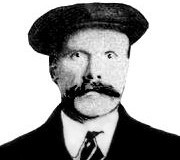 Albert Burrows
Murderer · United Kingdom · 1920
Albert Burrows (also named Albert Edward Burrows): married farm labourer who to…
4 victims
Albert Burrows
Murderer · United Kingdom · 1920
Albert Burrows (also named Albert Edward Burrows): married farm labourer who to…
4 victims
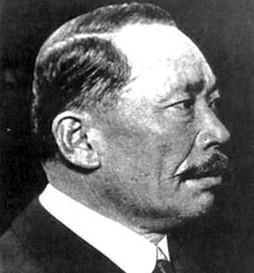 Lock Ah Tam
Murderer · United Kingdom · 1925
Lock Ah Tam was 54 when he killed his wife and two daughters. He had been a suc…
3 victims
Lock Ah Tam
Murderer · United Kingdom · 1925
Lock Ah Tam was 54 when he killed his wife and two daughters. He had been a suc…
3 victims
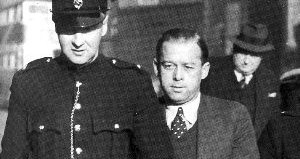 Walter Graham Rowland
Murderer · United Kingdom · 1934
Defendant: Walter Graham Rowland Age: 39 (labourer) Residence/Origin: from Mell…
2 victims
Walter Graham Rowland
Murderer · United Kingdom · 1934
Defendant: Walter Graham Rowland Age: 39 (labourer) Residence/Origin: from Mell…
2 victims
 Elizabeth Fenning
Attempted murder? · United Kingdom · 1815
Elizabeth Fenning was executed by hanging on July 26, 1815. Elizabeth Fenning (…
0 victims
Elizabeth Fenning
Attempted murder? · United Kingdom · 1815
Elizabeth Fenning was executed by hanging on July 26, 1815. Elizabeth Fenning (…
0 victims
 James DeRosa
Murderer · USA · 2000
James Lewis DeRosa (age 36 at execution) was executed by lethal injection in Ok…
2 victims
James DeRosa
Murderer · USA · 2000
James Lewis DeRosa (age 36 at execution) was executed by lethal injection in Ok…
2 victims
 Danilo Restivo
Murderer · United Kingdom · 1993
Danilo Restivo was born in Sicily in April 1972. He later lived in Potenza, Ita…
2 victims
Danilo Restivo
Murderer · United Kingdom · 1993
Danilo Restivo was born in Sicily in April 1972. He later lived in Potenza, Ita…
2 victims
 Nikola Radosavljevic
Spree killer · Serbia · 2007
Nikola Radosavljevic was taken to a prison mental hospital in Belgrade, where h…
9 victims
Nikola Radosavljevic
Spree killer · Serbia · 2007
Nikola Radosavljevic was taken to a prison mental hospital in Belgrade, where h…
9 victims
 Viktor Sayenko
Serial killer · Ukraine · 2007
The case was associated with “The Dnepropetrovsk Maniacs,” a media epithet for…
18 victims
Viktor Sayenko
Serial killer · Ukraine · 2007
The case was associated with “The Dnepropetrovsk Maniacs,” a media epithet for…
18 victims
 Mark Edward Lundy
Murderer · New Zealand · 2000
Mark Edward Lundy was the husband and father of the victims Christine Marie Lun…
2 victims
Mark Edward Lundy
Murderer · New Zealand · 2000
Mark Edward Lundy was the husband and father of the victims Christine Marie Lun…
2 victims
- Gender
- male
- Country
- United Kingdom
- Location
- Winchester, Hampshire, England, United Kingdom
- Date of birth
- 1905
- Age at first offence
- 19
- Characteristics
- bank robbery, mentally ill
- Victim profile
- William Edward Hall, 28 (bank clerk)
- Method of murder
- Shooting
- Date(s) of murder
- April 3, 1924
- Years active
- 1924
- Date of arrest
- 5 days after
- Status
-
Executed
Executed by hanging at Winchester prison on July 30, 1924
Name
Abraham Goldenberg
Timeline
- 3 April 1924 — William Hall, a clerk at Lloyds Bank, did not turn up at the bus stop after the close of business.
- 3 April 1924 — Hall was found shot dead behind the bank’s counter; a gaping hole in the back of his head was described.
- 3 April 1924 — Inquiries centred on soldiers based at St Lucia barracks, the camp served by the bank.
- 3 April 1924 — Abraham Goldenberg admitted he cashed a cheque at a quarter to two and said he was the only customer in the bank at the time.
- Around 1.50 — A signaller spoke to the manager (William Hall), returned at about 2.15, and found the bank closed.
- 8 April 1924 — Goldenberg left the camp to post a letter to his girlfriend.
- 8 April 1924 — Goldenberg was spotted by Sergeant Major Alliott, who ordered a bandsman to follow him.
- 8 April 1924 — Goldenberg entered a latrine, reached up into the rafters for a package, removed notes, and was caught with the stolen money.
- 19 June 1924 — Goldenberg was tried at Winchester Assizes before Mr Justice Bailhache.
- July 30 1924 — Goldenberg was executed by hanging at Winchester prison.
Background
Abraham Jack Goldenberg (also referred to as Lance Corporal “Jack” Goldenberg) served at St Lucia barracks, home of the 2nd East Lancashire Regiment. Police knew that Goldenberg needed money because three weeks earlier he had seen the Camp Commander and asked for a discharge so he could marry his girlfriend and take up new employment as a clerk. He was told that unless he could afford 35 to secure his release he would have to see out the rest of his time.
The offence
William Hall, a clerk at Lloyds Bank, was found shot dead behind the bank’s counter, described as lying in a pool of blood, with a gaping hole in the back of his head. Over £1,000 in notes and coin was missing.
Goldenberg got away with about £1,000, which in 1924 seemed quite a lot of money. The prosecution’s case was that the murder had been deliberately planned to obtain the money Goldenberg needed to marry his girlfriend.
Investigation
Inquiries were centred on the soldiers based at a nearby camp, which was served by the bank. A friend from a neighbouring bank returned to the branch and saw Hall’s body behind the counter through a window.
A roll-call and inventory at the camp showed no missing personnel or weapons. One man, a signaller, told police that he had spoken to the manager about 1.50 and that when he returned, around 2.15, he found the bank closed, giving police an approximate time of death if the account was accurate.
A couple of days later, an alert warrant officer at the camp noticed Goldenberg climbing out of a hut window. The warrant officer wondered why Goldenberg was doing this when he was free to use the door, and watched as Goldenberg climbed up onto the window-sill and looked into the roof beams where there was a small parcel. On opening the parcel, £500 was found, later shown to have come from the robbery.
Arrest
On the afternoon of 8 April, Goldenberg left the camp to post a letter to his girlfriend. Upon his return, he was spotted by Sergeant Major Alliott, who ordered a bandsman to follow the suspected soldier.
Goldenberg entered a latrine and reached up into the rafters for a package. The bandsman entered unnoticed and watched as Goldenberg pulled out a handful of notes from the package, before slipping away and returning with the Sergeant Major. Goldenberg was caught redhanded in possession of the stolen money and placed in the guard room.
Trial
Goldenberg was tried at Winchester Assizes on 19 June before Mr Justice Bailhache.
In the trial, the prosecution case was that the murder had been deliberately planned to obtain the money Goldenberg needed to marry his girlfriend. The defence called a Harley Street neurologist, who told the court that Goldenberg was of the opinion that the prisoner was suffering from a mental condition known as “Dementia Praecox”, described as a recurrent form of disease that renders a person incapable of judging the nature of an action he commits.
Goldenberg pleaded insanity, but the defence position was not accepted.
The jury took only a short time to find Goldenberg guilty. He was sentenced to death.
Sentencing
Goldenberg was sentenced to death.
Outcome
Goldenberg was executed by hanging at Winchester prison by Thomas Pierrepoint and William Willis.
When faced with the evidence, Goldenberg admitted killing the bank manager (William Hall). He was charged and tried at Winchester Assizes. His plea of insanity was not accepted, and he was consequently hanged at Winchester prison.
Other details
William Hall was described as 28 year old William Hall in one passage, and separately as the manager of a small bank near to Bordon Camp in Hampshire in another passage, with the manager found shot dead behind the bank’s counter. Over £1,000 was missing in notes and coin.
Spotted an error, or have more information about this case?