Patrick Higgins
Murderer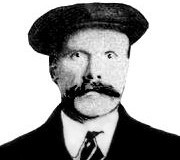 Albert Burrows
Murderer · United Kingdom · 1920
Albert Burrows (also named Albert Edward Burrows): married farm labourer who to…
4 victims
Albert Burrows
Murderer · United Kingdom · 1920
Albert Burrows (also named Albert Edward Burrows): married farm labourer who to…
4 victims
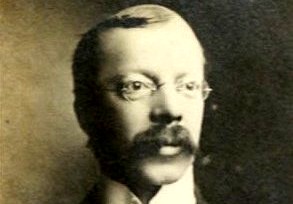 Dr. Hawley Harvey Crippen
Murderer · United Kingdom · 1910
Hawley Harvey Crippen (11 September 1862 – 23 November 1910), usually known as…
1 victim
Dr. Hawley Harvey Crippen
Murderer · United Kingdom · 1910
Hawley Harvey Crippen (11 September 1862 – 23 November 1910), usually known as…
1 victim
 Henri-Antoine Charrière
Homicide · France · 1930
Henri-Antoine Charrière was born in Ardèche, France. He had two older sisters.…
1 victim
Henri-Antoine Charrière
Homicide · France · 1930
Henri-Antoine Charrière was born in Ardèche, France. He had two older sisters.…
1 victim
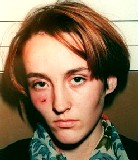 Florence Rey
Murderer · France · 1994
Florence Rey was born August 25, 1975. She was 19 years old at the time of the…
4 victims
Florence Rey
Murderer · France · 1994
Florence Rey was born August 25, 1975. She was 19 years old at the time of the…
4 victims
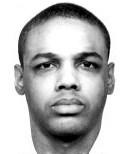 Arthur Brown
M ass m urderer · 1992
Arthur Brown Jr. was convicted in Texas of shooting four people to death in a d…
4 victims
Arthur Brown
M ass m urderer · 1992
Arthur Brown Jr. was convicted in Texas of shooting four people to death in a d…
4 victims
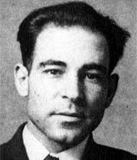 Nicola Sacco
Murderer? · USA · 1920
Nicola Sacco Nicola Sacco and Bartolomeo Vanzetti were convicted of murdering t…
2 victims
Nicola Sacco
Murderer? · USA · 1920
Nicola Sacco Nicola Sacco and Bartolomeo Vanzetti were convicted of murdering t…
2 victims
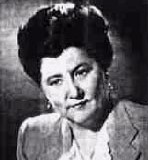 Maria Lee
Murderer · South Africa · 1947
Maria Helena Gertruida Lee (née van Niekerk), later known as Maria Lee, was bor…
1 victim
Maria Lee
Murderer · South Africa · 1947
Maria Helena Gertruida Lee (née van Niekerk), later known as Maria Lee, was bor…
1 victim
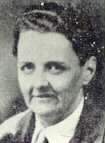 Margaret Allen
Murderer · United Kingdom · 1948
Margaret Allen was a cross-dressing lesbian who preferred to be called "Bill" a…
1 victim
Margaret Allen
Murderer · United Kingdom · 1948
Margaret Allen was a cross-dressing lesbian who preferred to be called "Bill" a…
1 victim
- Gender
- male
- Country
- United Kingdom
- Location
- Winchburg, West Lothian, Scotland, United Kingdom
- Date of birth
- ???
- Characteristics
- parricide
- Victim profile
- His sons aged six and four
- Method of murder
- Drowning
- Date(s) of murder
- November 1911
- Years active
- 1911
- Date of arrest
- 1913
- Status
-
Executed
Executed by hanging on October 2, 1913
Case record: Patrick Higgins
Background
Patrick Higgins was a labourer. His wife died in 1910, leaving Higgins looking after his two children alone.
Higgins complained to his GP of being forgetful and suffering frequent headaches. He reported active service in India.
After Higgins’s wife died, Higgins travelled around the Linlithgow area searching for work. When he did not work, they did not eat. His sons were described as sleeping rough and eating stolen potatoes roasted in camp fires.
At one point, Higgins was reported to the police and was charged with child neglect. The boys were taken into care and placed with a woman in Broxburn. Higgins fell behind with the payments, and his sons’ foster mother delivered them back to their father.
The offence
On a winters evening in November 1911, Higgins was looking after his two children alone after his wife had died the year before.
On that night, Higgins arrived in the local bar without the children. When asked where they were, he explained that he had been in Edinburgh and had met two young ladies who had offered to take and look after the children.
Nothing more was seen or heard of the two boys William and John.
More than eighteen months later, on a winter’s evening in June 1913, an object was seen floating in a disused quarry that was constantly flooded. Two young boys’ bodies were discovered there. The bodies were tied together, and one body was found attached to the other by a piece of rope.
A police assessment led to the establishment that the bodies had almost entirely turned into adipocere and that the time of death was about eighteen months prior to discovery.
Investigation
Two small bodies were discovered in a disused quarry in June 1913.
The waterlogged bodies were found at post mortem to be those of two little boys aged seven and four years old. The bodies had been converted to a substance called adipocere.
The Home Office Pathologist Dr Dick Shepherd discussed the extent of adipocere, which meant that Professor Sydney Smith, who began a career in forensic science on the case, could put the time of death at about eighteen months prior to discovery.
The adipocere preserved the boys’ stomach contents. It was established that they had eaten just an hour before their deaths, and that the meal had been of vegetables known to be grown locally. The meal was later described as Scotch broth about an hour before they were murdered.
Laundry marks on the boys’ clothes allowed the police to track down a lady who confirmed that she had given soup to John and William Higgins on the last day they were seen in the village.
The post mortem was carried out by Professor Harvey Littlejohn.
At the trial, the jury found the prosecution case persuasive after learning about the unusually well-preserved stomach contents.
Post-mortem retention of body parts and statements about it
Patrick Higgins’s case was notable for the post-mortem retention of body parts. In later discussion, it was said that Sir Sydney Smith and Harvey Littlejohn retained specimens from the post-mortem and that the head, internal organs and half of the limbs were packed and taken away.
In a 1959 book, Smith was quoted about adipocere formation and the interest in the unusual specimens. The quoted passage was:
“When a body is left for a long period in water, or buried in damp ground, it undergoes a distinctive change. Human fat, which is normally semi-fluid, is gradually converted to a fat that is quite firm, like mutton suet. This is adipocere. The conversion is a slow process, but permanent when complete. We were interested from a purely medical point of view, because extensive transformations are rarely come across, and these specimens were quite exceptional.”
A university magazine “at the time” was described as describing Smith and Littlejohn’s actions in verse:
“Two bodies found in a lonely mere,
Converted into adipocere.
Harvey , when called in to see ‘em,
Said, “Just what I need for my museum.””
It was also described that Smith arranged with Littlejohn for Littlejohn to distract the attention of the two police officers present by asking them to leave the mortuary so that Smith could confer with them. While the police officers were outside, Smith packed a substantial part of the bodies (the heads, internal organs and half of the limbs), put the remains in a coffin and screwed down the lid. Smith and Littlejohn then took the train back to Edinburgh with the body parts parcelled up and placed on the luggage rack in a crowded carriage on a day so hot that they feared that the smell would give their plot away.
Arrest
The police arrested Patrick Higgins after the identity of the boys was established using the adipocere and stomach contents.
The police charged Patrick Higgins with the murder of his own two children, William and John.
At one point prior to the discovery of the bodies, it was described that Higgins had been charged with child neglect after being reported to the police.
Trial
Patrick Higgins stood trial for the murder of his two sons in September 1913.
The prosecution case was that Higgins had assaulted his sons and thrown them into the water-filled Hopetoun Quarry.
Higgins pled not guilty to the murders. He did not deny killing his sons but claimed he was insane at the time. Scotland’s most eminent neurosurgeon was called to assess if Higgins had epilepsy.
The judge, Lord Johnston, rejected the defence. The judge declared that the accused’s “callousness, cold-bloodedness and deliberate cruelty were not insanity.”
The jury returned a verdict of guilty in one hour and twenty five minutes. The jury also made a plea for mercy because so much time had passed since the murders had taken place.
The trial included a legal statement by Lord Johnston regarding diminished responsibility. Lord Johnston was quoted telling the jury that they could not consider the partial defence of diminished responsibility. The quoted passage was:
“understand irresponsibility, but I cannot understand limited responsibility… I desire very humbly to enter my protest against this doctrine being accepted as part of the criminal law and practice of Scotland until the matter is more deliberately dealt with by a larger Court”
The quotation was tied to “HM Advocate v Higgins (1913) 7 Adam 229, at 233.”
Witnesses mentioned
At Higgins’s trial, the grandmother of the boys gave evidence. Two of his sisters and his brother in law also gave evidence, including an indication that these witnesses were covered in The Scotsman on 11 September 1913, p7.
Sentencing
After the jury’s verdict, Lord Johnston placed the black cap on his head and sentenced Higgins to death.
It was also stated that Lord Johnston did not feel lenient as the jury asked for mercy.
Lord Johnston pronounced the death penalty and sentenced Higgins to death, even after considering the plea for mercy.
Appeals
No appeal outcome was stated.
Outcome
On October 2, 1913, the official hangman John Ellis was ready to execute the sentence.
Patrick Higgins was executed by hanging on October 2, 1913.
Aftermath
In 2007, a BBC News website report described a relative of the victims calling for the return of body parts taken by the two pathologists, Sir Sydney Smith and Harvey Littlejohn, and held by Edinburgh University.
The university statement said it would return the remains provided that the relative who made the request could provide proof of her relationship to the two boys and that other surviving relatives agreed.
Spotted an error, or have more information about this case?