Lawrence Horn
Murderer Brian Kevin Rosenfeld
Murderer · USA · 1985
Brian Kevin Rosenfeld Brian Kevin Rosenfeld was sentenced to three concurrent l…
23 victims
Brian Kevin Rosenfeld
Murderer · USA · 1985
Brian Kevin Rosenfeld Brian Kevin Rosenfeld was sentenced to three concurrent l…
23 victims
 Russell Ellwood
Murderer · USA · 1991
Russell Ellwood was a former taxi driver. Authorities suspected him of killing…
20 victims
Russell Ellwood
Murderer · USA · 1991
Russell Ellwood was a former taxi driver. Authorities suspected him of killing…
20 victims
 Robert Martines Perez
Murderer · USA · 1994
Name: Robert Martines Perez · Other name used in proceedings: Robert Martinez P…
15 victims
Robert Martines Perez
Murderer · USA · 1994
Name: Robert Martines Perez · Other name used in proceedings: Robert Martinez P…
15 victims
 Billy Frank Vickers
Murderer · USA · 1993
Billy Frank Vickers Vickers was executed by lethal injection in Texas on Januar…
14 victims
Billy Frank Vickers
Murderer · USA · 1993
Billy Frank Vickers Vickers was executed by lethal injection in Texas on Januar…
14 victims
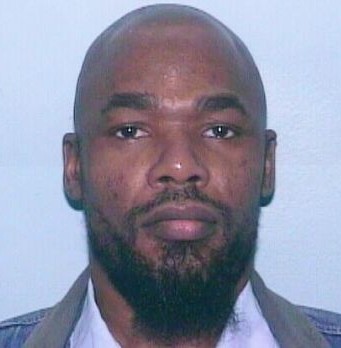 Gregory Clepper
Murderer · USA · 1996
1991 — The killings began. · April 24, 1996 — Patricia Scott was found in a tra…
1 victim
Gregory Clepper
Murderer · USA · 1996
1991 — The killings began. · April 24, 1996 — Patricia Scott was found in a tra…
1 victim
 Sergei Pomazun
Mass murderer · Russia · 2013
Sergey Pomazun was accused in connection with the Belgorod shooting in Belgorod…
6 victims
Sergei Pomazun
Mass murderer · Russia · 2013
Sergey Pomazun was accused in connection with the Belgorod shooting in Belgorod…
6 victims
 Phillip Brown
Murderer · USA · 2001
Phillip Brown (DOB 8-31-80) was indicted on August 13, 2002 on case 02CR00101,…
1 victim
Phillip Brown
Murderer · USA · 2001
Phillip Brown (DOB 8-31-80) was indicted on August 13, 2002 on case 02CR00101,…
1 victim
 Glen Stewart Godwin
Murderer · USA / Mexico · 1980
August 3, 1980 — Eagle Mountain residents found a blown-up pickup truck with re…
2 victims
Glen Stewart Godwin
Murderer · USA / Mexico · 1980
August 3, 1980 — Eagle Mountain residents found a blown-up pickup truck with re…
2 victims
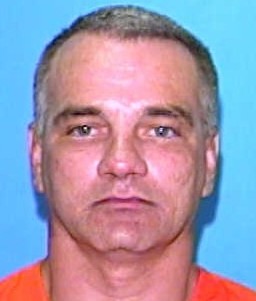 Paul Christopher Hildwin
Murderer · USA · 1985
Name: Paul Christopher Hildwin · Date of birth: 03/22/60 · Jurisdiction: Fifth…
1 victim
Paul Christopher Hildwin
Murderer · USA · 1985
Name: Paul Christopher Hildwin · Date of birth: 03/22/60 · Jurisdiction: Fifth…
1 victim
- Gender
- male
- Country
- USA
- Location
- Montgomery County, Maryland, USA
- Date of birth
- 1939
- Age at first offence
- 54
- Characteristics
- murder for hire, rape, motive unknown, abuse
- Victim profile
- Mildred Horn, 43 (his ex-wife), Trevor Horn, 8 (his severely retarded son) and Janice Roberts Saunders, 38 (the son's nurse)
- Method of murder
- Shooting (.22-caliber rifle) - Suffocation
- Date(s) of murder
- March 3, 1993
- Years active
- 1993
- Date of arrest
- —
- Status
-
Life imprisonment
Sentenced to life in prison without parole on May 17, 1996
Case record: Lawrence Horn
Background
Lawrence Horn was an African-American musician who was formerly a record producer and chief recording engineer for Motown Records. He had pioneered many mixing techniques and had directly supervised most of the mixes for Motown singles during the label’s success period from 1964 to 1967. He was laid off by Motown in 1990 and slid into debt.
Lawrence Horn was divorced from the former Millie Maree (Mildred Horn). His divorce from Millie Maree was described as bitter, and his attitude toward Trevor was described as indifferent. Horn had been fighting in civil court to inherit a trust fund arising from a hospital incident that left Trevor quadriplegic.
Tiffani Horn testified that her father asked her to videotape the interior of her mother’s house, apparently so that Horn could acquaint Perry with the killing ground.
Trevor Horn left behind a $1.7 million trust fund from a malpractice settlement.
The offence
In May 1996, Lawrence T. Horn was found guilty of first-degree murder and murder conspiracy for hiring a Detroit man to kill his ex-wife, his severely retarded son, and the son’s nurse in Silver Spring.
The murders were carried out in March 1993. Perry murdered Mildred Horn, Trevor Horn, and Trevor’s nurse, Janice Saunder.
Lawrence Horn contracted James Perry to kill his wife, his mentally challenged son, and the family’s overnight nurse. The motive for hiring the murder was that Horn stood to gain around $1.7 million to $2 million in life insurance money if his wife and son died.
Perry shot both Mildred Horn and Janice Saunders, a home care nurse, three times in the eyes with a modified AR-7 rifle from a distance of three feet. Trevor was suffocated to death by Perry the same evening. An autopsy showed the boy was smothered by someone who placed one hand over the tracheostomy opening in his throat and the other hand over his nose and mouth.
Perry was said to have carefully followed instructions to plan and commit the murders and then to flee from the crime scene. Hit Man recommended that the killer:
- chose an AR-7 rifle,
- obscured the gun’s serial number and affixed a silencer to it before shooting his victims,
- removed ejected shells from the crime scene and tussled some of the victims’ belongings to make the murders appear to be part of a burglary.
Prosecutors said a blade of grass found on Trevor’s cheek apparently was left by the killer. The bodies were discovered in the early morning on a cul-de-sac called Northgate Drive near Bel Pre Road. Mildred Horn was an American Airlines flight attendant aged 43 at the time of the murders and was shot in the eye with a .22-caliber rifle. Trevor’s body lay amid stuffed animals in his criblike bed, with the shrill alarm on his medical monitor carrying through the house.
A related narrative described that Horn stood trial after his divorce was bitter and his attitude toward Trevor was indifferent, while his prime suspect status was described as established by police.
Investigation
Lawrence Horn was always the prime suspect, police said.
Horn’s whereabouts on the night of the murders heightened suspicion. At almost the precise hour the slayings occurred, he was in his Los Angeles apartment aiming a video camcorder at the time and date display of a cable preview channel. A review of telephone records showed two calls to that apartment from Montgomery pay phones on the night of the murders.
One call was traced to the Days Inn on Shady Grove Road, where James Perry had registered that night. This discovery launched a massive FBI wiretap and surveillance effort.
Thomas E. Turner, a Horn cousin, testified under immunity that he had introduced Perry and Horn and served as a go-between for their contacts after the murders. Turner's testimony was buttressed by 709 prosecution exhibits, mostly telephone records, and an answering machine tape that captured Perry and Horn talking, perhaps on the night of the murders.
Horn’s whereabouts and attention to the size of the settlement were described as factors in suspicion, including that the judge in the hospital malpractice case told police that Horn had seemed unusually interested in the size of the settlement.
Arrest
Horn was arrested in the murders along with James Perry.
After the murders, investigators searched Perry’s home and found a Paladin Press catalog.
Trial
Both Perry and Horn were tried and convicted for murder in Maryland state court. Perry was sentenced to the death penalty, while Horn was sentenced to life in prison without parole.
During Horn’s trial, he shifted his eyes from the jury forewoman only when she answered “guilty” to the count naming his son. Horn’s attorneys declined to comment on the verdict.
The jury found Horn guilty on three counts of first-degree murder and one count of murder conspiracy. The jury deliberated for 7 1/2 hours.
Horn was 56 at the time of the verdicts being read.
Terry Krebs said:
"There's no joy in this decision, because joy was taken from us on March the 3rd, 1993," said Terry Krebs, whose sister Janice Roberts Saunders was 38 the night she rose from her chair beside Trevor Horn's bed and was shot in the eye. And: "I'm just glad that we got a guilty verdict," said Tiffani Horn, 21, who testified that her father had asked her to videotape the interior of her mother's house, apparently so that Horn could acquaint Perry with the killing ground. And: "Not only were my mother and my brother and Janice killed, but my family was destroyed," Tiffani Horn said, her voice breaking. And: "I hope when this is over, we'll be able to rebuild it, because that's all we have, is family."
Montgomery Deputy State's Attorney Robert Dean said:
it brought "a certain completion and finality" to a multimillion-dollar three-year investigation that seemed proportionate to the magnitude of the crime.
Horn’s trial was moved from Montgomery when Horn exercised his right under state law to move his death penalty case from the original jurisdiction.
Sentencing
Horn was sentenced to life in prison without parole on May 17, 1996.
Perry was sentenced to the death penalty three times by a Montgomery County jury in October.
Appeals
After Horn and Perry’s murder convictions, the victims’ families filed civil wrongful death lawsuits in U.S. District Court in Maryland to recover damages from Paladin Press.
In September 1996, U.S. District Court Judge Alexander Williams Jr. dismissed the civil case against Paladin Press on First Amendment grounds. The court found that Hit Man was “loathsome ... reprehensible and devoid of any significant redeeming social value,” and the court threw out the lawsuit because it believed the book did not fall under recognized areas of speech not protected by the First Amendment.
The victims’ families appealed to the U.S. Court of Appeals for the Fourth Circuit. They were joined by the National Victim Center, while Paladin Press’ position was supported by a variety of publishing concerns and media organizations including ABC and The New York Times.
The appellate court reversed the district court’s dismissal and remanded the case back down for trial. The appellate court held that a jury could find that Paladin “aided and abetted” Perry in the commission of the murders, even without showing an ongoing relationship or conspiracy between Paladin and Perry.
The appellate court reasoned that Paladin’s stipulations and the publisher’s intent established enough for a claim for aiding and abetting, including detailed instructions and encouraging prose, and ruled that a jury could find that Paladin “aided and abetted” in the killing. The opinion rejected the claim that the district court had misapplied the standard for unlawful incitement to the case facts.
The Fourth Circuit found Brandenburg v. Ohio’s incitement test inapplicable because Hit Man went beyond advocating crime to teaching it. It held that “intentional and explicit instructions to commit violence are an extension of the crime itself, and thus are punishable.”
The appellate court rejected claims by publishers, booksellers and news outlets that the decision would create new areas of liability for authors and journalists who communicate detailed accounts of real and fictional crimes. It also described Paladin’s stipulations as “astonishing.”
Some observers were quoted in the narrative. Attorney David Greene said:
"Although the court was working with a narrow set of unique facts," said attorney David Greene, program director of the National Campaign for Freedom of Expression, "its opinion still exposes for punishment a wide variety of so-called ‘instructional’ speech."
The narrative then described that the Supreme Court had let the Hit Man ruling stand, leading courts around the country to decide how broadly to interpret the decision.
Outcome
A civil case against Paladin Press proceeded through the appellate stage and was remanded for trial.
A later development described that Paladin’s insurance company decided to settle, paying several million dollars to Mildred and Trevor Horn’s family. Paladin agreed to cease publishing the book and its remaining stock of 700 copies sold out within a day.
The narrative described that the Utopian Anarchist Party posted the full text of Hit Man on its Web site, where the book became available for free.
Other details
Key people and roles
- Lawrence T. Horn: defendant; former Motown recording engineer and record producer; hired Perry.
- James Perry: hired hit man; native of Detroit; sentenced to death three times by a Montgomery County jury in October.
- Mildred Horn: Horn’s ex-wife; American Airlines flight attendant; aged 43 at the time she was shot in the eye with a .22-caliber rifle; victim.
- Trevor Horn: Horn’s severely retarded son; quadriplegic due to a hospital incident; aged 8; victim.
- Janice Saunders (Janice Roberts Saunders): home care nurse; victim; aged 38.
- Trevor’s nurse: Janice Saunder/Saunders is described as the overnight nurse.
- Terry Krebs: sister’s family member; quoted.
- Tiffani Horn: Horn’s daughter; testified and was quoted.
- Trevor Horn’s estate: described as standing to inherit.
- Robert Dean: Montgomery Deputy State's Attorney; quoted.
- Thomas E. Turner: Horn cousin; testified under immunity.
- Alexander Williams Jr.: U.S. District Court judge.
- David Greene: quoted as attorney and program director for the National Campaign for Freedom of Expression.
- Brian Levin: described as an associate professor of criminal justice at the Richard Stockton College of New Jersey and director of the Center on Hate & Extremism; also described as co-author and author of mentioned works.
Book-related facts
Perry purchased a how-to manual titled “Hit Man” before committing the murders in March 1993. Hit Man was written under a pseudonym, Rex Feral, in 1983. Following specific instructions from Hit Man, Perry carried out a triple execution in 1993.
The method and caliber were recommended in “Hit Man,” whose publisher was described as being sued in U.S. District Court by members of Mildred Horn’s family who claimed the book aided the murders. A hearing in U.S. District Court on whether the First Amendment’s free speech guarantee applied to the book was scheduled for July 22.
A narrative also included that Perry used another Paladin book, “How to Make a Disposable Silencer, Volume II,” to plan a triple execution in 1993. This silencer book had been published under a pseudonym in 1983.
It was described that both books sold in excess of 13,000 copies each and that Paladin sold over 20,000 copies of Hit Man: A Technical Manual for Independent Contractors.
The narrative also described that the pseudonymous author “Rex Feral” was a fictional persona, described as a divorced mother of two who needed money to pay property taxes; the press asked her to change the style to a “how to” after submitting a fictional hit man manuscript.
Evidence and actions
The narrative described that Perry chose an AR-7 rifle, obscured the gun’s serial number, and affixed a silencer before shooting. It also described that Perry removed ejected shells and tussled some victims’ belongings to make the murders appear to be part of a burglary.
The narrative also described that Perry disassembled the gun, filed down its components, dumped the pieces by the side of a road, and fled in a rental car bearing a stolen license plate.
It was also described that Perry called Lawrence Horn long distance a few hours after the murders, providing another key piece of evidence and disregarding Hit Man once more.
A cable preview channel video camcorder detail was provided for Horn’s location at the time of the slayings.
Civil litigation and procedural history details
The civil case dismissed in September 1996 was reversed by the U.S. Court of Appeals for the Fourth Circuit and remanded.
The narrative described that plaintiffs appealed with support from the National Victim Center and that Paladin’s position was supported by ABC and The New York Times among others.
The narrative described Brandenburg v. Ohio, 395 U.S. 444 (1969), quoting the standard:
the government cannot "forbid advocacy of the use of force or of law violation" unless "such advocacy is directed to inciting or producing imminent lawless action and is likely to incite or produce such action."
The narrative described that after the Fourth Circuit ruling, there were concerns about interpretation and potential expansion of liability. It also described planned trial timing “May 25, 1999” in the narrative and the settlement a few days before then.
Spotted an error, or have more information about this case?