Margaret Rheeder
Murderer Maria Lee
Murderer · South Africa · 1947
Maria Helena Gertruida Lee (née van Niekerk), later known as Maria Lee, was bor…
1 victim
Maria Lee
Murderer · South Africa · 1947
Maria Helena Gertruida Lee (née van Niekerk), later known as Maria Lee, was bor…
1 victim
 Mulalo Sivhidzho
Murderer · South Africa · 2006
Mulalo Sivhidzho was convicted of the murder of her husband, Avhatakali Netshis…
1 victim
Mulalo Sivhidzho
Murderer · South Africa · 2006
Mulalo Sivhidzho was convicted of the murder of her husband, Avhatakali Netshis…
1 victim
 Najwa Petersen
Murderer · South Africa · 2006
Najwa Petersen was the wife of South African singer, composer and theatre direc…
1 victim
Najwa Petersen
Murderer · South Africa · 2006
Najwa Petersen was the wife of South African singer, composer and theatre direc…
1 victim
 Thandi Maqubela
Murderer · South Africa · 2009
Thandi Maqubela was “humiliated and outraged” by her husband’s infidelities. Th…
1 victim
Thandi Maqubela
Murderer · South Africa · 2009
Thandi Maqubela was “humiliated and outraged” by her husband’s infidelities. Th…
1 victim
 Alexander Pichushkin
Serial killer · Russia · 1992
Alexander Yuryevich “Sasha” Pichushkin (Russian: Алекса́ндр Ю́рьевич Пичу́шкин,…
49 victims
Alexander Pichushkin
Serial killer · Russia · 1992
Alexander Yuryevich “Sasha” Pichushkin (Russian: Алекса́ндр Ю́рьевич Пичу́шкин,…
49 victims
 Jessie King
Murderer · United Kingdom · 1887
Jessie King was executed in Edinburgh on March 11, 1889, and she was described…
2 victims
Jessie King
Murderer · United Kingdom · 1887
Jessie King was executed in Edinburgh on March 11, 1889, and she was described…
2 victims
 Roy Norris
Serial killer · USA · 1979
Roy Norris was sentenced to 45 years to life, with parole possible after thirty…
5 victims
Roy Norris
Serial killer · USA · 1979
Roy Norris was sentenced to 45 years to life, with parole possible after thirty…
5 victims
 Jedidiah Murphy
Murderer · USA · 2000
Name: Jedidiah Murphy TDCJ Number: 999392 Date of Birth: 09/01/1975 Gender: mal…
1 victim
Jedidiah Murphy
Murderer · USA · 2000
Name: Jedidiah Murphy TDCJ Number: 999392 Date of Birth: 09/01/1975 Gender: mal…
1 victim
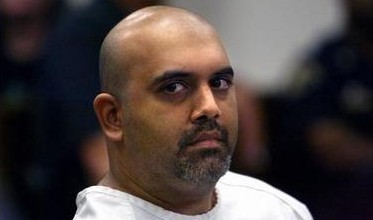 Naveed Afzal Haq
Murderer · USA · 2006
Name: Naveed Afzal Haq Naveed Afzal Haq was an American man of Pakistani descen…
1 victim
Naveed Afzal Haq
Murderer · USA · 2006
Name: Naveed Afzal Haq Naveed Afzal Haq was an American man of Pakistani descen…
1 victim
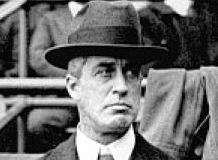 Charles Chapin
Murderer · USA · 1918
Charles Chapin (October 19, 1858 – December 13, 1930) was a New York newspaper…
1 victim
Charles Chapin
Murderer · USA · 1918
Charles Chapin (October 19, 1858 – December 13, 1930) was a New York newspaper…
1 victim
- Gender
- female
- Country
- South Africa
- Location
- Port Elizabeth, Eastern Cape Province, South Africa
- Date of birth
- 1921
- Age at first offence
- 36
- Characteristics
- parricide, poisoner
- Victim profile
- Benjamin Freedman Rheeder (her husband)
- Method of murder
- Poisoning (arsenic)
- Date(s) of murder
- May 8, 1957
- Years active
- 1957
- Date of arrest
- August 7, 1957
- Status
-
Executed
Executed by hanging in Pretoria Central Prison on May 6, 1958
Case overview
Margaret Rheeder was convicted of murdering her husband, Benjamin Rheeder, by administering arsenic. She was later executed by hanging in Pretoria Central Prison on May 6, 1958.
Background
Margaret Rheeder was born on 6 September 1922 at Platbos, a tiny village just outside Knysna in the Cape. By the time her father died, she had six brothers and sisters. Later, her mother married Cornelius Share, who fathered a further five children. During her childhood, Margaret knew the meaning of abject poverty. The house was chronically overcrowded and the family sometimes went hungry. Her stepfather was a sickly man who was often out of work. At one time, they had to depend on an £8 monthly grant provided by the Department of Social Welfare.
In 1934, Cornelius Share died. Margaret and her sisters, Gwen and Olga, were sent to an orphanage in George, where they learnt domestic work.
When Margaret was sixteen, she obtained her first job working as a servant for a family in Paarl. About five years later, she moved briefly to Wynberg. At twenty-one, she returned to Knysna and took a job as a housekeeper in a local hotel.
In Knysna, she met and married her first husband. She had two children, but the marriage was not a happy one. Her husband spent much time away from home and was always in trouble with the police. During his absences, she struck up friendships with other men and she openly boosted of her “conquests”. Ultimately, she divorced him while he was in prison.
In 1951, she met Benjamin Freedman Rheeder on the platform at Great Brak station. The couple had two children and were fleeing unhappy marriages. Margaret offered to keep house for him, and he accepted; she moved to Port Elizabeth with him. On 6 September 1952, Margaret’s thirtieth birthday, the couple were married. Benjamin Rheeder had a stable job as a checker at Port Elizabeth docks, and Margaret had financial security.
The offence
Margaret Rheeder’s marriage developed into hostility, with arguments beginning and increasing. She became critical of his children, complained about his drinking habits, and accused him of flirting with other women. She often complained to her sister, Gwen. Margaret said:
“I don't love him, Gwen,” she would say. “I never did. He doesn't suit me. I only married him out of pity. I'd like to give him a...slow death...”
She said she wanted her next husband to be someone she “really loved”, not the “old, licked-off bones” she was used to.
In October 1955, Margaret and her husband took in a lodger, Johannes Strydom, a twenty-two-year-old railway worker. Margaret visited him in his bedroom while her husband was out at work. As time passed, she became more and more infatuated. Margaret told Strydom:
”I once even smeared rat poison on his sandwiches, Johan,” she said, “but Ben said they smelt funny and threw them away.”
Strydom asked:
”Then why don't you separate?”
Margaret replied:
“Why do you have to kill him?”
She continued:
”Because I'd have to leave with nothing. And I couldn't bear to see him with another woman then,” she replied.
By the end of Summer 1957, the marriage had degenerated into open hostility. Margaret refused to sleep with her husband because of his “carryings-on”.
The sequence of events leading to Benjamin Rheeder’s death began on Saturday 27 April 1957. Margaret went to a pharmacy in Kempston Road, Port Elizabeth, about three kilometres from her home, and purchased a bottle of Antexit ant-killer. She was served by the owner, Mr A. Redhouse, who warned her the insecticide contained arsenic, was extremely dangerous, and had to be kept away from young children and pets. She thanked him for his advice and assured him she would be most careful. She signed the poisons register and left.
On Monday following 27 April 1957, Benjamin Rheeder became violently ill at work. He was still unwell the next day and visited the railway doctor, Dr Edmund Bloch, complaining of pains in the shoulder. Dr Bloch diagnosed fibrositis and prescribed appropriate medication. That night, Rheeder’s condition worsened; he began to retch uncontrollably and suffered excruciating pains in his legs.
At around midnight, he took himself to the casualty department of the provincial hospital. Dr Bloch was summoned; he gave Benjamin an injection to alleviate the pain and asked him to visit the surgery the following day. On Wednesday, Mrs Rheeder telephoned Dr Bloch and told him her husband had greatly improved but was not well enough to make his appointment. Dr Bloch asked her to continue the medication and keep him informed.
The next day, Dr Bloch visited Rheeder at his home. Benjamin complained of vague pains and general nausea, but his condition did not appear serious. Dr Bloch expected him to be up and about in a few days. Five days later, on 7 May, Dr Bloch was called out again; Benjamin’s condition had deteriorated considerably. His tongue was thick and white, and he had continual bouts of diarrhoea and vomiting and difficulty breathing. Dr Bloch suggested transfer to the local hospital for observation either that evening or the following morning, depending on availability; failing this, he would arrange for a specialist to make a house call.
Margaret appeared to assume death was imminent. To neighbour Mrs Fourie, she talked about the insurance money she would receive when Ben passed away. Other neighbours remarked on indifference to Benjamin’s suffering. Margaret was seen calmly ironing in the kitchen while Benjamin cried out in pain in the bedroom.
That night, Kenneth Harker, Margaret’s brother who lived in the same street, went to visit his brother-in-law. Benjamin could hardly swallow. At about 10 p.m., Margaret spoon-fed Benjamin a darkish liquid from a cup, which Harker assumed was medicine. Soon after, Benjamin writhed in agony, clutching his stomach and moaning about “the ‘hellish fires'” that consumed him. Margaret showed little sympathy and said:
“He's just putting it on,” she said.
In the early hours of 8 May, Benjamin Rheeder died. Dr Bloch was called out and signed the death certificate, listing cause of death as heart failure resulting from acute gastroenteritis.
Margaret refused to have Benjamin moved from the bedroom for two-and-a-half days. She had him buried straight from home, expecting to avoid a post mortem. She also attempted to deflect suspicion through innuendo to neighbours about the treatment Benjamin received from Dr Bloch. She claimed Dr Bloch had given Benjamin a “deadly injection” and hastened his end. She said Dr Bloch “had 'put the knife' to Benjamin” because “he was trying to weed out all the Nationalists'”. She repeated the accusation to her brother-in-law. When someone suggested holding a post mortem to substantiate these claims, she dismissed the idea and said:
”I don't need any proof,” she said.
On another occasion, Margaret claimed that after Benjamin had died Dr Bloch turned to her and asked, “What shall we write?” before completing the death certificate.
Investigation
Rumours about the death reached police in Port Elizabeth, Cape Province. Detective-Constable Petrus Rheeder became interested because Margaret and Benjamin shared a surname. Low-key inquiries were made, and the detective questioned Strydom.
An official investigation was instigated. Ten days after Benjamin Rheeder was buried, police called on Margaret Rheeder. They were particularly interested in whether poison was in the house. They took away tablets for analysis; all proved harmless. Police then visited pharmacies in the locality and found Margaret Rheeder’s name in the poisons register at Kempston Road Pharmacy. For a time, police kept this knowledge from her. When she was confronted with the evidence, she claimed she had bought the arsenic on her husband’s instruction, and that he had subsequently thrown it away as he thought it too dangerous to have in the house.
On 11 June, just over a month after the burial, Benjamin Rheeder’s body was exhumed. Sections of his viscera were sent to the Government Chemical laboratories in Johannesburg for analysis. Traces of arsenic were found in the liver, the kidneys, the hair and nails. The evidence indicated that a fatal dose of arsenic had been administered at about 10 p.m. on the night of his death.
Arrest and charge
Margaret Rheeder was arrested on 7 August 1957 and charged with the murder of her husband.
Trial
The trial began at the Criminal Sessions, Port Elizabeth, on 2 November 1957 and lasted eight days. Mr L.C. Barren, the Attorney-General, was State Prosecutor. Margaret Rheeder pleaded not guilty.
Despite evidence against her, she denied all accusations. At one point, she implied her brother Kenneth had also had the opportunity to kill Benjamin because he had visited the house on the afternoon prior to Benjamin’s death. The Attorney-General asked:
”Then are you saying the poisoner was your brother?”
Margaret replied:
”No. I won't say that. I will not bear false testimony.”
The Attorney-General asked:
”Then was it one of your children?”
Margaret replied:
“No.”
The Attorney-General asked:
”Then did your husband commit suicide?”
Margaret replied:
”No. There was no evidence to support that idea.”
The Attorney-General then asked:
”Then if it wasn't suicide and it wasn't you or any other person in the house, who was it that gave him the fatal dose?”
Margaret paused and said finally:
“I don't know,” she said finally. “I don't know,” she said finally.
The trial was concluded on 11 November 1957. Margaret Rheeder was found guilty of murdering her husband. In returning the verdict, the foreman of the jury requested mercy towards her on the grounds that she had suffered “a hell of a life”.
Before sentencing, the judge asked:
”Have you anything to say?”
Margaret was sobbing hysterically and said:
“My heart is too sore, she whispered. I want to go to my two little children.”
The judge sentenced her and said:
”The sentence of the court,” the judge said, “is that you be taken to a place of custody and hanged by the neck until you are dead. And may the lord have mercy on your soul.”
In a state of near-collapse, Margaret Rheeder was helped from the court. She declared her innocence until the very last day of her life.
Confession
As she was taken from the condemned cell to the gallows on May 6, 1957, Margaret finally confessed to the crime for which she had been convicted. She said:
”I cannot go to my death with a lie on my lips,” she said. “Yes, I did give Ben the poison. The last dose was at noon in the glass of water he asked me to give him.”
The confession was not entirely true in relation to the timing of the fatal dose, as the evidence indicated the fatal dose had been administered at about 10 p.m. on the night of Benjamin’s death.
During the trial, Margaret claimed Johannes Strydom had “seduced” her. It transpired that he had ended their relationship three months before Ben’s death.
Outcome
Margaret Rheeder was convicted of murdering her husband and was executed by hanging in Pretoria Central Prison on May 6, 1958.
Other details
People named
- Benjamin Freedman Rheeder (husband; victim)
- Gwen Rheeder (Margaret’s sister)
- Olga (Margaret’s sister)
- Cornelius Share (Margaret’s stepfather; father of further five children)
- Dr Edmund Bloch (railway doctor who treated Benjamin and signed the death certificate)
- Mr A. Redhouse (pharmacy owner who served Margaret when she purchased the ant-killer)
- Johannes Strydom (lodger; related to Margaret’s relationship)
- Kenneth Harker (Margaret’s brother; visited Benjamin)
- Mrs Fourie (neighbour)
- Detective-Constable Petrus Rheeder (detective who initiated inquiries)
- Mr L.C. Barren (Attorney-General; State Prosecutor)
Locations mentioned
- Platbos (outside Knysna in the Cape)
- Knysna
- George (orphanage)
- Paarl (first job after sixteen)
- Wynberg (brief move)
- Great Brak station
- Port Elizabeth
- Kempston Road (pharmacy location)
- provincial hospital and casualty department in Port Elizabeth
- Government Chemical laboratories in Johannesburg
- Criminal Sessions, Port Elizabeth
- Pretoria Central Prison
Medication and substance details
Margaret purchased a bottle of Antexit ant-killer. The insecticide contained arsenic. Arsenic was described as a metallic element obtained mainly from algar or orpiment ore, and as processed arsenic usually taking the form of a white powder that looked much like flour at sugar. The text described arsenic as a favourite of poisoners since the eighth century, and noted its faintly sweet taste, cumulative administration in small doses, symptoms of chronic poisoning, and the statement that “Two grains (130 mg) is recognized as a fatal dose.”
Spotted an error, or have more information about this case?