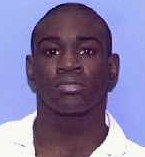
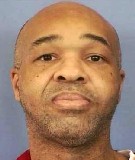
Jamaal Howard
Murderer Russell Ellwood
Murderer · USA · 1991
Russell Ellwood was a former taxi driver. Authorities suspected him of killing…
20 victims
Russell Ellwood
Murderer · USA · 1991
Russell Ellwood was a former taxi driver. Authorities suspected him of killing…
20 victims
 Robert Martines Perez
Murderer · USA · 1994
Name: Robert Martines Perez · Other name used in proceedings: Robert Martinez P…
15 victims
Robert Martines Perez
Murderer · USA · 1994
Name: Robert Martines Perez · Other name used in proceedings: Robert Martinez P…
15 victims
 Billy Frank Vickers
Murderer · USA · 1993
Billy Frank Vickers Vickers was executed by lethal injection in Texas on Januar…
14 victims
Billy Frank Vickers
Murderer · USA · 1993
Billy Frank Vickers Vickers was executed by lethal injection in Texas on Januar…
14 victims
 Mayra Perez
Murderer · USA · 2013
Mayra Perez was 23 and lived in northeast Denver with her husband, Ricky Perez,…
2 victims
Mayra Perez
Murderer · USA · 2013
Mayra Perez was 23 and lived in northeast Denver with her husband, Ricky Perez,…
2 victims
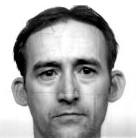 Stephen McCoy
Murderer · USA · 1980
Stephen A. McCoy was executed by lethal injection in Texas on May 24, 1989. He…
2 victims
Stephen McCoy
Murderer · USA · 1980
Stephen A. McCoy was executed by lethal injection in Texas on May 24, 1989. He…
2 victims
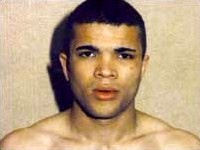 Stephen Akinmurele
Serial killer · United Kingdom · 1995
Stephen Akinmurele was accused in connection with the deaths of multiple pensio…
5 victims
Stephen Akinmurele
Serial killer · United Kingdom · 1995
Stephen Akinmurele was accused in connection with the deaths of multiple pensio…
5 victims
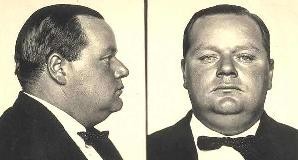 Roscoe Arbuckle
Homicide ? · USA · 1921
Roscoe Conkling Arbuckle, also known as Fatty Arbuckle (March 24, 1887 – June 2…
1 victim
Roscoe Arbuckle
Homicide ? · USA · 1921
Roscoe Conkling Arbuckle, also known as Fatty Arbuckle (March 24, 1887 – June 2…
1 victim
- Gender
- male
- Country
- USA
- Location
- Hardin County, Texas, USA
- Date of birth
- February 8, 1980
- Age at first offence
- 20
- Characteristics
- robbery, drug addict, mentally ill
- Victim profile
- A 42 year old white female clerk
- Method of murder
- Shooting
- Date(s) of murder
- May 12, 2000
- Years active
- 2000
- Date of arrest
- —
- Status
-
Sentenced to death
Sentenced to death on April 26, 2001
Case record
Identifiers
- Name: Jamaal Howard
- TDCJ Number: 999383
- Date of Birth: 02/08/1980
Charges and conviction
- Convicted of: capital murder
- Capital murder offense date: May 12, 2000
- Trial sentencing: death sentence was imposed on April 26, 2001
Offence
On 5/12/2000, Howard robbed a convenience store in Silsbee. During the robbery, Howard shot a 42 year old white female clerk one time in the chest, causing her death. Howard took $114 from the cash register during the robbery.
- Victim: white female clerk, age 42
- Number of victims: 1
- Method: Howard shot the victim once in the chest
- Property taken: $114 from the cash register
Investigation and evidentiary details
- The offense was recorded on videotape.
- Howard denied committing the offense until he was told it was videotaped.
- Howard told the officer who took his statement that he was not sorry for committing the offense.
Trial
The case was heard in the Court of Criminal Appeals of Texas, No. 74,118: Jamaal Howard, Appellant, v. The State of Texas.
A direct appeal to the Court of Criminal Appeals was automatic. The appellant raised nine points of error. The court affirmed the judgment. The court was en banc.
Special issues and sentencing basis
Pursuant to the jury's answers to the special issues set forth in Code of Criminal Procedure Article 37.071, Sections 2(b) and 2(e), the trial judge sentenced Howard to death.
Appeals
Appeal decision
- Appeal from: Hardin County
- Opinion date: October 13, 2004
- Judges: Meyers and Holcomb, JJ., dissent.
- Disposition: The court affirmed the judgment.
Grounds raised and determinations
Sixth point of error — future dangerousness (overruled). Howard claimed the evidence was legally insufficient to support the jury's verdict on the issue of his future dangerousness. He argued there was no evidence of premeditation to commit the murder and that he had no history of prior criminal violence. The Court reviewed the relevant evidence in a light most favorable to the verdict and overruled the point.
Evidence summarized by the Court included:
- Howard stole a gun from his grandfather the night before the murder and hid it.
- Howard retrieved the gun the following morning and walked several blocks from his house to the Chevron store.
- Howard peered in the windows, entered the store, went into the secured office area where the victim was sitting, cocked the gun, and shot the victim in the chest.
- Howard stole $114.00 from the cash register.
- Howard reached over the dying victim to steal a carton of cigarettes before leaving.
At the punishment stage:
- The State presented evidence that Howard demonstrated a disregard for authority and school rules despite continued efforts of his mother and educators.
- During one incident, Howard punched a pregnant teacher in the chest with his fist when she asked him to return to his seat.
- When Howard was assigned to an alternative school, he refused to comply with its rules and standards, and he was defiant and disruptive.
- The State presented evidence of Howard's possession of controlled substances, fighting with police officers and resisting arrest, committing several burglaries as a juvenile, and fighting with other inmates.
- Dr. Edward Gripon testified for the State that Howard was not suffering from schizophrenia, but rather was suffering from antisocial personality disorder.
The Court concluded that, based on Howard’s actions, his past history of assaultive conduct, disregard for authority and rules, drug offenses, juvenile offenses, and the expert testimony, the jury could rationally conclude beyond a reasonable doubt that Howard would probably commit criminal acts of violence that would pose a continuing threat to society.
Seventh point of error — mitigation special issue (overruled). Howard claimed the evidence was insufficient to support the jury's verdict on the mitigation special issue and argued that refusal to review mitigation violated the right to a meaningful appellate review. The Court stated it had repeatedly declined to review the sufficiency of mitigating evidence and overruled the point.
First point of error — prosecutor’s jury argument at punishment (overruled). Howard claimed the trial court erred in overruling his objection to the prosecutor's jury argument at punishment as outside the record. The objection was overruled.
During the punishment stage, the prosecutor argued:
- “When he is not waiting for capital murder trial and not going to have to be on his best behavior, then what is he going to act like? Gang activity, 5-9 Hoover Crypts [ sic ], and Crypts [ sic ] are in prison, too. He will fall right in with his old buds; extortion, rape, drug trafficking --”
Previously, the prosecutor made similar statements without objection, including:
- “ [U]ntil Dr. Laine's medical record came in through Dr. Fason and -- I didn't know that the defendant had been stalking a girl and I didn't know that he had told Dr. Laine that he admitted to being a gang member, smoking marijuana , drinking alcohol, carrying a gun. (Emphasis added).”
- The prosecutor further argued without objection that Howard would have the opportunity to join prison gangs and participate in activities:
- “The gentleman from the prison prosecution unit told you also that drugs are a big factor with prison gangs, that they sell drugs to make money in prison gangs. So, this will be another indication that [the appellant] would have the opportunity, if he wants to, if he hadn't learned his lesson, that he is going to be a future danger.”
The Court concluded that any error was harmless given the jury's previous exposure to similar arguments.
Third point of error — prosecutor’s comments and failure to show remorse (overruled). Howard claimed the prosecutor's argument at punishment was a comment on his failure to testify in violation of the Fifth Amendment and could not be understood as based on his discussion with Ranger Wilson. The Court overruled the point.
During closing argument, the prosecutor commented:
- “[Prosecutor]: That's the type of person you're dealing with in Jamaal Howard. And since that time not one feeling of remorse, not one word of sorry. [Defense objection, overruled]”
- “[Prosecutor]: In fact, he told Ranger Wilson, "I'm not sorry." That's the type of person you are dealing with in Jamaal Howard.”
Texas Ranger L.C. Wilson took Howard’s written statement. An excerpt from Wilson’s testimony included:
- “[Prosecutor]: Did [appellant] give any reason why he did it? [Wilson]: No. No, he never did. Q. Did he express any remorse to you? A. No, he didn't, you know, because right at the end of that statement I asked him, I said, "Jamaal, you know, in a year or so from now a jury is going to hear this and they are going to want to know why you did it. You know, now is your chance, you know. I'm asking you to explain to anybody." He didn't have a reason. I asked him, you know, "Do you have any remorse for this?" He said, "No." And I said, "You're willing to sign that statement? You have no remorse?" And he did.”
The Court held the prosecutor’s argument was a proper summation of the evidence because Wilson testified that Howard told him he had no remorse.
Second point of error — execution of mentally retarded person under the Eighth Amendment (overruled). Howard argued that a procedure allowing the death penalty for defendants with mental retardation violated the Eighth Amendment and that mentally retarded individuals must be excluded as a class from execution. The Court applied definitions and guidelines referenced from Atkins v. Virginia and Ex parte Briseno and rejected Howard’s Eighth Amendment claim.
Evidence considered by the Court included:
- Defense expert Dr. James Duncan testified Howard had borderline to mildly impaired intellectual functioning.
- A definition of mental retardation from the “Persons with Mental Retardation Act” (Health & Safety Code, Chapter 591) was applied, including:
- “‘Mental retardation’ means significantly subaverage general intellectual functioning that is concurrent with deficits in adaptive behavior and originates during the developmental period.”
- The “significantly subaverage general intellectual functioning” category was defined as an IQ of 70 or below.
- Adaptive behavior was defined as the effectiveness with or degree to which a person meets standards of personal independence and social responsibility expected for the person's age and cultural group.
- The developmental period was understood as the period before age 18.
The Court stated there was little testimony bearing on limitations in adaptive behavior beyond testimony about lack of personal hygiene. The Court also discussed conflicting expert views on mental illness and intellectual functioning:
- Dr. Fred Fason, a defense expert, testified that when he first met Howard and began administering psychological tests, Howard did not know some of the words in the first few questions. Fason concluded Howard could not read at the sixth grade level and questioned whether Howard was mentally retarded. Fason later discovered Howard had started school as a very bright student, with performance in the ninetieth percentile in math in second grade and dropping to about the thirtieth percentile in fifth grade. Fason theorized the decline was due to the onset of schizophrenia.
- An independent expert, Dr. Duncan, reached a similar conclusion. At one competency hearing, Duncan testified he gave Howard portions of an I.Q. test and Howard tested in the borderline to mildly impaired range which Duncan said was the level of an eleven or twelve year-old. On cross-examination, it was emphasized that Duncan had given only portions of an I.Q. test and based an estimate of Howard’s I.Q.
- The State’s expert, Dr. Gripon, testified Howard’s problems in school stemmed solely from an attention-deficit disorder addressed when he took medication; when Howard refused to take his medication, grades declined and behavior deteriorated. Gripon did not see evidence that Howard suffered from schizophrenia.
- The Court held the testimony was not sufficiently developed to establish that Howard was “mentally retarded” under the Briseno guidelines, so it rejected the Eighth Amendment claim.
Fourth and fifth points of error — ineffective assistance of counsel (overruled). Howard claimed ineffective assistance of counsel when trial counsel failed to introduce expert-witness testimony that he had an I.Q. in the range of 65 to 70. The Court overruled both points.
The Court discussed:
- At the competency hearing, Duncan testified Howard received only “some portions” of an I.Q. test to arrive at an “estimate” and that Duncan would say the range was “65 to 70 kind of I.Q. range.”
- At the guilt phase, Duncan testified only to “borderline to mildly impaired functioning,” and neither his specific I.Q. range nor related testimony was elicited before the jury.
- Under Strickland v. Washington and Ex parte Varelas, the Court addressed deficiency and prejudice and found the appellant did not show the outcome would have been different if the testimony had been elicited.
- The Court found counsel’s decision could be seen as reasonable trial strategy given the speculative weight and susceptibility to cross-examination, and it held Howard did not demonstrate prejudice.
Eighth and ninth points of error — ineffective assistance of counsel for failing to object to “stalking” argument (overruled). Howard claimed trial counsel was ineffective by failing to object to the prosecutor’s argument that Howard had been “stalking” someone when Howard argued no such evidence was introduced.
The prosecutor’s punishment-stage argument included:
- “Then we find out that he was stalking a young lady. That's a threat of violence.”
The Court also discussed cross-examination of defense witness Dr. Fred Fason where the prosecutor questioned Fason about history including stalking:
- “[Prosecutor]: And subsequent to that, as an adult, having charges related to delivery of cocaine, possession of cocaine, would that be important in making that diagnosis? [Fason]: Well, it's something you take into consideration; but it wouldn't be -- it's not pathognomonic of -- of any social personality disorder.”
- “Q. And even the history that his mother gave you that he was stalking some young lady -- A. Yes.”
- “Q. -- would that be important in diagnosing antisocial personality? A. Not in the way it was presented, no. I mean it's significant . It's another -- it's much like -- arriving at a diagnosis, in a way, is kind of like working a jigsaw puzzle. You take a whole bunch of different pieces and you see how they fit together to come out with a picture; and that would be a piece of the puzzle.”
- “Q. And taking that all together, you know, a history from the age of 13, from theft, to 15, 16, dealing drugs, to stalking , to capital murder, all that taken together doesn't that kind of suggest that there may be an antisocial personality here? (Emphasis added).”
The Court stated Fason did not refute the suggestion and affirmed the prosecutor’s suggestion, so the prosecutor’s argument referring to the evidence was not objectionable. The Court overruled the points.
Sentencing
- Howard was sentenced to death on April 26, 2001, following jury answers to special issues under Texas law.
Other details
Offender background and attributes (as stated)
- Age at the offense: 20
- Date received: 04/26/2001
- Age when received: 21
- Education level: 11
- County: Hardin
- Race: Native
- Gender: male
- Hair color: black
- Height: 5 ft 9 in
- Weight: 142
- Eye color: brown
- Native state: Texas
- Prior occupation: Hardin Texas laborer
- Prior prison record: None
Co-defendants
- Co-defendants: None
Prior/disciplinary-related facts discussed on appeal
The Court described evidence presented at punishment, including:
- possession of controlled substances
- fighting with police officers and resisting arrest
- several burglaries as a juvenile
- fighting with other inmates
- a history of disregard for authority and school rules
- an incident where Howard punched a pregnant teacher in the chest with his fist
- refusal to comply with alternative school rules and standards and being defiant and disruptive
Expert testimony referenced in appeal
- Dr. Edward Gripon: not schizophrenia; antisocial personality disorder; attention-deficit disorder linked to school problems; deterioration when medication was refused.
- Dr. Fred Fason: declining performance due to onset of schizophrenia; testimony about test word knowledge, sixth grade reading level question, and school performance history.
- Dr. James Duncan: borderline to mildly impaired intellectual functioning; portion-based I.Q. test estimates at one competency hearing.
Appellate procedural notes included in the opinion
- The appeal was delivered October 13, 2004 and the Court was en banc.
- The opinion was marked “Publish.”
- The court cited Tex. Penal Code § 19.03(a) and Tex. Code Crim. Proc. art. 37.071, § 2(g) and related provisions.
Timeline
- 05/12/2000 — Howard robbed a convenience store in Silsbee; he shot the 42-year-old white female clerk once in the chest and took $114 from the cash register.
- 04/26/2001 — Howard was sentenced to death.
- 10/13/2004 — The Court of Criminal Appeals of Texas delivered its en banc decision affirming the judgment.
Spotted an error, or have more information about this case?