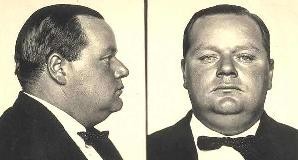
Roscoe Arbuckle
Homicide ?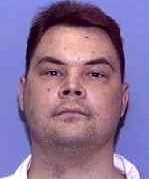 Robert Springsteen
Homicide ? · USA · 1991
Robert Springsteen IV (TDCJ number 999389) was the defendant. Springsteen was b…
4 victims
Robert Springsteen
Homicide ? · USA · 1991
Robert Springsteen IV (TDCJ number 999389) was the defendant. Springsteen was b…
4 victims
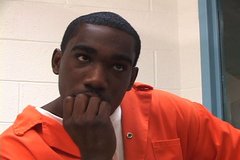 Ryan Matthews
Homicide ? · USA · 1997
Ryan Matthews was an African American juvenile who was 17 years of age at the t…
1 victim
Ryan Matthews
Homicide ? · USA · 1997
Ryan Matthews was an African American juvenile who was 17 years of age at the t…
1 victim
 Andrew Kehoe
Mass murderer · USA · 1927
Andrew P. Kehoe committed suicide the same day by killing himself in the explos…
44 victims
Andrew Kehoe
Mass murderer · USA · 1927
Andrew P. Kehoe committed suicide the same day by killing himself in the explos…
44 victims
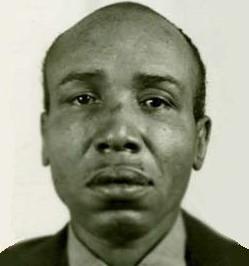 Jake Bird
Serial killer · USA · 1930
October 30, 1947 — Jake Bird broke into the home of Bertha Kludt and her daught…
44 victims
Jake Bird
Serial killer · USA · 1930
October 30, 1947 — Jake Bird broke into the home of Bertha Kludt and her daught…
44 victims
 Helmuth Schmidt
Serial killer? · USA · 1918
Helmuth Schmidt used a false name to place advertisements, which lured young, l…
30 victims
Helmuth Schmidt
Serial killer? · USA · 1918
Helmuth Schmidt used a false name to place advertisements, which lured young, l…
30 victims
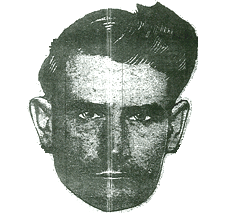 Henry Lee Moore
Serial killer · USA · 1911
Henry Lee Moore was sentenced to life in prison in Missouri in 1913. He was rel…
26 victims
Henry Lee Moore
Serial killer · USA · 1911
Henry Lee Moore was sentenced to life in prison in Missouri in 1913. He was rel…
26 victims
 Edgardo Rafael Cubas
Murderer · USA · 2002
Edgardo Rafael Cubas (also spelled Edgardo Rafael Cuba and Edgardo Rafael Cubas…
4 victims
Edgardo Rafael Cubas
Murderer · USA · 2002
Edgardo Rafael Cubas (also spelled Edgardo Rafael Cuba and Edgardo Rafael Cubas…
4 victims
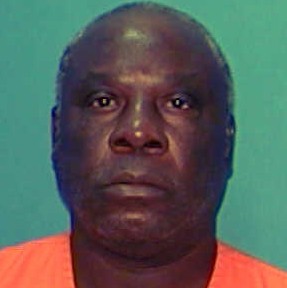 Daniel Burns
Murderer · 1987
Daniel Burns, Jr. was prosecuted in the Twelfth Judicial Circuit, Manatee Count…
1 victim
Daniel Burns
Murderer · 1987
Daniel Burns, Jr. was prosecuted in the Twelfth Judicial Circuit, Manatee Count…
1 victim
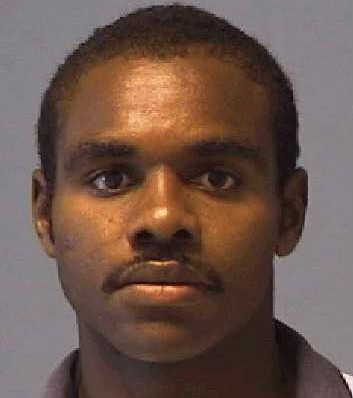 Clinton Bankston
Homicide · USA · 1987
15 August 1987 — Ann Morris (63), her sister Sally Nicholson (59), and Sally’s…
5 victims
Clinton Bankston
Homicide · USA · 1987
15 August 1987 — Ann Morris (63), her sister Sally Nicholson (59), and Sally’s…
5 victims
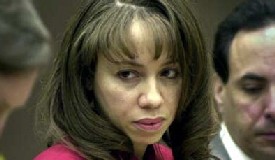 Dionne Baugh
Murderer · USA · 1996
Dionne Baugh was a Jamaican native who lived in Atlanta, Georgia. After her div…
1 victim
Dionne Baugh
Murderer · USA · 1996
Dionne Baugh was a Jamaican native who lived in Atlanta, Georgia. After her div…
1 victim
 Hannah Ocuish
Homicide · USA · 1786
Hannah Ocuish was a Native American girl who was executed by hanging in New Lon…
1 victim
Hannah Ocuish
Homicide · USA · 1786
Hannah Ocuish was a Native American girl who was executed by hanging in New Lon…
1 victim
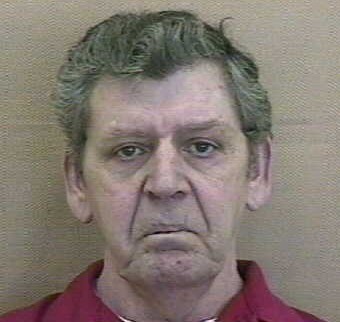 George Franklin Page
Homicide · USA · 1995
George Franklin Page was male, white, and aged 63. He served 16 years in the mi…
1 victim
George Franklin Page
Homicide · USA · 1995
George Franklin Page was male, white, and aged 63. He served 16 years in the mi…
1 victim
- Gender
- male
- Country
- USA
- Location
- San Francisco, California, USA
- Date of birth
- March 24, 1881
- Age at first offence
- 40
- Characteristics
- rape
- Victim profile
- Virginia Rappe, 30 (aspiring actress)
- Method of murder
- —
- Date(s) of murder
- September 3, 1921
- Years active
- 1921
- Date of arrest
- —
- Status
-
Died in custody
Not guilty verdict on April 12, 1922; died on June 29, 1933
Case record: Roscoe Arbuckle
Personal details
Roscoe Conkling Arbuckle, also known as Fatty Arbuckle (March 24, 1887 – June 29, 1933), was an American silent film comedian, director, and screenwriter.
Background and career
Arbuckle was noted as one of the most popular actors of his era, but he was best remembered for a heavily publicized criminal prosecution that ended his career. Although he was acquitted by a jury with a written apology, the trial scandal ruined him, and he would not appear on screen again for another 10 years.
He was born in Smith Center, Kansas, to Mollie and William Goodrich Arbuckle. He had several years of Vaudeville experience, including work at Idora Park in Oakland, California. One of his earliest mentors was comedian Leon Errol.
He began his film career with the Selig Polyscope Company in July 1909. He appeared sporadically in Selig one-reelers until 1913, moved briefly to Universal Pictures, and became a star in producer-director Mack Sennett's Keystone Cops comedies. He was also a talented singer. After Enrico Caruso heard him sing he urged the comedian to "give up this nonsense you do for a living, with training you could become the second greatest singer in the world".
On August 6, 1908 he married Araminta Estelle Durfee (1889-1975), the daughter of Charles Warren Durfee and Flora Adkins. Durfee starred in many early comedy films under the name Minta Durfee, often with Arbuckle.
Despite his massive physical size, Arbuckle was described as agile and acrobatic. Mack Sennett, when recounting his first meeting with Arbuckle, noted that he "skipped up the stairs as lightly as Fred Astaire"; and, "without warning went into a feather light step, clapped his hands and did a backward somersault as graceful as a girl tumbler".
His comedies were noted as rollicking and fast-paced, with many chase scenes and feature sight gags. Arbuckle was fond of the "pie in the face" gag, which symbolized silent-film-era comedy. The earliest known use of this gag was in the June 1913 Keystone one-reeler A Noise from the Deep, starring Arbuckle and frequent screen partner Mabel Normand.
In 1914 Paramount Pictures made an offer of $1,000 a day/25% of all profits/complete artistic control to make movies with them. The movies were so lucrative and popular that in 1918 they offered Arbuckle a 3-year/$3 million contract. Arbuckle disliked his screen nickname given because of his substantial girth. The name Fatty (big buster) was described as identifying the character portrayed on-screen, not Arbuckle himself. When Arbuckle portrayed a female, the character was named "Miss Fatty" (as in the film Miss Fatty's Seaside Lovers). Arbuckle discouraged anyone from addressing him as "Fatty" off-screen.
Film partners and mentorship
Buster Keaton received Arbuckle's first film-making work in his 1917 short, The Butcher Boy. They became screen partners, with deadpan Buster soberly assisting Roscoe in his adventures. When Arbuckle was promoted to feature films, Keaton inherited the short-subject series that launched his own career as a comedy star. Their close friendship was described as never wavering through tragedy and the depression and downfall that followed.
Charlie Chaplin was described as being mentored by Arbuckle after English actor Charlie Chaplin joined Keystone Studios in 1914. Chaplin's famous character "the Tramp" was described as being created after Chaplin "borrowed" Arbuckle's trademark balloon pants, boots, and tiny hat.
Pseudonym and naming
Arbuckle also directed a number of comedy shorts under the pseudonym William Goodrich for Educational Pictures, which featured lesser-known comics of the day. A person named Louise Brooks (who played the ingenue in one of them) told Kevin Brownlow:
"He made no attempt to direct this picture. He sat in his chair like a man dead. He had been very nice and sweetly dead ever since the scandal that ruined his career. But it was such an amazing thing for me to come in to make this broken-down picture, and to find my director was the great Roscoe Arbuckle. Oh, I thought he was magnificent in films. He was a wonderful dancer -- a wonderful ballroom dancer, in his heyday. It was like floating in the arms of a huge doughnut -- really delightful."
According to author David Yallop in The Day the Laughter Stopped (a biography of Arbuckle with special attention to the scandal and its aftermath), Arbuckle's father's full name was William Goodrich Arbuckle. A persistent but unsupported legend credited Keaton with suggesting Arbuckle become a director under the alias "Will B. Good". Arbuckle adopted the more formal pseudonym "William Goodrich". Yallop's book also stated that Roscoe Arbuckle was extremely large and heavy even at birth and that William Goodrich Arbuckle did not believe the child was his own offspring; this disbelief led him to name the child after a politician he despised: Roscoe Conkling.
The offence and allegations
At the height of his career, Arbuckle was under contract to Paramount Studios for $1 million a year and worked tirelessly filming three feature films simultaneously.
On September 3, 1921 Arbuckle drove to San Francisco with two friends—Lowell Sherman and cameraman Fred Fischbach—taking a break from his film schedule. The three checked into the St. Francis Hotel, decided to have a party, and invited several women to their suite. During the carousing, a 30-year-old aspiring actress named Virginia Rappe became seriously ill and was examined by the hotel doctor, who concluded her symptoms were mostly caused by intoxication. Rappe died three days later of peritonitis caused by a ruptured bladder.
Rappe's companion at the party, Maude Delmont, claimed before a grand jury that Arbuckle had somehow pierced Rappe's bladder while raping her. Rappe's manager Al Semnacker accused Arbuckle of using a piece of ice to simulate sex with her, which led to the injuries. The narrative was described as having evolved in newspapers into being a Coca-Cola or Champagne bottle, instead of a piece of ice. Witnesses testified that Arbuckle rubbed the ice on Rappe's stomach to ease her abdominal pain.
Arbuckle denied any wrongdoing and was described as being confident that he had nothing to be ashamed of. Delmont later made a statement to the police incriminating Arbuckle in an attempt to extort money from Arbuckle's attorneys; the matter soon spun out of her control.
During the first trial, the judge found no evidence of rape, but decided Arbuckle could be tried for manslaughter. The first trial is described as a prosecution case that was often met with laughter from the courtroom; spectators stood and cheered for Arbuckle after he testified.
The status requirement included a rape issue: the case record reflected a “Not guilty verdict on April 12, 1922” and the characteristics list included “Rape ?”.
Investigation and evidence issues
Delmont had a long criminal record with convictions for racketeering, bigamy, fraud, and extortion. The defense had also obtained a letter from Delmont admitting to a plan to extort Arbuckle.
During the hearing, despite the judge threatening a motion to dismiss the case, the prosecutor refused to allow the only witness accusing Arbuckle, Maude Delmont, to take the stand and testify. The defense arguments included that Delmont’s changing story meant that forcing her to testify would end any chance of going to trial.
Additional evidence issues were described across subsequent trials. In the second trial, Zey Prevon testified that the district attorney forced her to lie. Another witness who claimed Arbuckle had bribed him turned out to be an escaped prisoner charged with assaulting an 8 year old girl. Fingerprint experts testified that fingerprint evidence was faked.
Trial and courtroom proceedings
The prosecutor was San Francisco District Attorney Mathew Brady, described as determined to get a conviction as he planned to use the case in his campaign to run for governor. Brady made public pronouncements of Arbuckle’s guilt and pressured witnesses to make false statements.
Arbuckle’s defense included holding materials and arguments that were described as undermining the prosecution’s case; the judge was described as having demolished the prosecution's evidence and harangued Brady for producing a flimsy case in the first trial.
The first trial ended with the jury returning a deadlocked 10 - 2 not guilty verdict and a mistrial was declared.
The second trial presented the same evidence but included testimony that the district attorney forced a witness to lie. The second trial ended with the jury deadlocked with a 10 - 2 guilty verdict and a mistrial was declared.
The third trial followed a period in which newspapers were filled for seven months with alleged stories of Hollywood orgies, murder, sexual perversity, and lies about Arbuckle's case. Maude Delmont toured the country giving one-woman shows as "The woman who signed the murder charge against Arbuckle", lecturing on the evils of Hollywood. In the third trial, the jury deliberated for a mere 6 minutes and returned a unanimous not guilty verdict. Five of the minutes were described as being taken to write a statement of apology.
The jury’s written apology was described as unprecedented in American justice:
"Acquittal is not enough for Roscoe Arbuckle [they wrote]. We feel that a great injustice has been done him ... there was not the slightest proof adduced to connect him in any way with the commission of a crime. He was manly throughout the case and told a straightforward story which we all believe. We wish him success and hope that the American people will take the judgement of fourteen men and women that Roscoe Arbuckle is entirely innocent and free from all blame."
Timeline (dated events)
- July 1909 — Arbuckle began his film career with the Selig Polyscope Company.
- June 1913 — The earliest known "pie in the face" gag was used in the Keystone one-reeler A Noise from the Deep, starring Arbuckle and Mabel Normand.
- 1914 — Paramount Pictures made an offer of $1,000 a day/25% of all profits/complete artistic control to make movies with them.
- 1917 — Arbuckle gave Buster Keaton his first film-making work in The Butcher Boy.
- 1918 — Paramount offered Arbuckle a 3-year/$3 million contract.
- August 6, 1908 — Arbuckle married Araminta Estelle Durfee.
- September 3, 1921 — Arbuckle drove to San Francisco with Lowell Sherman and Fred Fischbach and checked into the St. Francis Hotel; Virginia Rappe became seriously ill.
- December 31, 1921 — Arbuckle wrote "In His Own Words - Roscoe On The Scandal" ending with “Roscoe Arbuckle December 31, 1921”.
- April 12, 1922 — Not guilty verdict.
- June 29, 1933 — Arbuckle died.
- January 27, 1925 — Arbuckle divorced Araminta Estelle Durfee in Paris.
- May 16, 1925 — Arbuckle married Doris Deane.
- June 21, 1931 — Roscoe married Addie Oakley Dukes McPhail (later Addie Oakley Sheldon, 1906-2003) in Erie, Pennsylvania.
- June 28, 1933 — Arbuckle finished filming the last of the two-reelers.
- April 19, 1922 — Will Hays made the first major policy decision banning Arbuckle from the screen.
- September 10, 1921 — Arbuckle heard that Virginia Rappe had died in a San Francisco hospital.
- November 28, 1921 — Arbuckle went on the witness stand to tell his story for the first time.
- September 5, 1921 — During a weekend party at the Saint Francis Hotel in San Francisco, Virginia Rappe ran screaming from a bedroom and died four days later.
- September 17, 1921 — Arbuckle was arraigned in San Francisco charged with the rape and murder of Virginia Rappe.
- April and May of 2006 — The Museum of Modern Art in New York City exhibited most of the surviving Arbuckle films.
Defence narrative and quoted statement by Arbuckle
Arbuckle’s statement included that he had the hardest thing he had ever done was to keep still for twelve weeks between September 10 and November 28, when he went on the witness stand to tell his story for the first time. He stated:
"The hardest thing I have ever done in my life was to keep still for the twelve weeks between September 10th, when I heard that Virginia Rappe had died in a San Francisco hospital, and November 28, when I went on the witness stand to tell my story for the first time. As soon as I was told that I was being held responsible for Miss Rappe's death and that I would have to clear myself in the eyes of a jury and of the world, I wanted to tell the truth. No one but myself could tell the whole truth of the affair, for no one else knew. Other people knew part of the story, and some of them thought that they knew a great deal more than they really did, but I alone could tell everything."
He stated he did not hurt Virginia Rappe:
"I did not hurt Virginia Rappe in any way whatever. I never had any intention of hurting her. I would not hurt any woman."
He described the party and who came to his rooms, stating:
"People have talked about me as entertaining a gay party in my rooms at the hotel that day. It has been referred to again and again as the "Arbuckle party." It wasn't my party at all."
He described seeing Virginia Rappe go into Room 1221 and not seeing her come out again, and described entering Room 1219 intending to dress after the automobile arrived. He described opening a bathroom door and finding Miss Rappe lying on the floor clutching her body and moaning:
"As I opened the door, it struck against something. I pushed in, and saw Miss Rappe lying on the floor, clutching her body with both hands and moaning."
He described picking her up and holding her, and then later described finding Zey Prevost [Prevon] there and sending for help:
"Then I went out into 1220, and found Zey Prevost [Prevon] there. I said: "Virginia is sick" and Miss Prevost went into Room 1219."
He described Mrs. Delmont arriving, tearing at her clothing, and removing clothing by helping:
"She had both hands gripped in her waist, and was ripping it to shreds, gritting her teeth and making noises."
He described asking Mrs. Delmont and Miss Prevost to make Miss Rappe stop tearing her clothing. He described sending over to her and taking hold of the sleeve:
"I sent over to her and took hold of the sleeve, and pulled it off, saying: "All right, if you want it off, I'll help you.""
He described later returning and seeing Mrs. Delmont rubbing her with a piece of ice:
"After that I went out of the room, and when I came back a little later, Miss Rappe was lying unclothed on the bed and Mrs. Delmont was rubbing her with a piece of ice."
He described his anger when Mrs. Delmont told him to shut up, and the statement:
"Mrs. Delmont turned on me angrily and told me to shut up and mind my own business--that she knew how to take care of Virginia."
He described the allegation about what he said and denied threatening behavior:
"Mrs. Delmont turned on me angrily and told me to shut up and mind my own business--that she knew how to take care of Virginia. It made me angry, for all I wanted to do was to help the sick girl and Mrs. Delmont was talking to me in a way I didn't like, so I told her to shut up or I would throw her out of the window. Of course, I wouldn't really have done it; it was just one of those things one says in a moment of anger without any idea of literal meaning."
He described rolling Miss Rappe in a bathrobe and having the manager lift her:
"We rolled her up in a bathrobe--she had been lying nude on the bed all this time, and uncovered except after I had managed to pull the spread out from under her and cover her with it."
He described returning after he was told of her death and stated:
"I did not know that Virginia Rappe was even seriously ill until I got word of her death."
He disputed screams and fingerprint claims:
"The State's witnesses have testified that they heard screams coming from my rooms. I know that all afternoon the window was wide open, and any sound louder than an ordinary conversation could have been heard without any difficulty; and people who occupied adjoining rooms have declared that they heard nothing."
He stated:
"They have made a great deal out of some finger prints that were found on the door of Room 1219--the door that lead into the hallway."
He stated he did not put marks on the door and denied touching it:
"I am positive that I never touched that door with my hand all day, as I had not gone out into the hallway, but only into the other rooms of the suite."
He discussed Jesse Norgaard’s testimony:
"Jesse Norgaard, who said he was a janitor at the Culver City studios when Miss Rappe and I were both working there, testified that once I asked him for the keys to her rooms, saying that I wanted to play a joke on her."
He stated he did not make the request and did not offer money:
"I never made any such request of Norgaard, nor did I offer him money for the keys, as he said I did."
He described having been denied a chance to tell his full story earlier and said:
"It has been made to sound as if I had said that to Virginia Rappe while she lay there suffering and ill."
He concluded with claims about moral acquittal and gratitude to the jury message:
"While, through the technicalities of the law, I have not been legally acquitted of the charge of manslaughter in connection with the death of Virginia Rappe, I have been morally acquitted."
And:
"After the organized propaganda, designed to make the securing of an impartial jury an impossibility and to prevent my obtaining a fair trial, I feel grateful for this message from the jury to the American people."
He ended his statement with the date:
"Roscoe Arbuckle December 31, 1921"
Sentencing
No sentencing outcome was stated in the provided material. The final outcome given was a not guilty verdict.
Outcome
The jury returned a unanimous not guilty verdict in the third trial. The jury also wrote a statement of apology. The status field reflected a not guilty verdict on April 12, 1922.
Aftermath and later events
After the verdict, the censorship board banned Roscoe Arbuckle from ever working in U.S. movies again six days after the verdict.
Owing to the scandal, most exhibitors declined to show Arbuckle's latest films. It was noted that one of the few feature-length films known to survive was Leap Year, which was one of two finished films Paramount withheld the release of amid the scandal. It was eventually released in Europe, but was never theatrically released in the United States or Britain.
After the case, Arbuckle divorced Araminta Estelle Durfee in Paris on January 27, 1925; she had charged desertion. Arbuckle married Doris Deane on May 16, 1925.
Arbuckle was described as trying to return to moviemaking, but industry resistance to distributing his pictures lingered after his acquittal; he retreated into alcoholism. His first wife was quoted:
"Roscoe only seemed to find solace and comfort in a bottle."
Buster Keaton attempted to help Arbuckle by giving him work on Keaton's films. Arbuckle wrote the story for a Keaton short called "Daydreams." It was alleged that Arbuckle allegedly co-directed scenes in Sherlock, Jr., but it was unclear how much remained in the final cut.
Arbuckle directed comedy shorts under the pseudonym William Goodrich for Educational Pictures. Louise Brooks made additional remarks about him:
"He was a wonderful dancer -- a wonderful ballroom dancer, in his heyday. It was like floating in the arms of a huge doughnut -- really delightful."
Arbuckle was said to have helped Bob Hope early in his career with a crucial job referral.
In 1929 Doris Deane sued for divorce in Los Angeles, charging desertion and cruelty.
On June 21, 1931 Roscoe married Addie Oakley Dukes McPhail (later Addie Oakley Sheldon, 1906-2003) in Erie, Pennsylvania.
Shortly before that marriage, Arbuckle signed a contract with Jack Warner to star in six two-reel Vitaphone short comedies under his own name. The six Vitaphone shorts were filmed in Brooklyn and constituted the only recordings of his voice. Silent-film comedian Al St. John (Arbuckle's nephew) and actors Lionel Stander and Shemp Howard appeared with Arbuckle.
The films were described as successful in America, although when Warner Brothers attempted to release the first one ("Hey, Pop!") in the UK, the British film board cited the 10-year-old scandal and refused to grant an exhibition certificate.
Roscoe Arbuckle finished filming the last of the two-reelers on June 28, 1933. The next day he was signed by Warner Brothers to make a feature-length film. He was described as having professional reputation restored and welcomed back into the world he loved. He reportedly said:
"This is the best day of my life."
He died that night of a heart attack. He was 46. He was cremated and his ashes scattered in the Pacific Ocean.
Other details, quotes, and contextual material
Mack Sennett recalled meeting Arbuckle:
"A tremendous man skipped up the steps as lightly as Fred Astaire. He was tremendous, obese --- just plain fat. 'Name's Arbuckle,' he said, 'Roscoe Arbuckle. Call me Fatty! I'm with a stock company. I'm a funnyman and an acrobat. But I could do good in pictures. Watcha think?' With no warning he went into a featherlight step, clapped his hands, and did a backward somersault as graceful as a girl tumbler."
Adela Rogers St. Johns remembered Hollywood:
"Everybody loved everybody. There were love affairs going on, and everybody had an excitement about the whole thing that I've never seen since. None of us knew even vaguely what we were doing. None of us knew what this picture business had come to; the greatest form of art and entertainment the world has ever known was put together there for awhile. It didn't last long but it was great, and here we were, right in the middle of the goldfish bowl, with everybody beginning to look at us."
A quote attributed to Charlie Chaplin and others appeared in the material but did not add additional legal facts beyond the mentorship and career narrative.
The material included a quote from Buster Keaton supporting Arbuckle at the time of the scandal: he called Roscoe one of the kindest souls he had known.
William S. Hart made public statements presumed Arbuckle was guilty.
It was stated that morality groups called for Arbuckle to be sentenced to death.
A narrative also stated that on April 19, 1922 Will Hays made the first major policy decision of his new job and banned Roscoe Arbuckle from the screen.
The record included additional biographical and legacy material, including a mention that the 1975 James Ivory film The Wild Party was repeatedly but incorrectly cited as a dramatization of the Arbuckle/Rappe scandal, and that the film was loosely based on the 1920s poem by Joseph Moncure March.
The record also included an April and May 2006 exhibition at the Museum of Modern Art in New York City of most surviving Arbuckle films.
Divorce and later marriage details
On January 27, 1925 Arbuckle divorced Araminta Estelle Durfee in Paris; she charged desertion.
On May 16, 1925 Arbuckle married Doris Deane.
On June 21, 1931 Arbuckle married Addie Oakley Dukes McPhail (later Addie Oakley Sheldon, 1906-2003) in Erie, Pennsylvania.
Spotted an error, or have more information about this case?