Avram Nika
Murderer Brian Kevin Rosenfeld
Murderer · USA · 1985
Brian Kevin Rosenfeld Brian Kevin Rosenfeld was sentenced to three concurrent l…
23 victims
Brian Kevin Rosenfeld
Murderer · USA · 1985
Brian Kevin Rosenfeld Brian Kevin Rosenfeld was sentenced to three concurrent l…
23 victims
 Russell Ellwood
Murderer · USA · 1991
Russell Ellwood was a former taxi driver. Authorities suspected him of killing…
20 victims
Russell Ellwood
Murderer · USA · 1991
Russell Ellwood was a former taxi driver. Authorities suspected him of killing…
20 victims
 Robert Martines Perez
Murderer · USA · 1994
Name: Robert Martines Perez · Other name used in proceedings: Robert Martinez P…
15 victims
Robert Martines Perez
Murderer · USA · 1994
Name: Robert Martines Perez · Other name used in proceedings: Robert Martinez P…
15 victims
 Billy Frank Vickers
Murderer · USA · 1993
Billy Frank Vickers Vickers was executed by lethal injection in Texas on Januar…
14 victims
Billy Frank Vickers
Murderer · USA · 1993
Billy Frank Vickers Vickers was executed by lethal injection in Texas on Januar…
14 victims
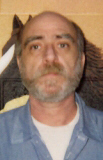 Terry Jess Dennis
Murderer · USA · 1999
Terry Jess Dennis was a male white/Caucasian death row inmate named DENNIS, TER…
1 victim
Terry Jess Dennis
Murderer · USA · 1999
Terry Jess Dennis was a male white/Caucasian death row inmate named DENNIS, TER…
1 victim
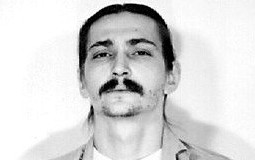 Larry C. Williams
Murderer · USA · 1979
Larry C. Williams and the other men drank beer, smoked pot, and watched TV for…
2 victims
Larry C. Williams
Murderer · USA · 1979
Larry C. Williams and the other men drank beer, smoked pot, and watched TV for…
2 victims
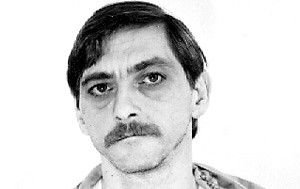 Larry Bellmore
Murderer · USA · 1985
Larry Bellmore Bellmore and Wesley went to Denney's home near Martinsville. Aft…
1 victim
Larry Bellmore
Murderer · USA · 1985
Larry Bellmore Bellmore and Wesley went to Denney's home near Martinsville. Aft…
1 victim
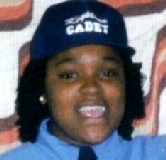 Leisa Jones
Mass murderer · USA · 2010
Leisa Jones died in a fire that she set intentionally in a second-floor apartme…
4 victims
Leisa Jones
Mass murderer · USA · 2010
Leisa Jones died in a fire that she set intentionally in a second-floor apartme…
4 victims
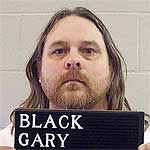 Gary Black
Murderer · USA · 1998
Gary W. Black was convicted of first-degree murder and sentenced to death in 19…
1 victim
Gary Black
Murderer · USA · 1998
Gary W. Black was convicted of first-degree murder and sentenced to death in 19…
1 victim
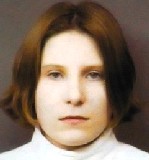 Sarah Kolb
Homicide · USA · 2005
Sarah Kolb was convicted in connection with the murder of 16-year-old Adrianne…
1 victim
Sarah Kolb
Homicide · USA · 2005
Sarah Kolb was convicted in connection with the murder of 16-year-old Adrianne…
1 victim
- Gender
- male
- Country
- USA
- Location
- Washoe County, Nevada, USA
- Date of birth
- 1970
- Age at first offence
- 24
- Characteristics
- robbery
- Victim profile
- Edward Smith ( a good Samaritan who stopped to help him)
- Method of murder
- Shooting
- Date(s) of murder
- August 26, 1994
- Years active
- 1994
- Date of arrest
- —
- Status
-
Sentenced to death on June 1995; death penalty upheld December 31, 2008 (5-2 decision in which the high court ruled against Avram Nika’s bid to overturn his conviction)
Case summary
Avram Nika was convicted killing Edward Smith of Fallon after Smith stopped to help him when Nika’s car had broken down on Interstate 80 east of Sparks. Nika beat Smith and shot him in the head, then dragged Smith’s body off the side of the road. Nika was sentenced to death. The death penalty was upheld.
Timeline
- August 26, 1994 — Avram Nika left Aptos, California, between noon and 1 p.m. and drove toward Chicago; his car broke down at mile marker 34, about twenty miles east of Reno.
- August 26, 1994 (around 7:45 p.m.) — Edward Sanchez was flagged down by Nika on Interstate 80; Nika said his car had broken down and asked for help.
- August 26, 1994 (around 8:00–8:02 p.m.) — Sanchez returned to his car at a truck stop in Fernley after helping with a call for a tow truck.
- August 26, 1994 (around 8:30 p.m.) — Davina Boling and her boyfriend saw Nika beside the Chrysler and offered help; Nika requested that they call a tow truck.
- August 26, 1994 (around 8:40 p.m.) — Debra Fauvell passed mile marker 34 and saw two cars and two people standing by the closer car.
- August 26, 1994 (8:51 p.m.) — Trooper Terry Whitehead ran a license plate check on the BMW.
- August 26, 1994 (8:53 p.m.) — Whitehead requested a tow truck for Nika.
- August 26, 1994 (8:56 p.m.) — Whitehead left the scene to answer a call for back-up assistance on a DUI case.
- August 27, 1994 — Ray Hansen noticed what he thought was a body lying next to the fence between the railroad tracks and I-80; police were called, and a trooper found the body.
- August 29, 1994 — The Washoe County Sheriff’s office called Chicago police for assistance in locating Nika.
- September 1, 1994 — Nika was extradited from Chicago to Reno and booked into Washoe County jail.
- October 11, 1994 — Wilson spoke to police for the first time.
- November 18, 1994 — Wilson was released from jail and granted probation after pleading guilty to “possession for sale.”
- July 10, 1995 — The jury found beyond a reasonable doubt that the murder was aggravated by the fact that the murder was committed upon Smith at random and without apparent motive.
- June 1995 — Nika stood trial in Washoe County, Nevada, and was convicted of first degree murder.
- On or following June 1995 — Nika was sentenced to death the following month.
- December 31, 2008 — Death penalty upheld in a 5-2 decision, with the high court ruling against Avram Nika’s bid to overturn his conviction.
Background
Avram Nika was a Yugoslav national born in Pancevo near Belgrade in 1970, although his family was believed to be Romanian. At the age of 19, Nika left Europe for Canada and the USA, settling with the Serbo-Croat émigré community in Chicago. He later moved, first to California and then to Reno, Nevada. In August 1994, Nika’s car broke down on a highway outside Reno as he was driving to Chicago.
Nika lived in Aptos, California, with his wife Rodika, and left between noon and 1 p.m. on August 26, 1994, traveling to Chicago so that he could fly from there to Romania to visit his sick mother. Nika’s car was full of clothes, tools, electronic items, and a small television.
Rodika stated that Nika spoke fluent Serbo-Croatian, spoke almost fluent Romanian, and spoke only broken English. She stated that Nika did not speak colloquial English and that she had to be present when he had dealings with merchants, government officials, and other people.
Nika maintained that only after repeated and unsuccessful attempts to flag down passing vehicles for assistance did Edward Smith finally stop. Nika did not report prior criminal record.
Nika alleged he was beaten during interrogation and stated that he did not deny shooting Smith but maintained he acted in self-defence after Smith held a gun to his head and then attempted to rob and molest him. Nika maintained that he wrested the gun from Smith during the struggle that ensued and shot him once in the head. Nika also alleged that he was denied an attorney and an interpreter during questioning by both local police and officers from Reno.
The offence
Edward Smith was employed as a manager at a Burger King in Reno. Smith left work to go home at approximately 8 p.m. to 8:10 p.m. on August 26, 1994. Smith’s family lived in Fallon, and Smith had made plans with his wife and child to attend a movie that started at approximately 9:45 p.m.
Smith drove a silver 1983 BMW. Mrs. Smith testified that the BMW often would not start, that they had to push start it, and that they had recently bought a new battery for the BMW in July 1994.
Nika’s car broke down at mile marker 34, approximately twenty miles east of Reno. Several people saw Nika standing by his car at mile marker 34 on August 26, 1994.
Trooper Terry Whitehead testified he made contact with Nika while patrolling on August 26, 1994. Whitehead was traveling westbound on I-80 when he saw a stranded BMW on the eastbound shoulder with its hazard lights on. He made a U-turn and went to help the stranded motorist. As Whitehead approached the BMW, he passed a brown Chrysler with no lights on. Because the Chrysler had no lights on, the hood was not open, and nobody was in the car, he drove further and pulled behind the BMW.
Whitehead saw someone waving a flashlight from a southeasterly direction apparently trying to get his attention. Whitehead testified that the flashlight was coming from the area where Smith’s dead body was found the next day. Whitehead got out and asked Nika what was wrong with his car; Nika pointed to the BMW and stated, "Everything's wrong with it." Whitehead asked Nika if he needed a ride, and Nika declined and instead asked for a tow truck. Whitehead left the scene at 8:56 p.m. to answer a call for back-up assistance on a DUI case.
After police investigations on August 27, 1994, Smith’s body was found under a barbed wire fence. David Billau described the crime scene: the Chrysler was parked off the shoulder of the eastbound lane of I-80; south of the car was a small hillside; south of the hillside was a barbed wire fence under which Smith’s body was dumped; and south of the fence and body were the railroad tracks. Drag marks in the dirt extended from the Chrysler to where the body was found. By the Chrysler’s rear passenger tire was a rock with pooled blood on it. By the front tire was an area of red stained dirt in which a bullet and human hair were found. A spent shell casing was found a few feet in front of the red stained dirt. Smith’s pants were hanging from the fence. Smith’s wallet was found with money still in it lying next to his body.
Dr. Anton Sohn conducted the autopsy. He found three blunt trauma wounds on the back of Smith’s head where Smith had been hit with an object heavy enough and with enough force to fracture the skull beneath each wound. Dr. Sohn testified that at least one of the blunt trauma wounds was delivered while Smith was lying face down. Dr. Sohn found a bullet wound on Smith’s forehead classified as a "contact wound," created when the muzzle of the gun was placed directly against the forehead and the gun was fired. Dr. Sohn found an exit wound in the back of Smith’s head and found other lacerations on Smith’s face. Dr. Sohn found scrapes or "drag marks" on Smith’s chest consistent with Smith being dragged in the dirt. Dr. Sohn stated that the gunshot to the head was the cause of death and that the blunt force traumas were inflicted before Smith was shot.
The jury found Nika guilty of first degree murder with the use of a deadly weapon.
Investigation
Witnesses saw Nika at mile marker 34. Edward Sanchez testified that Nika flagged him down at approximately 7:45 p.m., stating his car had broken down and that he needed help. Sanchez attempted to find out what was wrong, offered him a ride, but Nika could not decide and instead had Sanchez call a tow truck. Sanchez stated it was shortly after 8 p.m. when he got back into his car, perhaps 8:02 p.m., and that he stopped at a truck stop in Fernley and asked a clerk to call a tow truck for Nika.
Davina Boling testified she saw the brown Chrysler on the side of the road around 8:30 p.m. They pulled over to help Nika, described Nika as looking frustrated, and Nika told them he had been there for three or four hours and needed a tow truck. Boling and her boyfriend offered him a ride, which he declined, and Nika requested they call a tow truck for him. As they left, Nika told them, "Good-bye. Thank you, God bless."
Debra Fauvell stated that at approximately 8:40 p.m. she and her husband passed mile marker 34. Debra saw two cars on the side of the road: a tan or light colored four-door sedan with both driver's side doors open and no lights on, and about 150 feet in front (east) a dark brown sedan-type car with its hazard lights on. She stated that two people were standing by the tan car. The person standing by the rear passenger side of the tan car had a medium build, was about five feet ten inches tall, and wore a white T-shirt and light colored, faded jean-type pants. The second person was bigger, had bushier hair than the first person, and walked away in a southeasterly direction.
Daniel Fauvell testified that he was driving, focused on driving, and did not see much, but that the first car did not have any lights and the second car had hazard lights on, and one person was standing next to the first car.
Trooper Terry Whitehead testified that at the time he made contact, Nika wore white high-top tennis shoes and did not seem more nervous than any other person stranded at night. Whitehead stated he did not see blood on Nika’s shoes or fanny pack and that he never asked Nika his name. Whitehead requested a tow truck at 8:53 p.m.
Karl Younger testified for the defense. He worked for Anderson Towing and received a call at home in Reno on August 26, 1994 at 8:45 p.m. requesting tow truck assistance at mile marker 34 for a Chrysler New Yorker. At approximately 9:15 p.m., Younger saw the Chrysler and backed up to prepare to tow it, noticing two other cars about sixty yards in front of the tow truck: a silver BMW with out-of-state license plates and its lights on, and a blue or brown Nissan or Datsun also with its lights on. Younger testified that two people approached and told him the Chrysler needed oil, that they had taken the driver to town to get the oil, and that the tow truck was no longer needed. Younger stated that neither of these two men spoke with a thick accent and both spoke perfect English. He also noticed five to seven other people with flashlights in the area where Smith’s body was eventually found. Younger then left the scene.
Loni Kowalski testified she worked at Hanneman’s Tow Service and received a call at 8:53 p.m. from the Highway Patrol requesting a tow truck for a silver BMW. At 8:57 p.m. Kowalski called Jerry Turley, an employee who was on call but at his own home, to respond. Turley testified he drove west from Fernley toward mile marker 34 and looked on both sides of the highway for the silver BMW. He did not see the BMW, called Kowalski, and she told him to keep looking. He eventually saw two cars on the eastbound shoulder, exited and re-entered going eastbound, and put his flashers on. Turley noticed neither car was a silver BMW. He turned off flashers and called Kowalski at 9:49 p.m. to tell her he could not find the BMW. Turley stated one car was a large dark car that could have been a Chrysler and the other was a smaller domestic car, like a Mercury Monarch or Ford Granada, with its flashers on. He saw two people standing by the Chrysler but could not describe them.
On August 27, 1994, Ray Hansen, a brakeman for Southern Pacific Railroad, noticed what he thought was a body lying next to the fence between the railroad tracks and I-80. Police were called, and a trooper found the body. Careflight was called because it was first believed that a motorcycle accident had occurred and medical attention was required. The Careflight helicopter landed approximately fifteen to fifty feet from the body. Medics checked the body and discovered the person was dead.
David Billau testified that the Careflight helicopter could have disturbed the crime scene and then described the crime scene as set out above, including drag marks, pooled blood, the bullet and human hair in red stained dirt near the Chrysler’s front tire, a spent shell casing a few feet in front of the red stained dirt, Smith’s pants hanging from the fence, and Smith’s wallet with money still in it lying next to his body.
The police traced the brown Chrysler to Avram Nika and an address in Chicago.
On August 29, 1994, the Washoe County Sheriff’s office called Chicago police for assistance in locating Nika. Chicago Police Detective Tony Villardita and his partner discovered several addresses for Nika and attempted to locate him. They saw Nika exit a silver BMW, and when they asked his name, Nika gave them a false name. Based on this information they arrested Nika for possession of a stolen vehicle and read him Miranda rights.
Nika told the police that he understood his rights and would waive those rights and speak to them. He first denied knowledge of the BMW and said he had walked to his house. When police told him they saw him in the car and that they had found the car key in his pocket, Nika said the car belonged to his friend but he did not know his friend’s name. Police then told him the BMW was involved in a murder outside Reno. Nika said that he left Aptos in his Chrysler, arrived in Reno at around 2 p.m., went to a casino to eat, and when he came out of the casino his car was gone but his license plates were still there. Nika stated that three males pulled up and offered to sell the BMW to him for $300.00, that he took the offer, put his plates on the car, and drove to Chicago. Nika stated he made no other stops in Reno and that the car had no mechanical problems.
Police told Nika the BMW was seen on the side of I-80. Nika then said the BMW had an oil and antifreeze problem about thirty miles east of Reno, several people stopped to help him, and he eventually got the car restarted. Nika said he did not see his stolen Chrysler where the BMW broke down. Police told him witnesses had seen both cars on the side of the road. Nika then told police he was "ready to tell the truth," and he said he left the casino in his Chrysler and had car problems about thirty miles east of Reno, several people stopped to help him, and then the same three males described earlier stopped and offered to sell him the BMW for $300.00. He said he bought the car, changed the license plates, and loaded his personal property into the BMW.
Nika also stated that just as he was ready to leave and while the three males were still at the scene, a police officer stopped to help him. Nika told the officer the BMW was experiencing problems but that he was able to start it, and then he drove to Chicago. He stated he went to his mother-in-law’s garage in Chicago to unload his personal property, drove to get something to eat, and was arrested by Villardita and his partner.
After this questioning, John Yaryan, a Washoe County Sheriff’s deputy who had flown to Chicago, questioned Nika. A district judge suppressed this statement because Nika invoked his right to remain silent and right to counsel and Yaryan continued to question Nika at length. The State did not argue suppression was improper.
Police obtained consent to search the garage of Nika’s mother-in-law. They found a fanny pack, tennis shoes, and blue denim cut-off jeans, which were tested by forensic investigators. Forensic investigators found blood spatter on all three items. DNA testing indicated that the blood was consistent with Smith and excluded Nika as a source, and forensic investigators stated that at a minimum, 1 in 8,800 people had the same DNA pattern discovered.
Nika was extradited from Chicago to Reno and booked into Washoe County jail on September 1, 1994.
During incarceration, Nathanial Wilson befriended Nika and testified to statements made by Nika about the events on I-80. Wilson testified that Nika told him his car had broken down, a man stopped to help him, the man called him a "motherf ..... ," he hit the man in the head with a crowbar, and then shot him in the head. Nika told Wilson that in Romania, his country of origin, "you did not use the word 'motherf ..... '," and that "you could be killed for calling somebody that name." Wilson testified Nika said the victim was lying on the ground when he was shot in the head, that he tried to hide the body in some bushes, and that he killed the man because "he needed to get to Chicago." Wilson testified that Nika said he hid the gun, an automatic pistol, about five miles from the crime scene. Wilson also testified Nika told him he took the battery out of his car and put it in the BMW because the BMW would not start. The gun was never found despite an extensive search.
Wilson was in jail on one count of selling cocaine and testified he did not receive any deal from the prosecution in exchange for his testimony. Wilson spoke to police for the first time on October 11, 1994, and was released from jail and granted probation on November 18, 1994, after pleading guilty to what he called "possession for sale," a lesser crime than the one with which he was originally charged.
Arrest
Chicago Police Detective Tony Villardita and his partner arrested Nika for possession of a stolen vehicle and read him Miranda rights. The arrest occurred after Villardita saw Nika exit a silver BMW and Nika provided a false name when asked. Nika was booked into Washoe County jail on September 1, 1994 after extradition from Chicago to Reno.
Trial
Nika stood trial in Washoe County, Nevada, in June 1995 and was convicted of first degree murder with the use of a deadly weapon. The main evidence against him was the circumstances of his arrest and his "confession." The jury was not allowed to hear a statement Nika gave to Washoe County deputies the morning after his interrogation by Chicago police officers. Transcripts of Nika’s questioning while detained in Chicago were later misplaced, and Chicago police officers testified at trial that Nika spoke sufficient English to understand his Miranda rights and the charges against him and that he confessed to the murder.
At trial, Dr. Anton Sohn testified about the autopsy findings including the blunt trauma wounds, the contact gunshot wound to Smith’s forehead, the exit wound, lacerations, drag marks, and the cause of death.
Sentencing
The prosecution sought the death penalty and alleged three aggravating circumstances:
- Evidence that the murder was committed by AVRAM NIKA during the commission of or attempt to commit a robbery. NRS 200.033(4).
- Evidence that the murder was committed to avoid or prevent a lawful arrest. NRS 200.033(5).
- Evidence that the murder was committed upon one or more persons at random and without apparent motive. NRS 200.033(9).
At the penalty hearing, Anna Boka, Nika’s mother-in-law, testified about violent threats. Anna testified that in 1991, after she did not give Nika money for a trip, he threatened to kill both her and Rodika. Anna stated that Peter Boka, her husband, testified that in September 1993 he and Nika had gotten into an argument and Nika put a gun to Peter’s head. Peter later testified that he never saw a gun and that Nika only threatened to shoot him. Anna stated on cross-examination that Peter was a very heavy drinker and had instigated the fight in September 1993.
Anna testified that in October 1993, Nika stated that he would kill Anna if Rodika did not come back to live with him. She testified that in October 1993 Nika wanted to see his and Rodika’s baby staying at Anna’s house, but Peter refused to allow Nika into the house. Anna testified that Nika flashed a gun and told Anna that if Peter did not let him see the baby, he would kill Peter. She also testified that in November 1993 Nika told her that if Rodika did not leave Anna’s house in Chicago and come back to him, he would burn down Anna’s house.
Mary Ellen Izzo testified at the penalty hearing that Nika raped her in an apartment building in Chicago in December 1989. Izzo stated that Nika was helping people move into or out of the building, met her in the hallway, and later told her his mother, who was the manager of the apartment, wished to see her. Izzo testified that she went into the manager’s apartment with Nika, he locked the door, and he told her to come into the bedroom because that was where his mother was. Izzo testified Nika pushed her on the bed, hit her, and sexually penetrated her. Izzo testified she escaped after Nika let her up and then called the police.
Izzo stated Nika was never prosecuted for the alleged crime, and Izzo testified she did not proceed with the prosecution because Nika’s aunt threatened to evict her if she proceeded, Izzo had three children to take care of, and she did not have enough money to move. On cross-examination, Izzo stated she had bruises on her face and breasts from the rape, while a hospital report indicated she had only red marks on her neck. Izzo testified on cross-examination that she was not a drug user. Izzo testified that shortly after this event she received government housing and moved.
Rodika testified for the defense. Rodika testified that Izzo approached Rodika’s family and stated that if they did not want to see Nika jailed for rape, they had better pay her some "big money." Rodika testified that she had heard that Izzo had a drug problem and had hung her children out of her second story window.
Rodika testified about the September 1993 incident between Nika and Peter. Rodika stated that police were called and they never found a gun. She acknowledged on cross-examination that Nika was violent and had made death threats against her and her family on several occasions.
Dorina Vukadin testified for the defense. Vukadin testified that Nika played sports with her children and that her children liked Nika, but she also testified that he was a stern disciplinarian.
On July 10, 1995, the jury found beyond a reasonable doubt that the murder committed by Nika was aggravated by the fact that the murder was committed upon Smith at random and without apparent motive. The jury found that no mitigating circumstances existed. The mitigating circumstances did not outweigh the aggravating circumstances found, and a sentence of death was imposed.
Nika was sentenced to death the following month.
Appeals
The high court upheld the death sentence on December 31, 2008. The court issued a 5-2 decision against Avram Nika, ruling against his claim that a Washoe County District Court judge erred by dismissing his claims of ineffective legal counsel without an evidentiary hearing.
Chief Justice Jim Hardesty wrote the majority opinion. Hardesty stated that for Nika to succeed with an ineffective counsel claim he must prove the lawyer’s acts or omissions were deficient and show that prejudice resulted, and his claims "fail on the first prong of this test." Hardesty also said closing arguments by one of Nika’s lawyers were "disorganized and unfocused" but that the problem was "defused" because there was strong evidence to support a conviction and another defense lawyer made a second closing argument.
Justices Michael Cherry and Nancy Saitta dissented from the majority ruling. Cherry wrote that Nika deserved a new penalty hearing because his trial and appellate lawyers "were deficient on several grounds." Cherry stated jurors had "an incomplete depiction" of Nika’s character because of a lack of mitigating evidence about his background. Cherry stated that a Romanian spoke only limited English and that the trial attorney should have sought help from the Yugoslavian consulate. Hardesty stated it was not clear what the consulate could have done to help Nika, especially since the victim’s wounds, including the fatal shot to Smith’s head, "evince a calculated, deliberate act" of murder.
A case name associated with the appellate proceedings was listed as Nika v. State 12/30/1997 Appellant Avram Nika ("Nika").
Outcome
The death penalty was upheld, and Nika remained under a sentence of death.
Nika faced execution in April 1998, but the date was stayed pending the outcome of his appeals.
Other details
Evidence and forensic details included:
- Smith’s body was found under a barbed wire fence, with Smith’s pants hanging from the fence and Smith’s wallet found next to his body with money still in it.
- Drag marks in dirt extended from the Chrysler to where the body was found.
- By Smith’s crime scene, a bullet and human hair were found in red stained dirt, and a spent shell casing was found a few feet in front of the red stained dirt.
- DNA testing indicated the blood spatter on Nika’s items was consistent with Smith and excluded Nika as a source; forensic investigators stated that at a minimum, 1 in 8,800 people had the same DNA pattern discovered.
- The Careflight helicopter landed approximately fifteen to fifty feet from the body, and it could have disturbed the crime scene.
Defense and suppression details included:
- A district judge suppressed Nika’s statement made after he invoked his right to remain silent and right to counsel, because Yaryan continued to question him at length; the State did not argue suppression was improper.
- Transcripts of Nika’s Chicago questioning were later misplaced.
- The jury was not allowed to hear a statement Nika had given to Washoe County deputies the morning after his interrogation by Chicago police officers.
- The narrative about the statement indicated it showed Nika had little understanding of the situation and that, rather than a confession, it was a declaration of self-defence.
- The sentencing narrative also stated that at no point was Nika informed of his right to contact his consulate for assistance, and it stated that his poor command of English reportedly hampered communication between himself and his attorneys.
People named in connection with the case included:
- Edward Smith (victim)
- Avram Nika (defendant)
- Rodika (Nika’s wife)
- Anna Boka (mother-in-law)
- Peter Boka (Anna’s husband)
- Mary Ellen Izzo
- Dorina Vukadin
- Nathanial Wilson (inmate and witness)
- Dr. Anton Sohn (autopsy)
- David Billau (crime scene investigator)
- Trooper Terry Whitehead (Nevada Highway Patrol)
- Karl Younger (Anderson Towing)
- Loni Kowalski (Hanneman’s Tow Service)
- Jerry Turley (Hanneman’s Tow Service)
- Edward Sanchez
- Davina Boling
- Debra Fauvell and Daniel Fauvell
- Daniel Fauvell
- Ray Hansen (railroad brakeman)
- Careflight (helicopter medical response)
- John Yaryan (Washoe County Sheriff’s deputy)
- Chicago Police Detective Tony Villardita and partner
- Chief Justice Jim Hardesty
- Justices Michael Cherry and Nancy Saitta
Spotted an error, or have more information about this case?