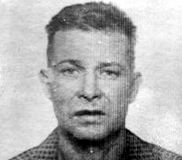
Ralph Hudson
Murderer Charles Manson
Murderer · USA · 1969
Charles Milles Manson (born November 12, 1934) was an American criminal and mus…
9 victims
Charles Manson
Murderer · USA · 1969
Charles Milles Manson (born November 12, 1934) was an American criminal and mus…
9 victims
 Gary Gene Tison
Murderer · USA · 1967
Gary Gene Tison was serving life sentences at the Arizona state prison. He had…
7 victims
Gary Gene Tison
Murderer · USA · 1967
Gary Gene Tison was serving life sentences at the Arizona state prison. He had…
7 victims
 Richard Lee Tingle
Murderer · USA · 1968
Richard Lee Tingle was born out of wedlock in December 1940. He was raised by a…
6 victims
Richard Lee Tingle
Murderer · USA · 1968
Richard Lee Tingle was born out of wedlock in December 1940. He was raised by a…
6 victims
 Gary Duane Rardon
Murderer · USA · 1962
Gary Duane Rardon killed a man in 1962 and later served 4 years for manslaughte…
4 victims
Gary Duane Rardon
Murderer · USA · 1962
Gary Duane Rardon killed a man in 1962 and later served 4 years for manslaughte…
4 victims
 Jeffrey Cutlip
Serial killer · USA · 1975
Jeffrey Cutlip Jeffrey Cutlip pleaded guilty. A judge sentenced him to three co…
3 victims
Jeffrey Cutlip
Serial killer · USA · 1975
Jeffrey Cutlip Jeffrey Cutlip pleaded guilty. A judge sentenced him to three co…
3 victims
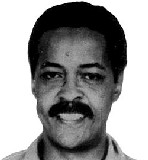 David James Roberts
Murderer · USA · 1974
David James Roberts David James Roberts was resentenced to six life sentences i…
4 victims
David James Roberts
Murderer · USA · 1974
David James Roberts David James Roberts was resentenced to six life sentences i…
4 victims
 Jack Unterweger
Serial killer · USA / Czechoslovakia · 1976
Johann “Jack” Unterweger was an Austrian serial killer. He was born in 1950 in…
12 victims
Jack Unterweger
Serial killer · USA / Czechoslovakia · 1976
Johann “Jack” Unterweger was an Austrian serial killer. He was born in 1950 in…
12 victims
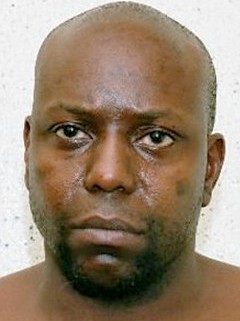 Peter Bryan
Homicide · United Kingdom · 1993
Peter Bryan was a schizophrenic cannibal who was sentenced to closed psychiatri…
3 victims
Peter Bryan
Homicide · United Kingdom · 1993
Peter Bryan was a schizophrenic cannibal who was sentenced to closed psychiatri…
3 victims
 Shirley Winters
Murderer · USA · 1980
Shirley Winters was born February 27, 1958. She was an upstate New York residen…
2 victims
Shirley Winters
Murderer · USA · 1980
Shirley Winters was born February 27, 1958. She was an upstate New York residen…
2 victims
 David William Tiley
Murderer · United Kingdom · 2007
David William Tiley was born in 1960. In 1995, he received a six-year jail term…
2 victims
David William Tiley
Murderer · United Kingdom · 2007
David William Tiley was born in 1960. In 1995, he received a six-year jail term…
2 victims
- Gender
- male
- Country
- USA
- Location
- Atlantic City, New Jersey, USA
- Date of birth
- 1919
- Age at first offence
- 41
- Characteristics
- parricide, alcohol, abuse
- Victim profile
- Myrtle Hudson, 49 (his estranged wife)
- Method of murder
- Stabbing with knife
- Date(s) of murder
- December 27, 1960
- Years active
- 1960
- Date of arrest
- Same day
- Status
-
Executed
Executed by electrocution on January 22, 1963
Case record: Ralph Hudson
Background
Ralph Hudson died on January 22, 1963. He was executed by electric chair in the Trenton State Prison.
Hudson was a native of Coatesville, Pennsylvania. He left a wife and three kids in Pottstown, Pennsylvania, in 1957. He had had a good union job at the Camden shipyards until alcohol got the best of him.
Hudson met Myrtle Hudson, a waitress. They were married in August 1959 after a fling. Myrtle Hudson was a few years older than Hudson and worked in an Atlantic City, New Jersey, restaurant.
The relationship involved abuse when Hudson was drinking, which was most of the time. Myrtle sought shelter with friends in nearby Brigantine. For months, Hudson stalked her, and the friends convinced Myrtle to prosecute after he beat her one summer day in 1960.
The offence
Hudson was tried and convicted of stabbing his estranged wife Myrtle Hudson to death. The stabbing occurred as she worked in an Atlantic City, New Jersey, restaurant on December 27, 1960.
On Christmas Eve, Hudson began a staggering tavern crawl that continued for three days. On the afternoon of December 27, Hudson bought a cheap serrated knife at a five-and-dime and then visited Capt. Starn’s, where he knew Myrtle was working.
Hudson arrived during the lull between lunch and dinner. Myrtle was at a table, gabbing with other waitresses. The other waitresses scattered when Hudson flashed the knife and cornered Myrtle. Hudson told Myrtle, “Nobody is going to double-cross a Hudson,” and “I’m going to mark up your pretty face.”
Investigation
Hudson was booked on suspicion of the murder of his wife, Myrtle, on December 27, 1960. Witnesses said that Hudson called his wife aside in Captain Starn's Restaurant, where she was employed as a waitress, pulled out a knife, and stabbed her in full view of patrons.
Trial
Hudson had been convicted of assault and battery four months earlier. He had been sentenced to six months in jail but had been let out for Christmas.
A judge ordered Hudson locked up for six months on August 30. When his cell door creaked open on December 24, Hudson returned to bar hopping.
Defense attorney Roy Baylinson sought to persuade the jury by putting Hudson on the witness stand, hoping for the jury’s sympathy. Baylinson later said, “He wanted to die.” Baylinson also said, “He would rather be put to death than spend any length of time in prison.”
At trial, Hudson shrugged and said, “Yeah, I did it.” The jury convicted him, dismissing the argument that Hudson was not responsible by reason of his bender.
Sentencing
Sentencing occurred on December 4, 1961. Judge George Naame asked Hudson if he had anything to say. Hudson replied, “I loved my wife more than life itself,” and “I worshiped the ground she walked on.”
Naame condemned Hudson to follow his beloved Myrtle to the grave. Hudson showed little interest in helping while attorneys pressed appeals to save his life. He wrote chipper farewell notes to friends from Trenton State Prison as his days waned.
A warden told reporters, “His attitude seemed to be, ‘Let’s get it over with.’”
Outcome
Hudson was executed by electric chair. On January 22, 1963, Hudson dined on a last supper of prime rib, polished off with ice cream and a fat cigar. He gripped the hand of a Methodist preacher and was led to the death chamber. He was secured in the electric chair, and a deadly current coursed through his body at just after 10 p.m. No final words were noted.
Hudson was buried beneath an economical tombstone marked with a number, not a name, in the no-frills state prison cemetery in Hamilton, New Jersey.
Hudson was the last person to be executed by New Jersey. His execution was described as the last of 361 carried out by the state of New Jersey.
New Jersey enacted a new death penalty in 1982, after the federal moratorium ended, but it was never used. After another legislative study, capital punishment was again abolished in 2007, and the 10 prisoners on Death Row had their sentences commuted to live without parole.
Other details
Enthusiasm for capital punishment was waning in many states, including New Jersey, which had recorded just three executions since 1956. Nationwide, executions declined from 127 in 1945 to 80 in 1955, to just 43 by 1961. The New Jersey legislature was conducting a study of capital punishment, an increasingly contentious political issue.
Prosecutors offered Hudson a plea deal to life in prison, and defense attorneys begged him to take it. Hudson waved off the idea.
Spotted an error, or have more information about this case?