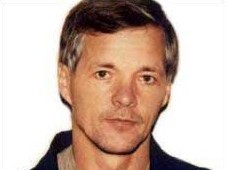
Jack Unterweger
Serial killer Pedro Alonso Lopez
Serial killer · Peru - Ecuador - Colombia · 1969
Name: Pedro Alonso Lopez · Nationality/Background: Colombian-born · Birth: born…
300 victims
Pedro Alonso Lopez
Serial killer · Peru - Ecuador - Colombia · 1969
Name: Pedro Alonso Lopez · Nationality/Background: Colombian-born · Birth: born…
300 victims
 Donald Henry Gaskins
Serial killer · USA · 1969
Donald Henry Gaskins, also known as Donald “Pee Wee” Gaskins, was a serial kill…
200 victims
Donald Henry Gaskins
Serial killer · USA · 1969
Donald Henry Gaskins, also known as Donald “Pee Wee” Gaskins, was a serial kill…
200 victims
 Carl Eugene Watts
Serial killer · USA · 1974
Carl Eugene Watts (born November 7, 1953; died September 21, 2007), also known…
100 victims
Carl Eugene Watts
Serial killer · USA · 1974
Carl Eugene Watts (born November 7, 1953; died September 21, 2007), also known…
100 victims
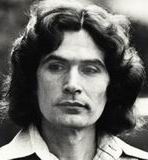 Rodney Alcala
Serial killer · USA · 1977
Rodney James Alcala (born August 23, 1943) was also known as Rodrigo Jacques Al…
100 victims
Rodney Alcala
Serial killer · USA · 1977
Rodney James Alcala (born August 23, 1943) was also known as Rodrigo Jacques Al…
100 victims
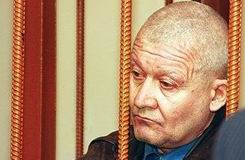 Serhiy Tkach
Serial killer · Ukraine · 1980
Serhiy Tkach (Russian: Серге́й Фёдорович Ткач, born 12 September 1952 in Kisely…
100 victims
Serhiy Tkach
Serial killer · Ukraine · 1980
Serhiy Tkach (Russian: Серге́й Фёдорович Ткач, born 12 September 1952 in Kisely…
100 victims
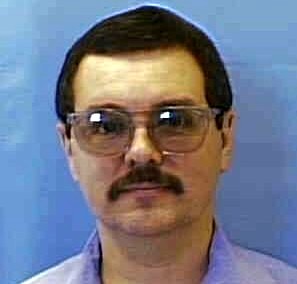 Donald Harvey
Serial killer · USA · 1970
Donald Harvey was known as an American serial killer and a self-professed “Ange…
87 victims
Donald Harvey
Serial killer · USA · 1970
Donald Harvey was known as an American serial killer and a self-professed “Ange…
87 victims
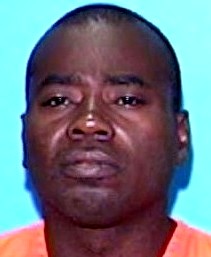 Robert L. Henry
Murderer · USA · 1987
Robert L. Henry was convicted in Broward County and sentenced to death for kill…
2 victims
Robert L. Henry
Murderer · USA · 1987
Robert L. Henry was convicted in Broward County and sentenced to death for kill…
2 victims
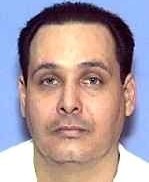 Richard Hinojosa
Murderer · USA · 1986
Richard Hinojosa was convicted and sentenced to death for the capital murder of…
2 victims
Richard Hinojosa
Murderer · USA · 1986
Richard Hinojosa was convicted and sentenced to death for the capital murder of…
2 victims
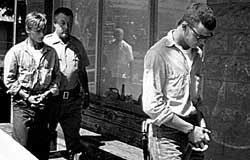 Leonard Maine
Spree killer · USA · 1967
Leonard Maine was convicted in connection with multiple violent offences involv…
4 victims
Leonard Maine
Spree killer · USA · 1967
Leonard Maine was convicted in connection with multiple violent offences involv…
4 victims
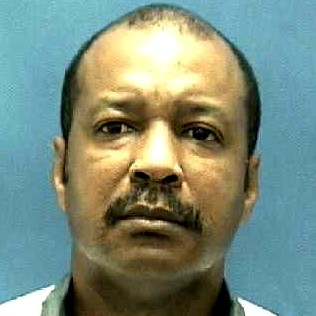 Dennis Charles Hall
Murderer · USA · 1990
September 12, 1990 — Dennis Charles Hall was sentenced to death. · August 1990…
1 victim
Dennis Charles Hall
Murderer · USA · 1990
September 12, 1990 — Dennis Charles Hall was sentenced to death. · August 1990…
1 victim
- Gender
- male
- Country
- USA / Czechoslovakia
- Location
- Austria / California, USA / Czechoslovakia
- Date of birth
- August 16, 1951
- Age at first offence
- 25
- Characteristics
- rape
- Victim profile
- Women (prostitutes)
- Method of murder
- Strangulation
- Date(s) of murder
- 1976 / 1990 - 1992
- Years active
- 1976–1992
- Date of arrest
- February 27, 1992 (in Miami, Florida, USA)
- Status
-
Life imprisonment
Sentenced to life in prison without possibility of parole on June 29, 1994; that night he took his own life by hanging himself in his cell
Overview
Johann “Jack” Unterweger was an Austrian serial killer. He was born in 1950 in Steiermark and died on 29 June 1994 in Graz. He murdered prostitutes in several countries.
He grew up in poverty with his abusive, alcoholic grandfather in a one-room cabin. He was in and out of prison several times during his youth for assaulting local prostitutes.
Background
Johann “Jack” Unterweger was born in Steiermark to a Viennese prostitute and an unknown American soldier. He was described as an illegitimate son.
He was a chronic truant by age nine and logged his first arrest at 16 for assaulting a prostitute.
The offences
Crimes in Austria and other places
Unterweger murdered multiple women after his release and while a fugitive.
A murder was described involving 18-year-old German Margaret Schäfer, whom Unterweger was said to have murdered in 1974 by strangling her with her own bra.
Other victims were identified in later accounts, including victims reported as prostitutes and women found in woods or abandoned areas in different places.
Austria after his release
After Unterweger was released from prison, police later found that he killed multiple prostitutes in Austria in the first year after his life term.
Los Angeles
In 1991, an Austrian magazine commissioned Unterweger to write about crime in Los Angeles, California, writing articles about prostitution and riding around town with local police.
During his time in Los Angeles, the three prostitutes Shannon Exley, Irene Rodriguez, and Sherri Ann Long were beaten, sexually assaulted with tree branches, and finally strangled with their own brassieres.
A separate narrative described a woman identified as Sherri Long and noted:
- She was found in Corral Canyon Road area of Malibu, north-west of Los Angeles.
- Her face was obscured by maggots streaming out of her nose, mouth, eyes and ears.
- Her T-shirt was hiked up to her shoulders.
- A bra was tightly knotted around her neck.
- Police identified her by her fingerprints.
- The pathologist estimated she had been dead for four to seven days.
That same narrative described:
- Shannon Exley as 20 years old and said that she was strangled with her own bra; a customer drove her from a location across the LA river to the Girl Scout Centre on Seventh and Fickett; a murder location was described behind it among eucalyptus trees where no one saw his car or heard her screams.
- Irene Rodriguez as 33 years old and found lying on her back under a big rig trailer with a bra tightly knotted around her neck; most clothing was missing; a sock, T-shirt and hypodermic syringe were lying near her body; police used fingerprints and follow-up investigation to identify her.
A forensic account in that narrative reported:
- On July 16, 1991, “three bras were delivered” to Dr Lynne Herold in brown paper bags; her training and observations were described.
- Herold stated: “For all three, I think you should be looking for the same guy,” and confirmed what the detective suspected.
The same narrative described that the killer struck three times in Los Angeles within a 14-day period, with nine days of cooling off between the first and second, and five days between the second and third, and that detectives braced for a fourth murder, but it never happened.
Vienna and other Austrian murders described in the narrative
A headline in the narrative read: “Prostitute in Vienna murdered: three still missing”.
Victims and circumstances were described:
- Sabine Moitzi, 25, a bakery salesgirl by day, who was described as addicted to heroin, with missing prostitute status and a disappearance from near the West Train Station area; her body was found five weeks later.
- Karin Eroglu, found a few days after Sabine Moitzi, described as having disappeared from a street-corner area and her body found in a grove of spruce trees.
- Silvia Zagler and Regina Prem were described as other missing women whose bodies were expected to be found.
A police figure in that narrative was identified as officer Ernst Geiger, described as having experience and as head of homicide appointed in 1991.
The narrative described that both the manner of death and ligature methods matched earlier cases:
- It stated that the victim had died from strangulation with her own tights and described the state of a body in the Vienna Woods.
- It stated that her killer arranged her corpse to cause outrage.
- It stated that an autopsy confirmed strangulation with her own tights.
Investigation and evidence
Police interest and surveillance
Police became suspicious of Unterweger after his release and literary fame. A detective identified as Dr Ernst Geiger maintained suspicion and arranged discreet surveillance.
Police traced paper trails including credit cards to receipts and rental car agencies.
The narrative stated that records showed Unterweger was in Graz when Brunhilde Masser was found strangled and in Bregenz when Heidemarie Hammerer disappeared.
A witness testified that Unterweger was similar to a man seen with Hammerer just before she disappeared, and that he was wearing a brown leather jacket and red scarf.
It was also described that sightings of Unterweger with other victims in Vienna were established.
Forensic links
The narrative reported that Dr Ernst Geiger carried out forensic tests on a BMW Unterweger had bought after release. It stated:
- A hair fragment was found.
- DNA tests proved it belonged to Blanka Bockova, the first victim described in Prague.
A warrant search of his flat in Vienna reportedly discovered:
- a brown leather jacket and red scarf,
- a menu and receipts from a Malibu seafood restaurant,
- home snapshots of Unterweger posing with female members of the Los Angeles Police Department.
Geiger contacted police in Los Angeles and discovered murders there were identical to those in Austria.
The narrative also stated that receipts from Unterweger’s apartment correlated to hotels near where the prostitutes were murdered.
Calls to Austrian media and stated innocence
The narrative described that while Unterweger was a fugitive he called Austrian media to try to convince them of his innocence.
Arrest, extradition, and custody
Arrest in Miami
An arrest was described in Miami, Florida. Unterweger was captured without resistance and was taken into custody.
The narrative described that US marshals arrested him at a Western Union office in South Beach, California. It described that:
- Mrak collected the money,
- Unterweger walked out with her,
- marshals followed,
- Unterweger bolted,
- he was chased through a restaurant and finally cornered in a back parking bay,
- he was handcuffed and arrested.
The narrative included an allegation that when officers informed him he was wanted for murders in Austria, Unterweger “broke down and wept.”
Search of residence and diary
A search of Unterweger and Mrak’s Malibu apartment reportedly revealed incriminating items linked to the murdered Los Angeles prostitutes.
The police also recovered a diary written by Unterweger that suggested plans to dispose of Mrak.
Deportation and extradition choice
The narrative described that Unterweger preferred to be tried in California, knowing he would face a murder charge involving three victims rather than many in Austria. However, he agreed to extradition.
It stated he was deported on 28 May 1992.
The narrative described that under Austrian law he was to be regarded as innocent because he died before he could appeal the verdict, and it said his case was one of those considered in a review of this legal principle.
Trial
Charges and trial scope
Back in Austria, Unterweger was charged with 11 homicides.
The narrative stated:
- One involved in Prague during his time visiting, and it was described as identical to murders of other prostitutes.
- The proceedings were delayed for nearly two years due to legal maneuvers.
- The trial began in June 1994 and lasted for two months, with testimony by FBI experts imported from Quantico, Virginia in one account.
The narrative described that the accused was tried for murders in Los Angeles, Prague, and Austria.
Verdict
The jury found him guilty of nine of the 11 counts of murder.
In one account, the jury deliberations were described with a timeframe; it stated that the bomb blast at the courthouse failed to disrupt jury deliberations on June 28 and Unterweger was convicted that afternoon on nine murder counts and acquitted of two others.
A quoted verdict scene in the narrative described:
“Is the accused, Jack Unterweger, guilty of the murder of Blanka Bockova?” Judge Haas asked.
“Six yes, two no,” replied the foreman.
Unterweger said:
“I will appeal.”
Sentencing and death
Sentence
On June 29, 1994, he was sentenced to life in prison without possibility of parole.
Suicide in custody
That night, jailers found him hanging in his cell at 3:40 A.M. after being sentenced.
One account described:
- he used a noose made from a curtain rod,
- “the drawstring from his sweatpants looped around his neck.”
Another description stated:
- he hung himself using “a rope made from shoelaces and a cord from the trousers of a track suit,” and
- it said he used “an intricate knot identical to that used on the murdered prostitutes.”
The narrative also described that he died before he could appeal the verdict.
Individuals mentioned
- Johann “Jack” Unterweger — accused; serial killer.
- Margaret Schäfer — 18-year-old German victim murdered in 1974 by strangling with her own bra.
- Shannon Exley — victim in Los Angeles; 20-year-old.
- Irene Rodriguez — victim in Los Angeles; 33-year-old.
- Sherri Ann Long / Sherri Long — victim in Los Angeles; body found in Malibu area; identification by fingerprints.
- Blanka Bockova — victim described as found in Prague; hair fragment from BMW identified her.
- Brunhilde Masser — victim described as found strangled in Graz.
- Heidemarie Hammerer — victim described as missing and later found dead.
- Elfriede Schrempf — victim described as disappearing and later found.
- Silvia Zagler — victim described as missing.
- Regina Prem — victim described as missing; husband described.
- Sabine Moitzi — victim described as missing and later found; 25-year-old.
- Karin Eroglu — victim described as missing and later found.
- Margaret Schaefer — referred to in the narrative as 18-year-old victim abducted and assaulted, corresponding to “Margaret Schäfer.”
- August Schenner — retired seventy-year-old investigator described in the narrative; connected to earlier case and to Barbara Scholz.
- Barbara Scholz — described as a prostitute who admitted abducting one victim and taking her to a wood where she was tied up and assaulted.
- Inspector Schenner — referenced as connected to discovery and involvement in the narrative.
- Dr Ernst Geiger — detective on the Austrian Federal police force described as maintaining surveillance; also linked to forensics and coordination.
- Thomas Mueller — Chief of the Criminal Psychology Service in the Federal Ministry of the Interior described as accompanying Geiger to America to learn about psychology of compulsive serial killers.
- Michael Newton — identified in one named citation.
- Richard Bevan — identified in one named citation as “The Crime & Investigation Network.”
- Michael Newton — included in the narrative citation area.
- FBI experts — referenced as imported from Quantico, Virginia.
- Judge Haas — judge named in the verdict quotation.
- Detective Fred Miller — LAPD homicide detective described in the narrative.
- Dr Lynne Herold — described as training in forensic pathology; received bras for analysis in the narrative.
- Daryl Gates — chief mentioned as a prospective interview target.
- Bianca Mrak — identified as Unterweger’s girlfriend who was missing and was also referenced during the fugitive period and arrest narrative.
- Shawn Conboy — US marshal mentioned in arrest narrative.
- Carolina — described as a receptionist at the Hotel Cecil whom Unterweger said he dated while in Los Angeles.
- Rudolf Prem — husband of still missing Regina Prem described in the narrative.
- Theresia Unterweger — mother of Jack Unterweger described in the narrative.
- Anna — Salzburg prostitute and referred to as the sister located in the narrative.
- Elfriede Jelinek — named as a Nobel Prize winner included among those petitioning for his release.
- Max Edelbacher — police chief named in the narrative.
- Peter Grolig — crime reporter named in the narrative.
- Hans Breitegger — reporter named in the narrative.
- Bernd Melichar — friend involved in the journalist ruse in the narrative.
- Geiger — referenced as the same Dr Ernst Geiger.
- Charles Bukowski — writer mentioned in the narrative as a meeting pursued by Unterweger.
- Robert Dornhelm — film-maker mentioned in the narrative.
Timeline (dated events only)
- 1974 — Unterweger murdered 18-year-old German Margaret Schäfer by strangling her with her own bra.
- May 23, 1990 — Unterweger was released on parole.
- 1991 — Police later found he killed six prostitutes in Austria in the first year after his release; an Austrian magazine commissioned him to write about crime in Los Angeles; murders occurred in Los Angeles involving Shannon Exley, Irene Rodriguez, and Sherri Ann Long.
- February 27, 1992 — Unterweger was arrested by the FBI in Miami, Florida (as described in the narrative).
- February 15, 1992 — An arrest warrant was described in the narrative as issued in Graz for Jack Unterweger.
- March 2, 1992 — Unterweger petitioned the US Federal Court in Miami “to institute my immediate deportation”.
- March 5, 1992 — Detective Fred Miller got a call from the Department of Justice; Interpol reported that US Marshals office in Miami had arrested Unterweger wanted in Austria.
- May 28, 1992 — Unterweger arrived at Vienna airport.
- August 1992 — Unterweger was indicted on 11 murder counts in August 1992 (as described in the narrative).
- April 20, 1994 — the trial came to court and proceedings began.
- June 28, 1994 — conviction was returned on nine murder counts after deliberations, in one account.
- June 29, 1994 — sentenced to life in prison without possibility of parole; that night he took his own life by hanging himself in his cell.
Other details
- The narrative stated that a bomb blast at the courthouse failed to disrupt jury deliberations on June 28.
- The narrative described that Unterweger used early confession language in court in one account, stating:
“l envisioned my mother in front of me, and I killed her.”
- Another narrative described a psychologist’s description of Unterweger as:
“sexually sadistic psychopath with narcissistic and histrionic tendencies, prone to fits of rage and anger. He is an incorrigible perpetrator”
- The narrative included Unterweger’s reported statement upon receiving parole:
“That life is over now,” he told the press. “Let's get on with the new.”
- The narrative described a woman’s statement about why they chose Miami as refuge:
“liked Don J ohnson,” star of the Miami Vice TV series
- The narrative included an assertion about Austrian legal treatment after death before appeal:
- “Thus, according to Austrian law, Unterweger is to be regarded as innocent.”
- The narrative described that several audio cassettes were recovered from his cell, but their content had never been divulged.
Spotted an error, or have more information about this case?