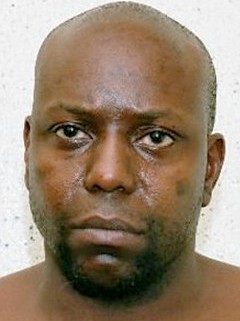
Peter Bryan
Homicide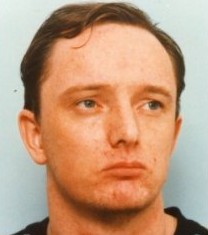 Robert Napper
Homicide · United Kingdom · 1992
Robert Clive Napper (born 25 February 1966) was a paranoid schizophrenic convic…
3 victims
Robert Napper
Homicide · United Kingdom · 1992
Robert Clive Napper (born 25 February 1966) was a paranoid schizophrenic convic…
3 victims
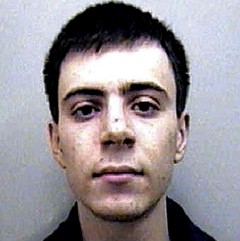 Gregory Davis
Homicide · United Kingdom · 2003
Gregory Davis was sentenced to closed psychiatric confinement in 2003. He serve…
2 victims
Gregory Davis
Homicide · United Kingdom · 2003
Gregory Davis was sentenced to closed psychiatric confinement in 2003. He serve…
2 victims
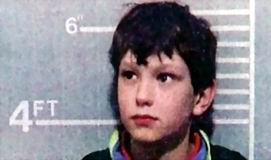 Jon Venables
Homicide · United Kingdom · 1993
Jon Venables was born 13 August 1982. He was a 10-year-old boy when he abducted…
1 victim
Jon Venables
Homicide · United Kingdom · 1993
Jon Venables was born 13 August 1982. He was a 10-year-old boy when he abducted…
1 victim
 Luke Mitchell
Homicide · United Kingdom · 2003
Luke Muir Mitchell (born July 24th 1988) was a Scottish teenager convicted of m…
1 victim
Luke Mitchell
Homicide · United Kingdom · 2003
Luke Muir Mitchell (born July 24th 1988) was a Scottish teenager convicted of m…
1 victim
 Matthew Hardman
Homicide · United Kingdom · 2001
1998 — Matthew Hardman moved to Llanfairpwll, Anglesey, when he was 13; his fat…
1 victim
Matthew Hardman
Homicide · United Kingdom · 2001
1998 — Matthew Hardman moved to Llanfairpwll, Anglesey, when he was 13; his fat…
1 victim
 Seth Privacky
Mass murderer · USA · 1998
Seth Privacky (June 2, 1980 - July 15, 2010) was sentenced to life in prison wi…
5 victims
Seth Privacky
Mass murderer · USA · 1998
Seth Privacky (June 2, 1980 - July 15, 2010) was sentenced to life in prison wi…
5 victims
 Luis Aguilar Perez
Murderer · USA · 1984
Luis Aguilar Perez was convicted of sexually assaulting and attempting to murde…
2 victims
Luis Aguilar Perez
Murderer · USA · 1984
Luis Aguilar Perez was convicted of sexually assaulting and attempting to murde…
2 victims
 Karl Ludwig Sand
Murderer · Germany · 1819
Karl Ludwig Sand was a German university student and a member of a liberal Burs…
1 victim
Karl Ludwig Sand
Murderer · Germany · 1819
Karl Ludwig Sand was a German university student and a member of a liberal Burs…
1 victim
 Marguerite Dixblanc
Murderer · United Kingdom · 1872
Marguerite Dixblanc was a Belgian cook. She entered the Park Lane household of…
1 victim
Marguerite Dixblanc
Murderer · United Kingdom · 1872
Marguerite Dixblanc was a Belgian cook. She entered the Park Lane household of…
1 victim
 Gerald Bordelon
Murderer · USA · 2002
Gerald Bordelon was sentenced to 10 years in prison after pleading guilty in 19…
1 victim
Gerald Bordelon
Murderer · USA · 2002
Gerald Bordelon was sentenced to 10 years in prison after pleading guilty in 19…
1 victim
- Gender
- male
- Country
- United Kingdom
- Location
- London, England, United Kingdom
- Date of birth
- 1970
- Age at first offence
- 23
- Characteristics
- cannibal
- Victim profile
- Nisha Sheth, 20 (shop assistant) / Brian Cherry, 43 (friend) / Richard Loudwell, 60 (fellow patient)
- Method of murder
- Hitting with a hammer / Strangulation
- Date(s) of murder
- March 18, 1993 / February 17/April 25, 2004
- Years active
- 1993–2004
- Date of arrest
- —
- Status
-
Sentenced to closed psychiatric confinement in 1993.
Case record: Peter Bryan
Peter Bryan was a schizophrenic cannibal who was sentenced to closed psychiatric confinement in 1993.
Background
Peter Bryan was described as a schizophrenic and a cannibal. He developed an “appetite for killing” after he battered a young woman to death in a Kings Road boutique. He had fallen for Nisha Sheth, the 20-year-old daughter of the shop's owners, while working as a shop assistant. He was sacked after being caught stealing clothes.
The offence
Bryan’s killing of Nisha Sheth occurred on March 18, 1993, when he returned to get revenge. He battered her over the head with a claw hammer as she chatted on the phone while he knocked Nisha’s 12-year-old brother Bobby to the floor. Nisha Sheth was dead before the ambulance arrived.
Bryan later killed Brian Cherry and cooked part of his brain. Brian Cherry, 43, lived at a ground floor flat at 1 Manning House, The Drive, Walthamstow, east London. A friend, Nicola Newman, let herself into the flat at around 7.15pm and noticed a strong smell of disinfectant. Bryan emerged bare-chested and holding a knife to announce: “Brian is dead.” Nicola Newman did not believe him and tried to look into the room. She saw Mr Cherry lying naked on the floor and could see one of his arms on the floor clearly separated from the rest of his body. When police arrived, they found Bryan standing in the hallway in the dark with bloodstained hands, jeans and trainers. Officers found a small amount of meat in a frying pan next to an open tub of Clover butter, and the meat was part of Mr Cherry’s brain. More brain tissue and hair matted with blood were heaped on a plate next to a knife and fork on the draining board.
Bryan’s actions toward Brian Cherry included severe mutilation: his skull had been smashed open with at least 24 blows from the hammer and his head had been partly sawn off. Bryan had also hacked off his right leg and both arms. Blood was spattered around the living room and three blood-stained knives were strewn around the floor. The severed left leg was partly sawn and partly fractured, and at the top of the right the muscle had been completely divided with superficial sawing of the bone having commenced. The pathologist concluded that the defendant had been interrupted before he could complete the amputation of that limb.
Bryan told police following his arrest: “I ate his brains with butter. It was really nice.” He later added: “I would have done someone else if you hadn't come along. I wanted their souls.”
Bryan later killed Richard Loudwell. Richard Loudwell was described as 60 and was awaiting trial for the murder of an 82-year-old woman. He was a patient on the same ward. On the day of his death, April 25, 2004, Mr Loudwell was “happy, cheering and laughing.” At around 6.10pm three members of staff heard two bangs coming from the dining room and found Mr Loudwell lying on the floor next to a table and chair. His face was covered in blood and there was a strangulation mark around his neck. Mr Loudwell died on June 5 from broncho-pneumonia caused by severe brain injuries.
When Bryan was found, he admitted he had tried to strangle Mr Loudwell with a piece of cord and smashed his head on the floor. Bryan told doctors: “I get these urges you see. I've had these urges ever since I saw him. He's the bottom of the food chain, old and haggard. He looked like he'd had his innings. 'I was just waiting for my chance to get at him. I wanted to kill him and eat him. I didn't have much time. If I did I'd have tried to cook him and eat him.” He also replied: “Of course it's normal. Cannibalism is normal. It's been here for centuries. If I was on the street I'd go for someone bigger, you know, for the challenge.” He said: “I felt excited when I attacked him. I wanted to shag him when he was alive and also when he was dead.” He said: “I wanted to cook him but there was no time, nor was there access to cooking equipment. I briefly considered eating him raw.” He said: “It's something like a ritual. I must be becoming a serial something.”
Bryan’s account included further claims: he named another patient as his next target and said: “It's something like a ritual. I must be becoming a serial something.” He told the doctors that he thought he would be released into the community again despite killing three people.
Investigation
Prosecutor Aftab Jafferjee told the Old Bailey that Nicola Newman “naturally did not believe him and tried to look into the room.” Jafferjee also said about the case: “He believed that the human body was a natural food source and it made him stronger. He had wanted to kill eight people because he wanted to be known as a serial killer.” Jafferjee said regarding the setting and danger after transfer decisions: “There was a significant failure within the Mental Health care regime in recognising the danger that the defendant presented.” He added: “Even more startling is the fact that such a capacity for failure within this regime was to manifest itself again in just a few weeks time.” Jafferjee also said: “He is at his most deadly when he is able to present himself as entirely calm and settled.” He added: “This case reveals a chilling insight into the mind of a man who had developed an appetite for killing.” Jafferjee said Bryan should die behind bars.
Arrest and custody details
After the killing of Nisha Sheth, Bryan jumped from the third floor balcony of a building in Battersea in an apparent suicide attempt. He survived and admitted the manslaughter of Nisha Sheth on the grounds of diminished responsibility. He was locked up in the Rampton maximum security psychiatric unit “without limit of time” but was released on the advice of psychiatrists nine years later.
Bryan later acquired items to carry out the attack before killing Brian Cherry. On February 17, 2004, it was agreed Bryan could leave the ward as much as he wanted. By 7pm that night he had killed his second victim Brian Cherry and begun to dismember the body. He went straight to a DIY shop where he bought a claw hammer, Stanley knife and a screwdriver.
Police were called to Cherry’s flat to discover a semi-naked Bryan brandishing a carving knife and covered in dried blood.
Bryan was described as having told a member of staff while at Pentonville jail that he wanted to kill a warder and eat someone’s nose. Riot shields were used when unlocking his cell in case of attack.
Bryan was admitted to Broadmoor maximum security hospital on April 15, 2004, and kept in a cell. Shortly after his arrival, doctors believed he had “settled” and could be transferred to a medium risk ward.
Trial
Bryan received a whole life sentence. Judge Giles Forrester told Bryan: “You had the urge not only to kill but also to eat the flesh of your victims. 'You experienced feelings of power and invincibility. Not only that but you gained sexual excitement from the act of battering your victims to death. 'The earlier treatment at hospital did not cure your disease and there is no reason to believe a hospital order now will do what it failed to achieve back in 1994. 'It is clear that you can appear calm and cooperative while harbouring bizarre psychotic beliefs.”
Sentencing and subsequent confinement
Bryan was sentenced to closed psychiatric confinement in 1993.
He was locked up in the Rampton maximum security psychiatric unit “without limit of time” after admitting manslaughter on diminished responsibility grounds. He was released nine years later on the advice of psychiatrists.
After killing Brian Cherry, Bryan was sent to Broadmoor. Shortly after his arrival at Broadmoor on April 15, 2004, doctors considered transferring him to a medium risk ward, but a “significant failure within the Mental Health care regime” was described in recognising the danger presented.
Following his whole life sentence, Bryan “will never be released from Broadmoor again.”
Timeline
- March 18, 1993 — Bryan returned to the boutique to get revenge and battered Nisha Sheth over the head with a claw hammer while knocking Bobby to the floor; Nisha Sheth was dead before the ambulance arrived.
- March 18, 1993 — Bryan jumped from the third floor balcony of a building in Battersea in an apparent suicide attempt; he survived and admitted the manslaughter of Nisha Sheth on diminished responsibility grounds.
- February 17, 2004 — It was agreed Bryan could leave the ward as much as he wanted; by 7pm he had killed Brian Cherry and began to dismember the body.
- April 15, 2004 — Bryan was admitted to Broadmoor maximum security hospital.
- April 25, 2004 — Bryan killed Richard Loudwell in the dining room; at around 6.10pm staff heard two bangs and found him with blood and a strangulation mark around his neck.
- June 5, 2004 — Richard Loudwell died from broncho-pneumonia caused by severe brain injuries.
- 1993 — Bryan was sentenced to closed psychiatric confinement.
- 2004 — Bryan was released in 2004.
- March 15, 2005 — Bryan was sentenced to life in prison.
- 2004 — Released in 2004.
Other details
After the killing of Nisha Sheth, Bryan was living in Derby Street, Forest Gate, East London, before the March 18, 1993 attack. He had been caught stealing clothes before his sacking.
A short stay at Riverside House residential care home in Seven Sisters, north London, ended when he was caught “blowing raspberries” on a 16-year-old girl's stomach.
Bryan was treated as a care in the community patient at Topaz Ward in Newham General Hospital. Following agreements for community movement, Bryan was later permitted to leave the ward temporarily and was then permitted to live in a hostel in north London where he could come and go as he pleased.
Bryan’s movements and transfers included spending seven-and-a-half years in a high secure unit at Rampton Hospital and being transferred to the medium secure ward of the John Howard Centre in Hackney, north east London, before being transferred as a secured patient to the forensic hostel Riverside House.
A psychiatrist Dr Martin Lock carried out interviews with Bryan and said: “You look like a brainy chap and you are quite slim. I think I could take you.” Dr Lock described Bryan as “the most dangerous man I have ever assessed.” Bryan told Dr Martin Lock that the victim’s arms and leg were “tasting like chicken.” Prosecutor Aftab Jafferjee said Bryan should die behind bars.
After being questioned about his actions toward Brian Cherry, Bryan said: “I wanted to eat him - but I didn’t have the time.” He also said: “I was comforted by the smell of blood” and “I used the Stanley knife to cut them off and some other kitchen knives but I had to stamp on them to break the bone.”
The report of failures in the treatment of Bryan described systemic issues in care provided by a general adult psychiatrist and a very inexperienced social worker, and described a “catalogue of errors.” It said: “there was, however, a systemic failure to ensure that the key professionals allocated to care for Peter Bryan in the community had the necessary experience to deal with someone with his forensic history and complex presentation.” It also stated: “The two professionals, who were a supervising psychiatrist and social supervisor, for this unusual and complicated patient were a general adult psychiatrist who never before had had responsibility for a patient who had killed someone, and a very inexperienced social worker who had no training in mental health.” It said a reduction in dosage after he complained could have been a factor in deterioration and that it led in 2003 to Bryan being placed in a position where he was allowed to self-medicate.
The report described criticism about not contacting the Home Office after an allegation that Bryan indecently assaulted a 17-year-old girl and stated it was “seriously concerned” that despite the allegation, no attempt was made by the hostel or his social worker to contact the Home Office at the earliest possible opportunity. Following the alleged indecent assault, Bryan was moved “for his own safety” from the hostel after being threatened by the girl's family. He was temporarily placed on a psychiatric ward at the Newham Centre in London in early February 2004 and was given permission to leave two weeks later.
Regarding Richard Loudwell’s death, the report said bullying was “not treated sufficiently seriously by any member of the clinical team, nor was it given the priority it merited in Loudwell's case.” It said: “Had a risk assessment been carried out properly, then it is likely that Peter Bryan would have been recognised as highly dangerous.” It said it was “not appropriate” that patients on the ward were allowed out of the sight of staff.
Dr Robert Dolan, chief executive of East London NHS Foundation Trust, said: “We offer our deepest and most sincere condolences to everyone affected by this case.” He said: “Peter Bryan clearly had a very severe and complex mental illness. In his lengthy contact with a range of services and a range of professionals, he was able to function at a high social level and did not display any of the typical behaviour or symptoms one would associate with a severe mental illness.” He said: “We accept that elements of the care provided to Mr Bryan could have been better but we also note that the independent report does not say the killing of Mr Cherry could have been predicted.” He said an action plan had been implemented following the case to improve the trust's quality of care.
Peter Cubbon, chief executive of West London Mental Health NHS Trust, apologised to Mr Loudwell’s family and said: “He was a patient in our care and we failed to ensure his safety.” He said: “We also failed Peter Bryan and our apology is unequivocal.” Following Mr Loudwell’s death, the Trust reduced the number of patients on the ward where the killing took place, increased the number of qualified nurses working on the ward, and increased patient observation.
Health minister Mike O'Brien told BBC Radio 4’s World at One: “This is something that raises some very worrying issues and we want to be sure we look at this with a great deal of care.” He added: “If changes are necessary they will be made.” Shadow Health Minister Anne Milton said: “This shocking report shows a complete failure of mental health and social services to protect both the public and a very sick mentally ill man.” She said: “It appears that there were repeated mistakes that ended in tragic consequences for the victims and their families and our sympathy is with them having to face the loss of a relative in such horrific circumstances.” She said: “Everyone has been let down and we need to make sure that systems are in place to ensure that mentally ill people who are such a risk to the public are in specialist secure care, not wandering our streets.”
Barbara Young, chairman of the Care Quality Commission, added: “This is a disturbing and tragic story.” She said: “Providing healthcare to this group of patients requires a high degree of skill and expertise.” She added: “But this report clearly illustrates just how badly things can go wrong when secure institutions have poor safeguards in place to protect people.” She said: “We have already taken action at Broadmoor. Our recent investigation identified a series of problems and proposed significant improvements that will make the service safer. We have been encouraged by the response.”
Mr Loudwell’s family criticised the handling of the case. His sister (not named) said: “The terrible feelings that this family experienced from when we initially learned of the attack on Richard have turned to anger and cynicism.” She said: “The family have never forgotten that another family are still suffering from Loudwell's own actions after he killed pensioner Joan Smythe in 2002, but 'expected that people would be kept safe from Richard, and that he would be kept safe from others' once inside Broadmoor.” The family spokeswoman said they were “truly unprepared for the shocking scale and catalogue of failings at all levels and in all disciplines of staff at Broadmoor which contributed to Richard's death”. She said family members were “horrified” when they were given details of what happened to Loudwell in March 2009. In a statement, Loudwell’s sister condemned “the way that we have been treated by the trust, the long delay in the trust accepting or apologising for the collective failings that led to Richard's death, and the apparent persistent failure of the trust to learn the lessons from their failure to keep Richard safe”.
Kate Maynard, the family’s solicitor, added they had been left with the “difficult decision” of whether to try to represent themselves at an upcoming inquest into Loudwell’s death or “invest their life savings in legal costs”. She said: “This state of affairs is deeply unjust,” and.
Peter Bryan was also described as having transferred to a secure hostel and being in the care of social workers and psychiatrists whose experience was criticised as part of a “lack of effective management of Bryan in the community.”
Spotted an error, or have more information about this case?